4 Black Recliner Elastic Straps
CN → US| HS编码 | 关税税率 | 原产国 | 目的国 | 文档 |
|---|---|---|---|---|
| 3926909905 | 22.8% | CN | US | 官方文档 |
| 5604909000 | 40.0% | CN | US | 官方文档 |
| 5604100000 | 41.3% | CN | US | 官方文档 |
| 9403999040 | 85.0% | CN | US | 官方文档 |
商品图片
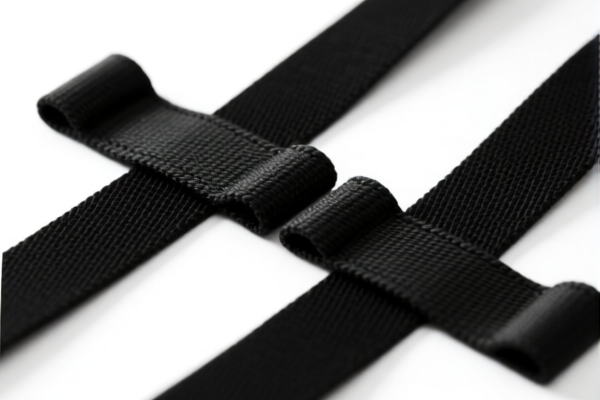
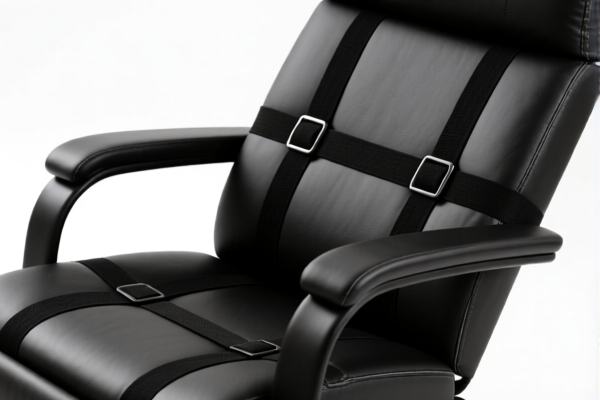
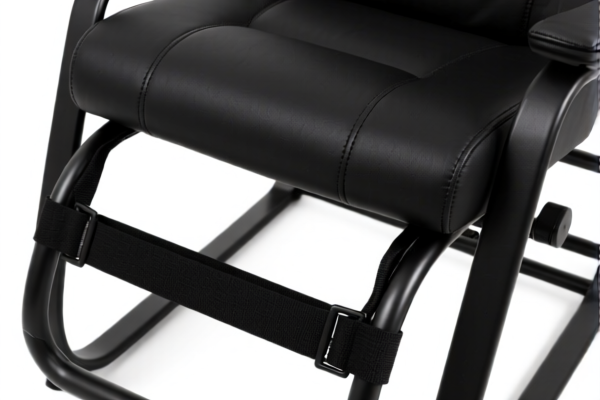
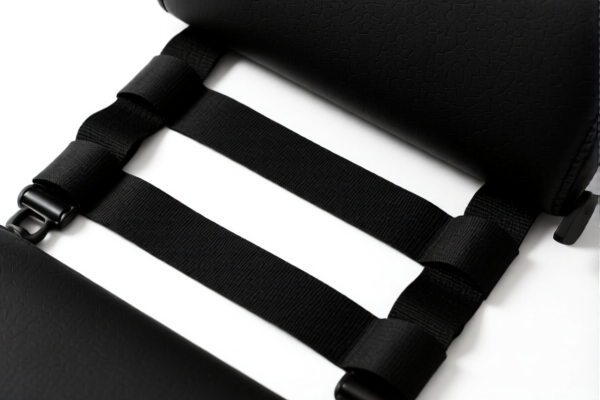
AI分析
🪑 Lounge Chair Elastic Straps (Black Recliner Elastic Straps)
🌐 HS Code Reference & Customs Clearance Guide | 2026 Latest Tariff Analysis | Professional Level Clearance Strategy
📌 I. Product Definition & Classification: Do You Really Understand "Elastic Straps"?
Elastic Straps (Black Recliner Elastic Straps) are flexible, tension-bearing components primarily used in the assembly or repair of furniture, specifically lounge chairs and recliners. In international trade, their classification depends heavily on the material composition (Plastic/Synthetic Fiber vs. Textile/Rubber-coated) and functional role (Raw Material vs. Furniture Part).
⚠️ Key Classification Distinction:
- If made of plastic/synthetic fibers and treated as general plastic articles → Falls under Chapter 39.
- If made of textile/rubber materials → Falls under Chapter 56.
- If classified as a part/accessory of furniture (regardless of material, if not more specifically classified elsewhere) → Falls under Chapter 94.
📦 II. HS Code Classification Details (2026 Latest Tariff Authority Comparison)
| HS Code | Product Description | Applicable Scenario | Material Logic | Total Tax Rate |
|---|---|---|---|---|
3926.90.99.05 |
Other articles of plastics and articles of other materials of headings 3901 to 3914 (Plastic/General) | Lounge chair straps made of plastic or synthetic fibers; generic plastic articles. | Consistent with "All Plastic" material attributes; no conflict. | 22.8% |
5604.90.90.00 |
Other textile threads and cordage, impregnated, coated, covered or sheathed with rubber or plastics, other than those of heading 5607. | Elastic straps where material matches "rubber-coated textile" or "impregnated textile yarns." | Material (elastic/textile) aligns with textile/rubber category; no material conflict. | 40.0% |
5604.10.00.00 |
Threads and cordage, coated with rubber, whether or not covered with textile. | Elastic straps made of textile covered with rubber; logic aligns with "textile-covered rubber threads/ropes." | Morphology (strap/rope-like) consistent with textile-covered rubber; no material conflict. | 41.3% |
9403.99.90.40 |
Parts of furniture of all kinds (Other Furniture Parts) | Straps explicitly identified as parts/accessories for Lounge Chairs. | Function (Furniture Part) aligns with "Other Furniture and Parts"; no material conflict. | 85.0% |
🔍 Key Reminder:
- Material Matters: The primary dispute is usually between Plastic (Ch. 39) and Textile/Rubber (Ch. 56). If the strap is woven fabric with a rubber core, Ch. 56 is more likely correct. If it is a molded plastic band, Ch. 39 is appropriate. - Functional Role: If declared strictly as a "Part of Chair," Ch. 94 applies, but beware of the highest tariff burden. Customs may reject this if the item is more specifically described in Ch. 39 or 56.
💰 III. 2026 Latest Tariff Rate Breakdown (Including Additional Duties & Policy Surcharges)
✅ Applicable Country: United States (US)
✅ Country of Origin: China (CN)
✅ Effective Date: From November 10, 2025 onwards (for subsequent imports)
🎯 1. 3926.90.99.05 —— Plastic/General Articles (Lowest Risk/Lowest Cost)
| Item | Content |
|---|---|
| Base Tariff | 5.3% (ad valorem) |
| Section 301 Surcharge (Add-on Tariff) | +7.5% |
| Section 122 Tariff | +10% (Specific provision for certain goods) |
| Total Tax Rate | 22.8% |
| Tax Calculation | CIF Value × 22.8% |
| De Minimis Eligibility | ❌ No (deny_de_minimis) |
| Legal Basis Path | Base: 3926.90.99.05 → Section 301: 7.5% → Sec 122: 10% |
📌 Explanation:
- This is the most favorable classification if the product can be substantiated as plastic/synthetic. - The "122 Tariff" is a specific additional duty often applied to certain Chinese imports. - Total 22.8% is significantly lower than other options, making this the preferred choice if material evidence supports it.
🎯 2. 5604.90.90.00 —— Textile/Rubber Articles (Medium Risk/Medium Cost)
| Item | Content |
|---|---|
| Base Tariff | 5.0% (ad valorem) |
| Section 301 Surcharge (Add-on Tariff) | +25.0% |
| Section 122 Tariff | +10% |
| Total Tax Rate | 40.0% |
| Tax Calculation | CIF Value × 40.0% |
| De Minimis Eligibility | ❌ No (deny_de_minimis) |
| Legal Basis Path | Base: 5604.90.90.00 → Section 301: 25% → Sec 122: 10% |
📌 Note:
- The 25% Section 301 surcharge is the key driver here. - Suitable if the product is clearly textile-based with rubber coating or impregnation. - Total 40% is moderate but nearly double the cost of the plastic classification.
🎯 3. 5604.10.00.00 —— Rubber-Coated Textile Threads/Ropes (Medium-High Risk)
| Item | Content |
|---|---|
| Base Tariff | 6.3% (ad valorem) |
| Section 301 Surcharge (Add-on Tariff) | +25.0% |
| Section 122 Tariff | +10% |
| Total Tax Rate | 41.3% |
| Tax Calculation | CIF Value × 41.3% |
| De Minimis Eligibility | ❌ No (deny_de_minimis) |
| Legal Basis Path | Base: 5604.10.00.00 → Section 301: 25% → Sec 122: 10% |
📌 Warning:
- Slightly higher than5604.90due to a higher base rate (6.3% vs 5.0%). - Applies if the product is strictly classified as "rubber-coated textile threads/ropes." - Total 41.3% is the most expensive among the textile/rubber options.
🎯 4. 9403.99.90.40 —— Furniture Parts (Highest Risk/Highest Cost)
| Item | Content |
|---|---|
| Base Tariff | 0.0% (ad valorem) |
| Section 301 Surcharge (Add-on Tariff) | +25.0% |
| Section 122 Tariff | +10% |
| Steel/Aluminum/Copper Surcharge | +50.0% (⚠️ Only if steel/aluminum/copper parts are involved) |
| Total Tax Rate | 85.0% (Standard) 135.0% (If metal components present) |
| Tax Calculation | CIF Value × 85.0% (or 135.0%) |
| De Minimis Eligibility | ❌ No (deny_de_minimis) |
| Legal Basis Path | Base: 9403.99.90.40 → Section 301: 25% → Sec 122: 10% + Metal Surcharge: 50% |
📌 Critical Alert:
- Extremely High Tariff: Even with a 0% base rate, the combination of Section 301 and Section 122 results in an 85% total duty. - Metal Component Risk: If any part of the strap assembly involves steel, aluminum, or copper, an additional 50% is added, bringing the total to 135%. - Usage Advice: Avoid this classification unless no other specific material-based classification (Ch 39/56) applies, as it is the most costly.
🛠️ IV. Customs Clearance Practical Advice (Battle-Tested Pitfall Avoidance Guide)
✅ 1. Preparation Checklist (All Documents Required)
| Document | Required | Explanation |
|---|---|---|
| ✅ Product Specifications | ✔️ | Must clearly state material (e.g., "Polyester woven with rubber core" vs. "Injection-molded plastic"). |
| ✅ Material Composition Report | ✔️ | Lab test report proving material content (e.g., % Polyester, % Rubber, % Plastic). Crucial for Ch 39 vs. Ch 56. |
| ✅ Product Photos (Clear) | ✔️ | Show the strap texture, cross-section, and any labels. |
| ✅ Commercial Invoice | ✔️ | Describe as "Elastic Straps for Furniture," NOT "Parts of Chair" if possible, to avoid Ch 94 high tariffs. |
| ✅ Packing List | ✔️ | Detail quantity, weight, and dimensions. |
| ✅ Origin Certificate | ✔️ | If applicable, to verify Country of Origin (China). |
✅ 2. Declaration Strategies (Key Mantras)
🔥 "Material Defines Code, Function Defines Risk!"
| Scenario | Correct Declaration | Wrong Practice |
|---|---|---|
| Plastic/Synthetic Straps | Use 3926.90.99.05 (22.8%) |
Declare as "Furniture Parts" → 85% |
| Textile/Rubber Straps | Use 5604.90.90.00 (40.0%) |
Declare as "Plastic" → Audit Risk |
| Straps with Metal Hardware | Use 5604... or 3926... |
Declare as 9403... with metal → 135% |
| Generic "Elastic Bands" | Specify Material in Description | Vague description → Customs Delay |
✅ 3. Special Case Handling
| Situation | Handling Advice |
|---|---|
| OEM Custom Straps | Provide design drawings showing material layers to support Ch 39 or Ch 56. |
| Mixed Material Components | If the strap has metal clips, declare the strap separately or use the higher-tariff component if inseparable. |
| Small Shipments (De Minimis) | ⚠️ Note: These HS Codes are NOT eligible for de minimis exemption (Section 321). All shipments are subject to duty. |
| Pre-Ruling Application | Strongly recommended to apply for an Advance Ruling from CBP if material classification is ambiguous. |
🌍 V. Global Market Comparison (2026 Latest)
| Country/Region | Recommended HS Code | Tariff (China Origin) | Certification | Notes |
|---|---|---|---|---|
| 🇺🇸 USA | 3926.90.99.05 |
22.8% | None specific | Lowest cost if plastic. Avoid Ch 94. |
| 🇺🇸 USA | 5604.90.90.00 |
40.0% | None specific | Moderate cost if textile. |
| 🇺🇸 USA | 9403.99.90.40 |
85.0% | None specific | Avoid. Extremely high. |
| 🇨🇳 China | Varies | ~5-10% | None | Lower duties, but export focus is US. |
| 🇪🇺 EU | Varies | 0-4.5% | CE/RoHS if applicable | No Section 301/122 equivalents. |
| 🇬🇧 UK | Varies | 0-5% | UKCA | Post-Brexit rules apply. |
📌 Conclusion:
- USA is the most challenging market due to Section 301 and Section 122 surcharges. - Material justification is critical. Prove it is plastic (Ch 39) to save ~17-62% compared to textile or furniture part classifications. - Never use "Furniture Part" (Ch 94) unless necessary, as the 85%+ tariff destroys profitability.
📌 VI. Common Mistakes & Pitfall Guide (Lessons Learned)
❌ Mistake 1: Declaring plastic straps as "Furniture Parts" (9403...)
👉 Consequence: Tax jumps from 22.8% to 85%. Profit margin evaporates.
❌ Mistake 2: Ignoring Section 122 Tariff (+10%)
👉 Consequence: Under-declaring taxes. Customs audits will reveal missed 10% surcharge + penalties.
❌ Mistake 3: Claiming "De Minimis" Exemption for these items
👉 Consequence: All these HS Codes are excluded from Section 321 de minimis. Shipment will be held, duties assessed, and storage fees incurred.
❌ Mistake 4: Vague Description "Elastic Band"
👉 Consequence: Customs assigns a random high-tariff code. Always specify "Elastic Strap for Lounge Chair, Material: XXXX."
✅ Correct Approach:
"Elastic Straps for Lounge Chairs, Made of Polyester/Rubber, Black, 4-Pack, Model XYZ. HS Code: 3926.90.99.05."
🎯 VII. Conclusion: Precise Classification Saves Money!
🎯 Remember the Mantra:
🔹 "Plastic is Cheap (22.8%), Textile is Medium (40%), Furniture Parts are Expensive (85%)."
🔹 "Material Defines Code, Section 122 Adds 10%, De Minimis is a Trap."
🔹 "HS Code is Life or Death, Tax Difference is Huge, Declaration Mistake Costs Thousands."
📌 Pro Tip:
If your supplier can provide a Material Test Report proving the straps are primarily plastic or synthetic fiber, strictly use 3926.90.99.05. This saves you $62 per $100 compared to the furniture part classification.
🚀 Immediate Action:
1. Contact Supplier: Request material composition details.
2. Apply for Pre-Ruling: If uncertain, submit to CBP for an Advance Ruling.
3. Declare Accurately: Use the correct HS Code and detailed description.
✨ Professional Clearance Starts with Accurate Classification!
💼 Every Penny Saved in Duties is Pure Profit!
用户评价
关于 HS 编码归类
协调制度(HS)是由世界海关组织(WCO)制定的国际贸易商品分类标准。全球 200 多个国家采用 HS 系统作为海关关税、贸易统计和进出口监管的基础。
每个 HS 编码遵循以下层级结构:
- 章(2 位)——商品大类(例如:第 84 章:机器和机械设备)
- 品目(4 位)——章内的更具体分类
- 子目(6 位)——国际通用细分,所有 WCO 成员国统一使用
- 本国细分(8-10 位)——各国自行扩展的细分编码,如美国 HTSUS 10 位编码
正确的 HS 编码归类对于顺利通关、准确缴纳关税和遵守贸易法规至关重要。错误归类可能导致海关延误、多缴关税或罚款。
从CN进口到US时,适用的关税税率可能包括:
- 最惠国(MFN)税率——适用于 WTO 成员国的标准关税税率
- 普通税率——适用于无贸易协定国家
- 贸易救济关税——附加关税,如 301 条款(反倾销)、232 条款(国家安全)或反补贴税
本页内容仅供参考。如需正式归类,请咨询当地海关或持牌报关代理。