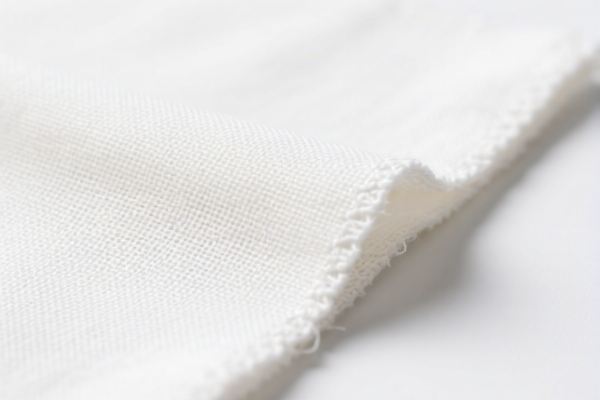
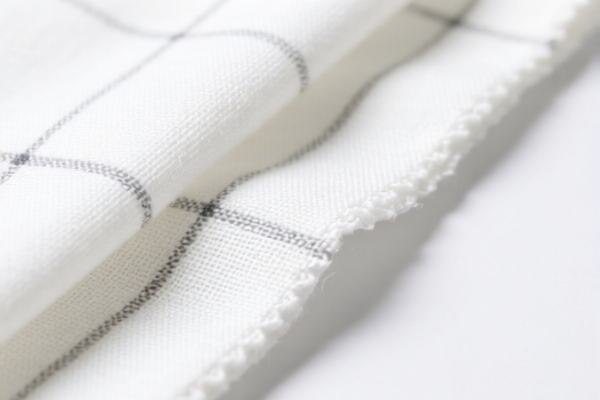
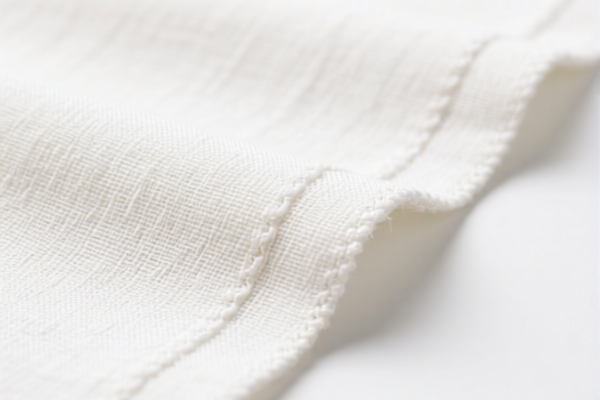
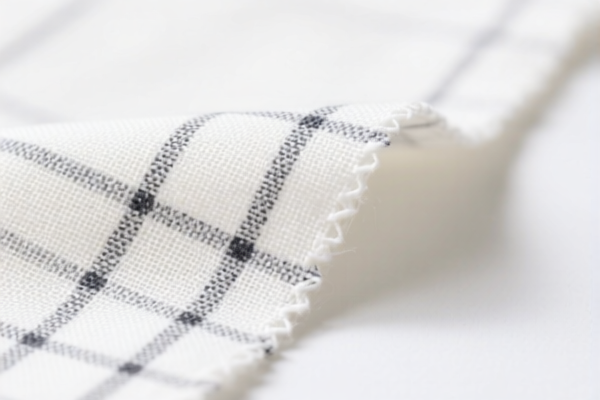
4 shuttle woven twill fabric bleached
CN → US| HS编码 | 关税税率 | 原产国 | 目的国 | 文档 |
|---|---|---|---|---|
| 5210491000 | 45.0% | CN | US | 官方文档 |
| 5211390040 | 43.1% | CN | US | 官方文档 |
| 5210320000 | 45.0% | CN | US | 官方文档 |
| 5513120000 | 49.9% | CN | US | 官方文档 |
| 5513491000 | 48.6% | CN | US | 官方文档 |
商品图片
AI分析
🧵 4-Shuttle Woven Twill Fabric, Bleached (Cotton Blends & Synthetics)
🌐 HS Code Reference & Customs Clearance Guide | 2026 Latest Tariff Analysis | Professional Compliance Strategy
📌 I. Product Definition: What Exactly is "4-Shuttle Woven Twill"?
In the textile industry, "4-shuttle woven twill fabric" refers to a specific construction where the weaving process involves four distinct yarn sets (warps and wefts interlacing in a twill pattern). The term "bleached" indicates the fabric has undergone a chemical whitening process to remove natural impurities and color, resulting in an off-white or bright white state.
Key Classification Criteria: 1. Material Composition: The HS Code depends entirely on the primary fiber (Cotton vs. Synthetic). 2. Weave Structure: It must be a Twill (diagonal rib pattern). 3. Processing: Bleached (not dyed, not printed). 4. Weight/Density: Often affects the sub-heading within the chapter.
⚠️ Critical Distinction:
- If the primary fiber is Cotton → Look at Chapter 52 (Cotton).
- If the primary fiber is Polyester/Synthetic mixed with Cotton → Look at Chapter 55 (Synthetic Fibers).
- "4-Shuttle" is a manufacturing detail that often falls under "Woven" (Chapter 52/55) rather than Knitted (Chapter 60).
📦 II. HS Code Classification Matrix (2026 Latest Tariff Mapping)
Based on the provided <DATA>, here are the precise HS Codes for bleached, 4-shuttle woven twill fabrics, categorized by fiber content.
| HS Code | Product Description | Fiber Composition | Weave/Process | Total Tax Rate |
|---|---|---|---|---|
5210.49.10.00 |
Cotton Blended Woven Twill, Bleached | Cotton (Primary) | 4-Shuttle, Bleached | 45.0% |
5211.39.00.40 |
Cotton/Wet Spun Rayon Twill, Bleached | Cotton (Primary) | Twill, Bleached (Weight unspecified) | 43.1% |
5210.32.00.00 |
Cotton Blended Woven Fabric, Bleached | Cotton (Primary) | 4-Line Twill Structure | 45.0% |
5513.12.00.00 |
Polyester Short-Fiber/Cotton Blend Twill, Bleached | Polyester (Primary) | Short Fiber, Bleached | 49.9% |
5513.49.10.00 |
Synthetic Short-Fiber/Cotton Blend Twill, Bleached | Synthetic (Primary) | 4-Silk/Yarn Twill, Bleached | 48.6% |
🔍 Key Insight:
- Cotton-dominant blends (Chapters 52) generally carry slightly lower base tariffs but are heavily impacted by the same附加 taxes as synthetic blends. - Polyester/Synthetic-dominant blends (Chapters 55) often have higher base tariffs (e.g., 14.9% vs 10.0%), leading to a higher total effective tax rate when combined with附加 taxes.
💰 III. 2026 Latest Tariff Breakdown (China Origin → USA)
✅ Destination: United States (US)
✅ Origin: China (CN)
✅ Effective Date: November 10, 2025 onwards
🎯 1. Cotton-Based HS Codes (5210.49.10.00, 5210.32.00.00, 5211.39.00.40)
| Component | Rate | Description |
|---|---|---|
| Base Tariff | 8.1% – 10.0% | Standard MFN (Most Favored Nation) rate for cotton twills. |
| Section 301 Tariff | +25.0% | Additional duty on Chinese goods under US Trade Law Section 301. |
| Section 122 Tariff | +10.0% | Additional duty under IEEPA (International Emergency Economic Powers Act) targeting specific Chinese textile imports. |
| TOTAL RATE | 43.1% – 45.0% | High Barrier to Entry |
📌 Example Calculation:
For5210.49.10.00:
Base (10%) + Sec 301 (25%) + Sec 122 (10%) = 45.0% total tax.
For5211.39.00.40:
Base (8.1%) + Sec 301 (25%) + Sec 122 (10%) = 43.1% total tax.
🎯 2. Synthetic/Polyester-Based HS Codes (5513.12.00.00, 5513.49.10.00)
| Component | Rate | Description |
|---|---|---|
| Base Tariff | 13.6% – 14.9% | Higher base rate for synthetic fiber blends compared to cotton. |
| Section 301 Tariff | +25.0% | Standard 301 additional duty. |
| Section 122 Tariff | +10.0% | Standard 122 additional duty. |
| TOTAL RATE | 48.6% – 49.9% | Highest Cost Scenario |
📌 Example Calculation:
For5513.12.00.00:
Base (14.9%) + Sec 301 (25%) + Sec 122 (10%) = 49.9% total tax.
For5513.49.10.00:
Base (13.6%) + Sec 301 (25%) + Sec 122 (10%) = 48.6% total tax.
🛠️ IV. Customs Clearance Practical Guide (Avoiding Pitfalls)
✅ 1. Mandatory Documentation Checklist
| Document | Required? | Purpose |
|---|---|---|
| Commercial Invoice | ✅ Yes | Must clearly state: "Bleached Woven Twill Fabric", "Cotton/Poly Blend", "4-Shuttle Weave". |
| Packing List | ✅ Yes | Detail gross/net weight, dimensions, and package count. |
| Textile Report | ✅ Yes | Crucial: Must confirm fiber composition (e.g., "65% Polyester, 35% Cotton") and weave structure (Twill). |
| Origin Certificate | ✅ Yes | Proof of Chinese origin triggers the 301/122 tariffs. |
| Production Process Description | ✅ Recommended | Explain "Bleaching" process to confirm it is not dyed (which would change HS Code). |
✅ 2. Classification Strategy: How to Choose the Right HS Code?
| Scenario | Recommended HS Code | Why? |
|---|---|---|
| Fabric is >50% Cotton | 5210.49.10.00 or 5210.32.00.00 |
Cotton is the primary material. Choose based on exact weight/thickness specifications. |
| Fabric is Cotton + Rayon | 5211.39.00.40 |
Rayon (viscose) is often grouped with cotton in specific subheadings for twills. |
| Fabric is >50% Polyester | 5513.12.00.00 |
Polyester is the primary synthetic fiber. |
| Fabric is Synthetic (other) + Cotton | 5513.49.10.00 |
For non-polyester synthetics (e.g., nylon, acrylic) blended with cotton. |
⚠️ Warning:
- "4-Shuttle" is not explicitly in the HS code description but defines the weave structure. If the fabric is not strictly twill, it may be misclassified.
- "Bleached" is key. If the fabric is dyed, it moves to different subheadings (e.g.,5210.49.20), which may have different tax implications.
✅ 3. Cost Optimization Tips
- Pre-Clearance Ruling:
Apply for an Advance Ruling from US Customs and Border Protection (CBP) to confirm the HS Code. This avoids delays and penalties during actual import. - Fabric Weight Optimization:
Some HS subheadings (like5211.39.00.40) are specific to weight ranges. If your fabric weight falls into a lower-tariff bracket, ensure the specification sheet reflects this accurately. - Supply Chain Diversification:
Given the 45%+ tax rate, consider if sourcing from non-China origins (e.g., Vietnam, Bangladesh) is viable for future orders, though cotton/synthetic blends may still face duties depending on trade agreements.
🌍 V. Global Market Comparison (2026)
| Region | HS Code Focus | Estimated Total Duty (China Origin) | Notes |
|---|---|---|---|
| 🇺🇸 USA | 5210.xxxx / 5513.xxxx |
43.1% – 49.9% | High due to Sec 301 + Sec 122. |
| 🇪🇺 EU | Similar HS Codes | ~12% - 15% | No Sec 301/122 equivalent. Lower risk. |
| 🇨🇳 China | Same HS Codes | ~8% - 10% | Base rate only. No additional附加 taxes. |
| 🇯🇵 Japan | Similar HS Codes | ~7% - 9% | Moderate duty, no附加 taxes. |
📌 Conclusion:
- The USA is the most expensive market for these goods due to political tariffs.
- EU and Japan offer more favorable duty rates for the same product.
📌 VI. Common Mistakes & Pitfalls
❌ Mistake 1: Misidentifying "Twill" as "Plain Weave"
👉 Consequence: Wrong HS Code → Potential penalty or retroactive tax.
👉 Fix: Provide clear weave samples and diagrams to customs brokers.
❌ Mistake 2: Ignoring "Bleached" vs. "Dyed"
👉 Consequence: Bleached fabrics often have different base tariffs than dyed ones.
👉 Fix: Specify "Bleached" in the commercial invoice and textile report.
❌ Mistake 3: Overlooking Fiber Composition
👉 Consequence: If you declare "Cotton" but it’s 60% Polyester, the classification changes from Chapter 52 to Chapter 55.
👉 Fix: Get a fiber composition test report from a third-party lab (e.g., SGS, Intertek).
🎯 VII. Final Recommendation
🎯 Key Takeaway:
"Textile Tariffs are Fiber-Dependent + Political Surcharge."
For "4-Shuttle Woven Twill, Bleached," expect 43.1% – 49.9% total tax when importing into the USA from China.
✅ Action Plan:
1. Test Fiber Content: Confirm if Cotton or Polyester is primary.
2. Select HS Code: Use the matrix above to pick the exact 10-digit HS Code.
3. Apply for Advance Ruling: Submit to CBP for legal certainty.
4. Budget Accordingly: Factor in ~45% duty into your landed cost calculation.
📣 Contact Experts:
📞 Engage a licensed customs broker specializing in textiles.
📄 Provide: Fabric Swatch, Fiber Test Report, Production Process Flow.
🚀 Minimize Risk, Maximize Profit!
✨ Precision Classification is the Key to Smooth Customs Clearance!
💼 Don't let unexpected 45% duties erase your margin!
用户评价
关于 HS 编码归类
协调制度(HS)是由世界海关组织(WCO)制定的国际贸易商品分类标准。全球 200 多个国家采用 HS 系统作为海关关税、贸易统计和进出口监管的基础。
每个 HS 编码遵循以下层级结构:
- 章(2 位)——商品大类(例如:第 84 章:机器和机械设备)
- 品目(4 位)——章内的更具体分类
- 子目(6 位)——国际通用细分,所有 WCO 成员国统一使用
- 本国细分(8-10 位)——各国自行扩展的细分编码,如美国 HTSUS 10 位编码
正确的 HS 编码归类对于顺利通关、准确缴纳关税和遵守贸易法规至关重要。错误归类可能导致海关延误、多缴关税或罚款。
从CN进口到US时,适用的关税税率可能包括:
- 最惠国(MFN)税率——适用于 WTO 成员国的标准关税税率
- 普通税率——适用于无贸易协定国家
- 贸易救济关税——附加关税,如 301 条款(反倾销)、232 条款(国家安全)或反补贴税
本页内容仅供参考。如需正式归类,请咨询当地海关或持牌报关代理。