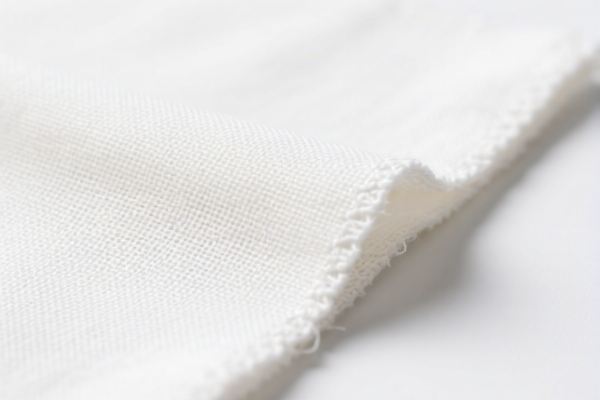
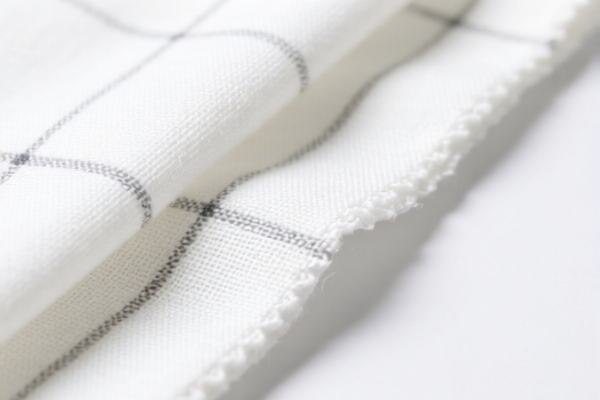
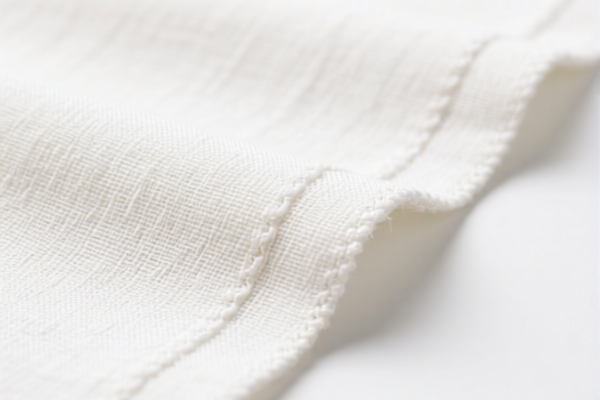
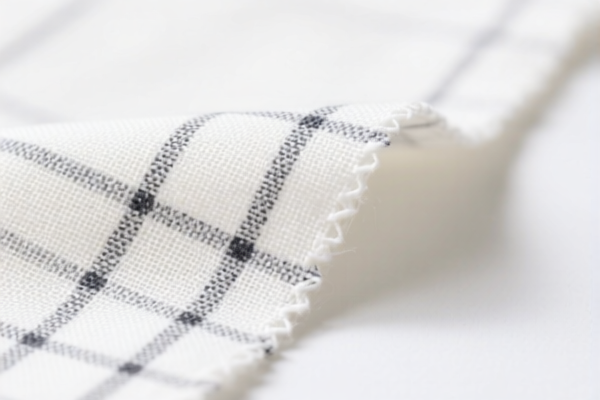
4 shuttle woven twill fabric bleached
CN → US| HS Code | Tariff Rate | Origin | Destination | Doc |
|---|---|---|---|---|
| 5210491000 | 45.0% | CN | US | Official Doc |
| 5211390040 | 43.1% | CN | US | Official Doc |
| 5210320000 | 45.0% | CN | US | Official Doc |
| 5513120000 | 49.9% | CN | US | Official Doc |
| 5513491000 | 48.6% | CN | US | Official Doc |
Product Images
AI Analysis
🧵 4-Shuttle Woven Twill Fabric, Bleached (Cotton Blends & Synthetics)
🌐 HS Code Reference & Customs Clearance Guide | 2026 Latest Tariff Analysis | Professional Compliance Strategy
📌 I. Product Definition: What Exactly is "4-Shuttle Woven Twill"?
In the textile industry, "4-shuttle woven twill fabric" refers to a specific construction where the weaving process involves four distinct yarn sets (warps and wefts interlacing in a twill pattern). The term "bleached" indicates the fabric has undergone a chemical whitening process to remove natural impurities and color, resulting in an off-white or bright white state.
Key Classification Criteria: 1. Material Composition: The HS Code depends entirely on the primary fiber (Cotton vs. Synthetic). 2. Weave Structure: It must be a Twill (diagonal rib pattern). 3. Processing: Bleached (not dyed, not printed). 4. Weight/Density: Often affects the sub-heading within the chapter.
⚠️ Critical Distinction:
- If the primary fiber is Cotton → Look at Chapter 52 (Cotton).
- If the primary fiber is Polyester/Synthetic mixed with Cotton → Look at Chapter 55 (Synthetic Fibers).
- "4-Shuttle" is a manufacturing detail that often falls under "Woven" (Chapter 52/55) rather than Knitted (Chapter 60).
📦 II. HS Code Classification Matrix (2026 Latest Tariff Mapping)
Based on the provided <DATA>, here are the precise HS Codes for bleached, 4-shuttle woven twill fabrics, categorized by fiber content.
| HS Code | Product Description | Fiber Composition | Weave/Process | Total Tax Rate |
|---|---|---|---|---|
5210.49.10.00 |
Cotton Blended Woven Twill, Bleached | Cotton (Primary) | 4-Shuttle, Bleached | 45.0% |
5211.39.00.40 |
Cotton/Wet Spun Rayon Twill, Bleached | Cotton (Primary) | Twill, Bleached (Weight unspecified) | 43.1% |
5210.32.00.00 |
Cotton Blended Woven Fabric, Bleached | Cotton (Primary) | 4-Line Twill Structure | 45.0% |
5513.12.00.00 |
Polyester Short-Fiber/Cotton Blend Twill, Bleached | Polyester (Primary) | Short Fiber, Bleached | 49.9% |
5513.49.10.00 |
Synthetic Short-Fiber/Cotton Blend Twill, Bleached | Synthetic (Primary) | 4-Silk/Yarn Twill, Bleached | 48.6% |
🔍 Key Insight:
- Cotton-dominant blends (Chapters 52) generally carry slightly lower base tariffs but are heavily impacted by the same附加 taxes as synthetic blends. - Polyester/Synthetic-dominant blends (Chapters 55) often have higher base tariffs (e.g., 14.9% vs 10.0%), leading to a higher total effective tax rate when combined with附加 taxes.
💰 III. 2026 Latest Tariff Breakdown (China Origin → USA)
✅ Destination: United States (US)
✅ Origin: China (CN)
✅ Effective Date: November 10, 2025 onwards
🎯 1. Cotton-Based HS Codes (5210.49.10.00, 5210.32.00.00, 5211.39.00.40)
| Component | Rate | Description |
|---|---|---|
| Base Tariff | 8.1% – 10.0% | Standard MFN (Most Favored Nation) rate for cotton twills. |
| Section 301 Tariff | +25.0% | Additional duty on Chinese goods under US Trade Law Section 301. |
| Section 122 Tariff | +10.0% | Additional duty under IEEPA (International Emergency Economic Powers Act) targeting specific Chinese textile imports. |
| TOTAL RATE | 43.1% – 45.0% | High Barrier to Entry |
📌 Example Calculation:
For5210.49.10.00:
Base (10%) + Sec 301 (25%) + Sec 122 (10%) = 45.0% total tax.
For5211.39.00.40:
Base (8.1%) + Sec 301 (25%) + Sec 122 (10%) = 43.1% total tax.
🎯 2. Synthetic/Polyester-Based HS Codes (5513.12.00.00, 5513.49.10.00)
| Component | Rate | Description |
|---|---|---|
| Base Tariff | 13.6% – 14.9% | Higher base rate for synthetic fiber blends compared to cotton. |
| Section 301 Tariff | +25.0% | Standard 301 additional duty. |
| Section 122 Tariff | +10.0% | Standard 122 additional duty. |
| TOTAL RATE | 48.6% – 49.9% | Highest Cost Scenario |
📌 Example Calculation:
For5513.12.00.00:
Base (14.9%) + Sec 301 (25%) + Sec 122 (10%) = 49.9% total tax.
For5513.49.10.00:
Base (13.6%) + Sec 301 (25%) + Sec 122 (10%) = 48.6% total tax.
🛠️ IV. Customs Clearance Practical Guide (Avoiding Pitfalls)
✅ 1. Mandatory Documentation Checklist
| Document | Required? | Purpose |
|---|---|---|
| Commercial Invoice | ✅ Yes | Must clearly state: "Bleached Woven Twill Fabric", "Cotton/Poly Blend", "4-Shuttle Weave". |
| Packing List | ✅ Yes | Detail gross/net weight, dimensions, and package count. |
| Textile Report | ✅ Yes | Crucial: Must confirm fiber composition (e.g., "65% Polyester, 35% Cotton") and weave structure (Twill). |
| Origin Certificate | ✅ Yes | Proof of Chinese origin triggers the 301/122 tariffs. |
| Production Process Description | ✅ Recommended | Explain "Bleaching" process to confirm it is not dyed (which would change HS Code). |
✅ 2. Classification Strategy: How to Choose the Right HS Code?
| Scenario | Recommended HS Code | Why? |
|---|---|---|
| Fabric is >50% Cotton | 5210.49.10.00 or 5210.32.00.00 |
Cotton is the primary material. Choose based on exact weight/thickness specifications. |
| Fabric is Cotton + Rayon | 5211.39.00.40 |
Rayon (viscose) is often grouped with cotton in specific subheadings for twills. |
| Fabric is >50% Polyester | 5513.12.00.00 |
Polyester is the primary synthetic fiber. |
| Fabric is Synthetic (other) + Cotton | 5513.49.10.00 |
For non-polyester synthetics (e.g., nylon, acrylic) blended with cotton. |
⚠️ Warning:
- "4-Shuttle" is not explicitly in the HS code description but defines the weave structure. If the fabric is not strictly twill, it may be misclassified.
- "Bleached" is key. If the fabric is dyed, it moves to different subheadings (e.g.,5210.49.20), which may have different tax implications.
✅ 3. Cost Optimization Tips
- Pre-Clearance Ruling:
Apply for an Advance Ruling from US Customs and Border Protection (CBP) to confirm the HS Code. This avoids delays and penalties during actual import. - Fabric Weight Optimization:
Some HS subheadings (like5211.39.00.40) are specific to weight ranges. If your fabric weight falls into a lower-tariff bracket, ensure the specification sheet reflects this accurately. - Supply Chain Diversification:
Given the 45%+ tax rate, consider if sourcing from non-China origins (e.g., Vietnam, Bangladesh) is viable for future orders, though cotton/synthetic blends may still face duties depending on trade agreements.
🌍 V. Global Market Comparison (2026)
| Region | HS Code Focus | Estimated Total Duty (China Origin) | Notes |
|---|---|---|---|
| 🇺🇸 USA | 5210.xxxx / 5513.xxxx |
43.1% – 49.9% | High due to Sec 301 + Sec 122. |
| 🇪🇺 EU | Similar HS Codes | ~12% - 15% | No Sec 301/122 equivalent. Lower risk. |
| 🇨🇳 China | Same HS Codes | ~8% - 10% | Base rate only. No additional附加 taxes. |
| 🇯🇵 Japan | Similar HS Codes | ~7% - 9% | Moderate duty, no附加 taxes. |
📌 Conclusion:
- The USA is the most expensive market for these goods due to political tariffs.
- EU and Japan offer more favorable duty rates for the same product.
📌 VI. Common Mistakes & Pitfalls
❌ Mistake 1: Misidentifying "Twill" as "Plain Weave"
👉 Consequence: Wrong HS Code → Potential penalty or retroactive tax.
👉 Fix: Provide clear weave samples and diagrams to customs brokers.
❌ Mistake 2: Ignoring "Bleached" vs. "Dyed"
👉 Consequence: Bleached fabrics often have different base tariffs than dyed ones.
👉 Fix: Specify "Bleached" in the commercial invoice and textile report.
❌ Mistake 3: Overlooking Fiber Composition
👉 Consequence: If you declare "Cotton" but it’s 60% Polyester, the classification changes from Chapter 52 to Chapter 55.
👉 Fix: Get a fiber composition test report from a third-party lab (e.g., SGS, Intertek).
🎯 VII. Final Recommendation
🎯 Key Takeaway:
"Textile Tariffs are Fiber-Dependent + Political Surcharge."
For "4-Shuttle Woven Twill, Bleached," expect 43.1% – 49.9% total tax when importing into the USA from China.
✅ Action Plan:
1. Test Fiber Content: Confirm if Cotton or Polyester is primary.
2. Select HS Code: Use the matrix above to pick the exact 10-digit HS Code.
3. Apply for Advance Ruling: Submit to CBP for legal certainty.
4. Budget Accordingly: Factor in ~45% duty into your landed cost calculation.
📣 Contact Experts:
📞 Engage a licensed customs broker specializing in textiles.
📄 Provide: Fabric Swatch, Fiber Test Report, Production Process Flow.
🚀 Minimize Risk, Maximize Profit!
✨ Precision Classification is the Key to Smooth Customs Clearance!
💼 Don't let unexpected 45% duties erase your margin!
Customer Reviews
About HS Code Classification
The Harmonized System (HS) is an internationally standardized nomenclature developed by the World Customs Organization (WCO) to classify traded products. Over 200 countries use the HS system as the basis for customs tariffs, trade statistics, and import/export regulations.
Each HS code follows a hierarchical structure:
- Chapter (2 digits) — Broad category of goods (e.g., Chapter 84: Machinery and Mechanical Appliances)
- Heading (4 digits) — More specific grouping within the chapter
- Subheading (6 digits) — Internationally standardized breakdown, used by all WCO member countries
- National subdivisions (8-10 digits) — Country-specific extensions for further classification, such as US HTSUS 10-digit codes
Correct HS code classification is essential for smooth customs clearance, accurate duty payment, and compliance with trade regulations. Misclassification can lead to customs delays, overpayment of duties, or penalties.
When importing from CN to US, the applicable tariff rates may include:
- Most-Favored-Nation (MFN) rate — The standard duty rate applied to WTO members
- General rate — Applied to countries without trade agreements
- Trade remedy duties — Additional tariffs such as Section 301 (anti-dumping), Section 232 (national security), or countervailing duties
The information provided on this page is for reference purposes only. For official classification, please consult with your local customs authority or a licensed customs broker.