6 piece silicone stretch lids
CN → US| HS编码 | 关税税率 | 原产国 | 目的国 | 文档 |
|---|---|---|---|---|
| 3923500000 | 40.3% | CN | US | 官方文档 |
| 3926909989 | 22.8% | CN | US | 官方文档 |
| 3926904800 | 13.4% | CN | US | 官方文档 |
| 3923500000 | 40.3% | CN | US | 官方文档 |
| 3926909989 | 22.8% | CN | US | 官方文档 |
商品图片
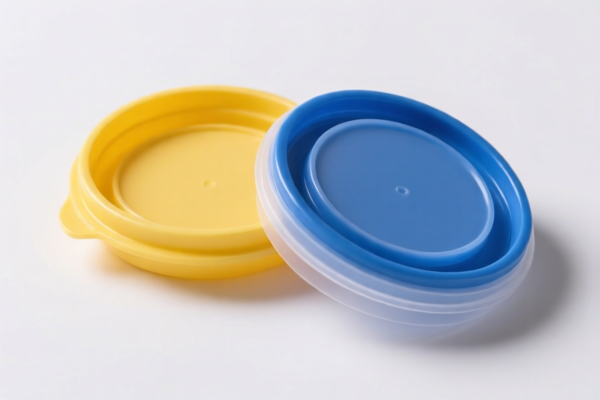
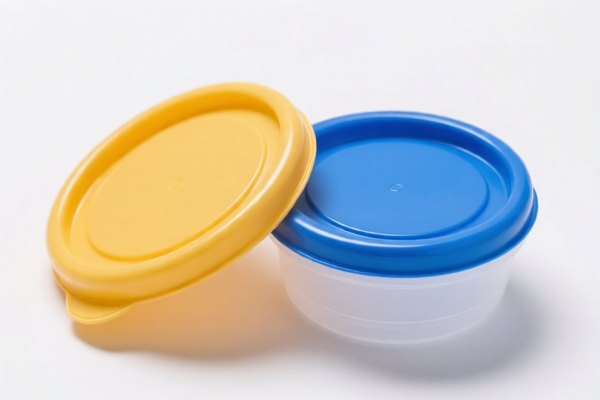
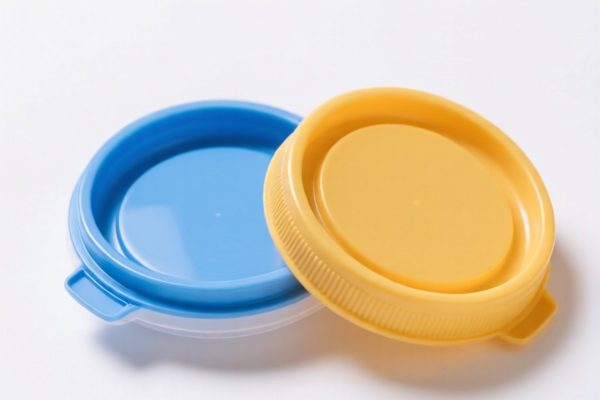
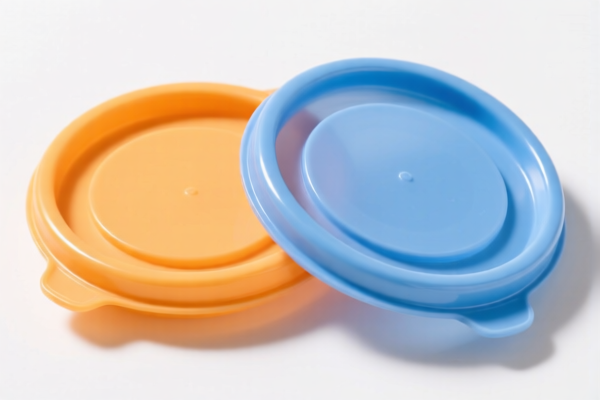
AI分析
🧘♀️ Silicone Stretch Lids (6-Piece Set)
🌐 HS Code Reference & Customs Clearance Guide | 2026 Latest Tariff Analysis | Professional Clearance Strategy
📌 1. Product Definition & Classification: What Are "Silicone Stretch Lids"?
Silicone Stretch Lids are reusable, flexible kitchen accessories designed to seal food containers, bowls, and even cut fruits/vegetables. Made from food-grade silicone, they stretch over various openings to create an airtight seal.
In international trade, their classification depends heavily on their primary function and structural design: - As Closures (Stoppers/Caps): If the product is primarily viewed as a "stopper" or "plug" that closes a container opening, it falls under heading 3923.50. - As General Plastic Articles: If classified broadly as other manufactured plastic articles not specified elsewhere, it falls under heading 3926.90.
⚠️ Key Distinction:
- If the lid is explicitly marketed and structured as a "cap," "stopper," or "closure" for containers → 3923.50.00.00
- If the lid is treated as a general plastic kitchen accessory (similar to spatulas or mats) → 3926.90.99.89 or 3926.90.48.00
📦 2. HS Code Classification Details (2026 Latest Tariff Authority Comparison)
| HS Code | Product Description | Application Scenario | Classification Logic |
|---|---|---|---|
3923.50.00.00 |
Silicone Stretch Lids classified as Stoppers, Caps, Covers, and Other Closure Devices | Products sold specifically as "container seals" or "lids" | ✅ Primary Function: Closure |
3926.90.99.89 |
Silicone Stretch Lids classified as Other Plastic Articles | General kitchenware where "closure" function is secondary or less emphasized | ✅ General Plastic Article |
3926.90.48.00 |
Silicone Stretch Lids classified as Other Plastic Articles, Specific Sub-category | A specific sub-class of general plastic articles with lower base duties | ✅ Specific Sub-category |
🔍 Important Reminder:
- 3923.50.00.00 is the most technically accurate if the product is explicitly a "lid/cap."
- 3926.90.99.89 and 3926.90.48.00 are used when the product is considered a general "plastic article" rather than a dedicated "closure device."
- The choice significantly impacts tariff rates, especially with additional US tariffs.
💰 3. 2026 Latest Tariff Rate Breakdown (Including Additional Taxes & Policy Surcharges)
✅ Applicable Country: United States (US)
✅ Origin: China (CN)
✅ Effective Time: 2025 November 10 onwards (including subsequent imports)
🎯 1. 3923.50.00.00 — Silicone Stretch Lids (Classified as Stoppers/Caps)
| Item | Details |
|---|---|
| Base Duty Rate | 5.3% (Ad Valorem) |
| Section 301 Additional Duty | +25.0% |
| Section 122 Duty | +10.0% |
| Total Tax Rate | 40.3% |
| Tax Calculation | CIF Value × 40.3% |
| De Minimis Eligibility | ❌ Not Eligible (Deny De Minimis) |
| Legal Authority Path | Base: 5.3% + 301: 25.0% + 122: 10.0% |
📌 Explanation:
- The 25% Section 301 tariff is the standard additional duty for most Chinese-made plastic articles.
- The 10% Section 122 tariff is an additional surcharge often applied to specific categories.
- Total 40.3% is a high tariff burden, significantly impacting profit margins.
🎯 2. 3926.90.99.89 — Silicone Stretch Lids (Classified as Other Plastic Articles)
| Item | Details |
|---|---|
| Base Duty Rate | 5.3% (Ad Valorem) |
| Section 301 Additional Duty | +7.5% |
| Section 122 Duty | +10.0% |
| Total Tax Rate | 22.8% |
| Tax Calculation | CIF Value × 22.8% |
| De Minimis Eligibility | ❌ Not Eligible (Deny De Minimis) |
| Legal Authority Path | Base: 5.3% + 301: 7.5% + 122: 10.0% |
📌 Note:
- This classification benefits from a lower Section 301 rate (7.5% vs. 25%).
- The 22.8% total rate is much more favorable than 40.3%.
- Suitable for products marketed broadly as "kitchen gadgets" rather than strict "container closures."
🎯 3. 3926.90.48.00 — Silicone Stretch Lids (Classified as Other Plastic Articles, Specific Sub-category)
| Item | Details |
|---|---|
| Base Duty Rate | 3.4% (Ad Valorem) |
| Section 301 Additional Duty | 0.0% |
| Section 122 Duty | +10.0% |
| Total Tax Rate | 13.4% |
| Tax Calculation | CIF Value × 13.4% |
| De Minimis Eligibility | ❌ Not Eligible (Deny De Minimis) |
| Legal Authority Path | Base: 3.4% + 301: 0.0% + 122: 10.0% |
📌 Critical Insight:
- This is the most cost-effective classification with a 13.4% total rate.
- The 0% Section 301 duty is a key advantage.
- Requires careful justification that the product fits into this specific sub-category of "other plastic articles."
- Risk: Customs may challenge this classification if the product is clearly a "lid." Ensure documentation supports this broader classification.
🛠️ 4. Customs Clearance Practical Advice (Battle-Tested Pitfall Avoidance)
✅ 1. Required Documentation Checklist (Non-negotiable)
| Document | Required | Notes |
|---|---|---|
| ✅ Product Catalog/Spec Sheet | ✔️ | Must detail material (100% Food-Grade Silicone), dimensions, and usage. |
| ✅ Product Photos | ✔️ | Clear images showing the product stretched over different containers. |
| ✅ Commercial Invoice | ✔️ | Must clearly describe the product as "Silicone Stretch Lids" or "Kitchen Seal Covers." Avoid ambiguous terms like "Plastic Parts." |
| ✅ Packing List | ✔️ | Specify quantity (6 pieces/set) and weight. |
| ✅ FDA Compliance Certificate | ✔️ | Essential for food-contact silicone products. |
| ✅ Certificate of Origin (CO) | ✔️ | Required to claim any potential exemptions (if applicable). |
✅ 2. Declaration Strategy (Key Tips)
🔥 "Classify Right, Save Big! Lids vs. General Art!"
| Scenario | Recommended HS Code | Declaration Description | Why? |
|---|---|---|---|
| Explicitly Sold as "Lids" | 3923.50.00.00 |
"Silicone Stretch Lids for Food Containers" | Most accurate legally, but 40.3% tariff. |
| Sold as "Kitchen Gadgets" | 3926.90.99.89 |
"Silicone Kitchen Seal Covers" | Balanced approach, 22.8% tariff. |
| Broad Plastic Articles | 3926.90.48.00 |
"Silicone Food Storage Accessories" | Lowest tariff 13.4%, but highest risk of challenge. |
✅ 3. Special Cases & Handling
| Situation | Handling Advice |
|---|---|
| Mixed Sets (Lids + Boxes) | Declare the primary function. If the box is just packaging, it doesn't change the HS code. |
| OEM/White Label | Provide supplier invoices to prove origin. Misdeclaring origin to avoid tariffs can lead to severe penalties. |
| Small Value Shipments | Note: De Minimis exemption ($800) does NOT apply due to Section 301 and 122 tariffs. All shipments are subject to duty. |
| Customs Audit | If challenged on 3926.90.48.00, be prepared to argue that the product is a "general article" rather than a "specialized closure." |
🌍 5. Global Market Clearance Comparison (2026 Latest)
| Country/Region | Recommended HS Code | Estimated Duty | Certification Required | Notes |
|---|---|---|---|---|
| 🇺🇸 USA | 3926.90.48.00 (Best Case) |
13.4% | FDA | High risk of audit. 3923.50 is 40.3%. |
| 🇨🇳 China | 3926.90.99.90 |
~5-10% | CCC (if applicable) | Generally lower duties for exports. |
| 🇪🇺 EU | 3926.90.97 |
6.5% | FDA + LFGB | No Section 301/122. Standard EU tariff. |
| 🇬🇧 UK | 3926.90.97 |
6.5% | UKCA | Post-Brexit standards. |
| 🇦🇺 Australia | 3926.90.90 |
5% | SAA | Low duty, but strict food safety rules. |
📌 Conclusion:
- The US market is the most expensive due to additional tariffs.
- EU/UK/Australia offer more stable and lower duty rates.
- Strategy for US: If possible, explore3926.90.48.00for cost savings, but ensure robust documentation. Alternatively, consider supply chain diversification (e.g., Vietnam, Thailand) for US-bound goods to avoid Section 301/122 tariffs.
📌 6. Common Mistakes & Pitfall Guide (Lessons Learned)
❌ Mistake 1: Declaring as "Plastic Bags" or "Ziplock Bags"
👉 Consequence: Incorrect classification → Customs seizure or heavy fines. Silicone lids are not bags.
❌ Mistake 2: Ignoring Section 122 Tariff
👉 Consequence: Underestimating costs by 10%. Budget for 13.4%-40.3%, not just base duty.
❌ Mistake 3: Assuming De Minimis Applies
👉 Consequence: Packages under $800 are still taxed. Do not use "Gift" or "Low Value" labels to bypass.
❌ Mistake 4: Misrepresenting Material as "Rubber"
👉 Consequence: If it's silicone, declare as silicone. Mislabeling can lead to FDA compliance issues.
✅ Correct Approach:
"6-Piece Set, 100% Food-Grade Silicone Stretch Lids, Reusable, BPA-Free, For Bowls & Containers. Model: SLS-6."
🎯 7. Conclusion: Smart Classification, Smarter Profits!
🎯 Remember This Mantra:
🔹 "Lids = Closure (3923) = 40.3% | General Plastic (3926) = 13.4-22.8% | Think Before You Declare!"
🔹 "10% Section 122 is unavoidable, but 25% Section 301 can be minimized with correct classification."
📌 Pro Tip:
- If you are a high-volume importer, apply for an Advance Ruling from US Customs and Border Protection (CBP) to confirm the optimal HS code.
- Consider transshipment through non-China countries if tariffs remain prohibitive, but ensure origin rules are strictly followed to avoid fraud allegations.
📣 Take Action Now:
📞 Consult a Licensed Customs Broker
📋 Review Product Documentation
🚀 Optimize Your Supply Chain for 2026 Tariffs!
✨ Professional Clearance Starts with Accurate Classification!
💼 Every Percent Saved is Pure Profit!
用户评价
关于 HS 编码归类
协调制度(HS)是由世界海关组织(WCO)制定的国际贸易商品分类标准。全球 200 多个国家采用 HS 系统作为海关关税、贸易统计和进出口监管的基础。
每个 HS 编码遵循以下层级结构:
- 章(2 位)——商品大类(例如:第 84 章:机器和机械设备)
- 品目(4 位)——章内的更具体分类
- 子目(6 位)——国际通用细分,所有 WCO 成员国统一使用
- 本国细分(8-10 位)——各国自行扩展的细分编码,如美国 HTSUS 10 位编码
正确的 HS 编码归类对于顺利通关、准确缴纳关税和遵守贸易法规至关重要。错误归类可能导致海关延误、多缴关税或罚款。
从CN进口到US时,适用的关税税率可能包括:
- 最惠国(MFN)税率——适用于 WTO 成员国的标准关税税率
- 普通税率——适用于无贸易协定国家
- 贸易救济关税——附加关税,如 301 条款(反倾销)、232 条款(国家安全)或反补贴税
本页内容仅供参考。如需正式归类,请咨询当地海关或持牌报关代理。