6 piece silicone stretch lids
CN → US| HS Code | Tariff Rate | Origin | Destination | Doc |
|---|---|---|---|---|
| 3923500000 | 40.3% | CN | US | Official Doc |
| 3926909989 | 22.8% | CN | US | Official Doc |
| 3926904800 | 13.4% | CN | US | Official Doc |
| 3923500000 | 40.3% | CN | US | Official Doc |
| 3926909989 | 22.8% | CN | US | Official Doc |
Product Images
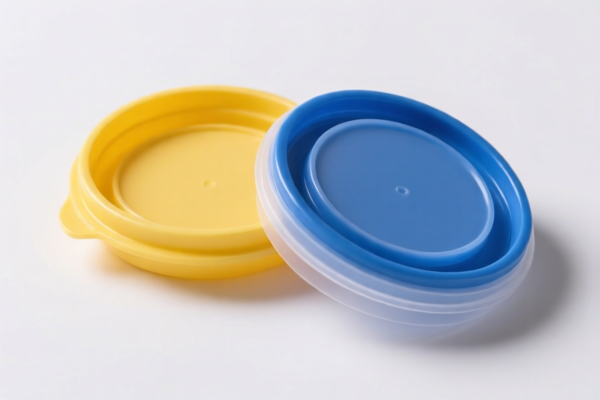
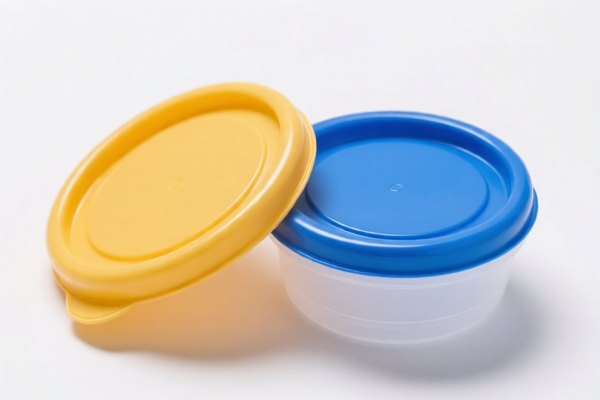
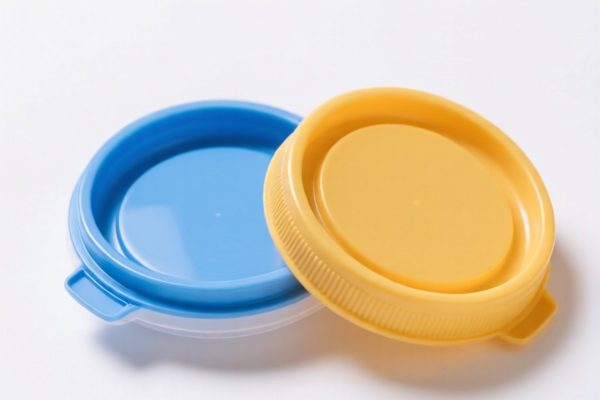
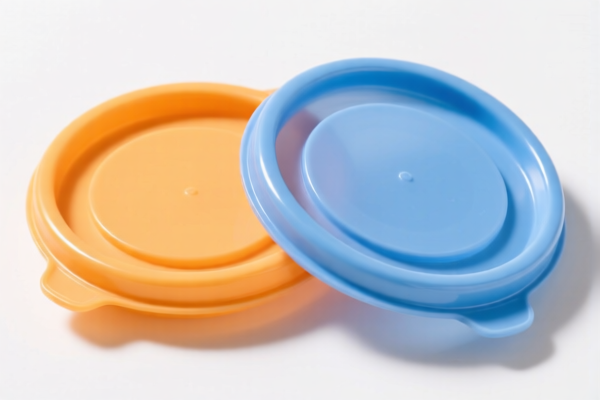
AI Analysis
🧘♀️ Silicone Stretch Lids (6-Piece Set)
🌐 HS Code Reference & Customs Clearance Guide | 2026 Latest Tariff Analysis | Professional Clearance Strategy
📌 1. Product Definition & Classification: What Are "Silicone Stretch Lids"?
Silicone Stretch Lids are reusable, flexible kitchen accessories designed to seal food containers, bowls, and even cut fruits/vegetables. Made from food-grade silicone, they stretch over various openings to create an airtight seal.
In international trade, their classification depends heavily on their primary function and structural design: - As Closures (Stoppers/Caps): If the product is primarily viewed as a "stopper" or "plug" that closes a container opening, it falls under heading 3923.50. - As General Plastic Articles: If classified broadly as other manufactured plastic articles not specified elsewhere, it falls under heading 3926.90.
⚠️ Key Distinction:
- If the lid is explicitly marketed and structured as a "cap," "stopper," or "closure" for containers → 3923.50.00.00
- If the lid is treated as a general plastic kitchen accessory (similar to spatulas or mats) → 3926.90.99.89 or 3926.90.48.00
📦 2. HS Code Classification Details (2026 Latest Tariff Authority Comparison)
| HS Code | Product Description | Application Scenario | Classification Logic |
|---|---|---|---|
3923.50.00.00 |
Silicone Stretch Lids classified as Stoppers, Caps, Covers, and Other Closure Devices | Products sold specifically as "container seals" or "lids" | ✅ Primary Function: Closure |
3926.90.99.89 |
Silicone Stretch Lids classified as Other Plastic Articles | General kitchenware where "closure" function is secondary or less emphasized | ✅ General Plastic Article |
3926.90.48.00 |
Silicone Stretch Lids classified as Other Plastic Articles, Specific Sub-category | A specific sub-class of general plastic articles with lower base duties | ✅ Specific Sub-category |
🔍 Important Reminder:
- 3923.50.00.00 is the most technically accurate if the product is explicitly a "lid/cap."
- 3926.90.99.89 and 3926.90.48.00 are used when the product is considered a general "plastic article" rather than a dedicated "closure device."
- The choice significantly impacts tariff rates, especially with additional US tariffs.
💰 3. 2026 Latest Tariff Rate Breakdown (Including Additional Taxes & Policy Surcharges)
✅ Applicable Country: United States (US)
✅ Origin: China (CN)
✅ Effective Time: 2025 November 10 onwards (including subsequent imports)
🎯 1. 3923.50.00.00 — Silicone Stretch Lids (Classified as Stoppers/Caps)
| Item | Details |
|---|---|
| Base Duty Rate | 5.3% (Ad Valorem) |
| Section 301 Additional Duty | +25.0% |
| Section 122 Duty | +10.0% |
| Total Tax Rate | 40.3% |
| Tax Calculation | CIF Value × 40.3% |
| De Minimis Eligibility | ❌ Not Eligible (Deny De Minimis) |
| Legal Authority Path | Base: 5.3% + 301: 25.0% + 122: 10.0% |
📌 Explanation:
- The 25% Section 301 tariff is the standard additional duty for most Chinese-made plastic articles.
- The 10% Section 122 tariff is an additional surcharge often applied to specific categories.
- Total 40.3% is a high tariff burden, significantly impacting profit margins.
🎯 2. 3926.90.99.89 — Silicone Stretch Lids (Classified as Other Plastic Articles)
| Item | Details |
|---|---|
| Base Duty Rate | 5.3% (Ad Valorem) |
| Section 301 Additional Duty | +7.5% |
| Section 122 Duty | +10.0% |
| Total Tax Rate | 22.8% |
| Tax Calculation | CIF Value × 22.8% |
| De Minimis Eligibility | ❌ Not Eligible (Deny De Minimis) |
| Legal Authority Path | Base: 5.3% + 301: 7.5% + 122: 10.0% |
📌 Note:
- This classification benefits from a lower Section 301 rate (7.5% vs. 25%).
- The 22.8% total rate is much more favorable than 40.3%.
- Suitable for products marketed broadly as "kitchen gadgets" rather than strict "container closures."
🎯 3. 3926.90.48.00 — Silicone Stretch Lids (Classified as Other Plastic Articles, Specific Sub-category)
| Item | Details |
|---|---|
| Base Duty Rate | 3.4% (Ad Valorem) |
| Section 301 Additional Duty | 0.0% |
| Section 122 Duty | +10.0% |
| Total Tax Rate | 13.4% |
| Tax Calculation | CIF Value × 13.4% |
| De Minimis Eligibility | ❌ Not Eligible (Deny De Minimis) |
| Legal Authority Path | Base: 3.4% + 301: 0.0% + 122: 10.0% |
📌 Critical Insight:
- This is the most cost-effective classification with a 13.4% total rate.
- The 0% Section 301 duty is a key advantage.
- Requires careful justification that the product fits into this specific sub-category of "other plastic articles."
- Risk: Customs may challenge this classification if the product is clearly a "lid." Ensure documentation supports this broader classification.
🛠️ 4. Customs Clearance Practical Advice (Battle-Tested Pitfall Avoidance)
✅ 1. Required Documentation Checklist (Non-negotiable)
| Document | Required | Notes |
|---|---|---|
| ✅ Product Catalog/Spec Sheet | ✔️ | Must detail material (100% Food-Grade Silicone), dimensions, and usage. |
| ✅ Product Photos | ✔️ | Clear images showing the product stretched over different containers. |
| ✅ Commercial Invoice | ✔️ | Must clearly describe the product as "Silicone Stretch Lids" or "Kitchen Seal Covers." Avoid ambiguous terms like "Plastic Parts." |
| ✅ Packing List | ✔️ | Specify quantity (6 pieces/set) and weight. |
| ✅ FDA Compliance Certificate | ✔️ | Essential for food-contact silicone products. |
| ✅ Certificate of Origin (CO) | ✔️ | Required to claim any potential exemptions (if applicable). |
✅ 2. Declaration Strategy (Key Tips)
🔥 "Classify Right, Save Big! Lids vs. General Art!"
| Scenario | Recommended HS Code | Declaration Description | Why? |
|---|---|---|---|
| Explicitly Sold as "Lids" | 3923.50.00.00 |
"Silicone Stretch Lids for Food Containers" | Most accurate legally, but 40.3% tariff. |
| Sold as "Kitchen Gadgets" | 3926.90.99.89 |
"Silicone Kitchen Seal Covers" | Balanced approach, 22.8% tariff. |
| Broad Plastic Articles | 3926.90.48.00 |
"Silicone Food Storage Accessories" | Lowest tariff 13.4%, but highest risk of challenge. |
✅ 3. Special Cases & Handling
| Situation | Handling Advice |
|---|---|
| Mixed Sets (Lids + Boxes) | Declare the primary function. If the box is just packaging, it doesn't change the HS code. |
| OEM/White Label | Provide supplier invoices to prove origin. Misdeclaring origin to avoid tariffs can lead to severe penalties. |
| Small Value Shipments | Note: De Minimis exemption ($800) does NOT apply due to Section 301 and 122 tariffs. All shipments are subject to duty. |
| Customs Audit | If challenged on 3926.90.48.00, be prepared to argue that the product is a "general article" rather than a "specialized closure." |
🌍 5. Global Market Clearance Comparison (2026 Latest)
| Country/Region | Recommended HS Code | Estimated Duty | Certification Required | Notes |
|---|---|---|---|---|
| 🇺🇸 USA | 3926.90.48.00 (Best Case) |
13.4% | FDA | High risk of audit. 3923.50 is 40.3%. |
| 🇨🇳 China | 3926.90.99.90 |
~5-10% | CCC (if applicable) | Generally lower duties for exports. |
| 🇪🇺 EU | 3926.90.97 |
6.5% | FDA + LFGB | No Section 301/122. Standard EU tariff. |
| 🇬🇧 UK | 3926.90.97 |
6.5% | UKCA | Post-Brexit standards. |
| 🇦🇺 Australia | 3926.90.90 |
5% | SAA | Low duty, but strict food safety rules. |
📌 Conclusion:
- The US market is the most expensive due to additional tariffs.
- EU/UK/Australia offer more stable and lower duty rates.
- Strategy for US: If possible, explore3926.90.48.00for cost savings, but ensure robust documentation. Alternatively, consider supply chain diversification (e.g., Vietnam, Thailand) for US-bound goods to avoid Section 301/122 tariffs.
📌 6. Common Mistakes & Pitfall Guide (Lessons Learned)
❌ Mistake 1: Declaring as "Plastic Bags" or "Ziplock Bags"
👉 Consequence: Incorrect classification → Customs seizure or heavy fines. Silicone lids are not bags.
❌ Mistake 2: Ignoring Section 122 Tariff
👉 Consequence: Underestimating costs by 10%. Budget for 13.4%-40.3%, not just base duty.
❌ Mistake 3: Assuming De Minimis Applies
👉 Consequence: Packages under $800 are still taxed. Do not use "Gift" or "Low Value" labels to bypass.
❌ Mistake 4: Misrepresenting Material as "Rubber"
👉 Consequence: If it's silicone, declare as silicone. Mislabeling can lead to FDA compliance issues.
✅ Correct Approach:
"6-Piece Set, 100% Food-Grade Silicone Stretch Lids, Reusable, BPA-Free, For Bowls & Containers. Model: SLS-6."
🎯 7. Conclusion: Smart Classification, Smarter Profits!
🎯 Remember This Mantra:
🔹 "Lids = Closure (3923) = 40.3% | General Plastic (3926) = 13.4-22.8% | Think Before You Declare!"
🔹 "10% Section 122 is unavoidable, but 25% Section 301 can be minimized with correct classification."
📌 Pro Tip:
- If you are a high-volume importer, apply for an Advance Ruling from US Customs and Border Protection (CBP) to confirm the optimal HS code.
- Consider transshipment through non-China countries if tariffs remain prohibitive, but ensure origin rules are strictly followed to avoid fraud allegations.
📣 Take Action Now:
📞 Consult a Licensed Customs Broker
📋 Review Product Documentation
🚀 Optimize Your Supply Chain for 2026 Tariffs!
✨ Professional Clearance Starts with Accurate Classification!
💼 Every Percent Saved is Pure Profit!
Customer Reviews
About HS Code Classification
The Harmonized System (HS) is an internationally standardized nomenclature developed by the World Customs Organization (WCO) to classify traded products. Over 200 countries use the HS system as the basis for customs tariffs, trade statistics, and import/export regulations.
Each HS code follows a hierarchical structure:
- Chapter (2 digits) — Broad category of goods (e.g., Chapter 84: Machinery and Mechanical Appliances)
- Heading (4 digits) — More specific grouping within the chapter
- Subheading (6 digits) — Internationally standardized breakdown, used by all WCO member countries
- National subdivisions (8-10 digits) — Country-specific extensions for further classification, such as US HTSUS 10-digit codes
Correct HS code classification is essential for smooth customs clearance, accurate duty payment, and compliance with trade regulations. Misclassification can lead to customs delays, overpayment of duties, or penalties.
When importing from CN to US, the applicable tariff rates may include:
- Most-Favored-Nation (MFN) rate — The standard duty rate applied to WTO members
- General rate — Applied to countries without trade agreements
- Trade remedy duties — Additional tariffs such as Section 301 (anti-dumping), Section 232 (national security), or countervailing duties
The information provided on this page is for reference purposes only. For official classification, please consult with your local customs authority or a licensed customs broker.