Acrylic Photoresist Material
CN → US商品图片
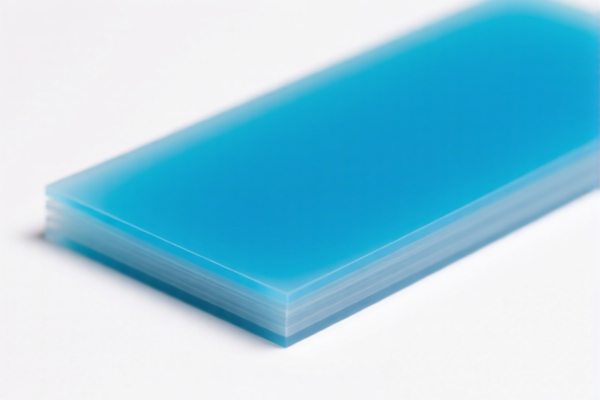
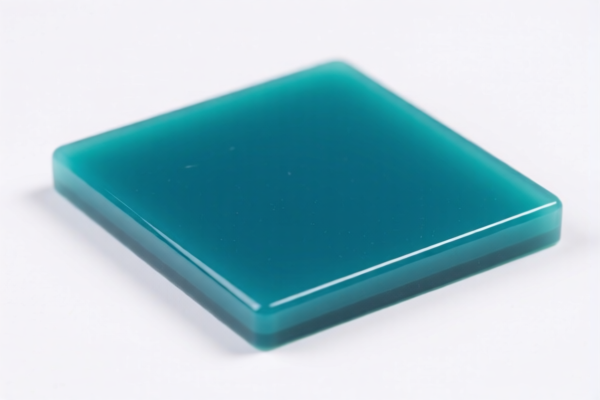

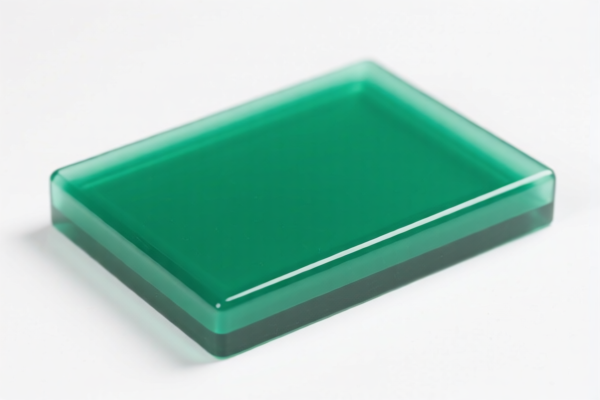
AI分析
🖼️ Acrylic Photoresist Material (Acrylic Optical Adhesives)
🌐 HS Code Reference & Clearance Guide | 2026 Latest Tariff Analysis | Professional Clearance Strategy
📌 One, Product Definition and Classification: Do You Really Understand "Acrylic Photoresist"?
Acrylic Photoresist Material, often referred to as Acrylic Optical Adhesive (AOA), UV-Curing Acrylic Resin, or Photopolymer Acrylic, is a specialized chemical material used primarily in the manufacturing of optical lenses, display assemblies, and electronic components. It cures upon exposure to UV light or visible light, forming a transparent, hard, and durable bond.
In international trade, it is strictly categorized based on its chemical composition and intended use:
1. Pure Acrylic Resin/Prepolymers (Uncured): Liquid or solid raw materials before curing. These are chemical substances. 2. Photoresist Kits/Compounds (Cured/Pre-mixed): Materials containing photoinitiators and monomers, designed for specific optical bonding processes.
⚠️ Key Distinction Point:
- If the product is a pure chemical monomer or polymer without specific "photoresist" additives for semiconductor lithography, it is generally classified under Resins (Chapter 39).
- If it is specifically formulated for semiconductor lithography (creating micro-circuits), it may fall under Photoresist Preparations (Chapter 39 or 38).
- However, most "Acrylic Photoresist" in the context of displays/lenses is classified as Acrylic Resins/Polymers because it acts as an adhesive/lens material, not a semiconductor lithography resist.
📦 Two, HS Code Classification Details (2026 Latest Tariff Authority Comparison)
| HS Code | Product Description | Application Scenario | Is it Semiconductor Lithography Resist? |
|---|---|---|---|
3906.90.50.00 |
Acrylic polymers in primary forms (e.g., liquids, granules) | Raw acrylic resin for optical bonding, adhesive production | ❌ No (Raw Material) |
3906.90.90.00 |
Other acrylic polymers in primary forms | General acrylic photo-curable resins, non-lithography | ❌ No (General Chemical) |
3907.99.00.00 |
Other polyacetals, other polyethers, and epoxy resins; polycarbonizers... | Sometimes misclassified if mistaken for epoxy photoresist | ❌ No (Wrong Category) |
3824.99.99.00 |
Prepared binders for foundry molds; chemical products... | If explicitly labeled as "Photoresist for PCB/Semiconductor" | ✅ Yes (Specialized Chemical Preparation) |
8541.40.00.00 |
Photosensitive semiconductors, including photovoltaic cells | Only if it is a finished photoelectric cell component | ❌ No (Unfinished material) |
🔍 Critical Reminder:
- For Acrylic Photoresist used in displays, lenses, or packaging, the correct classification is almost always under 3906.xx (Acrylic Polymers).
- Do NOT classify it under3824(Prepared Binders) unless it is specifically for industrial foundry molds or contains significant non-acrylic binders.
- If it is a liquid UV-curing acrylic adhesive, it still falls under 3906 because it is an acrylic polymer in primary form.
💰 Three, 2026 Latest Tariff Rate Details (Including Surtaxes, Policy Add-ons)
✅ Applicable Country: United States (US)
✅ Country of Origin: China (CN)
✅ Effective Date: From November 10, 2025 (and subsequent imports)
🎯 1. 3906.90.50.00 —— Acrylic Polymers in Primary Forms (Liquid/Solid)
| Item | Content |
|---|---|
| Base Rate | 5.3% (ad valorem) |
| USITC Surtax | +7.5% (From USITC Footnote 9903.39.50.00 - Section 301 Tariff) |
| IEEPA Surtax | +10% (Against Chinese/HK products, starting Nov 10, 2025) |
| Total Rate | 22.8% |
| Tax Calculation | CIF Value × 22.8% |
| De Minimis Eligibility | ❌ Not Eligible (deny_de_minimis for Section 301 goods) |
| Legal Basis Path | IEEPA:9903.01.24 → USITC:3906.90.50.00 → FOOTNOTE:9903.39.50.00 |
📌 Explanation:
- Acrylic resins are subject to Section 301 tariffs due to their status as chemical intermediates.
- The IEEPA 10% surcharge applies because it is a Chinese-origin chemical product.
- Total Duty: 22.8%. This is a moderate-to-high cost, so accurate declaration is crucial.
🎯 2. 3906.90.90.00 —— Other Acrylic Polymers (e.g., Granules, Solid Blocks)
| Item | Content |
|---|---|
| Base Rate | 5.7% (ad valorem) |
| USITC Surtax | +7.5% (From USITC Footnote 9903.39.90.00) |
| IEEPA Surtax | +10% |
| Total Rate | 23.2% |
| Tax Calculation | CIF Value × 23.2% |
| De Minimis Eligibility | ❌ Not Eligible |
| Legal Basis Path | IEEPA:9901.25 → USITC:3906.90.90.00 → FOOTNOTE:9903.39.90.00 |
📌 Note:
- If your acrylic photoresist is in solid block or granule form (for later melting/processing), it falls here.
- If it is liquid (ready for dispensing/curing), it falls under3906.90.50.00.
- The rate difference is minimal (22.8% vs. 23.2%), but state classification correctly to avoid customs queries.
🎯 3. 3824.99.99.00 —— If Misclassified as "Prepared Chemical Product" (Risk Scenario)
| Item | Content |
|---|---|
| Base Rate | 5.8% |
| USITC Surtax | +7.5% |
| IEEPA Surtax | +10% |
| Total Rate | 23.3% |
| Risk | High risk of misclassification penalty if deemed more appropriate under Ch 39 |
📌 Warning:
- Only use3824if the product is a pre-mixed binding agent for non-acrylic use or has significant non-polymer additives.
- Pure acrylic photoresist should NOT be declared here. Incorrect declaration can lead to audits and back-taxes.
🛠️ Four, Clearance Practical Advice (Real-World Pitfall Avoidance Guide)
✅ 1. Required Documentation Checklist (All Mandatory)
| Document | Must Provide | Description |
|---|---|---|
| ✅ Technical Data Sheet (TDS) | ✔️ | Shows chemical composition, curing mechanism, viscosity |
| ✅ Safety Data Sheet (SDS) | ✔️ | Critical for chemical classification and DOT/Hazmat compliance |
| ✅ Product Photos | ✔️ | Clear shots of liquid/solid state, packaging, labels |
| ✅ Commercial Invoice | ✔️ | Must clearly state "Acrylic Polymer" or "UV-Curing Acrylic Resin" |
| ✅ Certificate of Origin (CO) | ✔️ | Essential for IEEPA surcharge exemption claims (if applicable) |
| ✅ Usage Declaration | ✔️ | Specify end-use: e.g., "For optical lens bonding," "Not for semiconductor lithography" |
✅ 2. Declaration Tips (Key Mantra)
🔥 "Liquid is Polymer, Solid is Resin, State Matters, Classify Clean!"
| Scenario | Correct Declaration | Wrong Practice |
|---|---|---|
| Liquid UV-Curing Acrylic | 3906.90.50.00 - "Acrylic Polymer, Liquid" |
Declare as "Glue" or "Adhesive" → 7.5% base + surtax |
| Solid Acrylic Blocks/Granules | 3906.90.90.00 - "Acrylic Polymer, Solid" |
Declare as "Plastic Sheets" → Different duty, wrong code |
| Pre-mixed Photoresist Kit | 3906.90.50.00 (if acrylic-based) |
Declare as "Chemical Preparation" → Risk of audit |
| Semiconductor Lithography Resist | 3824.99.99.00 (if non-acrylic) |
Declare as "Acrylic" → Under-reporting duty |
✅ 3. Special Circumstances Handling
| Situation | Handling Advice |
|---|---|
| Hazmat Classification | Acrylic photoresists may contain volatile organic compounds (VOCs). Ensure DOT/Hazmat documentation is ready for air/freight shipping. |
| EPA Registration | If the product contains new chemical substances, ensure TSCA compliance (Toxic Substances Control Act). |
| China-Made vs. Third-Party | If assembled in Vietnam/Malaysia but ingredients are from China, origin rules may still trigger Chinese surcharges. Verify Substantial Transformation. |
| Sample Shipments | Even for samples, declare value accurately. De Minimis ($800) does NOT apply to Section 301 goods. |
🌍 Five, Global Major Market Clearance Comparison (2026 Latest)
| Country/Region | Recommended HS Code | Tariff | Certification Requirements | Notes |
|---|---|---|---|---|
| 🇺🇸 USA | 3906.90.50.00 |
22.8% (CN Origin) | TSCA + SDS | High duty due to Section 301 & IEEPA |
| 🇨🇳 China | 3906.90.50.00 |
5.0% | None (Import) | Low duty for raw materials |
| 🇪🇺 EU | 3906.90.50.00 |
6.5% | REACH Compliance | No additional surtaxes |
| 🇬🇧 UK | 3906.90.50.00 |
6.5% | UK REACH | Post-Brexit rules apply |
| 🇯🇵 Japan | 3906.90.50.00 |
5.3% | JIS Standard | No significant surtaxes |
📌 Conclusion:
- USA is the most expensive market for Chinese-made acrylic photoresists due to 22.8% total duty.
- EU/UK/Japan are more cost-effective, with duties around 5-7%.
- REACH (EU) and TSCA (US) are critical for chemical compliance.
📌 Six, Common Mistakes & Pitfall Guide (Blood & Tears Lessons)
❌ Mistake 1: Declaring "Acrylic Photoresist" as "General Adhesive" under Chapter 35
👉 Consequence: Wrong chapter, potential penalty for misclassification, and duty difference.
👉 Correction: Acrylic photoresists are polymers, not protein-based adhesives. Use Chapter 39.
❌ Mistake 2: Ignoring IEEPA Surtax for Liquid vs. Solid State
👉 Consequence: If you declare solid 3906.90.90.00 but import liquid, customs may reject the declaration.
👉 Correction: Match the physical state (liquid/solid) with the HS code subheading.
❌ Mistake 3: Failing to Provide SDS for Chemical Imports
👉 Consequence: Customs hold, destruction or return of goods if Hazmat documentation is missing.
👉 Correction: Always include SDS and TDS with shipment.
✅ Correct Practice:
"Acrylic Polymer, Liquid, UV-Curing, for Optical Bonding, Model XYZ, TSCA Compliant, SDS Attached"
🎯 Seven, Conclusion: Precision Classification, Save Costs, Ensure Smooth Clearance!
🎯 Remember the Mantra:
🔹 "Liquid is 3906.50, Solid is 3906.90, State Matters, Don't Guess!"
🔹 "22.8% is the Cost, SDS is the Key, TSCA is Mandatory, Compliance is Free!"
📌 Pro Tip:
- If your acrylic photoresist is assembled or mixed in a third country (e.g., Vietnam, Malaysia) with significant transformation, you may avoid Chinese surcharges.
- Apply for Advance Ruling from US CBP if unsure about classification.
- Ensure TSCA certification is up-to-date to avoid EPA delays.
📣 Immediate Action:
📞 Contact a licensed customs broker + Provide SDS/TDS + Apply for HS Code Advance Ruling
🚀 Let your acrylic photoresist clear smoothly, stay competitive, and maximize profit!
✨ Professional Clearance Starts with Accurate Classification!
💼 Every Dollar of Duty Counts!
用户评价
关于 HS 编码归类
协调制度(HS)是由世界海关组织(WCO)制定的国际贸易商品分类标准。全球 200 多个国家采用 HS 系统作为海关关税、贸易统计和进出口监管的基础。
每个 HS 编码遵循以下层级结构:
- 章(2 位)——商品大类(例如:第 84 章:机器和机械设备)
- 品目(4 位)——章内的更具体分类
- 子目(6 位)——国际通用细分,所有 WCO 成员国统一使用
- 本国细分(8-10 位)——各国自行扩展的细分编码,如美国 HTSUS 10 位编码
正确的 HS 编码归类对于顺利通关、准确缴纳关税和遵守贸易法规至关重要。错误归类可能导致海关延误、多缴关税或罚款。
从CN进口到US时,适用的关税税率可能包括:
- 最惠国(MFN)税率——适用于 WTO 成员国的标准关税税率
- 普通税率——适用于无贸易协定国家
- 贸易救济关税——附加关税,如 301 条款(反倾销)、232 条款(国家安全)或反补贴税
本页内容仅供参考。如需正式归类,请咨询当地海关或持牌报关代理。