Acrylic Photoresist Material
CN → USProduct Images
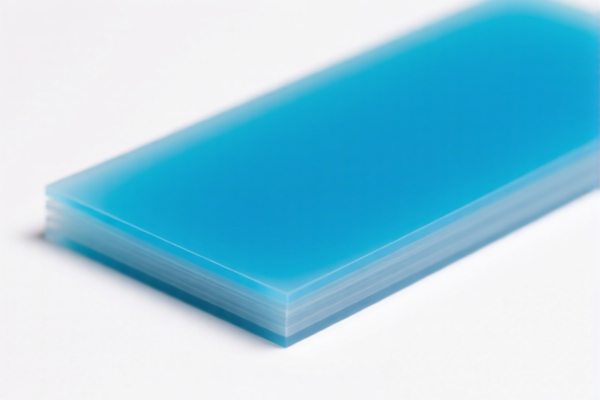
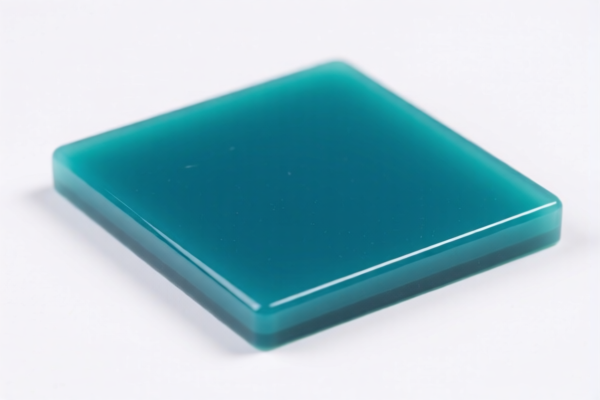

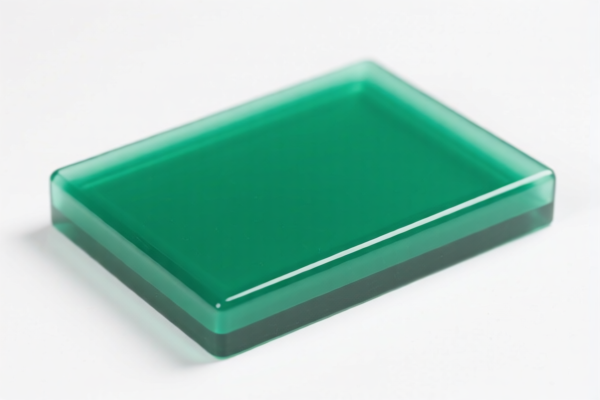
AI Analysis
🖼️ Acrylic Photoresist Material (Acrylic Optical Adhesives)
🌐 HS Code Reference & Clearance Guide | 2026 Latest Tariff Analysis | Professional Clearance Strategy
📌 One, Product Definition and Classification: Do You Really Understand "Acrylic Photoresist"?
Acrylic Photoresist Material, often referred to as Acrylic Optical Adhesive (AOA), UV-Curing Acrylic Resin, or Photopolymer Acrylic, is a specialized chemical material used primarily in the manufacturing of optical lenses, display assemblies, and electronic components. It cures upon exposure to UV light or visible light, forming a transparent, hard, and durable bond.
In international trade, it is strictly categorized based on its chemical composition and intended use:
1. Pure Acrylic Resin/Prepolymers (Uncured): Liquid or solid raw materials before curing. These are chemical substances. 2. Photoresist Kits/Compounds (Cured/Pre-mixed): Materials containing photoinitiators and monomers, designed for specific optical bonding processes.
⚠️ Key Distinction Point:
- If the product is a pure chemical monomer or polymer without specific "photoresist" additives for semiconductor lithography, it is generally classified under Resins (Chapter 39).
- If it is specifically formulated for semiconductor lithography (creating micro-circuits), it may fall under Photoresist Preparations (Chapter 39 or 38).
- However, most "Acrylic Photoresist" in the context of displays/lenses is classified as Acrylic Resins/Polymers because it acts as an adhesive/lens material, not a semiconductor lithography resist.
📦 Two, HS Code Classification Details (2026 Latest Tariff Authority Comparison)
| HS Code | Product Description | Application Scenario | Is it Semiconductor Lithography Resist? |
|---|---|---|---|
3906.90.50.00 |
Acrylic polymers in primary forms (e.g., liquids, granules) | Raw acrylic resin for optical bonding, adhesive production | ❌ No (Raw Material) |
3906.90.90.00 |
Other acrylic polymers in primary forms | General acrylic photo-curable resins, non-lithography | ❌ No (General Chemical) |
3907.99.00.00 |
Other polyacetals, other polyethers, and epoxy resins; polycarbonizers... | Sometimes misclassified if mistaken for epoxy photoresist | ❌ No (Wrong Category) |
3824.99.99.00 |
Prepared binders for foundry molds; chemical products... | If explicitly labeled as "Photoresist for PCB/Semiconductor" | ✅ Yes (Specialized Chemical Preparation) |
8541.40.00.00 |
Photosensitive semiconductors, including photovoltaic cells | Only if it is a finished photoelectric cell component | ❌ No (Unfinished material) |
🔍 Critical Reminder:
- For Acrylic Photoresist used in displays, lenses, or packaging, the correct classification is almost always under 3906.xx (Acrylic Polymers).
- Do NOT classify it under3824(Prepared Binders) unless it is specifically for industrial foundry molds or contains significant non-acrylic binders.
- If it is a liquid UV-curing acrylic adhesive, it still falls under 3906 because it is an acrylic polymer in primary form.
💰 Three, 2026 Latest Tariff Rate Details (Including Surtaxes, Policy Add-ons)
✅ Applicable Country: United States (US)
✅ Country of Origin: China (CN)
✅ Effective Date: From November 10, 2025 (and subsequent imports)
🎯 1. 3906.90.50.00 —— Acrylic Polymers in Primary Forms (Liquid/Solid)
| Item | Content |
|---|---|
| Base Rate | 5.3% (ad valorem) |
| USITC Surtax | +7.5% (From USITC Footnote 9903.39.50.00 - Section 301 Tariff) |
| IEEPA Surtax | +10% (Against Chinese/HK products, starting Nov 10, 2025) |
| Total Rate | 22.8% |
| Tax Calculation | CIF Value × 22.8% |
| De Minimis Eligibility | ❌ Not Eligible (deny_de_minimis for Section 301 goods) |
| Legal Basis Path | IEEPA:9903.01.24 → USITC:3906.90.50.00 → FOOTNOTE:9903.39.50.00 |
📌 Explanation:
- Acrylic resins are subject to Section 301 tariffs due to their status as chemical intermediates.
- The IEEPA 10% surcharge applies because it is a Chinese-origin chemical product.
- Total Duty: 22.8%. This is a moderate-to-high cost, so accurate declaration is crucial.
🎯 2. 3906.90.90.00 —— Other Acrylic Polymers (e.g., Granules, Solid Blocks)
| Item | Content |
|---|---|
| Base Rate | 5.7% (ad valorem) |
| USITC Surtax | +7.5% (From USITC Footnote 9903.39.90.00) |
| IEEPA Surtax | +10% |
| Total Rate | 23.2% |
| Tax Calculation | CIF Value × 23.2% |
| De Minimis Eligibility | ❌ Not Eligible |
| Legal Basis Path | IEEPA:9901.25 → USITC:3906.90.90.00 → FOOTNOTE:9903.39.90.00 |
📌 Note:
- If your acrylic photoresist is in solid block or granule form (for later melting/processing), it falls here.
- If it is liquid (ready for dispensing/curing), it falls under3906.90.50.00.
- The rate difference is minimal (22.8% vs. 23.2%), but state classification correctly to avoid customs queries.
🎯 3. 3824.99.99.00 —— If Misclassified as "Prepared Chemical Product" (Risk Scenario)
| Item | Content |
|---|---|
| Base Rate | 5.8% |
| USITC Surtax | +7.5% |
| IEEPA Surtax | +10% |
| Total Rate | 23.3% |
| Risk | High risk of misclassification penalty if deemed more appropriate under Ch 39 |
📌 Warning:
- Only use3824if the product is a pre-mixed binding agent for non-acrylic use or has significant non-polymer additives.
- Pure acrylic photoresist should NOT be declared here. Incorrect declaration can lead to audits and back-taxes.
🛠️ Four, Clearance Practical Advice (Real-World Pitfall Avoidance Guide)
✅ 1. Required Documentation Checklist (All Mandatory)
| Document | Must Provide | Description |
|---|---|---|
| ✅ Technical Data Sheet (TDS) | ✔️ | Shows chemical composition, curing mechanism, viscosity |
| ✅ Safety Data Sheet (SDS) | ✔️ | Critical for chemical classification and DOT/Hazmat compliance |
| ✅ Product Photos | ✔️ | Clear shots of liquid/solid state, packaging, labels |
| ✅ Commercial Invoice | ✔️ | Must clearly state "Acrylic Polymer" or "UV-Curing Acrylic Resin" |
| ✅ Certificate of Origin (CO) | ✔️ | Essential for IEEPA surcharge exemption claims (if applicable) |
| ✅ Usage Declaration | ✔️ | Specify end-use: e.g., "For optical lens bonding," "Not for semiconductor lithography" |
✅ 2. Declaration Tips (Key Mantra)
🔥 "Liquid is Polymer, Solid is Resin, State Matters, Classify Clean!"
| Scenario | Correct Declaration | Wrong Practice |
|---|---|---|
| Liquid UV-Curing Acrylic | 3906.90.50.00 - "Acrylic Polymer, Liquid" |
Declare as "Glue" or "Adhesive" → 7.5% base + surtax |
| Solid Acrylic Blocks/Granules | 3906.90.90.00 - "Acrylic Polymer, Solid" |
Declare as "Plastic Sheets" → Different duty, wrong code |
| Pre-mixed Photoresist Kit | 3906.90.50.00 (if acrylic-based) |
Declare as "Chemical Preparation" → Risk of audit |
| Semiconductor Lithography Resist | 3824.99.99.00 (if non-acrylic) |
Declare as "Acrylic" → Under-reporting duty |
✅ 3. Special Circumstances Handling
| Situation | Handling Advice |
|---|---|
| Hazmat Classification | Acrylic photoresists may contain volatile organic compounds (VOCs). Ensure DOT/Hazmat documentation is ready for air/freight shipping. |
| EPA Registration | If the product contains new chemical substances, ensure TSCA compliance (Toxic Substances Control Act). |
| China-Made vs. Third-Party | If assembled in Vietnam/Malaysia but ingredients are from China, origin rules may still trigger Chinese surcharges. Verify Substantial Transformation. |
| Sample Shipments | Even for samples, declare value accurately. De Minimis ($800) does NOT apply to Section 301 goods. |
🌍 Five, Global Major Market Clearance Comparison (2026 Latest)
| Country/Region | Recommended HS Code | Tariff | Certification Requirements | Notes |
|---|---|---|---|---|
| 🇺🇸 USA | 3906.90.50.00 |
22.8% (CN Origin) | TSCA + SDS | High duty due to Section 301 & IEEPA |
| 🇨🇳 China | 3906.90.50.00 |
5.0% | None (Import) | Low duty for raw materials |
| 🇪🇺 EU | 3906.90.50.00 |
6.5% | REACH Compliance | No additional surtaxes |
| 🇬🇧 UK | 3906.90.50.00 |
6.5% | UK REACH | Post-Brexit rules apply |
| 🇯🇵 Japan | 3906.90.50.00 |
5.3% | JIS Standard | No significant surtaxes |
📌 Conclusion:
- USA is the most expensive market for Chinese-made acrylic photoresists due to 22.8% total duty.
- EU/UK/Japan are more cost-effective, with duties around 5-7%.
- REACH (EU) and TSCA (US) are critical for chemical compliance.
📌 Six, Common Mistakes & Pitfall Guide (Blood & Tears Lessons)
❌ Mistake 1: Declaring "Acrylic Photoresist" as "General Adhesive" under Chapter 35
👉 Consequence: Wrong chapter, potential penalty for misclassification, and duty difference.
👉 Correction: Acrylic photoresists are polymers, not protein-based adhesives. Use Chapter 39.
❌ Mistake 2: Ignoring IEEPA Surtax for Liquid vs. Solid State
👉 Consequence: If you declare solid 3906.90.90.00 but import liquid, customs may reject the declaration.
👉 Correction: Match the physical state (liquid/solid) with the HS code subheading.
❌ Mistake 3: Failing to Provide SDS for Chemical Imports
👉 Consequence: Customs hold, destruction or return of goods if Hazmat documentation is missing.
👉 Correction: Always include SDS and TDS with shipment.
✅ Correct Practice:
"Acrylic Polymer, Liquid, UV-Curing, for Optical Bonding, Model XYZ, TSCA Compliant, SDS Attached"
🎯 Seven, Conclusion: Precision Classification, Save Costs, Ensure Smooth Clearance!
🎯 Remember the Mantra:
🔹 "Liquid is 3906.50, Solid is 3906.90, State Matters, Don't Guess!"
🔹 "22.8% is the Cost, SDS is the Key, TSCA is Mandatory, Compliance is Free!"
📌 Pro Tip:
- If your acrylic photoresist is assembled or mixed in a third country (e.g., Vietnam, Malaysia) with significant transformation, you may avoid Chinese surcharges.
- Apply for Advance Ruling from US CBP if unsure about classification.
- Ensure TSCA certification is up-to-date to avoid EPA delays.
📣 Immediate Action:
📞 Contact a licensed customs broker + Provide SDS/TDS + Apply for HS Code Advance Ruling
🚀 Let your acrylic photoresist clear smoothly, stay competitive, and maximize profit!
✨ Professional Clearance Starts with Accurate Classification!
💼 Every Dollar of Duty Counts!
Customer Reviews
About HS Code Classification
The Harmonized System (HS) is an internationally standardized nomenclature developed by the World Customs Organization (WCO) to classify traded products. Over 200 countries use the HS system as the basis for customs tariffs, trade statistics, and import/export regulations.
Each HS code follows a hierarchical structure:
- Chapter (2 digits) — Broad category of goods (e.g., Chapter 84: Machinery and Mechanical Appliances)
- Heading (4 digits) — More specific grouping within the chapter
- Subheading (6 digits) — Internationally standardized breakdown, used by all WCO member countries
- National subdivisions (8-10 digits) — Country-specific extensions for further classification, such as US HTSUS 10-digit codes
Correct HS code classification is essential for smooth customs clearance, accurate duty payment, and compliance with trade regulations. Misclassification can lead to customs delays, overpayment of duties, or penalties.
When importing from CN to US, the applicable tariff rates may include:
- Most-Favored-Nation (MFN) rate — The standard duty rate applied to WTO members
- General rate — Applied to countries without trade agreements
- Trade remedy duties — Additional tariffs such as Section 301 (anti-dumping), Section 232 (national security), or countervailing duties
The information provided on this page is for reference purposes only. For official classification, please consult with your local customs authority or a licensed customs broker.