Analytical Instrument Parts
CN → US| HS编码 | 关税税率 | 原产国 | 目的国 | 文档 |
|---|---|---|---|---|
| 9031808085 | 35.0% | CN | US | 官方文档 |
| 9022190000 | 35.0% | CN | US | 官方文档 |
| 9027504015 | 35.0% | CN | US | 官方文档 |
| 9031499000 | 35.0% | CN | US | 官方文档 |
| 9027894530 | 35.0% | CN | US | 官方文档 |
商品图片
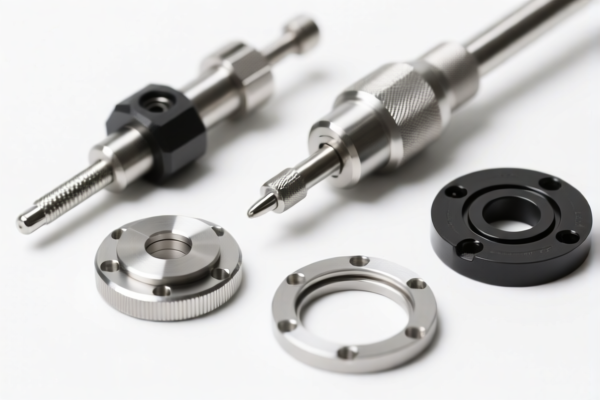
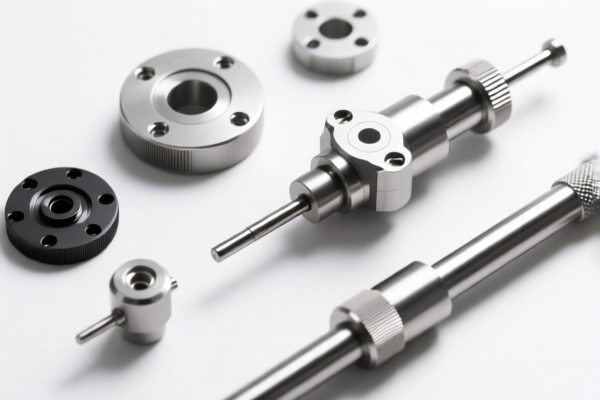
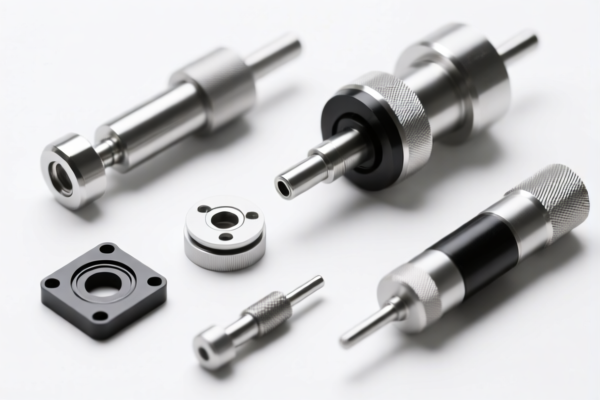
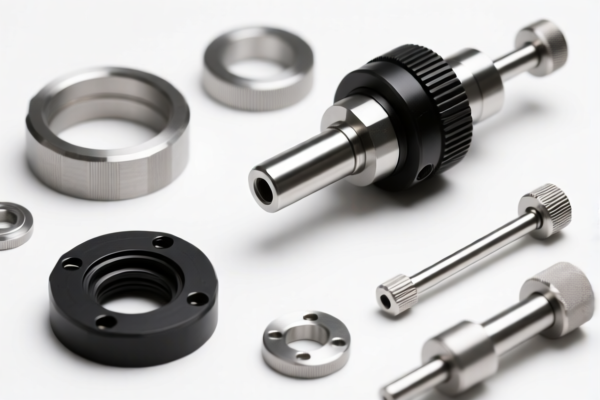
AI分析
🧪 Analytical Instrument Parts (分析仪器零部件)
🌐 HS Code Reference & Customs Clearance Guide | 2026 Latest Tariff Analysis | Professional Strategy for "Analytical Instruments"
📌 I. Product Definition & Classification: What are "Analytical Instrument Parts"?
In international trade, Analytical Instruments refer to devices used for chemical analysis, physical property measurement, or imaging/detection. When importing Parts or Components of these instruments, classification is critical. Unlike complete machines, parts may fall under different sub-headings depending on their specific function (e.g., chemical analysis vs. X-ray imaging vs. general measurement).
⚠️ Key Distinction Point:
- If the part is specific to Chemical Analysis (e.g., spectrometers, chromatographs) → It falls under Chapter 9027.
- If the part is for X-ray Imaging/Detection → It falls under Chapter 9022.
- If the part is for General Optical/Mechanical Measurement → It falls under Chapter 9031.
📦 II. HS Code Classification Details (2026 Latest Tariff Authority Reference)
Based on the provided data, here are the applicable HS Codes for Analytical Instruments/Components and their specific justifications. Note that the provided data references full instrument codes, which often serve as the primary classification for specialized parts unless generic parts are identified.
| HS Code | Product Description & Application | Justification from Data |
|---|---|---|
9031.80.80.85 |
Other Measuring/Checking Instruments | Falls under the category of "Other measuring or checking instruments, appliances and machines." |
9022.19.00.00 |
X-ray Imaging/Detection Equipment | Belongs to the category of equipment based on X-ray imaging or detection purposes. |
9027.50.40.15 |
Electrical Instruments for Chemical Analysis | Highly matches the classification explanation for "Chemical Analysis"; belongs to the electrical instrument category. |
9031.49.90.00 |
Optical Instruments & Equipment | Falls under the category of "Optical instruments and appliances" for measuring or checking purposes. |
9027.89.45.30 |
Chemical Analysis Instruments & Devices | Directly corresponds to the usage category of "Chemical analysis instruments and apparatus." |
🔍 Important Note:
- The classification depends heavily on the primary function of the part/instrument.
- Chemical Analysis parts usually map to9027series.
- X-ray/Detection parts map to9022series.
- General/Optical Measurement parts map to9031series.
💰 III. 2026 Latest Tariff Rate Breakdown (Including Surtaxes & Policy Add-ons)
✅ Applicable Country: United States (US)
✅ Origin: China (CN)
✅ Effective Date: Includes subsequent imports (as per data structure)
🎯 1. All Listed HS Codes (9031.80.80.85, 9022.19.00.00, 9027.50.40.15, 9031.49.90.00, 9027.89.45.30)
For all the above HS Codes related to Analytical Instruments, the tax structure is identical according to the provided data.
| Item | Content |
|---|---|
| Base Tariff Rate | 0.0% (Ad Valorem) |
| Section 301 Surtax | +25.0% |
| Section 122 Tariff | +10.0% |
| Total Tariff Rate | 35.0% |
| Tax Calculation | CIF Value × 35% |
| De Minimis Exemption | ❌ Not Eligible (High-value industrial equipment usually excluded) |
| Legal Basis Path | USITC:9027/9022/9031 → Section 301: Footnote 9903.xxxx → Section 122: IEEPA/Trade Act |
📌 Detailed Explanation:
- Base Rate (0%): The fundamental Most Favored Nation (MFN) duty for these specialized scientific instruments is typically low or zero.
- Section 301 Surtax (25%): This is the standard retaliatory tariff imposed on many Chinese-origin goods, including industrial machinery and precision instruments.
- Section 122 Tariff (10%): An additional surtax under Section 122 of the Trade Act of 1974, often applied to imports that threaten to impair US national security or industrial base.
- Total Burden (35%): This is a significant cost burden. Importers must calculate this into the landed cost immediately.
🛠️ IV. Customs Clearance Practical Advice (Real-World Pitfall Avoidance Guide)
✅ 1. Documentation Checklist (None are optional)
| Document | Required? | Explanation |
|---|---|---|
| ✅ Product Specification Sheet | ✔️ | Must detail: Technical parameters, measurement range, accuracy, and specific analytical method (e.g., HPLC, GC, XRF). |
| ✅ Part List / BOM | ✔️ | If importing "parts," provide a detailed Bill of Materials showing how they assemble into the final analytical instrument. |
| ✅ Technical Drawings | ✔️ | Critical for Customs to determine if the part is specific to Chapter 9027 (Chemical) vs. 9031 (General). |
| ✅ Commercial Invoice | ✔️ | Must clearly state: "Part for Analytical Instrument, Model XYZ, Not for Consumer Use." |
| ✅ Origin Certificate (CO) | ✔️ | Proof of Chinese origin is required to calculate the 35% tariff correctly (and potentially claim exemptions if applicable). |
| ✅ Certification (FCC/CE) | ✔️ | Electronic parts within analytical instruments often require FCC compliance. |
✅ 2. Declaration Strategy (Key Mantras)
🔥 "Function Defines Code, Precision Saves Money, Don't Genericize!"
| Scenario | Correct Declaration | Incorrect Practice |
|---|---|---|
| Parts for Chemical Analyzer | Use 9027 codes (9027.50.40.15 or 9027.89.45.30) |
Misdeclare as "General Machinery Parts" → Risk of reclassification + penalties. |
| X-ray Detector Component | Use 9022.19.00.00 |
Misdeclare as "Medical Equipment" without proof → Delays. |
| Generic Sensor/Probe | Use 9031 codes (9031.80.80.85 or 9031.49.90.00) |
Over-classifying to specific instrument codes when generic is appropriate. |
| Complete vs. Parts | If it's a complete unit, declare as such. If loose parts, declare as parts. | Bundling parts and declaring as one machine → Under-declaration risk. |
✅ 3. Special Circumstances Handling
| Situation | Handling Advice |
|---|---|
| Kit Components | If parts are shipped in a kit to assemble an analytical instrument, declare the complete instrument if it constitutes a complete good at the time of import. |
| R&D Samples | Apply for MITP (Medical, Industrial, Technical, or Personal) or R&D Sample exemption if eligible, though 35% may still apply unless specific trade agreements exist. |
| Dual-Use Items | Some analytical instruments (e.g., X-ray) may have dual-use (civilian/military). Ensure proper BIS (Bureau of Industry and Security) classification to avoid export/import license delays. |
| Software-Enabled Parts | If the part includes embedded software for analysis, declare the hardware but ensure software licensing is documented separately to avoid valuation disputes. |
🌍 V. Global Market Comparison (2026 Latest)
| Country/Region | Recommended HS Code | Base Tariff | Surtax/Additional | Total Cost Impact |
|---|---|---|---|---|
| 🇺🇸 USA | 9027/9022/9031 |
0% | +35% (25% Sec 301 + 10% Sec 122) | High (35% total) |
| 🇨🇳 China | 9027/9022/9031 |
~0-7% | None | Low |
| 🇪🇺 EU | 9027/9022/9031 |
0-4% | None | Low |
| 🇯🇵 Japan | 9027/9022/9031 |
0-3% | None | Low |
| 🇰🇷 South Korea | 9027/9022/9031 |
0-3% | None | Low |
📌 Conclusion:
- The US market is uniquely expensive for Chinese-origin analytical instruments due to the cumulative 35% tariff.
- EU, Japan, and Korea offer much more favorable tariff structures, but may have stricter environmental/EMC certifications (CE, PSE, KC).
📌 VI. Common Mistakes & Pitfall Guide (Lessons Learned)
❌ Mistake 1: Declaring "Analytical Instrument" without specifying the type (Chemical, X-ray, Optical).
👉 Consequence: Customs may assign the wrong sub-heading, leading to audit risks or re-classification fees.
❌ Mistake 2: Ignoring the 35% Total Tariff.
👉 Consequence: Unexpected high landed costs erode profit margins. Always budget for 35% extra duty.
❌ Mistake 3: Mixing "Parts" with "Consumables" (e.g., chemicals, filters).
👉 Consequence: Consumables may have different HS codes and tax rates. Separate them on the invoice to avoid overpaying or misdeclaration.
❌ Mistake 4: Failing to provide Technical Data Sheets.
👉 Consequence: Customs may hold the shipment for 90+ days to determine classification.
✅ Correct Approach:
"Precise HS Code based on Primary Function + Detailed Technical Documentation + Separate Invoicing for Parts/Consumables."
🎯 VII. Conclusion: Precision Classification for Cost Efficiency
🎯 Remember the Mantra:
🔹 "Chemical = 9027, X-ray = 9022, Optical/Other = 9031."
🔹 "35% is the US Price: 25% Sec 301 + 10% Sec 122."
🔹 "Documentation is King: Specs, Drawings, and Origin Certs."
📌 Pro Tip:
If your analytical instruments are assembled in Vietnam, Mexico, or Thailand, you may avoid the 35% US surtax.
Consider Supply Chain Restructuring or Substantial Transformation strategies to change the country of origin.
📣 Immediate Action:
📞 Engage a Licensed Customs Broker + Provide Detailed Tech Specs + Request Pre-Classification Ruling from CBP if unsure.
🚀 Ensure Your Analytical Instruments Clear Customs Smoothly, Avoid Delays, and Protect Your Margins!
✨ Professional Clearance Starts with Accurate Classification!
💼 Every Percent of Duty Saved is Pure Profit!
用户评价
关于 HS 编码归类
协调制度(HS)是由世界海关组织(WCO)制定的国际贸易商品分类标准。全球 200 多个国家采用 HS 系统作为海关关税、贸易统计和进出口监管的基础。
每个 HS 编码遵循以下层级结构:
- 章(2 位)——商品大类(例如:第 84 章:机器和机械设备)
- 品目(4 位)——章内的更具体分类
- 子目(6 位)——国际通用细分,所有 WCO 成员国统一使用
- 本国细分(8-10 位)——各国自行扩展的细分编码,如美国 HTSUS 10 位编码
正确的 HS 编码归类对于顺利通关、准确缴纳关税和遵守贸易法规至关重要。错误归类可能导致海关延误、多缴关税或罚款。
从CN进口到US时,适用的关税税率可能包括:
- 最惠国(MFN)税率——适用于 WTO 成员国的标准关税税率
- 普通税率——适用于无贸易协定国家
- 贸易救济关税——附加关税,如 301 条款(反倾销)、232 条款(国家安全)或反补贴税
本页内容仅供参考。如需正式归类,请咨询当地海关或持牌报关代理。