Analytical Instrument Parts
CN → US| HS Code | Tariff Rate | Origin | Destination | Doc |
|---|---|---|---|---|
| 9031808085 | 35.0% | CN | US | Official Doc |
| 9022190000 | 35.0% | CN | US | Official Doc |
| 9027504015 | 35.0% | CN | US | Official Doc |
| 9031499000 | 35.0% | CN | US | Official Doc |
| 9027894530 | 35.0% | CN | US | Official Doc |
Product Images
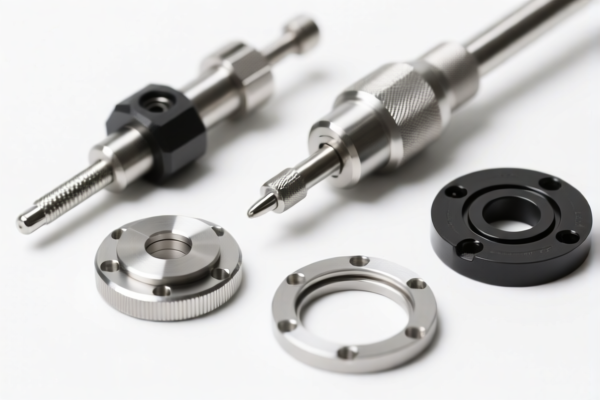
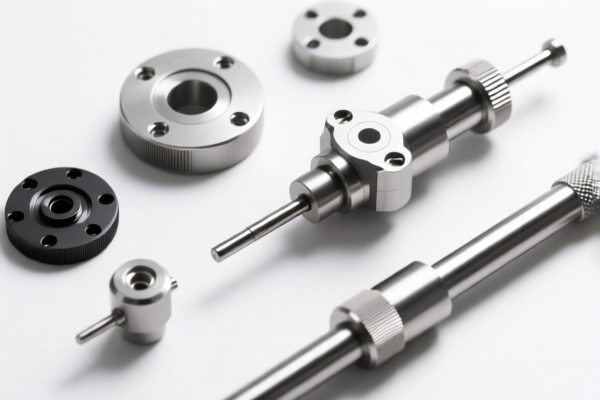
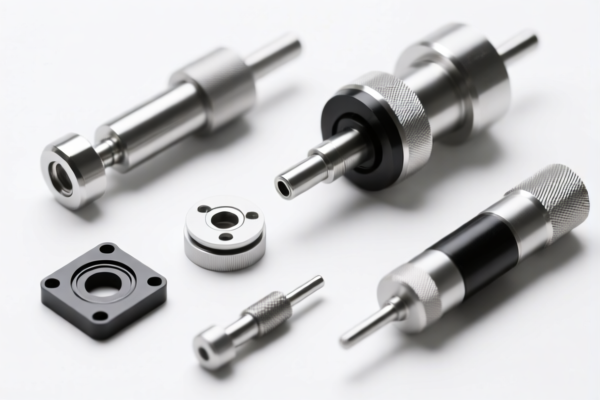
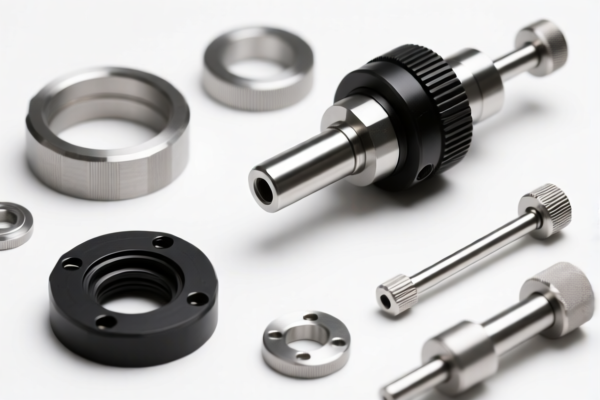
AI Analysis
🧪 Analytical Instrument Parts (分析仪器零部件)
🌐 HS Code Reference & Customs Clearance Guide | 2026 Latest Tariff Analysis | Professional Strategy for "Analytical Instruments"
📌 I. Product Definition & Classification: What are "Analytical Instrument Parts"?
In international trade, Analytical Instruments refer to devices used for chemical analysis, physical property measurement, or imaging/detection. When importing Parts or Components of these instruments, classification is critical. Unlike complete machines, parts may fall under different sub-headings depending on their specific function (e.g., chemical analysis vs. X-ray imaging vs. general measurement).
⚠️ Key Distinction Point:
- If the part is specific to Chemical Analysis (e.g., spectrometers, chromatographs) → It falls under Chapter 9027.
- If the part is for X-ray Imaging/Detection → It falls under Chapter 9022.
- If the part is for General Optical/Mechanical Measurement → It falls under Chapter 9031.
📦 II. HS Code Classification Details (2026 Latest Tariff Authority Reference)
Based on the provided data, here are the applicable HS Codes for Analytical Instruments/Components and their specific justifications. Note that the provided data references full instrument codes, which often serve as the primary classification for specialized parts unless generic parts are identified.
| HS Code | Product Description & Application | Justification from Data |
|---|---|---|
9031.80.80.85 |
Other Measuring/Checking Instruments | Falls under the category of "Other measuring or checking instruments, appliances and machines." |
9022.19.00.00 |
X-ray Imaging/Detection Equipment | Belongs to the category of equipment based on X-ray imaging or detection purposes. |
9027.50.40.15 |
Electrical Instruments for Chemical Analysis | Highly matches the classification explanation for "Chemical Analysis"; belongs to the electrical instrument category. |
9031.49.90.00 |
Optical Instruments & Equipment | Falls under the category of "Optical instruments and appliances" for measuring or checking purposes. |
9027.89.45.30 |
Chemical Analysis Instruments & Devices | Directly corresponds to the usage category of "Chemical analysis instruments and apparatus." |
🔍 Important Note:
- The classification depends heavily on the primary function of the part/instrument.
- Chemical Analysis parts usually map to9027series.
- X-ray/Detection parts map to9022series.
- General/Optical Measurement parts map to9031series.
💰 III. 2026 Latest Tariff Rate Breakdown (Including Surtaxes & Policy Add-ons)
✅ Applicable Country: United States (US)
✅ Origin: China (CN)
✅ Effective Date: Includes subsequent imports (as per data structure)
🎯 1. All Listed HS Codes (9031.80.80.85, 9022.19.00.00, 9027.50.40.15, 9031.49.90.00, 9027.89.45.30)
For all the above HS Codes related to Analytical Instruments, the tax structure is identical according to the provided data.
| Item | Content |
|---|---|
| Base Tariff Rate | 0.0% (Ad Valorem) |
| Section 301 Surtax | +25.0% |
| Section 122 Tariff | +10.0% |
| Total Tariff Rate | 35.0% |
| Tax Calculation | CIF Value × 35% |
| De Minimis Exemption | ❌ Not Eligible (High-value industrial equipment usually excluded) |
| Legal Basis Path | USITC:9027/9022/9031 → Section 301: Footnote 9903.xxxx → Section 122: IEEPA/Trade Act |
📌 Detailed Explanation:
- Base Rate (0%): The fundamental Most Favored Nation (MFN) duty for these specialized scientific instruments is typically low or zero.
- Section 301 Surtax (25%): This is the standard retaliatory tariff imposed on many Chinese-origin goods, including industrial machinery and precision instruments.
- Section 122 Tariff (10%): An additional surtax under Section 122 of the Trade Act of 1974, often applied to imports that threaten to impair US national security or industrial base.
- Total Burden (35%): This is a significant cost burden. Importers must calculate this into the landed cost immediately.
🛠️ IV. Customs Clearance Practical Advice (Real-World Pitfall Avoidance Guide)
✅ 1. Documentation Checklist (None are optional)
| Document | Required? | Explanation |
|---|---|---|
| ✅ Product Specification Sheet | ✔️ | Must detail: Technical parameters, measurement range, accuracy, and specific analytical method (e.g., HPLC, GC, XRF). |
| ✅ Part List / BOM | ✔️ | If importing "parts," provide a detailed Bill of Materials showing how they assemble into the final analytical instrument. |
| ✅ Technical Drawings | ✔️ | Critical for Customs to determine if the part is specific to Chapter 9027 (Chemical) vs. 9031 (General). |
| ✅ Commercial Invoice | ✔️ | Must clearly state: "Part for Analytical Instrument, Model XYZ, Not for Consumer Use." |
| ✅ Origin Certificate (CO) | ✔️ | Proof of Chinese origin is required to calculate the 35% tariff correctly (and potentially claim exemptions if applicable). |
| ✅ Certification (FCC/CE) | ✔️ | Electronic parts within analytical instruments often require FCC compliance. |
✅ 2. Declaration Strategy (Key Mantras)
🔥 "Function Defines Code, Precision Saves Money, Don't Genericize!"
| Scenario | Correct Declaration | Incorrect Practice |
|---|---|---|
| Parts for Chemical Analyzer | Use 9027 codes (9027.50.40.15 or 9027.89.45.30) |
Misdeclare as "General Machinery Parts" → Risk of reclassification + penalties. |
| X-ray Detector Component | Use 9022.19.00.00 |
Misdeclare as "Medical Equipment" without proof → Delays. |
| Generic Sensor/Probe | Use 9031 codes (9031.80.80.85 or 9031.49.90.00) |
Over-classifying to specific instrument codes when generic is appropriate. |
| Complete vs. Parts | If it's a complete unit, declare as such. If loose parts, declare as parts. | Bundling parts and declaring as one machine → Under-declaration risk. |
✅ 3. Special Circumstances Handling
| Situation | Handling Advice |
|---|---|
| Kit Components | If parts are shipped in a kit to assemble an analytical instrument, declare the complete instrument if it constitutes a complete good at the time of import. |
| R&D Samples | Apply for MITP (Medical, Industrial, Technical, or Personal) or R&D Sample exemption if eligible, though 35% may still apply unless specific trade agreements exist. |
| Dual-Use Items | Some analytical instruments (e.g., X-ray) may have dual-use (civilian/military). Ensure proper BIS (Bureau of Industry and Security) classification to avoid export/import license delays. |
| Software-Enabled Parts | If the part includes embedded software for analysis, declare the hardware but ensure software licensing is documented separately to avoid valuation disputes. |
🌍 V. Global Market Comparison (2026 Latest)
| Country/Region | Recommended HS Code | Base Tariff | Surtax/Additional | Total Cost Impact |
|---|---|---|---|---|
| 🇺🇸 USA | 9027/9022/9031 |
0% | +35% (25% Sec 301 + 10% Sec 122) | High (35% total) |
| 🇨🇳 China | 9027/9022/9031 |
~0-7% | None | Low |
| 🇪🇺 EU | 9027/9022/9031 |
0-4% | None | Low |
| 🇯🇵 Japan | 9027/9022/9031 |
0-3% | None | Low |
| 🇰🇷 South Korea | 9027/9022/9031 |
0-3% | None | Low |
📌 Conclusion:
- The US market is uniquely expensive for Chinese-origin analytical instruments due to the cumulative 35% tariff.
- EU, Japan, and Korea offer much more favorable tariff structures, but may have stricter environmental/EMC certifications (CE, PSE, KC).
📌 VI. Common Mistakes & Pitfall Guide (Lessons Learned)
❌ Mistake 1: Declaring "Analytical Instrument" without specifying the type (Chemical, X-ray, Optical).
👉 Consequence: Customs may assign the wrong sub-heading, leading to audit risks or re-classification fees.
❌ Mistake 2: Ignoring the 35% Total Tariff.
👉 Consequence: Unexpected high landed costs erode profit margins. Always budget for 35% extra duty.
❌ Mistake 3: Mixing "Parts" with "Consumables" (e.g., chemicals, filters).
👉 Consequence: Consumables may have different HS codes and tax rates. Separate them on the invoice to avoid overpaying or misdeclaration.
❌ Mistake 4: Failing to provide Technical Data Sheets.
👉 Consequence: Customs may hold the shipment for 90+ days to determine classification.
✅ Correct Approach:
"Precise HS Code based on Primary Function + Detailed Technical Documentation + Separate Invoicing for Parts/Consumables."
🎯 VII. Conclusion: Precision Classification for Cost Efficiency
🎯 Remember the Mantra:
🔹 "Chemical = 9027, X-ray = 9022, Optical/Other = 9031."
🔹 "35% is the US Price: 25% Sec 301 + 10% Sec 122."
🔹 "Documentation is King: Specs, Drawings, and Origin Certs."
📌 Pro Tip:
If your analytical instruments are assembled in Vietnam, Mexico, or Thailand, you may avoid the 35% US surtax.
Consider Supply Chain Restructuring or Substantial Transformation strategies to change the country of origin.
📣 Immediate Action:
📞 Engage a Licensed Customs Broker + Provide Detailed Tech Specs + Request Pre-Classification Ruling from CBP if unsure.
🚀 Ensure Your Analytical Instruments Clear Customs Smoothly, Avoid Delays, and Protect Your Margins!
✨ Professional Clearance Starts with Accurate Classification!
💼 Every Percent of Duty Saved is Pure Profit!
Customer Reviews
About HS Code Classification
The Harmonized System (HS) is an internationally standardized nomenclature developed by the World Customs Organization (WCO) to classify traded products. Over 200 countries use the HS system as the basis for customs tariffs, trade statistics, and import/export regulations.
Each HS code follows a hierarchical structure:
- Chapter (2 digits) — Broad category of goods (e.g., Chapter 84: Machinery and Mechanical Appliances)
- Heading (4 digits) — More specific grouping within the chapter
- Subheading (6 digits) — Internationally standardized breakdown, used by all WCO member countries
- National subdivisions (8-10 digits) — Country-specific extensions for further classification, such as US HTSUS 10-digit codes
Correct HS code classification is essential for smooth customs clearance, accurate duty payment, and compliance with trade regulations. Misclassification can lead to customs delays, overpayment of duties, or penalties.
When importing from CN to US, the applicable tariff rates may include:
- Most-Favored-Nation (MFN) rate — The standard duty rate applied to WTO members
- General rate — Applied to countries without trade agreements
- Trade remedy duties — Additional tariffs such as Section 301 (anti-dumping), Section 232 (national security), or countervailing duties
The information provided on this page is for reference purposes only. For official classification, please consult with your local customs authority or a licensed customs broker.