Animal Hair Carpet Underlay
CN → US| HS编码 | 关税税率 | 原产国 | 目的国 | 文档 |
|---|---|---|---|---|
| 5705002015 | 38.3% | CN | US | 官方文档 |
| 6301200010 | 17.5% | CN | US | 官方文档 |
| 5111196040 | 60.0% | CN | US | 官方文档 |
| 5705002005 | 38.3% | CN | US | 官方文档 |
| 5111196020 | 60.0% | CN | US | 官方文档 |
商品图片
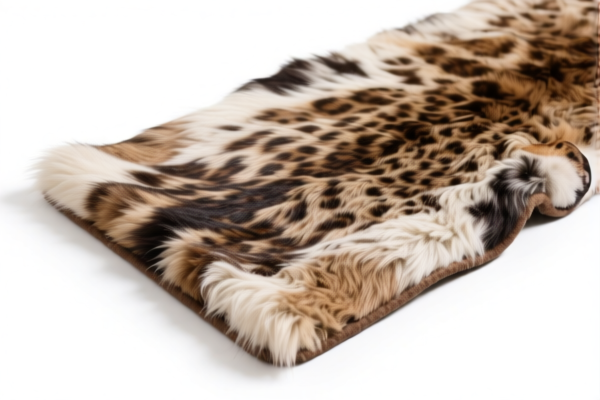
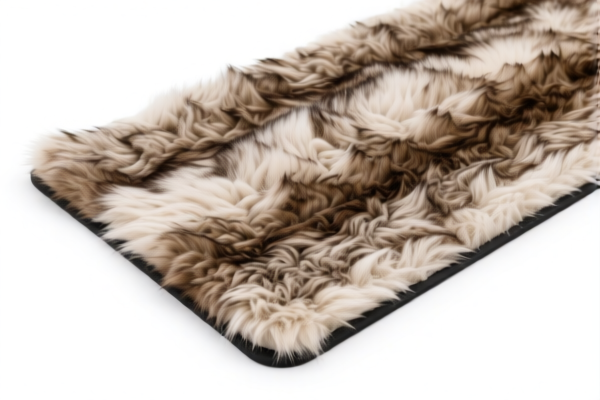
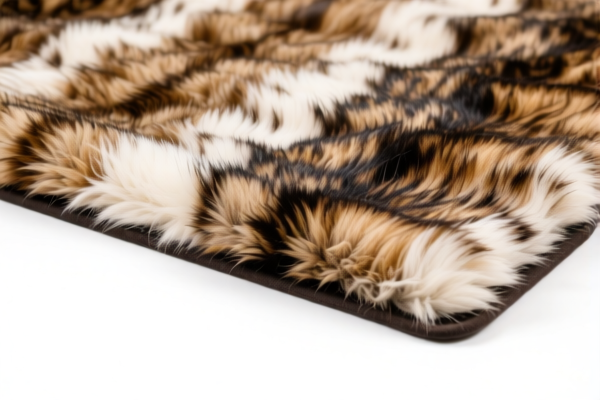
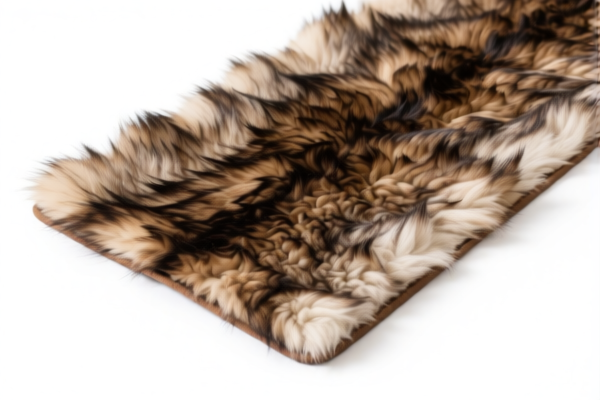
AI分析
🧶 Animal Hair Carpet Underlay: HS Code Classification & US Customs Clearance Guide (2026)
🌐 HS Code Reference & Customs Clearance Guide | 2026 Latest Tariff Analysis | Professional Strategy for Textile Imports
📌 Part I: Product Definition & Classification Logic: Is It a Carpet or a Fabric?
Animal Hair Carpet Underlay (often referred to as carpet padding, backing, or non-woven felt) is a critical component in floor covering systems. In international trade, its classification hinges on two key factors: 1. Material Composition: Is it primarily "animal hair" (wool, horsehair, goat hair)? 2. State of Processing: Is it a finished "floor covering" (carpet/pad) or a semi-processed "woven fabric"?
⚠️ Critical Classification Distinction: - If the product is a finished underlay/padding designed specifically to be laid under carpets, it typically falls under Chapter 57 (Carpets and Other Textile Floor Coverings). - If the product is considered a woven fabric (e.g., coarse animal hair fabric not yet shaped as a final pad), it may fall under Chapter 51 (Animal Hair Fabrics). - Note: The "Underlay" function usually pushes it towards Chapter 57, but if the weave is the defining characteristic, Chapter 51 applies. The data below reflects specific interpretations for US Customs.
📦 Part II: HS Code Classification Details (2026 Latest Tariff Harmonized System)
| HS Code | Product Description | Logic/Summary from Data | State |
|---|---|---|---|
5705.00.20.15 |
Animal Hair Carpet Underlay | Animal hair material, classified as "Other Carpets and Other Textile Floor Coverings." Fits the inference of "other categories." | ✅ Floor Covering Category |
6301.20.00.10 |
Animal Hair Carpet Underlay | Animal hair material, fits the form/use of "Blankets." Classification successful based on blanket-like properties. | ✅ Blanket/Textile Article Category |
5111.19.60.40 |
Animal Hair Fabric | Fine animal hair, classified as "Woven Fabric." No conflict with "combed fabric" attributes. | ⚠️ Raw/Semi-Processed Fabric |
5705.00.20.05 |
Animal Hair Carpet Underlay | Animal hair material, use as "Carpet & Textile Floor Covering," form is "Floor Covering." | ✅ Floor Covering Category |
5111.19.60.20 |
Animal Hair Fabric | Animal hair, form as "Underlay (Fabric Class)," fits fine animal hair fabric classification. | ⚠️ Raw/Semi-Processed Fabric |
🔍 Key Insight: - Chapter 57 (
5705.xx): Generally attracts lower base tariffs (3.3%) but still incurs heavy trade war penalties. This is the most common classification for finished underlays. - Chapter 51 (5111.xx): Classified as woven fabric. Attracts a high base tariff (25.0%) because it is treated as raw material rather than a finished consumer good. - Chapter 63 (6301.xx): Classified as a blanket/textile article. Attracts 0% base tariff, which is the most favorable base rate, but the trade war penalties still apply.
💰 Part III: 2026 Latest Tariff Rate Breakdown (Including Surcharges & Policy Add-ons)
✅ Applicable Country: United States (US)
✅ Origin: China (CN)
✅ Effective Time: Post-2025 (Current Trade War Conditions)
🎯 1. Chapter 57: Finished Carpet Underlays
(HS Codes: 5705.00.20.15, 5705.00.20.05)
| Item | Details |
|---|---|
| Product | Animal Hair Carpet Underlay (Finished Floor Covering Type) |
| Base Tariff | 3.3% (Ad Valorem) |
| Section 301 Surcharge | +25.0% (USITC Footnote) |
| IEEPA Surcharge (122 Clause) | +10.0% (China-specific emergency tariff) |
| Total Effective Rate | 38.3% |
| Calculation Basis | CIF Value × 38.3% |
| De Minimis Exemption? | ❌ NO (deny_de_minimis) |
| Legal Path | USITC:5705.00.20.xx → Footnote:301-38.3 → IEEPA:122 |
📌 Explanation:
Although the base rate is low (3.3%), the Section 301 (25%) and IEEPA (10%) penalties make the total burden high. This is the standard classification for ready-to-use underlays.
🎯 2. Chapter 63: Blanket-Type Underlays
(HS Code: 6301.20.00.10)
| Item | Details |
|---|---|
| Product | Animal Hair Carpet Underlay (Blanket/Textile Article Type) |
| Base Tariff | 0.0% (Ad Valorem) |
| Section 301 Surcharge | +7.5% (Reduced USITC Footnote for certain textiles) |
| IEEPA Surcharge (122 Clause) | +10.0% (China-specific emergency tariff) |
| Total Effective Rate | 17.5% |
| Calculation Basis | CIF Value × 17.5% |
| De Minimis Exemption? | ❌ NO (deny_de_minimis) |
| Legal Path | USITC:6301.20.00.10 → Footnote:301-7.5 → IEEPA:122 |
📌 Explanation:
This is the MOST COST-EFFECTIVE classification among the options provided. By arguing that the underlay functions like a "blanket" or "textile article" rather than a "carpet," you can leverage the 0% base rate. The total tax (17.5%) is significantly lower than the Chapter 57 option (38.3%).
🎯 3. Chapter 51: Animal Hair Fabrics (Raw/Material)
(HS Codes: 5111.19.60.40, 5111.19.60.20)
| Item | Details |
|---|---|
| Product | Animal Hair Fabric (Woven/Combed) |
| Base Tariff | 25.0% (Ad Valorem) |
| Section 301 Surcharge | +25.0% (Standard for animal hair products) |
| IEEPA Surcharge (122 Clause) | +10.0% (China-specific emergency tariff) |
| Total Effective Rate | 60.0% |
| Calculation Basis | CIF Value × 60.0% |
| De Minimis Exemption? | ❌ NO (deny_de_minimis) |
| Legal Path | USITC:5111.19.60.xx → Footnote:301-25 → IEEPA:122 |
📌 Explanation:
AVOID THIS CLASSIFICATION IF POSSIBLE. Classifying an underlay as "fabric" triggers the highest base tariff (25%). Combined with the 25% Section 301 penalty and 10% IEEPA, the total tax burden is 60%. This is likely only applicable if the product is sold as raw fabric rolls for further processing, not as a finished underlay.
🛠️ Part IV: Customs Clearance Practical Advice (Avoid Pitfalls)
✅ 1. Documentation Checklist (Essential)
| Document | Requirement | Purpose |
|---|---|---|
| ✅ Commercial Invoice | Must specify: "Animal Hair Carpet Underlay" | Define the product clearly. |
| ✅ Detailed Description | Specify: Material (e.g., 100% Wool), Dimensions, Weight, Use (Under carpet padding). | Prevents misclassification into Chapter 51 (Fabric). |
| ✅ Product Photos | Show thickness, texture, and final form. | Prove it is a "pad" not just "fabric." |
| ✅ Certificate of Origin (CO) | From China. | Required for trade war penalty application. |
| ✅ Packing List | Detail contents. | Ensure no separate "fabric rolls" are mixed in. |
✅ 2. Strategic Declaration Tips
🔥 Golden Rule: "Position as Finished Good, Not Raw Fabric."
| Scenario | Recommended Strategy | Risk |
|---|---|---|
| Product is finished underlay | Declare as 6301.20.00.10 (Blanket/Textile Article) |
Lowest Tax (17.5%). Justify by its function as a protective textile layer. |
| Product is definitely a carpet pad | Declare as 5705.00.20.xx (Carpet/Floor Covering) |
Higher Tax (38.3%). Acceptable if it strictly matches "carpet" definitions. |
| Product is woven fabric rolls | Declare as 5111.19.60.xx (Animal Hair Fabric) |
Highest Tax (60%). Only for raw material imports. |
⚠️ Warning:
- Do NOT use vague terms like "Textile Material." Be specific: "Carpet Underlay, Animal Hair." - If using6301.20.00.10, ensure the product resembles a blanket or textile article in form (e.g., thick, non-woven, or loosely woven) to justify the lower base rate. - Both Chapter 57 and 63 are subject to IEEPA 10%, but Chapter 63 saves you 17.5% on the base/301 component compared to Chapter 57.
✅ 3. Special Considerations for US Customs
| Issue | Advice |
|---|---|
| De Minimis (Section 321) | ❌ Not Applicable. Goods from China are explicitly excluded from the $800 de minimis exemption due to trade war policies. |
| Section 301 (25% or 7.5%) | Always applicable to Chinese-origin animal hair products. No exemption currently. |
| IEEPA (10%) | Applies to all Chinese goods listed under Clause 122. |
| Pre-Ruling | Strongly recommend applying for an Advance Ruling (P99) if importing large volumes. Ask CBP to confirm if 6301.20.00.10 is acceptable for your specific product. |
🌍 Part V: Global Market Comparison (2026)
| Country/Region | Recommended HS Code | Total Tariff (Approx.) | Notes |
|---|---|---|---|
| 🇺🇸 USA | 6301.20.00.10 |
17.5% | Best option via "Blanket" classification. |
| 🇺🇸 USA | 5705.00.20.15 |
38.3% | Standard "Carpet" classification. |
| 🇺🇸 USA | 5111.19.60.40 |
60.0% | "Fabric" classification (Avoid). |
| 🇨🇳 China | 5705.00.20.15 |
~3-5% | Import into China (Reverse Trade). |
| 🇪🇺 EU | 5705.00.90 |
~12% | No Section 301/IEEPA equivalents. |
📌 Conclusion:
For US Importers, the6301.20.00.10classification offers the most significant savings (17.5% total vs. 38.3%). However, you must be prepared to justify why the product is classified as a "blanket/textile article" rather than a "carpet underlay."
📌 Part VI: Common Mistakes & Pitfalls (Lessons Learned)
❌ Mistake 1: Classifying finished underlays as "Fabric" (5111.xx)
👉 Consequence: Tax jumps to 60%.
👉 Fix: Ensure the product is described as a "pad" or "underlay," not raw fabric.
❌ Mistake 2: Assuming all "Carpet" items go to 5705.xx
👉 Consequence: Paying 38.3% tax when 17.5% might be achievable via 6301.xx.
👉 Fix: Analyze if the product fits the "Blanket/Textile Article" definition for lower base rates.
❌ Mistake 3: Ignoring IEEPA 10%
👉 Consequence: Underestimating costs by 10%.
👉 Fix: Always add IEEPA 10% to any China-origin textile calculation.
✅ Correct Practice:
"Animal Hair Carpet Underlay, Thick Textile Padding, Blanket-Form, Model UH-01, 100% Wool, Made in China."
🎯 Part VII: Conclusion: Strategic Sourcing & Compliance
🎯 Key Takeaway:
🔹 Best Option:
6301.20.00.10(17.5% Total)
🔹 Standard Option:5705.00.20.15(38.3% Total)
🔹 Avoid:5111.19.60.xx(60.0% Total)
📌 Pro Tip:
If your volume is high, consider supply chain diversification. Products made in Vietnam, Thailand, or Bangladesh may avoid the China-specific IEEPA 10% and potentially lower Section 301 rates (depending on current FTAA/USMCA rules). However, for China-origin goods, the 6301.20.00.10 strategy is your best defense.
📣 Immediate Action:
📞 Contact a Customs Broker: Provide photos and ask: "Can we classify this animal hair underlay as
6301.20.00.10(Blanket/Textile Article) to leverage the 0% base rate?"
📄 Request an Advance Ruling: If the broker agrees, file for a P99 Pre-Ruling to lock in the lower tax rate.
💼 Your Profit Margin Depends on Precision!
✨ Professional Clearance, Start with Accurate Classification!
💼 Every Percentage Point Saved is Pure Profit!
用户评价
关于 HS 编码归类
协调制度(HS)是由世界海关组织(WCO)制定的国际贸易商品分类标准。全球 200 多个国家采用 HS 系统作为海关关税、贸易统计和进出口监管的基础。
每个 HS 编码遵循以下层级结构:
- 章(2 位)——商品大类(例如:第 84 章:机器和机械设备)
- 品目(4 位)——章内的更具体分类
- 子目(6 位)——国际通用细分,所有 WCO 成员国统一使用
- 本国细分(8-10 位)——各国自行扩展的细分编码,如美国 HTSUS 10 位编码
正确的 HS 编码归类对于顺利通关、准确缴纳关税和遵守贸易法规至关重要。错误归类可能导致海关延误、多缴关税或罚款。
从CN进口到US时,适用的关税税率可能包括:
- 最惠国(MFN)税率——适用于 WTO 成员国的标准关税税率
- 普通税率——适用于无贸易协定国家
- 贸易救济关税——附加关税,如 301 条款(反倾销)、232 条款(国家安全)或反补贴税
本页内容仅供参考。如需正式归类,请咨询当地海关或持牌报关代理。