Animal Hair Carpet Underlay
CN → US| HS Code | Tariff Rate | Origin | Destination | Doc |
|---|---|---|---|---|
| 5705002015 | 38.3% | CN | US | Official Doc |
| 6301200010 | 17.5% | CN | US | Official Doc |
| 5111196040 | 60.0% | CN | US | Official Doc |
| 5705002005 | 38.3% | CN | US | Official Doc |
| 5111196020 | 60.0% | CN | US | Official Doc |
Product Images
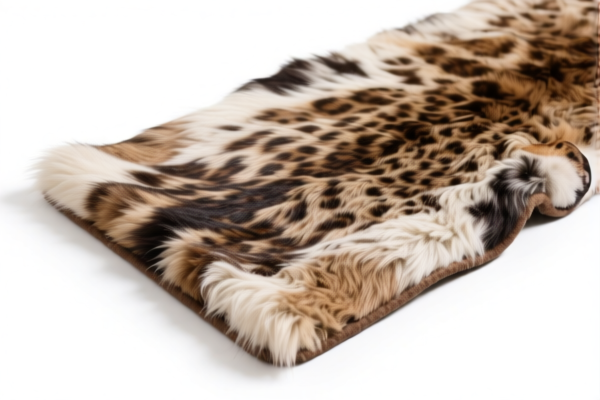
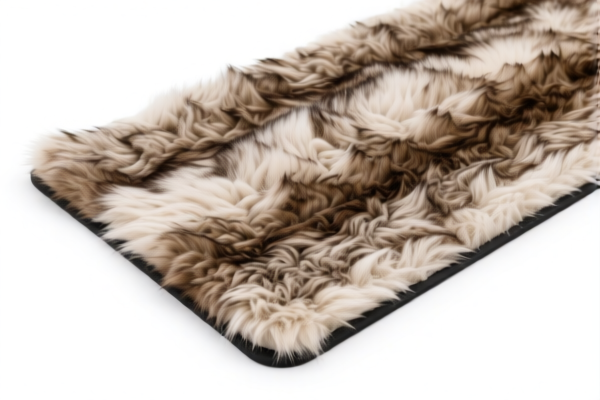
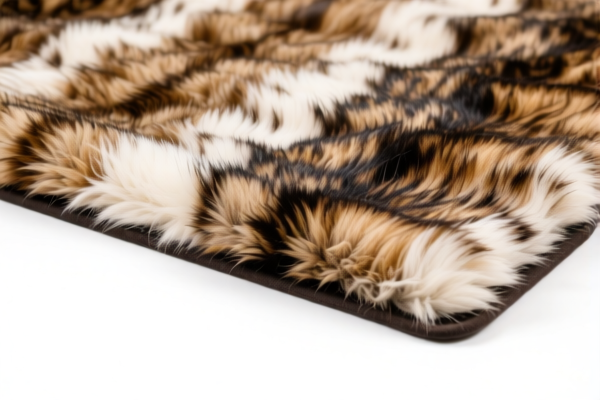
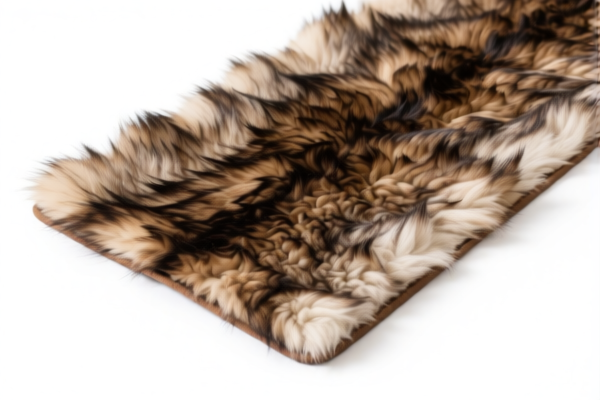
AI Analysis
🧶 Animal Hair Carpet Underlay: HS Code Classification & US Customs Clearance Guide (2026)
🌐 HS Code Reference & Customs Clearance Guide | 2026 Latest Tariff Analysis | Professional Strategy for Textile Imports
📌 Part I: Product Definition & Classification Logic: Is It a Carpet or a Fabric?
Animal Hair Carpet Underlay (often referred to as carpet padding, backing, or non-woven felt) is a critical component in floor covering systems. In international trade, its classification hinges on two key factors: 1. Material Composition: Is it primarily "animal hair" (wool, horsehair, goat hair)? 2. State of Processing: Is it a finished "floor covering" (carpet/pad) or a semi-processed "woven fabric"?
⚠️ Critical Classification Distinction: - If the product is a finished underlay/padding designed specifically to be laid under carpets, it typically falls under Chapter 57 (Carpets and Other Textile Floor Coverings). - If the product is considered a woven fabric (e.g., coarse animal hair fabric not yet shaped as a final pad), it may fall under Chapter 51 (Animal Hair Fabrics). - Note: The "Underlay" function usually pushes it towards Chapter 57, but if the weave is the defining characteristic, Chapter 51 applies. The data below reflects specific interpretations for US Customs.
📦 Part II: HS Code Classification Details (2026 Latest Tariff Harmonized System)
| HS Code | Product Description | Logic/Summary from Data | State |
|---|---|---|---|
5705.00.20.15 |
Animal Hair Carpet Underlay | Animal hair material, classified as "Other Carpets and Other Textile Floor Coverings." Fits the inference of "other categories." | ✅ Floor Covering Category |
6301.20.00.10 |
Animal Hair Carpet Underlay | Animal hair material, fits the form/use of "Blankets." Classification successful based on blanket-like properties. | ✅ Blanket/Textile Article Category |
5111.19.60.40 |
Animal Hair Fabric | Fine animal hair, classified as "Woven Fabric." No conflict with "combed fabric" attributes. | ⚠️ Raw/Semi-Processed Fabric |
5705.00.20.05 |
Animal Hair Carpet Underlay | Animal hair material, use as "Carpet & Textile Floor Covering," form is "Floor Covering." | ✅ Floor Covering Category |
5111.19.60.20 |
Animal Hair Fabric | Animal hair, form as "Underlay (Fabric Class)," fits fine animal hair fabric classification. | ⚠️ Raw/Semi-Processed Fabric |
🔍 Key Insight: - Chapter 57 (
5705.xx): Generally attracts lower base tariffs (3.3%) but still incurs heavy trade war penalties. This is the most common classification for finished underlays. - Chapter 51 (5111.xx): Classified as woven fabric. Attracts a high base tariff (25.0%) because it is treated as raw material rather than a finished consumer good. - Chapter 63 (6301.xx): Classified as a blanket/textile article. Attracts 0% base tariff, which is the most favorable base rate, but the trade war penalties still apply.
💰 Part III: 2026 Latest Tariff Rate Breakdown (Including Surcharges & Policy Add-ons)
✅ Applicable Country: United States (US)
✅ Origin: China (CN)
✅ Effective Time: Post-2025 (Current Trade War Conditions)
🎯 1. Chapter 57: Finished Carpet Underlays
(HS Codes: 5705.00.20.15, 5705.00.20.05)
| Item | Details |
|---|---|
| Product | Animal Hair Carpet Underlay (Finished Floor Covering Type) |
| Base Tariff | 3.3% (Ad Valorem) |
| Section 301 Surcharge | +25.0% (USITC Footnote) |
| IEEPA Surcharge (122 Clause) | +10.0% (China-specific emergency tariff) |
| Total Effective Rate | 38.3% |
| Calculation Basis | CIF Value × 38.3% |
| De Minimis Exemption? | ❌ NO (deny_de_minimis) |
| Legal Path | USITC:5705.00.20.xx → Footnote:301-38.3 → IEEPA:122 |
📌 Explanation:
Although the base rate is low (3.3%), the Section 301 (25%) and IEEPA (10%) penalties make the total burden high. This is the standard classification for ready-to-use underlays.
🎯 2. Chapter 63: Blanket-Type Underlays
(HS Code: 6301.20.00.10)
| Item | Details |
|---|---|
| Product | Animal Hair Carpet Underlay (Blanket/Textile Article Type) |
| Base Tariff | 0.0% (Ad Valorem) |
| Section 301 Surcharge | +7.5% (Reduced USITC Footnote for certain textiles) |
| IEEPA Surcharge (122 Clause) | +10.0% (China-specific emergency tariff) |
| Total Effective Rate | 17.5% |
| Calculation Basis | CIF Value × 17.5% |
| De Minimis Exemption? | ❌ NO (deny_de_minimis) |
| Legal Path | USITC:6301.20.00.10 → Footnote:301-7.5 → IEEPA:122 |
📌 Explanation:
This is the MOST COST-EFFECTIVE classification among the options provided. By arguing that the underlay functions like a "blanket" or "textile article" rather than a "carpet," you can leverage the 0% base rate. The total tax (17.5%) is significantly lower than the Chapter 57 option (38.3%).
🎯 3. Chapter 51: Animal Hair Fabrics (Raw/Material)
(HS Codes: 5111.19.60.40, 5111.19.60.20)
| Item | Details |
|---|---|
| Product | Animal Hair Fabric (Woven/Combed) |
| Base Tariff | 25.0% (Ad Valorem) |
| Section 301 Surcharge | +25.0% (Standard for animal hair products) |
| IEEPA Surcharge (122 Clause) | +10.0% (China-specific emergency tariff) |
| Total Effective Rate | 60.0% |
| Calculation Basis | CIF Value × 60.0% |
| De Minimis Exemption? | ❌ NO (deny_de_minimis) |
| Legal Path | USITC:5111.19.60.xx → Footnote:301-25 → IEEPA:122 |
📌 Explanation:
AVOID THIS CLASSIFICATION IF POSSIBLE. Classifying an underlay as "fabric" triggers the highest base tariff (25%). Combined with the 25% Section 301 penalty and 10% IEEPA, the total tax burden is 60%. This is likely only applicable if the product is sold as raw fabric rolls for further processing, not as a finished underlay.
🛠️ Part IV: Customs Clearance Practical Advice (Avoid Pitfalls)
✅ 1. Documentation Checklist (Essential)
| Document | Requirement | Purpose |
|---|---|---|
| ✅ Commercial Invoice | Must specify: "Animal Hair Carpet Underlay" | Define the product clearly. |
| ✅ Detailed Description | Specify: Material (e.g., 100% Wool), Dimensions, Weight, Use (Under carpet padding). | Prevents misclassification into Chapter 51 (Fabric). |
| ✅ Product Photos | Show thickness, texture, and final form. | Prove it is a "pad" not just "fabric." |
| ✅ Certificate of Origin (CO) | From China. | Required for trade war penalty application. |
| ✅ Packing List | Detail contents. | Ensure no separate "fabric rolls" are mixed in. |
✅ 2. Strategic Declaration Tips
🔥 Golden Rule: "Position as Finished Good, Not Raw Fabric."
| Scenario | Recommended Strategy | Risk |
|---|---|---|
| Product is finished underlay | Declare as 6301.20.00.10 (Blanket/Textile Article) |
Lowest Tax (17.5%). Justify by its function as a protective textile layer. |
| Product is definitely a carpet pad | Declare as 5705.00.20.xx (Carpet/Floor Covering) |
Higher Tax (38.3%). Acceptable if it strictly matches "carpet" definitions. |
| Product is woven fabric rolls | Declare as 5111.19.60.xx (Animal Hair Fabric) |
Highest Tax (60%). Only for raw material imports. |
⚠️ Warning:
- Do NOT use vague terms like "Textile Material." Be specific: "Carpet Underlay, Animal Hair." - If using6301.20.00.10, ensure the product resembles a blanket or textile article in form (e.g., thick, non-woven, or loosely woven) to justify the lower base rate. - Both Chapter 57 and 63 are subject to IEEPA 10%, but Chapter 63 saves you 17.5% on the base/301 component compared to Chapter 57.
✅ 3. Special Considerations for US Customs
| Issue | Advice |
|---|---|
| De Minimis (Section 321) | ❌ Not Applicable. Goods from China are explicitly excluded from the $800 de minimis exemption due to trade war policies. |
| Section 301 (25% or 7.5%) | Always applicable to Chinese-origin animal hair products. No exemption currently. |
| IEEPA (10%) | Applies to all Chinese goods listed under Clause 122. |
| Pre-Ruling | Strongly recommend applying for an Advance Ruling (P99) if importing large volumes. Ask CBP to confirm if 6301.20.00.10 is acceptable for your specific product. |
🌍 Part V: Global Market Comparison (2026)
| Country/Region | Recommended HS Code | Total Tariff (Approx.) | Notes |
|---|---|---|---|
| 🇺🇸 USA | 6301.20.00.10 |
17.5% | Best option via "Blanket" classification. |
| 🇺🇸 USA | 5705.00.20.15 |
38.3% | Standard "Carpet" classification. |
| 🇺🇸 USA | 5111.19.60.40 |
60.0% | "Fabric" classification (Avoid). |
| 🇨🇳 China | 5705.00.20.15 |
~3-5% | Import into China (Reverse Trade). |
| 🇪🇺 EU | 5705.00.90 |
~12% | No Section 301/IEEPA equivalents. |
📌 Conclusion:
For US Importers, the6301.20.00.10classification offers the most significant savings (17.5% total vs. 38.3%). However, you must be prepared to justify why the product is classified as a "blanket/textile article" rather than a "carpet underlay."
📌 Part VI: Common Mistakes & Pitfalls (Lessons Learned)
❌ Mistake 1: Classifying finished underlays as "Fabric" (5111.xx)
👉 Consequence: Tax jumps to 60%.
👉 Fix: Ensure the product is described as a "pad" or "underlay," not raw fabric.
❌ Mistake 2: Assuming all "Carpet" items go to 5705.xx
👉 Consequence: Paying 38.3% tax when 17.5% might be achievable via 6301.xx.
👉 Fix: Analyze if the product fits the "Blanket/Textile Article" definition for lower base rates.
❌ Mistake 3: Ignoring IEEPA 10%
👉 Consequence: Underestimating costs by 10%.
👉 Fix: Always add IEEPA 10% to any China-origin textile calculation.
✅ Correct Practice:
"Animal Hair Carpet Underlay, Thick Textile Padding, Blanket-Form, Model UH-01, 100% Wool, Made in China."
🎯 Part VII: Conclusion: Strategic Sourcing & Compliance
🎯 Key Takeaway:
🔹 Best Option:
6301.20.00.10(17.5% Total)
🔹 Standard Option:5705.00.20.15(38.3% Total)
🔹 Avoid:5111.19.60.xx(60.0% Total)
📌 Pro Tip:
If your volume is high, consider supply chain diversification. Products made in Vietnam, Thailand, or Bangladesh may avoid the China-specific IEEPA 10% and potentially lower Section 301 rates (depending on current FTAA/USMCA rules). However, for China-origin goods, the 6301.20.00.10 strategy is your best defense.
📣 Immediate Action:
📞 Contact a Customs Broker: Provide photos and ask: "Can we classify this animal hair underlay as
6301.20.00.10(Blanket/Textile Article) to leverage the 0% base rate?"
📄 Request an Advance Ruling: If the broker agrees, file for a P99 Pre-Ruling to lock in the lower tax rate.
💼 Your Profit Margin Depends on Precision!
✨ Professional Clearance, Start with Accurate Classification!
💼 Every Percentage Point Saved is Pure Profit!
Customer Reviews
About HS Code Classification
The Harmonized System (HS) is an internationally standardized nomenclature developed by the World Customs Organization (WCO) to classify traded products. Over 200 countries use the HS system as the basis for customs tariffs, trade statistics, and import/export regulations.
Each HS code follows a hierarchical structure:
- Chapter (2 digits) — Broad category of goods (e.g., Chapter 84: Machinery and Mechanical Appliances)
- Heading (4 digits) — More specific grouping within the chapter
- Subheading (6 digits) — Internationally standardized breakdown, used by all WCO member countries
- National subdivisions (8-10 digits) — Country-specific extensions for further classification, such as US HTSUS 10-digit codes
Correct HS code classification is essential for smooth customs clearance, accurate duty payment, and compliance with trade regulations. Misclassification can lead to customs delays, overpayment of duties, or penalties.
When importing from CN to US, the applicable tariff rates may include:
- Most-Favored-Nation (MFN) rate — The standard duty rate applied to WTO members
- General rate — Applied to countries without trade agreements
- Trade remedy duties — Additional tariffs such as Section 301 (anti-dumping), Section 232 (national security), or countervailing duties
The information provided on this page is for reference purposes only. For official classification, please consult with your local customs authority or a licensed customs broker.