Anti Slip Strip
CN → US| HS编码 | 关税税率 | 原产国 | 目的国 | 文档 |
|---|---|---|---|---|
| 4016996050 | 37.5% | CN | US | 官方文档 |
| 3919102055 | 40.8% | CN | US | 官方文档 |
| 5907006000 | 35.0% | CN | US | 官方文档 |
| 4016910000 | 37.7% | CN | US | 官方文档 |
| 5907001500 | 43.0% | CN | US | 官方文档 |
商品图片
AI分析
🛑 Anti-Slip Strip (Anti-Slip Tape/Adhesive)
🌐 HS Code Reference & Customs Clearance Guide | 2026 Latest Tariff Analysis | Professional Compliance Strategy
📌 I. Product Definition & Classification: What Exactly is an "Anti-Slip Strip"?
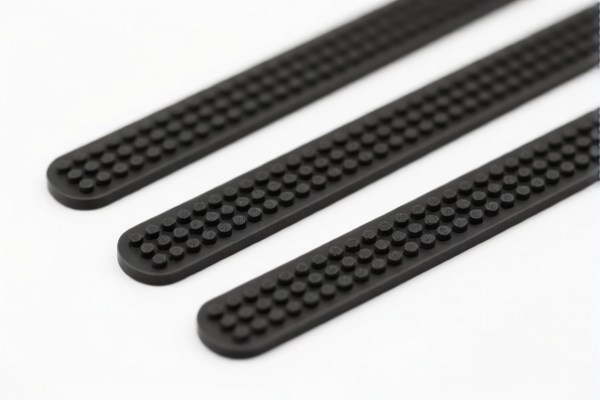
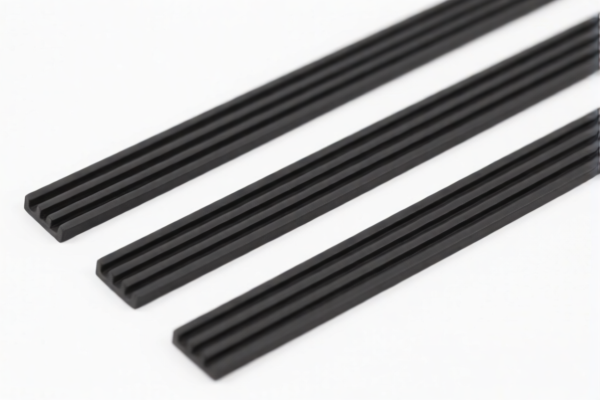
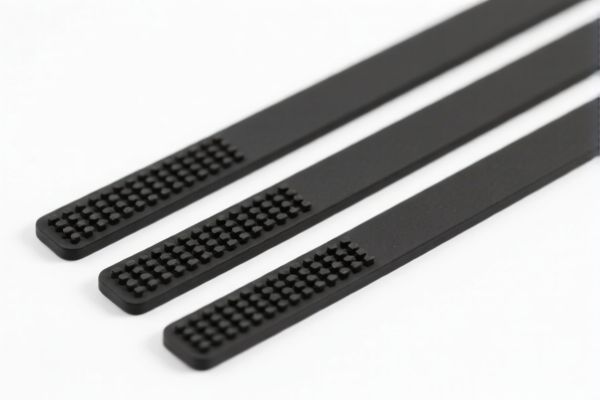
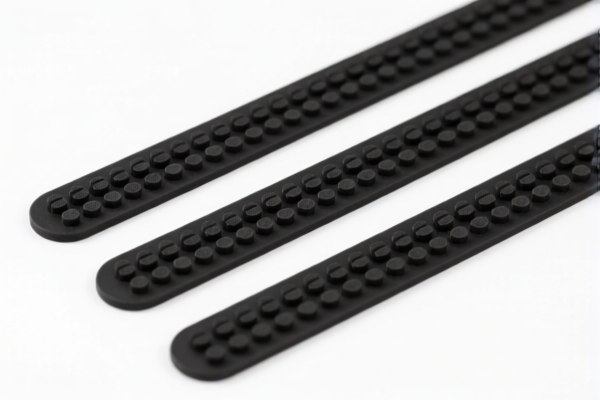
Anti-Slip Strips are safety accessories designed to provide traction on smooth surfaces (floors, stairs, shelves, etc.). They are typically self-adhesive tapes or mats. In international trade, their classification depends entirely on the material composition and the physical structure (e.g., is it a simple sheet, an impregnated fabric, or a rubber sheet?).
Misclassification is a high-risk area because the tariff rates vary significantly (from 35% to 43%) depending on whether the customs authority views the product as a rubber good, a plastic self-adhesive product, a textile good, or a carpet/rug substitute.
⚠️ Key Distinction Points:
- If the backing is rubber and the abrasive surface is integrated (not just a coating) → Often Chapter 40.
- If the backing is plastic film with adhesive → Often Chapter 39.
- If the material is textile/fabric impregnated with rubber or plastic → Often Chapter 59.
- If it resembles a rug or mat in form and function → Often Chapter 40 (other rubber articles).
📦 II. HS Code Classification Details (2026 Latest Tariff Authority Comparison)
Below are the five most likely HS Codes for Anti-Slip Strips based on the provided <DATA>. Each code carries a different tax burden.
| HS Code | Product Description (Based on <DATA>) |
Material/Structure | Total Tax Rate | Key Determinant |
|---|---|---|---|---|
| 4016.99.60.50 | Rubber or similar elastomer products; other vulcanized rubber articles | Vulcanized Rubber base, generic "other" category | 37.5% | Pure rubber or rubber-heavy elastomer construction. |
| 3919.10.20.55 | Self-adhesive plates, sheets, film, foil, tape, strip, and other flat shapes, of plastics | Plastic material, self-adhesive, flat sheet form, for anti-slip use | 40.8% | Plastic backing with adhesive; clearly "self-adhesive" nature. |
| 5907.00.60.00 | Textile fabrics, impregnated, coated, covered or layered with plastic substances | Textile/Synthetic Fiber, impregnated/coated fabric | 35.0% | Lowest Rate! Fabric base with plastic/rubber coating. |
| 4016.91.00.00 | Other vulcanized rubber articles; carpets, mats, and matting | Rubber/Plastic, classified as "Carpets/Mats" | 37.7% | Treated specifically as a floor covering/mat rather than a simple strip. |
| 5907.00.15.00 | Textiles or synthetic fibers, patches treated with coatings or coverings | Textile/Synthetic Fiber, patch/coated form | 43.0% | Highest Rate! Specific "patch" or heavily coated textile classification. |
🔍 Critical Analysis:
- 5907.00.60.00 offers the lowest tariff (35.0%) but requires proof that the product is fundamentally a textile fabric that has been impregnated/coated.
- 3919.10.20.55 is common for commercial PVC self-adhesive tapes but carries a higher rate (40.8%).
- 5907.00.15.00 is risky due to the highest rate (43.0%) and specific "patch" definition.
- 4016.99.60.50 and 4016.91.00.00 apply if the product is predominantly vulcanized rubber.
💰 III. 2026 Latest Tariff Rate Breakdown (Including Surtaxes & Policy Add-ons)
✅ Applicable Country: United States (US)
✅ Country of Origin: China (CN)
✅ Effective Date: November 10, 2025 onwards (for subsequent imports)
🎯 1. 5907.00.60.00 —— Textile Fabric Impregnated/Coated (Recommended for Low Tax)
| Item | Detail |
|---|---|
| Base Tariff | 0.0% (ad valorem) |
| Section 301 Surtax | +25.0% |
| Section 122 Tariff | +10.0% |
| Total Effective Rate | 35.0% |
| Tax Calculation | CIF Value × 35% |
| De Minimis Exemption | ❌ Not Available (deny_de_minimis) |
| Legal Basis Path | USITC:5907.00.60.00 → Section 301: 25% → Section 122: 10% |
📌 Explanation:
- This code has a 0% base rate, making it the most attractive for cost reduction.
- However, customs may challenge this if the textile content is low or if the "impregnation" does not define the essential character of the good.
- Total 35% is still high but lower than the plastic/textile-patch alternatives.
🎯 2. 3919.10.20.55 —— Self-Adhesive Plastic Tape/Strip
| Item | Detail |
|---|---|
| Base Tariff | 5.8% |
| Section 301 Surtax | +25.0% |
| Section 122 Tariff | +10.0% |
| Total Effective Rate | 40.8% |
| Tax Calculation | CIF Value × 40.8% |
| De Minimis Exemption | ❌ Not Available (deny_de_minimis) |
| Legal Basis Path | USITC:3919.10.20.55 → Section 301: 25% → Section 122: 10% |
📌 Explanation:
- Common for PVC anti-slip tapes.
- The 5.8% base rate pushes the total to 40.8%.
- Often easier to justify if the product is clearly a "plastic sheet" with adhesive on one side.
🎯 3. 4016.99.60.50 —— Other Vulcanized Rubber Articles
| Item | Detail |
|---|---|
| Base Tariff | 2.5% |
| Section 301 Surtax | +25.0% |
| Section 122 Tariff | +10.0% |
| Total Effective Rate | 37.5% |
| Tax Calculation | CIF Value × 37.5% |
| De Minimis Exemption | ❌ Not Available (deny_de_minimis) |
| Legal Basis Path | USITC:4016.99.60.50 → Section 301: 25% → Section 122: 10% |
📌 Explanation:
- Applicable if the strip is made of solid rubber or rubber sheeting.
- 37.5% is a middle-ground option.
🎯 4. 4016.91.00.00 —— Rubber Mats/Carpets
| Item | Detail |
|---|---|
| Base Tariff | 2.7% |
| Section 301 Surtax | +25.0% |
| Section 122 Tariff | +10.0% |
| Total Effective Rate | 37.7% |
| Tax Calculation | CIF Value × 37.7% |
| De Minimis Exemption | ❌ Not Available (deny_de_minimis) |
| Legal Basis Path | USITC:4016.91.00.00 → Section 301: 25% → Section 122: 10% |
📌 Explanation:
- If the anti-slip strip is large, thick, and resembles a small rug or floor mat, this code applies.
- 37.7% is similar to the generic rubber code.
🎯 5. 5907.00.15.00 —— Coated Textile Patches
| Item | Detail |
|---|---|
| Base Tariff | 8.0% |
| Section 301 Surtax | +25.0% |
| Section 122 Tariff | +10.0% |
| Total Effective Rate | 43.0% |
| Tax Calculation | CIF Value × 43.0% |
| De Minimis Exemption | ❌ Not Available (deny_de_minimis) |
| Legal Basis Path | USITC:5907.00.15.00 → Section 301: 25% → Section 122: 10% |
📌 Explanation:
- Highest Risk: This code carries the highest total tax (43.0%).
- Avoid this classification unless the product is explicitly a "patch" for repair/covering, not just an anti-slip strip.
- The 8.0% base rate makes it expensive.
🛠️ IV. Customs Clearance Practical Advice (Actionable Pitfall Guide)
✅ 1. Document Preparation Checklist (Non-Negotiable)
| Document | Required? | Purpose |
|---|---|---|
| ✅ Product Spec Sheet | ✔️ | Must detail material composition (e.g., "100% PVC backing with sandpaper abrasive" vs. "Rubber sheet with grit surface"). |
| ✅ Photos (Top & Cross-Section) | ✔️ | Prove structure: Is it a single layer (rubber)? A laminate (plastic+adhesive)? Or a coated fabric? |
| ✅ Composition Statement | ✔️ | Declare % of material by weight (e.g., "Textile base 60%, Plastic coating 40%"). Critical for 5907 vs. 3919. |
| ✅ Commercial Invoice | ✔️ | Description must be precise: e.g., "Self-Adhesive Anti-Slip Tape, PVC Material" (not just "Anti-Slip"). |
| ✅ Packaging List | ✔️ | Show units, rolls, or cut pieces. |
✅ 2. Classification Strategy (The "Golden Rules")
🔥 "Material Defines Code, Not Function!"
| Scenario | Recommended HS Code | Reasoning |
|---|---|---|
| PVC Tape with Adhesive | 3919.10.20.55 |
Clearly "self-adhesive plastic sheet." High tax (40.8%) but easy to defend. |
| Fabric with Rubber/Plastic Coating | 5907.00.60.00 |
Lowest Tax (35.0%). Must prove textile is the essential character. |
| Solid Rubber Strip | 4016.99.60.50 |
Generic rubber article. Moderate tax (37.5%). |
| Thick Rubber Mat/Tile | 4016.91.00.00 |
Classified as "mat." Slightly higher than generic rubber (37.7%). |
| Heavy Coated Fabric Patch | 5907.00.15.00 |
Avoid if possible. Highest tax (43.0%). |
✅ 3. Special Handling & Risk Mitigation
| Issue | Solution |
|---|---|
| Customs Challenge on "Textile" Content | If using 5907.00.60.00, ensure the fabric weight is significant. If the plastic/rubber coating dominates, they may reclassify to 3919. |
| "De Minimis" (Section 321) Eligibility | ❌ None of these codes qualify for the $800 de minimis exemption. All shipments will incur duties and taxes. |
| Section 122 Tariff (10%) | This is a mandatory surcharge for certain Chinese goods. Ensure your broker applies this correctly to avoid penalties. |
| Product Naming | Avoid generic terms like "Mat." Use specific terms: "Self-Adhesive Anti-Slip Tape, PVC" or "Coated Textile Anti-Slip Strip." |
🌍 V. Global Market Customs Comparison (2026 Outlook)
| Market | Recommended HS Code | Est. Total Duty (China Origin) | Notes |
|---|---|---|---|
| 🇺🇸 USA | 5907.00.60.00 |
35.0% | Best rate if textile-based. |
| 🇺🇸 USA | 3919.10.20.55 |
40.8% | Common for PVC tapes. |
| 🇪🇺 EU | 5907.00.90 |
~5-10% (No Section 301) | Lower duties, but stricter REACH/CE rules. |
| 🇨🇳 China | 3919.10 |
~5-6% | Low import duty for export-oriented goods. |
| 🇨🇦 Canada | 5907.00 |
~5-10% (CUSMA may apply) | Check preferential rules if sourced from Mexico/US. |
📌 Conclusion for USA:
The Section 301 (25%) and Section 122 (10%) tariffs make anti-slip strips expensive to import from China.
Strategy: If your product is fabric-based, aggressively pursue classification under5907.00.60.00to save 3-8% compared to plastic/rubber alternatives.
📌 VI. Common Errors & Pitfalls (Lessons Learned)
❌ Error 1: Classifying PVC tape as "Rubber" (4016) to guess a lower rate.
👉 Result: Customs rejects, issues invoice of cargo, delays shipment by weeks.
❌ Error 2: Omitting "Self-Adhesive" in description for 3919.
👉 Result: Misleading documentation, potential fraud investigation.
❌ Error 3: Assuming "Anti-Slip" is a functional term that defines HS Code.
👉 Result: HS Codes are based on material, not function. Two anti-slip strips with different materials have different codes.
❌ Error 4: Ignoring Section 122 Tariff.
👉 Result: Underpayment of duties, penalties, and interest.
✅ Correct Approach:
"PVC Tape? → 3919.10.20.55 (40.8%)
Fabric Coated? → 5907.00.60.00 (35.0%)
Rubber Sheet? → 4016.99.60.50 (37.5%)
Always provide Material Spec Sheet!"
🎯 VII. Conclusion: Precision Classification for Cost Savings
🎯 Key Takeaway:
For Anti-Slip Strips from China,
5907.00.60.00(35.0%) is the most tax-efficient if your product allows it (textile-based).
3919.10.20.55(40.8%) is the standard for plastic tapes.
Avoid5907.00.15.00(43.0%) unless forced by product structure.📌 Pro Tip:
- Get an Advance Ruling from U.S. Customs if your product sits on the boundary between textile and plastic.
- Ensure your supplier declares the correct material weight percentages to support your HS Code choice.
- Budget for ~35-41% total landed cost impact due to tariffs.
📣 Immediate Action:
📞 Contact your customs broker with your product's material composition report.
🚀 Choose the HS Code that matches your material, not just your product name.
💼 Save money by avoiding the 43% tax bracket!
✨ Professional Customs Clearance Starts with Accurate Classification!
💼 Your Cost, Your Margin, Your Compliance.
用户评价
关于 HS 编码归类
协调制度(HS)是由世界海关组织(WCO)制定的国际贸易商品分类标准。全球 200 多个国家采用 HS 系统作为海关关税、贸易统计和进出口监管的基础。
每个 HS 编码遵循以下层级结构:
- 章(2 位)——商品大类(例如:第 84 章:机器和机械设备)
- 品目(4 位)——章内的更具体分类
- 子目(6 位)——国际通用细分,所有 WCO 成员国统一使用
- 本国细分(8-10 位)——各国自行扩展的细分编码,如美国 HTSUS 10 位编码
正确的 HS 编码归类对于顺利通关、准确缴纳关税和遵守贸易法规至关重要。错误归类可能导致海关延误、多缴关税或罚款。
从CN进口到US时,适用的关税税率可能包括:
- 最惠国(MFN)税率——适用于 WTO 成员国的标准关税税率
- 普通税率——适用于无贸易协定国家
- 贸易救济关税——附加关税,如 301 条款(反倾销)、232 条款(国家安全)或反补贴税
本页内容仅供参考。如需正式归类,请咨询当地海关或持牌报关代理。