Anti Slip Strip
CN → US| HS Code | Tariff Rate | Origin | Destination | Doc |
|---|---|---|---|---|
| 4016996050 | 37.5% | CN | US | Official Doc |
| 3919102055 | 40.8% | CN | US | Official Doc |
| 5907006000 | 35.0% | CN | US | Official Doc |
| 4016910000 | 37.7% | CN | US | Official Doc |
| 5907001500 | 43.0% | CN | US | Official Doc |
Product Images
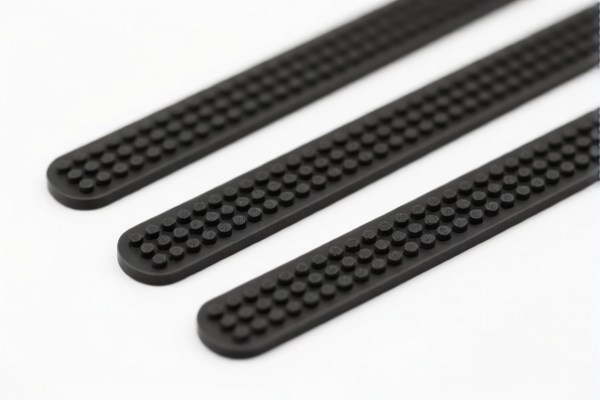
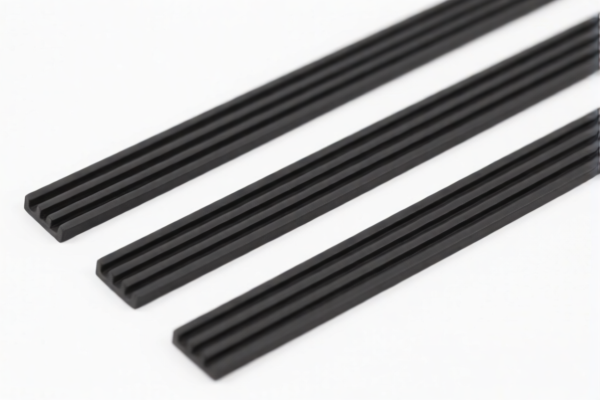
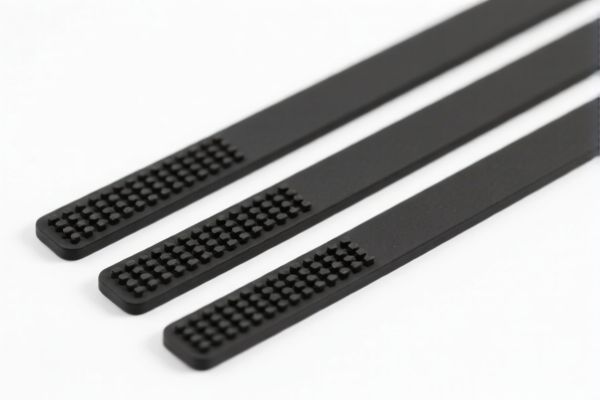
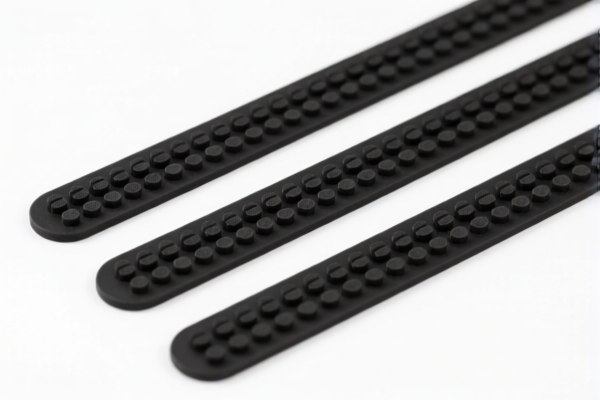
AI Analysis
🛑 Anti-Slip Strip (Anti-Slip Tape/Adhesive)
🌐 HS Code Reference & Customs Clearance Guide | 2026 Latest Tariff Analysis | Professional Compliance Strategy
📌 I. Product Definition & Classification: What Exactly is an "Anti-Slip Strip"?
Anti-Slip Strips are safety accessories designed to provide traction on smooth surfaces (floors, stairs, shelves, etc.). They are typically self-adhesive tapes or mats. In international trade, their classification depends entirely on the material composition and the physical structure (e.g., is it a simple sheet, an impregnated fabric, or a rubber sheet?).
Misclassification is a high-risk area because the tariff rates vary significantly (from 35% to 43%) depending on whether the customs authority views the product as a rubber good, a plastic self-adhesive product, a textile good, or a carpet/rug substitute.
⚠️ Key Distinction Points:
- If the backing is rubber and the abrasive surface is integrated (not just a coating) → Often Chapter 40.
- If the backing is plastic film with adhesive → Often Chapter 39.
- If the material is textile/fabric impregnated with rubber or plastic → Often Chapter 59.
- If it resembles a rug or mat in form and function → Often Chapter 40 (other rubber articles).
📦 II. HS Code Classification Details (2026 Latest Tariff Authority Comparison)
Below are the five most likely HS Codes for Anti-Slip Strips based on the provided <DATA>. Each code carries a different tax burden.
| HS Code | Product Description (Based on <DATA>) |
Material/Structure | Total Tax Rate | Key Determinant |
|---|---|---|---|---|
| 4016.99.60.50 | Rubber or similar elastomer products; other vulcanized rubber articles | Vulcanized Rubber base, generic "other" category | 37.5% | Pure rubber or rubber-heavy elastomer construction. |
| 3919.10.20.55 | Self-adhesive plates, sheets, film, foil, tape, strip, and other flat shapes, of plastics | Plastic material, self-adhesive, flat sheet form, for anti-slip use | 40.8% | Plastic backing with adhesive; clearly "self-adhesive" nature. |
| 5907.00.60.00 | Textile fabrics, impregnated, coated, covered or layered with plastic substances | Textile/Synthetic Fiber, impregnated/coated fabric | 35.0% | Lowest Rate! Fabric base with plastic/rubber coating. |
| 4016.91.00.00 | Other vulcanized rubber articles; carpets, mats, and matting | Rubber/Plastic, classified as "Carpets/Mats" | 37.7% | Treated specifically as a floor covering/mat rather than a simple strip. |
| 5907.00.15.00 | Textiles or synthetic fibers, patches treated with coatings or coverings | Textile/Synthetic Fiber, patch/coated form | 43.0% | Highest Rate! Specific "patch" or heavily coated textile classification. |
🔍 Critical Analysis:
- 5907.00.60.00 offers the lowest tariff (35.0%) but requires proof that the product is fundamentally a textile fabric that has been impregnated/coated.
- 3919.10.20.55 is common for commercial PVC self-adhesive tapes but carries a higher rate (40.8%).
- 5907.00.15.00 is risky due to the highest rate (43.0%) and specific "patch" definition.
- 4016.99.60.50 and 4016.91.00.00 apply if the product is predominantly vulcanized rubber.
💰 III. 2026 Latest Tariff Rate Breakdown (Including Surtaxes & Policy Add-ons)
✅ Applicable Country: United States (US)
✅ Country of Origin: China (CN)
✅ Effective Date: November 10, 2025 onwards (for subsequent imports)
🎯 1. 5907.00.60.00 —— Textile Fabric Impregnated/Coated (Recommended for Low Tax)
| Item | Detail |
|---|---|
| Base Tariff | 0.0% (ad valorem) |
| Section 301 Surtax | +25.0% |
| Section 122 Tariff | +10.0% |
| Total Effective Rate | 35.0% |
| Tax Calculation | CIF Value × 35% |
| De Minimis Exemption | ❌ Not Available (deny_de_minimis) |
| Legal Basis Path | USITC:5907.00.60.00 → Section 301: 25% → Section 122: 10% |
📌 Explanation:
- This code has a 0% base rate, making it the most attractive for cost reduction.
- However, customs may challenge this if the textile content is low or if the "impregnation" does not define the essential character of the good.
- Total 35% is still high but lower than the plastic/textile-patch alternatives.
🎯 2. 3919.10.20.55 —— Self-Adhesive Plastic Tape/Strip
| Item | Detail |
|---|---|
| Base Tariff | 5.8% |
| Section 301 Surtax | +25.0% |
| Section 122 Tariff | +10.0% |
| Total Effective Rate | 40.8% |
| Tax Calculation | CIF Value × 40.8% |
| De Minimis Exemption | ❌ Not Available (deny_de_minimis) |
| Legal Basis Path | USITC:3919.10.20.55 → Section 301: 25% → Section 122: 10% |
📌 Explanation:
- Common for PVC anti-slip tapes.
- The 5.8% base rate pushes the total to 40.8%.
- Often easier to justify if the product is clearly a "plastic sheet" with adhesive on one side.
🎯 3. 4016.99.60.50 —— Other Vulcanized Rubber Articles
| Item | Detail |
|---|---|
| Base Tariff | 2.5% |
| Section 301 Surtax | +25.0% |
| Section 122 Tariff | +10.0% |
| Total Effective Rate | 37.5% |
| Tax Calculation | CIF Value × 37.5% |
| De Minimis Exemption | ❌ Not Available (deny_de_minimis) |
| Legal Basis Path | USITC:4016.99.60.50 → Section 301: 25% → Section 122: 10% |
📌 Explanation:
- Applicable if the strip is made of solid rubber or rubber sheeting.
- 37.5% is a middle-ground option.
🎯 4. 4016.91.00.00 —— Rubber Mats/Carpets
| Item | Detail |
|---|---|
| Base Tariff | 2.7% |
| Section 301 Surtax | +25.0% |
| Section 122 Tariff | +10.0% |
| Total Effective Rate | 37.7% |
| Tax Calculation | CIF Value × 37.7% |
| De Minimis Exemption | ❌ Not Available (deny_de_minimis) |
| Legal Basis Path | USITC:4016.91.00.00 → Section 301: 25% → Section 122: 10% |
📌 Explanation:
- If the anti-slip strip is large, thick, and resembles a small rug or floor mat, this code applies.
- 37.7% is similar to the generic rubber code.
🎯 5. 5907.00.15.00 —— Coated Textile Patches
| Item | Detail |
|---|---|
| Base Tariff | 8.0% |
| Section 301 Surtax | +25.0% |
| Section 122 Tariff | +10.0% |
| Total Effective Rate | 43.0% |
| Tax Calculation | CIF Value × 43.0% |
| De Minimis Exemption | ❌ Not Available (deny_de_minimis) |
| Legal Basis Path | USITC:5907.00.15.00 → Section 301: 25% → Section 122: 10% |
📌 Explanation:
- Highest Risk: This code carries the highest total tax (43.0%).
- Avoid this classification unless the product is explicitly a "patch" for repair/covering, not just an anti-slip strip.
- The 8.0% base rate makes it expensive.
🛠️ IV. Customs Clearance Practical Advice (Actionable Pitfall Guide)
✅ 1. Document Preparation Checklist (Non-Negotiable)
| Document | Required? | Purpose |
|---|---|---|
| ✅ Product Spec Sheet | ✔️ | Must detail material composition (e.g., "100% PVC backing with sandpaper abrasive" vs. "Rubber sheet with grit surface"). |
| ✅ Photos (Top & Cross-Section) | ✔️ | Prove structure: Is it a single layer (rubber)? A laminate (plastic+adhesive)? Or a coated fabric? |
| ✅ Composition Statement | ✔️ | Declare % of material by weight (e.g., "Textile base 60%, Plastic coating 40%"). Critical for 5907 vs. 3919. |
| ✅ Commercial Invoice | ✔️ | Description must be precise: e.g., "Self-Adhesive Anti-Slip Tape, PVC Material" (not just "Anti-Slip"). |
| ✅ Packaging List | ✔️ | Show units, rolls, or cut pieces. |
✅ 2. Classification Strategy (The "Golden Rules")
🔥 "Material Defines Code, Not Function!"
| Scenario | Recommended HS Code | Reasoning |
|---|---|---|
| PVC Tape with Adhesive | 3919.10.20.55 |
Clearly "self-adhesive plastic sheet." High tax (40.8%) but easy to defend. |
| Fabric with Rubber/Plastic Coating | 5907.00.60.00 |
Lowest Tax (35.0%). Must prove textile is the essential character. |
| Solid Rubber Strip | 4016.99.60.50 |
Generic rubber article. Moderate tax (37.5%). |
| Thick Rubber Mat/Tile | 4016.91.00.00 |
Classified as "mat." Slightly higher than generic rubber (37.7%). |
| Heavy Coated Fabric Patch | 5907.00.15.00 |
Avoid if possible. Highest tax (43.0%). |
✅ 3. Special Handling & Risk Mitigation
| Issue | Solution |
|---|---|
| Customs Challenge on "Textile" Content | If using 5907.00.60.00, ensure the fabric weight is significant. If the plastic/rubber coating dominates, they may reclassify to 3919. |
| "De Minimis" (Section 321) Eligibility | ❌ None of these codes qualify for the $800 de minimis exemption. All shipments will incur duties and taxes. |
| Section 122 Tariff (10%) | This is a mandatory surcharge for certain Chinese goods. Ensure your broker applies this correctly to avoid penalties. |
| Product Naming | Avoid generic terms like "Mat." Use specific terms: "Self-Adhesive Anti-Slip Tape, PVC" or "Coated Textile Anti-Slip Strip." |
🌍 V. Global Market Customs Comparison (2026 Outlook)
| Market | Recommended HS Code | Est. Total Duty (China Origin) | Notes |
|---|---|---|---|
| 🇺🇸 USA | 5907.00.60.00 |
35.0% | Best rate if textile-based. |
| 🇺🇸 USA | 3919.10.20.55 |
40.8% | Common for PVC tapes. |
| 🇪🇺 EU | 5907.00.90 |
~5-10% (No Section 301) | Lower duties, but stricter REACH/CE rules. |
| 🇨🇳 China | 3919.10 |
~5-6% | Low import duty for export-oriented goods. |
| 🇨🇦 Canada | 5907.00 |
~5-10% (CUSMA may apply) | Check preferential rules if sourced from Mexico/US. |
📌 Conclusion for USA:
The Section 301 (25%) and Section 122 (10%) tariffs make anti-slip strips expensive to import from China.
Strategy: If your product is fabric-based, aggressively pursue classification under5907.00.60.00to save 3-8% compared to plastic/rubber alternatives.
📌 VI. Common Errors & Pitfalls (Lessons Learned)
❌ Error 1: Classifying PVC tape as "Rubber" (4016) to guess a lower rate.
👉 Result: Customs rejects, issues invoice of cargo, delays shipment by weeks.
❌ Error 2: Omitting "Self-Adhesive" in description for 3919.
👉 Result: Misleading documentation, potential fraud investigation.
❌ Error 3: Assuming "Anti-Slip" is a functional term that defines HS Code.
👉 Result: HS Codes are based on material, not function. Two anti-slip strips with different materials have different codes.
❌ Error 4: Ignoring Section 122 Tariff.
👉 Result: Underpayment of duties, penalties, and interest.
✅ Correct Approach:
"PVC Tape? → 3919.10.20.55 (40.8%)
Fabric Coated? → 5907.00.60.00 (35.0%)
Rubber Sheet? → 4016.99.60.50 (37.5%)
Always provide Material Spec Sheet!"
🎯 VII. Conclusion: Precision Classification for Cost Savings
🎯 Key Takeaway:
For Anti-Slip Strips from China,
5907.00.60.00(35.0%) is the most tax-efficient if your product allows it (textile-based).
3919.10.20.55(40.8%) is the standard for plastic tapes.
Avoid5907.00.15.00(43.0%) unless forced by product structure.📌 Pro Tip:
- Get an Advance Ruling from U.S. Customs if your product sits on the boundary between textile and plastic.
- Ensure your supplier declares the correct material weight percentages to support your HS Code choice.
- Budget for ~35-41% total landed cost impact due to tariffs.
📣 Immediate Action:
📞 Contact your customs broker with your product's material composition report.
🚀 Choose the HS Code that matches your material, not just your product name.
💼 Save money by avoiding the 43% tax bracket!
✨ Professional Customs Clearance Starts with Accurate Classification!
💼 Your Cost, Your Margin, Your Compliance.
Customer Reviews
About HS Code Classification
The Harmonized System (HS) is an internationally standardized nomenclature developed by the World Customs Organization (WCO) to classify traded products. Over 200 countries use the HS system as the basis for customs tariffs, trade statistics, and import/export regulations.
Each HS code follows a hierarchical structure:
- Chapter (2 digits) — Broad category of goods (e.g., Chapter 84: Machinery and Mechanical Appliances)
- Heading (4 digits) — More specific grouping within the chapter
- Subheading (6 digits) — Internationally standardized breakdown, used by all WCO member countries
- National subdivisions (8-10 digits) — Country-specific extensions for further classification, such as US HTSUS 10-digit codes
Correct HS code classification is essential for smooth customs clearance, accurate duty payment, and compliance with trade regulations. Misclassification can lead to customs delays, overpayment of duties, or penalties.
When importing from CN to US, the applicable tariff rates may include:
- Most-Favored-Nation (MFN) rate — The standard duty rate applied to WTO members
- General rate — Applied to countries without trade agreements
- Trade remedy duties — Additional tariffs such as Section 301 (anti-dumping), Section 232 (national security), or countervailing duties
The information provided on this page is for reference purposes only. For official classification, please consult with your local customs authority or a licensed customs broker.