Anti explosion Cleaning Dispersant
CN → US商品图片

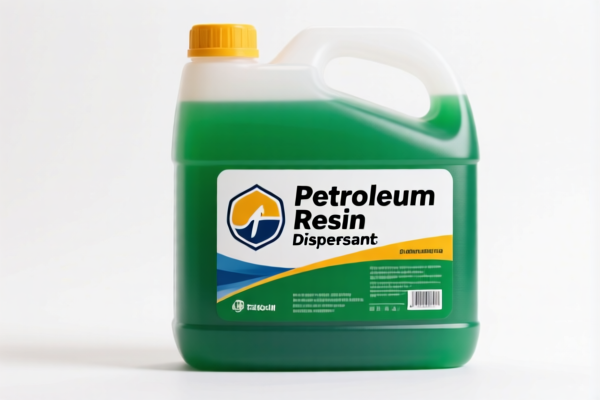
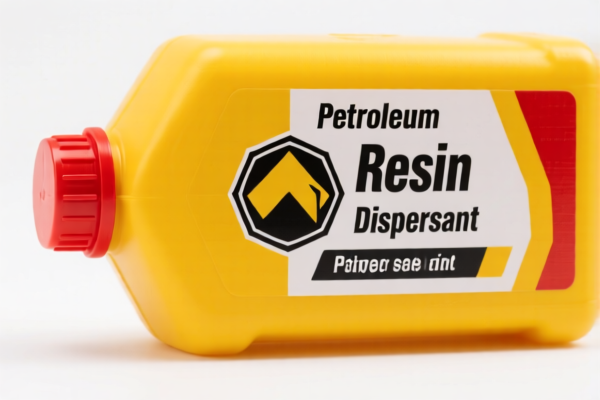
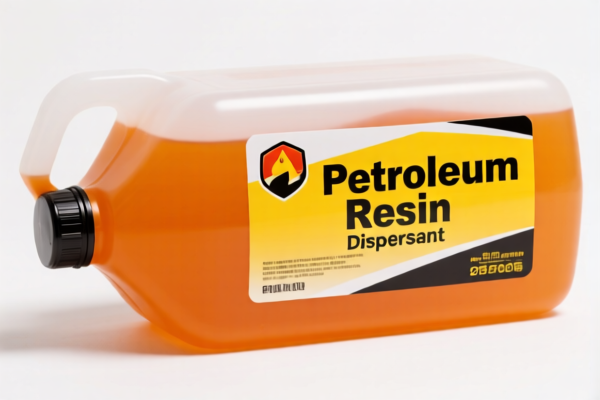
AI分析
🛡️ Anti-Explosion Cleaning Dispersant (Explosion-Proof Industrial Degreaser)
🌐 HS Code Reference & Customs Clearance Guide | 2026 Latest Tariff Analysis | Professional-Level Clearance Strategy
📌 I. Product Definition and Classification: Do You Really Understand "Anti-Explosion Cleaning Disersant"?
An Anti-Explosion Cleaning Dispersant is a specialized chemical mixture designed for cleaning industrial equipment, machinery, or facilities in hazardous environments (e.g., oil & gas refineries, chemical plants, mining operations, aerospace manufacturing).
Key characteristics:
- Low Flammability / Non-Explosive: Formulated with non-flammable solvents (e.g., water-based, fluorinated hydrocarbons, or specialized esters) to prevent ignition in explosive atmospheres.
- Dispersion Function: Emulsifies, disperses, or dissolves grease, oil, carbon deposits, and particulate matter.
- Certifications: Typically requires certifications such as ATEX (Europe), UL Class I Div 1/2 (USA), or IECEx for use in explosive zones.
⚠️ Critical Classification Distinction:
- If the product is primarily a cleaning agent (chemical composition >70% active ingredients for cleaning) → Classified under Chapter 38 (Miscellaneous Chemical Products).
- If it is primarily a solvent (for industrial degreasing, not labeled as "cleaner") → May fall under Chapter 29 (Organic Chemicals) or Chapter 38 depending on function.
- Never classify under "Explosives" (Chapter 36) unless it is an explosive material (which it is not—it prevents explosions).
📦 II. HS Code Classification Details (2026 Latest Tariff Authority Comparison)
| HS Code | Product Description | Applicable Scenario | Primary Function |
|---|---|---|---|
| 3820.00.00.00 | Prepared rust preventives; prepared oils and greases for internal combustion engines or lubricating oils | Not applicable – This is for lubricants, not cleaners. | Lubrication |
| 3824.99.95.00 | Other chemical products and preparations (including those for cleaning, degreasing, etc., not elsewhere specified) | Most likely – General-purpose industrial cleaning agents with anti-static/explosion-proof formulations. | Cleaning/Degreasing |
| 3402.90.90.00 | Organic surface-active agents (including those as components or preparations), washing preparations including auxiliary washing preparations and cleaning preparations, whether or not containing soap | Possible – If the product is a surfactant-based detergent/cleaning formulation. | Cleaning/Detergent |
| 3808.94.00.00 | Insecticides, rodenticides, fungicides, herbicides, antiseptics and similar products | Not applicable – Not a pesticide or disinfectant. | Pest Control |
| 2905.16.00.00 | 2-Methyl-2-propanol (tert-Butyl alcohol) | Not applicable – Only if the product is pure solvent, not a mixture. | Solvent |
| 3824.60.00.00 | Halogenated (including fluorinated) organic products | Possible – If based on fluorinated solvents (e.g., HFCs, PFCs) for precision cleaning. | Solvent/Cleaner |
🔍 Key Reminder:
- Most "Anti-Explosion Cleaning Dispersants" fall under3824.99.95.00or3402.90.90.00, depending on whether they are surfactant-based (3402) or chemical mixtures (3824).
- Do NOT classify under Chapter 36 (Explosives) – This is a preventive agent, not an explosive.
- Do NOT classify under Chapter 29 unless it is a pure organic chemical (unlikely for a commercial cleaning product).
💰 III. 2026 Latest Tariff Rate Breakdown (Including Supplementary Taxes, Policy Add-ons)
✅ Applicable Country: United States (US)
✅ Country of Origin: China (CN)
✅ Effective Date: November 10, 2025 onwards (including subsequent imports)
🎯 1. 3824.99.95.00 – Other Chemical Products (Most Common for Industrial Cleaners)
| Item | Details |
|---|---|
| Base Tariff Rate | 5.3% (ad valorem) |
| USITC Supplementary Tax | 0% (No Section 301 addition for this subheading) |
| IEEPA Supplementary Tax | +10% (USITC Footnote 9903.88.01 applies to certain Chinese-origin chemical products; verify if 3824.99.95 is exempt) |
| Total Tariff Rate | 5.3% ~ 15.3% (Depends on IEEPA applicability) |
| Tax Calculation | CIF Value × Total Rate |
| De Minimis Exemption | ❌ Not Eligible (Chemical products are generally excluded from Section 321 de minimis) |
| Legal Basis Path | IEEPA:9903.01.25 → USITC:3824.99.95.00 → FOOTNOTE:9903.88.01 |
📌 Explanation:
-3824.99.95is often not subject to the 25% Section 301 tariff, but may be subject to the 10% IEEPA tariff if classified under specific Chinese-origin chemical lists.
- Always verify with CBP whether your specific product formulation is exempt from IEEPA additions.
🎯 2. 3402.90.90.00 – Organic Surface-Active Agents / Washing Preparations
| Item | Details |
|---|---|
| Base Tariff Rate | 6.5% (ad valorem) |
| USITC Supplementary Tax | 0% |
| IEEPA Supplementary Tax | +10% (Same as above, verify applicability) |
| Total Tariff Rate | 6.5% ~ 16.5% |
| Tax Calculation | CIF Value × Total Rate |
| De Minimis Exemption | ❌ Not Eligible |
| Legal Basis Path | IEEPA:9903.01.25 → USITC:3402.90.90.00 → FOOTNOTE:9903.88.01 |
📌 Note:
- If the product is primarily a surfactant-based detergent (e.g., for washing machinery), it falls here.
- Tariff impact is moderate compared to electronics or steel.
🛠️ IV. Customs Clearance Practical Suggestions (Battle-Tested Pitfall Avoidance Guide)
✅ 1. Required Documentation Checklist (None Can Be Omitted)
| Document | Required | Description |
|---|---|---|
| ✅ Product Safety Data Sheet (SDS/MSDS) | ✔️ | Must comply with GHS (Globally Harmonized System) and highlight flammability class (e.g., Class 9 or non-flammable). |
| ✅ Certificate of Analysis (COA) | ✔️ | Confirms chemical composition, active ingredients, and absence of hazardous/explosive properties. |
| ✅ Certification for Explosive Atmospheres | ✔️ | ATEX, UL Class I Div 1/2, or IECEx certificates proving the product is safe for use in explosive zones. |
| ✅ Commercial Invoice | ✔️ | Clearly state: "Anti-Explosion Cleaning Dispersant, Non-Flammable, For Industrial Degreasing" |
| ✅ Packing List | ✔️ | Detail net/gross weight, number of containers, and hazard class (if any). |
| ✅ FDA/ EPA Registration (If Applicable) | ✔️ | If used in food-grade environments, EPA registration may be required. |
✅ 2. Declaration Strategy (Key Mantra)
🔥 "Declare by Function, Not by Name; Highlight Non-Flammability; Avoid 'Explosive' Misclassification!"
| Scenario | Correct Declaration | Wrong Practice |
|---|---|---|
| Industrial cleaner for hazardous zones | 3824.99.95.00 - "Chemical Cleaning Preparation, Non-Flammable" |
Calling it "Explosive Cleaner" → Triggers Chapter 36 investigation |
| Solvent-based degreaser | 3824.60.00.00 - "Halogenated Cleaning Agent" |
Mislabeling as "Lubricant" → Wrong HS Code, penalties |
| Water-based anti-static cleaner | 3402.90.90.00 - "Surfactant Cleaning Preparation" |
Under-declaring as "Water" → Fraud risk |
| Bulk chemical shipment | 3824.99.95.00 |
Mixing with flammable solvents in same container → Safety violation |
✅ 3. Special Handling Cases
| Case | Handling Suggestion |
|---|---|
| UN Number Assignment | If non-flammable, may be UN3082 (Environmentally Hazardous Substance, Solid) or UN3077 (Environmentally Hazardous Substance, Liquid). If truly non-hazardous, no UN number. |
| Flammability Labeling | Must display GHS Label with "Non-Flammable" or "Low Flammability" symbol. |
| Food-Grade vs. Industrial | If food-grade, EPA/FDA documentation is mandatory; otherwise, industrial use only. |
| Ocean Freight Hazmat Declaration | If classified as Class 9 (Miscellaneous Dangerous Goods), must file DGD (Dangerous Goods Declaration) with carrier. |
🌍 V. Global Market Clearance Comparison (2026 Latest)
| Country/Region | Recommended HS Code | Tariff | Certification Requirements | Notes |
|---|---|---|---|---|
| 🇺🇸 USA | 3824.99.95.00 or 3402.90.90.00 |
5.3%~16.5% | GHS SDS, UL/ATEX if explosive zone | IEEPA 10% may apply |
| 🇨🇳 China | 3824.99.90.00 |
5% | CCC (if applicable), MSDS | No additional surcharges |
| 🇪🇺 EU | 3824.99 or 3402.90 |
0%~4% | REACH Registration, CLP Labeling | REACH compliance is critical |
| 🇦🇺 Australia | 3824.99.90 |
5% | GHS Labeling, NICNAS Assessment | Moderate compliance |
| 🇯🇵 Japan | 3824.90 or 3402.90 |
6%~8% | JIS Standards, MSDS | Stricter chemical testing |
📌 Conclusion:
- The US and EU are the most stringent regarding chemical product documentation.
- China and Australia are relatively straightforward if MSDS and GHS labels are provided.
- Always ensure REACH (EU) or TSCA (US) compliance for chemical imports.
📌 VI. Common Mistakes & Pitfall Avoidance Guide (Lessons from Blood)
❌ Mistake 1: Classifying under Chapter 36 (Explosives) because of the word "Explosion" in the name
👉 Consequence: 100% inspection, seizure, or fines!
👉 Solution: Emphasize "Prevention" and "Non-Flammable" in declaration.
❌ Mistake 2: Omitting SDS/MSDS or providing outdated GHS version
👉 Consequence: Delay at customs, return of shipment
👉 Solution: Update SDS to latest GHS Rev. 9 (2025) standard.
❌ Mistake 3: Mislabeling flammable solvents as "Non-Explosive"
👉 Consequence: Safety violation, criminal liability
👉 Solution: Accurate flammability classification based on flash point testing.
❌ Mistake 4: Ignoring REACH (EU) or TSCA (US) chemical registration requirements
👉 Consequence: Import blocked, fines up to $50,000/day
👉 Solution: Verify chemical substances are registered under respective regulations.
✅ Correct Declaration Example:
"Anti-Explosion Industrial Cleaning Dispersant, Water-Based, Non-Flammable, For Use in Hazardous Zones, SDS Provided, HS Code 3824.99.95.00"
🎯 VII. Conclusion: Professional Declaration, Save Time and Cost!
🎯 Remember Mantra:
🔹 "Non-Flammable is Key, SDS is Mandatory, Avoid Chapter 36, Declare as Chemical Cleaner!"
🔹 "HS Code determines duty, Tariff varies by composition, Declaration accuracy saves thousands!"
📌 Pro Tip:
If your cleaning dispersant contains fluorinated compounds (e.g., PFAS), it may be subject to additional environmental regulations in the EU, US, and Australia. Test for PFAS content and declare accurately.
📣 Immediate Action:
📞 Contact a licensed customs broker + Provide SDS + Verify IEEPA Applicability
🚀 Ensure smooth clearance, avoid delays, and maximize efficiency!
✨ Professional Clearance Starts with Accurate Classification!
💼 Every dollar of duty is worth precise calculation!
用户评价
关于 HS 编码归类
协调制度(HS)是由世界海关组织(WCO)制定的国际贸易商品分类标准。全球 200 多个国家采用 HS 系统作为海关关税、贸易统计和进出口监管的基础。
每个 HS 编码遵循以下层级结构:
- 章(2 位)——商品大类(例如:第 84 章:机器和机械设备)
- 品目(4 位)——章内的更具体分类
- 子目(6 位)——国际通用细分,所有 WCO 成员国统一使用
- 本国细分(8-10 位)——各国自行扩展的细分编码,如美国 HTSUS 10 位编码
正确的 HS 编码归类对于顺利通关、准确缴纳关税和遵守贸易法规至关重要。错误归类可能导致海关延误、多缴关税或罚款。
从CN进口到US时,适用的关税税率可能包括:
- 最惠国(MFN)税率——适用于 WTO 成员国的标准关税税率
- 普通税率——适用于无贸易协定国家
- 贸易救济关税——附加关税,如 301 条款(反倾销)、232 条款(国家安全)或反补贴税
本页内容仅供参考。如需正式归类,请咨询当地海关或持牌报关代理。