Anti explosion Cleaning Dispersant
CN → USProduct Images

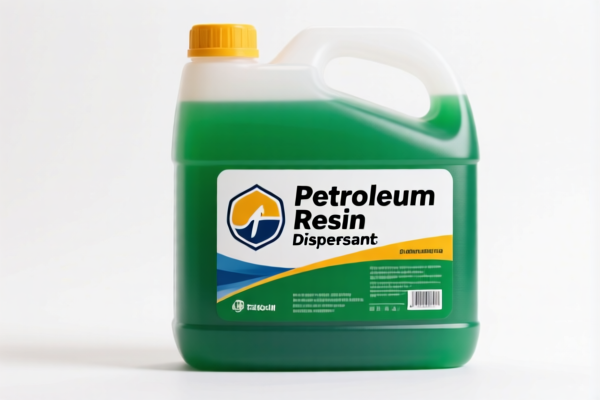
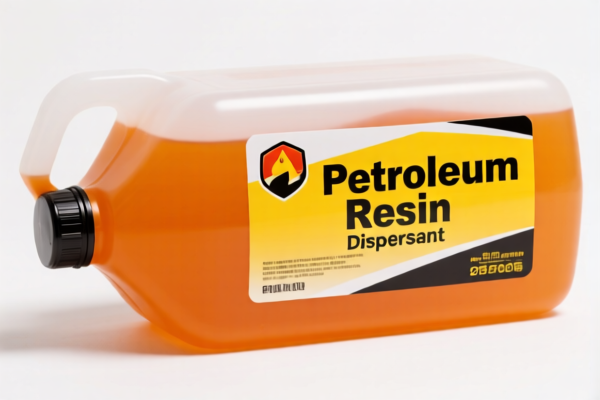
AI Analysis
🛡️ Anti-Explosion Cleaning Dispersant (Explosion-Proof Industrial Degreaser)
🌐 HS Code Reference & Customs Clearance Guide | 2026 Latest Tariff Analysis | Professional-Level Clearance Strategy
📌 I. Product Definition and Classification: Do You Really Understand "Anti-Explosion Cleaning Disersant"?
An Anti-Explosion Cleaning Dispersant is a specialized chemical mixture designed for cleaning industrial equipment, machinery, or facilities in hazardous environments (e.g., oil & gas refineries, chemical plants, mining operations, aerospace manufacturing).
Key characteristics:
- Low Flammability / Non-Explosive: Formulated with non-flammable solvents (e.g., water-based, fluorinated hydrocarbons, or specialized esters) to prevent ignition in explosive atmospheres.
- Dispersion Function: Emulsifies, disperses, or dissolves grease, oil, carbon deposits, and particulate matter.
- Certifications: Typically requires certifications such as ATEX (Europe), UL Class I Div 1/2 (USA), or IECEx for use in explosive zones.
⚠️ Critical Classification Distinction:
- If the product is primarily a cleaning agent (chemical composition >70% active ingredients for cleaning) → Classified under Chapter 38 (Miscellaneous Chemical Products).
- If it is primarily a solvent (for industrial degreasing, not labeled as "cleaner") → May fall under Chapter 29 (Organic Chemicals) or Chapter 38 depending on function.
- Never classify under "Explosives" (Chapter 36) unless it is an explosive material (which it is not—it prevents explosions).
📦 II. HS Code Classification Details (2026 Latest Tariff Authority Comparison)
| HS Code | Product Description | Applicable Scenario | Primary Function |
|---|---|---|---|
| 3820.00.00.00 | Prepared rust preventives; prepared oils and greases for internal combustion engines or lubricating oils | Not applicable – This is for lubricants, not cleaners. | Lubrication |
| 3824.99.95.00 | Other chemical products and preparations (including those for cleaning, degreasing, etc., not elsewhere specified) | Most likely – General-purpose industrial cleaning agents with anti-static/explosion-proof formulations. | Cleaning/Degreasing |
| 3402.90.90.00 | Organic surface-active agents (including those as components or preparations), washing preparations including auxiliary washing preparations and cleaning preparations, whether or not containing soap | Possible – If the product is a surfactant-based detergent/cleaning formulation. | Cleaning/Detergent |
| 3808.94.00.00 | Insecticides, rodenticides, fungicides, herbicides, antiseptics and similar products | Not applicable – Not a pesticide or disinfectant. | Pest Control |
| 2905.16.00.00 | 2-Methyl-2-propanol (tert-Butyl alcohol) | Not applicable – Only if the product is pure solvent, not a mixture. | Solvent |
| 3824.60.00.00 | Halogenated (including fluorinated) organic products | Possible – If based on fluorinated solvents (e.g., HFCs, PFCs) for precision cleaning. | Solvent/Cleaner |
🔍 Key Reminder:
- Most "Anti-Explosion Cleaning Dispersants" fall under3824.99.95.00or3402.90.90.00, depending on whether they are surfactant-based (3402) or chemical mixtures (3824).
- Do NOT classify under Chapter 36 (Explosives) – This is a preventive agent, not an explosive.
- Do NOT classify under Chapter 29 unless it is a pure organic chemical (unlikely for a commercial cleaning product).
💰 III. 2026 Latest Tariff Rate Breakdown (Including Supplementary Taxes, Policy Add-ons)
✅ Applicable Country: United States (US)
✅ Country of Origin: China (CN)
✅ Effective Date: November 10, 2025 onwards (including subsequent imports)
🎯 1. 3824.99.95.00 – Other Chemical Products (Most Common for Industrial Cleaners)
| Item | Details |
|---|---|
| Base Tariff Rate | 5.3% (ad valorem) |
| USITC Supplementary Tax | 0% (No Section 301 addition for this subheading) |
| IEEPA Supplementary Tax | +10% (USITC Footnote 9903.88.01 applies to certain Chinese-origin chemical products; verify if 3824.99.95 is exempt) |
| Total Tariff Rate | 5.3% ~ 15.3% (Depends on IEEPA applicability) |
| Tax Calculation | CIF Value × Total Rate |
| De Minimis Exemption | ❌ Not Eligible (Chemical products are generally excluded from Section 321 de minimis) |
| Legal Basis Path | IEEPA:9903.01.25 → USITC:3824.99.95.00 → FOOTNOTE:9903.88.01 |
📌 Explanation:
-3824.99.95is often not subject to the 25% Section 301 tariff, but may be subject to the 10% IEEPA tariff if classified under specific Chinese-origin chemical lists.
- Always verify with CBP whether your specific product formulation is exempt from IEEPA additions.
🎯 2. 3402.90.90.00 – Organic Surface-Active Agents / Washing Preparations
| Item | Details |
|---|---|
| Base Tariff Rate | 6.5% (ad valorem) |
| USITC Supplementary Tax | 0% |
| IEEPA Supplementary Tax | +10% (Same as above, verify applicability) |
| Total Tariff Rate | 6.5% ~ 16.5% |
| Tax Calculation | CIF Value × Total Rate |
| De Minimis Exemption | ❌ Not Eligible |
| Legal Basis Path | IEEPA:9903.01.25 → USITC:3402.90.90.00 → FOOTNOTE:9903.88.01 |
📌 Note:
- If the product is primarily a surfactant-based detergent (e.g., for washing machinery), it falls here.
- Tariff impact is moderate compared to electronics or steel.
🛠️ IV. Customs Clearance Practical Suggestions (Battle-Tested Pitfall Avoidance Guide)
✅ 1. Required Documentation Checklist (None Can Be Omitted)
| Document | Required | Description |
|---|---|---|
| ✅ Product Safety Data Sheet (SDS/MSDS) | ✔️ | Must comply with GHS (Globally Harmonized System) and highlight flammability class (e.g., Class 9 or non-flammable). |
| ✅ Certificate of Analysis (COA) | ✔️ | Confirms chemical composition, active ingredients, and absence of hazardous/explosive properties. |
| ✅ Certification for Explosive Atmospheres | ✔️ | ATEX, UL Class I Div 1/2, or IECEx certificates proving the product is safe for use in explosive zones. |
| ✅ Commercial Invoice | ✔️ | Clearly state: "Anti-Explosion Cleaning Dispersant, Non-Flammable, For Industrial Degreasing" |
| ✅ Packing List | ✔️ | Detail net/gross weight, number of containers, and hazard class (if any). |
| ✅ FDA/ EPA Registration (If Applicable) | ✔️ | If used in food-grade environments, EPA registration may be required. |
✅ 2. Declaration Strategy (Key Mantra)
🔥 "Declare by Function, Not by Name; Highlight Non-Flammability; Avoid 'Explosive' Misclassification!"
| Scenario | Correct Declaration | Wrong Practice |
|---|---|---|
| Industrial cleaner for hazardous zones | 3824.99.95.00 - "Chemical Cleaning Preparation, Non-Flammable" |
Calling it "Explosive Cleaner" → Triggers Chapter 36 investigation |
| Solvent-based degreaser | 3824.60.00.00 - "Halogenated Cleaning Agent" |
Mislabeling as "Lubricant" → Wrong HS Code, penalties |
| Water-based anti-static cleaner | 3402.90.90.00 - "Surfactant Cleaning Preparation" |
Under-declaring as "Water" → Fraud risk |
| Bulk chemical shipment | 3824.99.95.00 |
Mixing with flammable solvents in same container → Safety violation |
✅ 3. Special Handling Cases
| Case | Handling Suggestion |
|---|---|
| UN Number Assignment | If non-flammable, may be UN3082 (Environmentally Hazardous Substance, Solid) or UN3077 (Environmentally Hazardous Substance, Liquid). If truly non-hazardous, no UN number. |
| Flammability Labeling | Must display GHS Label with "Non-Flammable" or "Low Flammability" symbol. |
| Food-Grade vs. Industrial | If food-grade, EPA/FDA documentation is mandatory; otherwise, industrial use only. |
| Ocean Freight Hazmat Declaration | If classified as Class 9 (Miscellaneous Dangerous Goods), must file DGD (Dangerous Goods Declaration) with carrier. |
🌍 V. Global Market Clearance Comparison (2026 Latest)
| Country/Region | Recommended HS Code | Tariff | Certification Requirements | Notes |
|---|---|---|---|---|
| 🇺🇸 USA | 3824.99.95.00 or 3402.90.90.00 |
5.3%~16.5% | GHS SDS, UL/ATEX if explosive zone | IEEPA 10% may apply |
| 🇨🇳 China | 3824.99.90.00 |
5% | CCC (if applicable), MSDS | No additional surcharges |
| 🇪🇺 EU | 3824.99 or 3402.90 |
0%~4% | REACH Registration, CLP Labeling | REACH compliance is critical |
| 🇦🇺 Australia | 3824.99.90 |
5% | GHS Labeling, NICNAS Assessment | Moderate compliance |
| 🇯🇵 Japan | 3824.90 or 3402.90 |
6%~8% | JIS Standards, MSDS | Stricter chemical testing |
📌 Conclusion:
- The US and EU are the most stringent regarding chemical product documentation.
- China and Australia are relatively straightforward if MSDS and GHS labels are provided.
- Always ensure REACH (EU) or TSCA (US) compliance for chemical imports.
📌 VI. Common Mistakes & Pitfall Avoidance Guide (Lessons from Blood)
❌ Mistake 1: Classifying under Chapter 36 (Explosives) because of the word "Explosion" in the name
👉 Consequence: 100% inspection, seizure, or fines!
👉 Solution: Emphasize "Prevention" and "Non-Flammable" in declaration.
❌ Mistake 2: Omitting SDS/MSDS or providing outdated GHS version
👉 Consequence: Delay at customs, return of shipment
👉 Solution: Update SDS to latest GHS Rev. 9 (2025) standard.
❌ Mistake 3: Mislabeling flammable solvents as "Non-Explosive"
👉 Consequence: Safety violation, criminal liability
👉 Solution: Accurate flammability classification based on flash point testing.
❌ Mistake 4: Ignoring REACH (EU) or TSCA (US) chemical registration requirements
👉 Consequence: Import blocked, fines up to $50,000/day
👉 Solution: Verify chemical substances are registered under respective regulations.
✅ Correct Declaration Example:
"Anti-Explosion Industrial Cleaning Dispersant, Water-Based, Non-Flammable, For Use in Hazardous Zones, SDS Provided, HS Code 3824.99.95.00"
🎯 VII. Conclusion: Professional Declaration, Save Time and Cost!
🎯 Remember Mantra:
🔹 "Non-Flammable is Key, SDS is Mandatory, Avoid Chapter 36, Declare as Chemical Cleaner!"
🔹 "HS Code determines duty, Tariff varies by composition, Declaration accuracy saves thousands!"
📌 Pro Tip:
If your cleaning dispersant contains fluorinated compounds (e.g., PFAS), it may be subject to additional environmental regulations in the EU, US, and Australia. Test for PFAS content and declare accurately.
📣 Immediate Action:
📞 Contact a licensed customs broker + Provide SDS + Verify IEEPA Applicability
🚀 Ensure smooth clearance, avoid delays, and maximize efficiency!
✨ Professional Clearance Starts with Accurate Classification!
💼 Every dollar of duty is worth precise calculation!
Customer Reviews
About HS Code Classification
The Harmonized System (HS) is an internationally standardized nomenclature developed by the World Customs Organization (WCO) to classify traded products. Over 200 countries use the HS system as the basis for customs tariffs, trade statistics, and import/export regulations.
Each HS code follows a hierarchical structure:
- Chapter (2 digits) — Broad category of goods (e.g., Chapter 84: Machinery and Mechanical Appliances)
- Heading (4 digits) — More specific grouping within the chapter
- Subheading (6 digits) — Internationally standardized breakdown, used by all WCO member countries
- National subdivisions (8-10 digits) — Country-specific extensions for further classification, such as US HTSUS 10-digit codes
Correct HS code classification is essential for smooth customs clearance, accurate duty payment, and compliance with trade regulations. Misclassification can lead to customs delays, overpayment of duties, or penalties.
When importing from CN to US, the applicable tariff rates may include:
- Most-Favored-Nation (MFN) rate — The standard duty rate applied to WTO members
- General rate — Applied to countries without trade agreements
- Trade remedy duties — Additional tariffs such as Section 301 (anti-dumping), Section 232 (national security), or countervailing duties
The information provided on this page is for reference purposes only. For official classification, please consult with your local customs authority or a licensed customs broker.