Anti exposure Lining
CN → US| HS编码 | 关税税率 | 原产国 | 目的国 | 文档 |
|---|---|---|---|---|
| 6210105010 | 17.5% | CN | US | 官方文档 |
| 6210105090 | 17.5% | CN | US | 官方文档 |
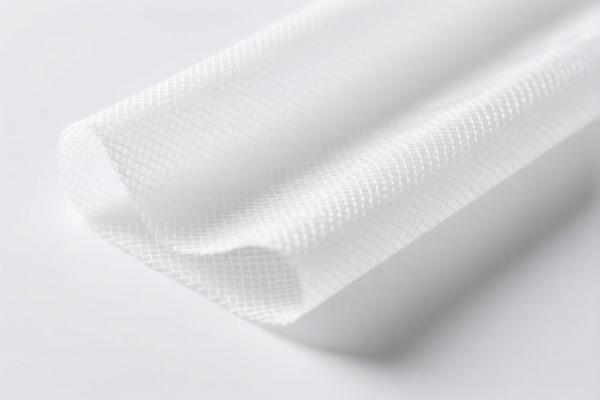
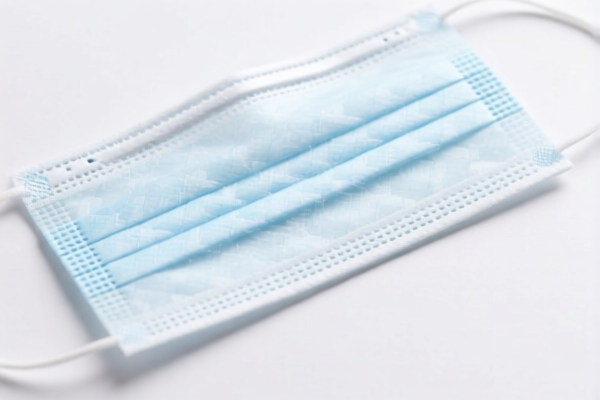
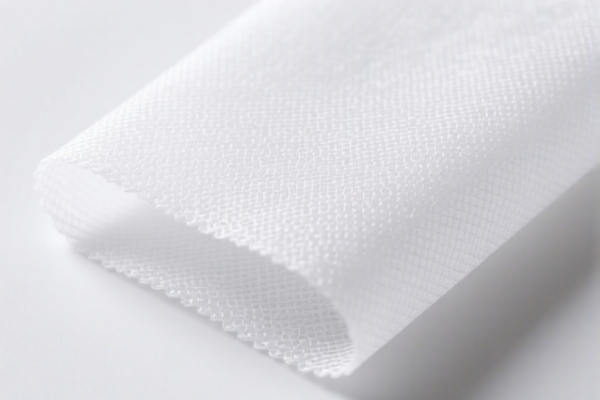
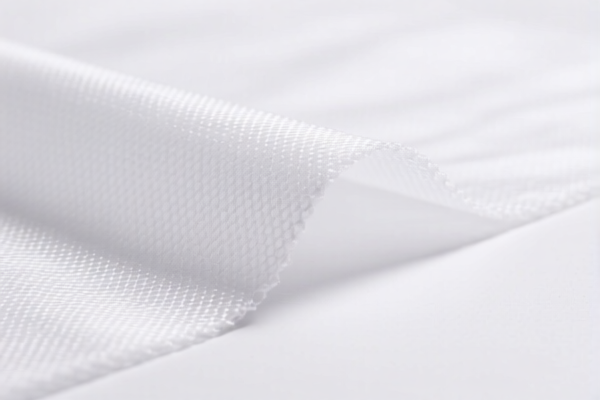
商品图片
AI分析
🛡️ Anti-Exposure Lining (Nonwoven Disposable Medical Apparel)
🌐 HS Code Reference & Customs Clearance Guide | 2026 Latest Tariff Analysis | Professional Clearance Strategy
📌 I. Product Definition & Classification: What is "Anti-Exposure Lining"?
Anti-Exposure Lining, in the context of international trade and customs classification, refers to nonwoven disposable garments specifically designed for protective use in high-risk environments. These items are typically made from fabrics classified under Heading 5602 (Felt) or Heading 5603 (Nonwovens).
In global supply chains, these products are broadly categorized into two distinct sub-groups based on their specific medical application:
- Surgical or Isolation Gowns: High-barrier protection used in hospitals, clinics, and during surgical procedures to prevent fluid and particle penetration.
- Other Nonwoven Disposable Apparel: General protective clothing for contaminated areas, laboratories, or industrial hygiene settings where specific "surgical" standards may not apply, but contamination control is critical.
⚠️ Key Distinction Point:
- If the garment is designed for hospital/clinic/surgical use → It falls under6210.10.50.10
- If the garment is for general lab/contaminated area use (non-surgical) → It falls under6210.10.50.90
- Material Base: Must be fabrics of Heading 5602, 5603, 5903, 5906, or 5907 (Mostly Nonwovens).
📦 II. HS Code Classification Details (2026 Latest Tariff Authority Comparison)
| HS Code | Product Description | Application Scenario | Key Features |
|---|---|---|---|
6210.10.50.10 |
Surgical or isolation gowns (Nonwoven disposable apparel) | Hospitals, Clinics, Surgical Theaters, Contaminated Areas | High-level barrier protection, sterile/non-sterile surgical use |
6210.10.50.90 |
Other nonwoven disposable apparel (For hospitals, clinics, labs, or contaminated areas) | Laboratories, Industrial Cleaning, General Contamination Control | Non-surgical protective clothing, lab coats, aprons, coveralls |
🔍 Critical Note:
- Both HS Codes fall under Chapter 62 (Articles of Apparel and Clothing Accessories, Not Knitted or Crocheted), specifically under 6210 (Garments made up of fabrics of heading 5602, 5603, 5903, 5906 or 5907). - The primary differentiator is the intended use: "Surgical/Isolation" vs. "Other."
💰 III. 2026 Latest Tariff Rate Breakdown (Including Additional Taxes & Policy Surcharges)
✅ Applicable Country: United States (US)
✅ Origin: China (CN)
✅ Effective Time: 2025/2026 Current Rates
🎯 1. 6210.10.50.10 —— Surgical or Isolation Gowns (Nonwoven)
| Item | Content |
|---|---|
| Base Tariff Rate | 0.0% (ad valorem) |
| Additional Tariff (Section 301) | +7.5% |
| Total Tax Rate | 7.5% |
| Tax Calculation | CIF Value × 7.5% |
| De Minimis Exemption Eligibility | ❌ No (Subject to Section 301 tariffs) |
| Legal Basis Path | HTSUS:6210.10.50.10 → Section 301 Footnote |
📌 Explanation:
- Although the base MFN (Most Favored Nation) tariff is 0%, products of Chinese origin are subject to an additional 7.5% tariff under Section 301 of the Trade Act. - This is a flat additional duty, not a cumulative percentage on top of the base rate (since base is 0%).
🎯 2. 6210.10.50.90 —— Other Nonwoven Disposable Apparel (Non-Surgical)
| Item | Content |
|---|---|
| Base Tariff Rate | 0.0% (ad valorem) |
| Additional Tariff (Section 301) | +7.5% |
| Total Tax Rate | 7.5% |
| Tax Calculation | CIF Value × 7.5% |
| De Minimis Exemption Eligibility | ❌ No (Subject to Section 301 tariffs) |
| Legal Basis Path | HTSUS:6210.10.50.90 → Section 301 Footnote |
📌 Note:
- Identical tax treatment to surgical gowns. - Even if the item is not a "gown" (e.g., lab coat, coverall, apron), if it is made of nonwoven fabric for protective use in contaminated areas, it retains the 7.5% additional tariff.
🛠️ IV. Customs Clearance Practical Advice (Battle-Tested Pitfall Guide)
✅ 1. Documentation Checklist (Mandatory)
| Document | Required? | Description |
|---|---|---|
| ✅ Product Description | ✔️ | Must specify "Nonwoven," "Disposable," and "Protective Apparel" |
| ✅ Intended Use Statement | ✔️ | Explicitly state: "Surgical/Isolation" vs. "General Lab/Contaminated Area" |
| ✅ Material Composition | ✔️ | Confirm fabric falls under Heading 5602/5603 |
| ✅ Certificate of Origin (CO) | ✔️ | For origin verification (China-origin triggers 7.5% surcharge) |
| ✅ Commercial Invoice | ✔️ | Accurate value, unit price, and HS Code reference |
| ✅ Packing List | ✔️ | Item count, weight, dimensions |
✅ 2. Declaration Tips (Key Mnemonic)
🔥 "Nonwoven Protect, Use Defines Code, 7.5% Addl Duty, China Origin Mode!"
| Scenario | Correct HS Code | Risk if Misclassified |
|---|---|---|
| Surgical Gown (Hospital Use) | 6210.10.50.10 |
Misclassifying as "Other" (50.90) may raise suspicion; however, tax rate is same. Better to be precise. |
| Lab Coat / Disposable Coverall | 6210.10.50.90 |
Misclassifying as "Surgical" (50.10) is unsafe (regulatory mismatch). |
| Woven Cotton Gown | Not in DATA | Falls under Chapter 61 or other 62 subheadings (e.g., 6210.30, 6210.40) with different tax rates. Do NOT use 6210.10.50.10/90. |
| Reusable PPE | Not in DATA | Reusable items may fall under different headings. This data applies only to Disposable nonwovens. |
⚠️ Critical Warning:
- Do not declare these as "Textile Garments" generally (e.g., 6217.90) if they are specifically nonwoven disposables for protective use. The specificity of Heading 6210 overrides general provisions. - Misdeclaration Risk: If Customs determines the item is not made of Heading 5602/5603 fabrics, the entire classification fails.
✅ 3. Special Case Handling
| Case | Handling Advice |
|---|---|
| Mixed Shipments (Surgical + Lab) | Clearly separate items on invoice. Use 50.10 for surgical, 50.90 for lab. Do not lump under one code if distinct uses. |
| OEM/Private Label | Ensure the manufacturer confirms the fabric type (Nonwoven). Private label doesn't change HS Code. |
| Origin Change | If shipped from Vietnam/Malaysia/Thailand with substantial transformation, you may avoid the 7.5% additional tariff. Provide proof of origin. |
| De Minimis (Section 321) | ❌ Not Eligible: Items under Section 301 (like these) are generally excluded from the $800 de minimis exemption if they are subject to the 7.5% surcharge. Declare formally. |
🌍 V. Global Market Comparison (2026 Update)
| Country/Region | Recommended HS Code | Base Tariff | Additional Tariff (China) | Total Cost Impact |
|---|---|---|---|---|
| 🇺🇸 USA | 6210.10.50.10 / 50.90 |
0% | +7.5% | 7.5% |
| 🇨🇳 China | 6210.10.50.10 / 50.90 |
0% - 5% | N/A (Import) | Low |
| 🇪🇺 EU | 6210.10.90 (Similar) |
0% - 4% | None | Low |
| 🇬🇧 UK | 6210.10.90 |
0% - 4% | None | Low |
📌 Conclusion:
- The 7.5% additional tariff is a specific burden for US imports from China.
- Other markets (EU, UK, Canada) generally do not apply Section 301-like surcharges to these goods.
📌 VI. Common Mistakes & Pitfalls (Blood & Tears Lesson)
❌ Mistake 1: Classifying Reusable PPE as Disposable Nonwoven
👉 Consequence: Wrong HS Code, potential penalty, and incorrect duty assessment.
❌ Mistake 2: Ignoring the 7.5% Additional Tariff
👉 Consequence: Underpayment of duties, penalties, and interest upon US Customs inspection.
❌ Mistake 3: Using "Clothing" generic description
👉 Consequence: Customs may request additional info, leading to delays. Be specific: "Nonwoven Disposable Isolation Gown."
❌ Mistake 4: Assuming De Minimis exemption applies
👉 Consequence: If the package value is < $800 but subject to Section 301, it must be entered formally. Failure to do so can lead to seizure or fines.
✅ Correct Approach:
"Disposable Nonwoven Surgical Gown, Head-to-Toe, SMS Fabric, Sterile, Model XYZ, Made in China"
🎯 VII. Conclusion: Precision in Classification Saves Money
🎯 Remember:
🔹 "Nonwoven Disposable, Use Defines the Code"
🔹 "Surgical = 50.10, Other = 50.90"
🔹 "China Origin = 7.5% Extra Tax, No De Minimis!"
📌 Pro Tip:
If you are importing large volumes into the US, consider:
1. Supply Chain Diversification: Source from non-China countries to avoid the 7.5% additional tariff.
2. Advance Ruling: Request a CBP (Customs and Border Protection) Advance Ruling to confirm the specific classification of your product to avoid post-entry audits.
📣 Immediate Action:
📞 Consult your customs broker with product photos and material specs.
🚀 Ensure your commercial invoice clearly states "Nonwoven Disposable Apparel" to prevent classification disputes.
✨ Professional Customs Clearance Starts with Accurate Classification!
💼 Every 7.5% matters—don't let misclassification eat your margin!
用户评价
关于 HS 编码归类
协调制度(HS)是由世界海关组织(WCO)制定的国际贸易商品分类标准。全球 200 多个国家采用 HS 系统作为海关关税、贸易统计和进出口监管的基础。
每个 HS 编码遵循以下层级结构:
- 章(2 位)——商品大类(例如:第 84 章:机器和机械设备)
- 品目(4 位)——章内的更具体分类
- 子目(6 位)——国际通用细分,所有 WCO 成员国统一使用
- 本国细分(8-10 位)——各国自行扩展的细分编码,如美国 HTSUS 10 位编码
正确的 HS 编码归类对于顺利通关、准确缴纳关税和遵守贸易法规至关重要。错误归类可能导致海关延误、多缴关税或罚款。
从CN进口到US时,适用的关税税率可能包括:
- 最惠国(MFN)税率——适用于 WTO 成员国的标准关税税率
- 普通税率——适用于无贸易协定国家
- 贸易救济关税——附加关税,如 301 条款(反倾销)、232 条款(国家安全)或反补贴税
本页内容仅供参考。如需正式归类,请咨询当地海关或持牌报关代理。