Anti tamper Tag
CN → US| HS编码 | 关税税率 | 原产国 | 目的国 | 文档 |
|---|---|---|---|---|
| 8309900085 | 37.6% | CN | US | 官方文档 |
| 8301106080 | 23.6% | CN | US | 官方文档 |
| 8301406060 | 23.2% | CN | US | 官方文档 |
| 8309900080 | 37.6% | CN | US | 官方文档 |
| 4821102000 | 35.0% | CN | US | 官方文档 |
商品图片
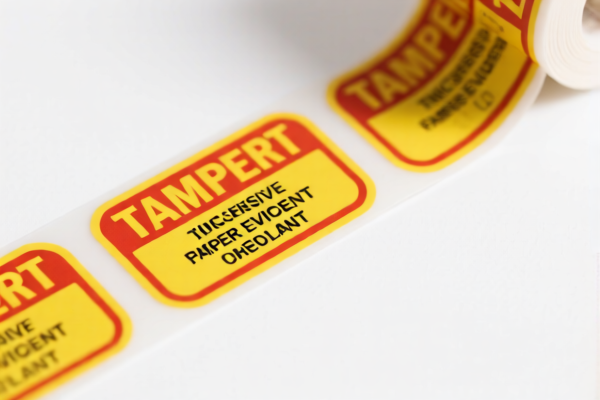
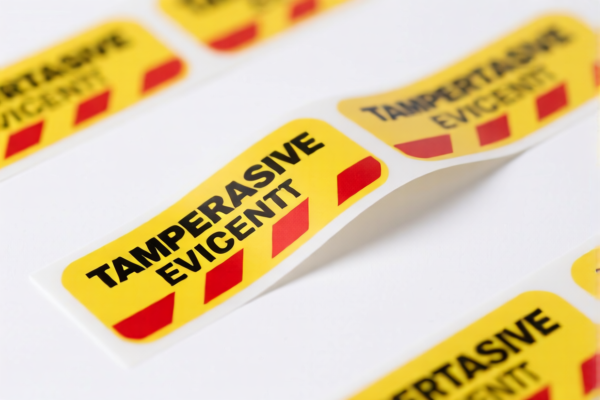
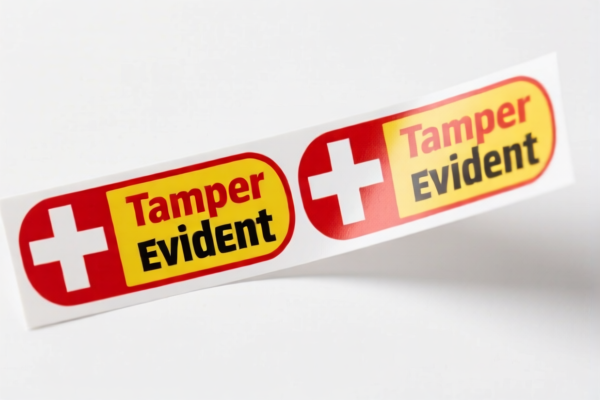
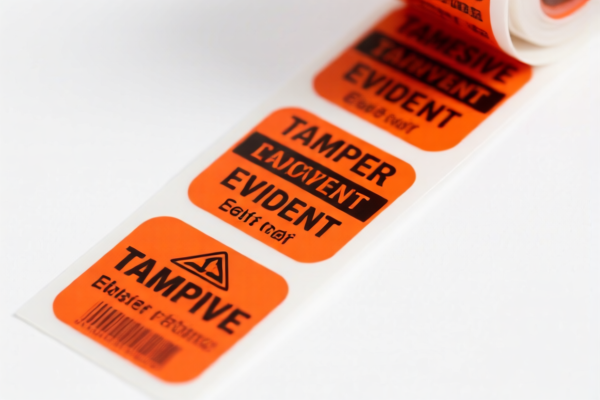
AI分析
🔒 Anti-Tamper Tags (Security Seals & Labels)
🌐 HS Code Reference & Customs Clearance Guide | 2026 Latest Tariff Analysis | Professional Compliance Strategy
📌 I. Product Definition & Classification: What Exactly Is an "Anti-Tamper Tag"?
An Anti-Tamper Tag is a broad category of security accessories designed to provide visible evidence of unauthorized access, theft, or interference. In international trade, these items do not have a single exclusive HS code; instead, they are classified based on their primary function, material, and structural form.
The provided data identifies four distinct classification paths, ranging from metallic locks/seals to paper labels. Misclassification can lead to significant duty discrepancies due to the varying "Section 301" and "122 Clause" tariffs.
⚠️ Key Distinction Points:
- Is it a physical locking mechanism (metal/plastic seal)? → Likely 8301 or 8309.
- Is it a paper/film label with security features? → Likely 4821.
- Does it function as a closure/stopper for bottles/containers? → Likely 8309.
📦 II. HS Code Classification Details (2026 Latest Tariff Authority Mapping)
Based on the provided data, here are the four potential HS Codes and their logical derivation:
| HS Code | Product Description | Logical Basis from Data |
|---|---|---|
8309.90.00.85 |
Other closures and caps (Anti-tamper functional accessories) | Based on the anti-tamper function commonly found in closures like corks, caps, and plugs. Fits the "other items" fallback logic for packaging accessories. |
8301.10.60.80 |
Locks of a kind used for motor vehicles (Security locks/seals) | Inferred as lock articles or seals with security functions based on anti-tamper attributes. Fits ferrous metal or composite material characteristics. |
8301.40.60.60 |
Other locks (Security locking devices) | Inferred as lock articles with specific locking or protective functions based on anti-tamper attributes. Fits the "other locks" fallback category. |
8309.90.00.80 |
Other articles of base metal (Sealing/Packaging accessories) | Anti-tamper belongs to sealing/packaging attachment functions, consistent with sealing parts and packaging accessories. Follows the "other items" fallback principle. |
4821.10.20.00 |
Paper or paperboard labels (Security Labels/Stickers) | Anti-tamper labels fall under paper/cardboard label usage. Though material isn't always specified, it is inferred to be paper or film, matching the label form and function. |
🔍 Critical Note:
- Metal Seals/Barrels Seals: Often fall under 8309 (Closures) or 8301 (Locks) depending on whether they are classified as "closures" or "locking devices."
- Adhesive Labels: Must be classified under 4821 if primarily paper/film-based, regardless of any embedded RFID chips (unless the chip's value/function outweighs the label's).
💰 III. 2026 Latest Tariff Rate Breakdown (Including Surcharge & Policy Surcharges)
✅ Applicable Country: United States (US)
✅ Country of Origin: China (CN)
✅ Effective Date: 2025/2026 Import Period
🎯 1. 8309.90.00.85 & 8309.90.00.80 —— Closures & Packaging Accessories
These codes cover anti-tamper caps, plugs, and metal sealing accessories.
| Item | Content |
|---|---|
| Base Duty Rate | 2.6% (ad valorem) |
| Section 301 Surcharge | +25.0% |
| 122 Clause Tariff | +10.0% |
| Total Effective Rate | 37.6% |
| Tax Calculation | CIF Value × 37.6% |
| De Minimis Exemption | ❌ Not Available (High risk for small packages) |
| Legal Basis Path | Base Tariff → Section 301 (USITC Footnote) → 122 Clause (USTR) |
📌 Explanation:
- Although the base rate is low (2.6%), the 25% Section 301 tariff is the dominant cost driver for Chinese-origin goods.
- The 122 Clause adds an additional 10% on top, making the total burden 37.6%.
- This applies to metal or plastic seals/caps that are considered "closures."
🎯 2. 8301.10.60.80 & 8301.40.60.60 —— Locks & Security Seals
These codes cover heavy-duty anti-tamper locks, bolt seals, and industrial security seals.
| Item | Content |
|---|---|
| Base Duty Rate | 5.7% – 6.1% (varies by sub-heading) |
| Section 301 Surcharge | +7.5% |
| 122 Clause Tariff | +10.0% |
| Total Effective Rate | 23.2% – 23.6% |
| Tax Calculation | CIF Value × ~23.4% (average) |
| De Minimis Exemption | ❌ Not Available |
| Legal Basis Path | Base Tariff → Section 301 (Specific Footnotes) → 122 Clause |
📌 Explanation:
- Locks often benefit from slightly lower Section 301 surcharges (7.5% vs 25%) compared to general closures.
- The total tax burden is significantly lower (≈23%) than closures (37.6%).
- Strategy: If the anti-tamper device is a rigid bolt seal or padlock-style security tag, classify under 8301 rather than 8309 to save ~14% in duties.
🎯 3. 4821.10.20.00 —— Paper/Film Security Labels
These codes cover adhesive anti-tamper labels, void stickers, and holographic seals.
| Item | Content |
|---|---|
| Base Duty Rate | 0.0% |
| Section 301 Surcharge | +25.0% |
| 122 Clause Tariff | +10.0% |
| Total Effective Rate | 35.0% |
| Tax Calculation | CIF Value × 35.0% |
| De Minimis Exemption | ❌ Not Available |
| Legal Basis Path | Base Tariff (0%) → Section 301 → 122 Clause |
📌 Explanation:
- While the base rate is 0%, the 25% Section 301 and 10% 122 Clause apply, resulting in a 35% total.
- This is still cheaper than closures (37.6%) but more expensive than locks (23.2%).
- Crucial: If the label contains electronic components (e.g., NFC/RFID) that define the essential character, it might move to Chapter 85, but standard paper/film labels remain here.
🛠️ IV. Customs Clearance Practical Advice (Real-World Pitfall Guide)
✅ 1. Documentation Checklist (Non-Negotiable)
| Document | Must Provide | Explanation |
|---|---|---|
| ✅ Product Specification Sheet | ✔️ | Clearly state: "Anti-Tamper," "Void Effect," "Locking Mechanism," or "Seal Type." |
| ✅ Material Composition | ✔️ | Specify if it is Metal (Steel/Aluminum), Plastic (Polypropylene), Paper, or Film. This dictates HS Chapter (83 vs 48). |
| ✅ Product Photos (Open/Closed) | ✔️ | Show how the tamper evidence is triggered (e.g., "voids text upon removal," "breaks if cut"). |
| ✅ Commercial Invoice | ✔️ | Use precise descriptions: "Metal Bolt Seal, Anti-Tamper" NOT just "Seal." |
| ✅ Label Design (if adhesive) | ✔️ | For 4821, provide a scan of the label to prove it is primarily paper/film. |
✅ 2. Classification Strategy (The "Save Money" Logic)
| Scenario | Recommended HS Code | Tax Rate | Why? |
|---|---|---|---|
| Rigid Metal Bolt Seal (for shipping containers) | 8301.40.60.60 |
23.2% | Classified as a Lock, not a closure. Lower Section 301 surcharge. |
| Plastic Cable Tie Seal | 8301.10.60.80 or 8309 |
23.2% - 37.6% | Debatable. If it acts as a lock, use 8301. If just a tie, use 8309. Argue for Locks to save tax. |
| Bottle Cap with Tamper Band | 8309.90.00.85 |
37.6% | Clearly a Closure. No argument for 8301. |
| Adhesive "Void" Sticker | 4821.10.20.00 |
35.0% | Clearly a Label. Base rate 0% helps, but 301 tax applies. |
🔥 Key Insight:
- Do NOT classify all anti-tamper items as "Labels." If it is a rigid plastic or metal seal, argue for Chapter 83 (Base Metals).
- Do NOT classify metal locks as "Closures" unless they are simple caps. Bolt seals are often argued as Locks (8301) to benefit from the lower 7.5% Section 301 rate instead of 25%.
✅ 3. Special Circumstances
| Situation | Handling Advice |
|---|---|
| Anti-Tamper with RFID | If the RFID chip provides essential tracking function, it may fall under Chapter 85. However, standard paper labels with RFID are often still 4821. Consult a specialist. |
| Custom Branding | Custom logos on seals/labels do not change the HS code but must be declared to prove they are finished goods, not raw materials. |
| Small Quantities (De Minimis) | ❌ No Exemption. All listed codes trigger high tariffs. Do not use 861.17 (De Minimis) for these items if they are clearly subject to Section 301/122. |
🌍 V. Global Market Comparison (2026 Update)
| Market | Recommended HS | Est. Total Tax (China Origin) | Notes |
|---|---|---|---|
| 🇺🇸 USA | 8301 (Lock) / 8309 (Closure) / 4821 (Label) |
23.2% – 37.6% | High Section 301 & 122 Clause impacts. |
| 🇨🇳 China | 8301 / 8309 / 4821 |
5% – 13% | Lower base rates, no Section 301. |
| 🇪🇺 EU | 8301 / 8309 / 4821 |
0% – 3.7% | Generally low base duties, no major US-style surcharges. |
| 🇬🇧 UK | 8301 / 8309 / 4821 |
0% – 3.7% | Post-Brexit, mostly aligns with EU rates. |
📌 Conclusion:
- The USA is the most expensive market due to Section 301 and 122 Clause tariffs.
- For US exports, try to classify rigid seals as Locks (8301) to save ~14% vs. Closures.
- Labels (4821) are a middle ground (35%) but risky if the "label" is actually a complex security device.
📌 VI. Common Errors & Pitfalls (Blood & Tears Lessons)
❌ Error 1: Classifying a Metal Bolt Seal as a "Plastic Tag" (3926)
👉 Consequence: If deemed a plastic article, it may face different tariffs or lack specific security exemptions. Better to use 8301 for robust metal/plastic hybrid locks.
❌ Error 2: Calling a Padlock Security Tag a "Closure" (8309)
👉 Consequence: You pay 37.6% instead of 23.2%. A bolt seal locks the container; it doesn't just close a bottle. Argue for 8301 to save money.
❌ Error 3: Ignoring the 122 Clause
👉 Consequence: Many importers only calculate Section 301 (25%). Failing to add the 10% 122 Clause results in underpayment, leading to CBSA/USCBP audits and penalties.
✅ Correct Declaration Example:
"Anti-Tamper Steel Bolt Seal, Used for Shipping Containers, Locking Function, HS Code 8301.40.60.60"
🎯 VII. Conclusion: Precise Classification Saves Thousands!
🎯 Remember the Golden Rule:
🔹 "Rigid Seal = Lock (8301) = 23.2% Tax"
🔹 "Cap/Closure = Closure (8309) = 37.6% Tax"
🔹 "Sticker/Label = Label (4821) = 35.0% Tax"
📌 Action Plan:
1. Inspect the Physical Product: Is it a lock? A cap? A sticker?
2. Check Material: Metal/Plastic (Ch 83) vs. Paper/Film (Ch 48).
3. Apply Correct HS: Use the logic above to minimize the 301/122 impact.
4. Document Everything: Photos and specs are your best defense against customs reclassification.
✨ Professional Clearance Starts with Accurate Classification!
💼 Every Percentage Point Saved is Pure Profit!
用户评价
关于 HS 编码归类
协调制度(HS)是由世界海关组织(WCO)制定的国际贸易商品分类标准。全球 200 多个国家采用 HS 系统作为海关关税、贸易统计和进出口监管的基础。
每个 HS 编码遵循以下层级结构:
- 章(2 位)——商品大类(例如:第 84 章:机器和机械设备)
- 品目(4 位)——章内的更具体分类
- 子目(6 位)——国际通用细分,所有 WCO 成员国统一使用
- 本国细分(8-10 位)——各国自行扩展的细分编码,如美国 HTSUS 10 位编码
正确的 HS 编码归类对于顺利通关、准确缴纳关税和遵守贸易法规至关重要。错误归类可能导致海关延误、多缴关税或罚款。
从CN进口到US时,适用的关税税率可能包括:
- 最惠国(MFN)税率——适用于 WTO 成员国的标准关税税率
- 普通税率——适用于无贸易协定国家
- 贸易救济关税——附加关税,如 301 条款(反倾销)、232 条款(国家安全)或反补贴税
本页内容仅供参考。如需正式归类,请咨询当地海关或持牌报关代理。