Archival Photography Paper Base
CN → US| HS编码 | 关税税率 | 原产国 | 目的国 | 文档 |
|---|---|---|---|---|
| 4823906700 | 35.0% | CN | US | 官方文档 |
| 3926908700 | 40.3% | CN | US | 官方文档 |
| 4823908680 | 35.0% | CN | US | 官方文档 |
| 4811413000 | 35.0% | CN | US | 官方文档 |
| 3926909989 | 22.8% | CN | US | 官方文档 |
商品图片

AI分析
📸 Archival Photography Paper Base
🌐 HS Code Reference & Customs Clearance Guide | 2026 Latest Tariff Analysis | Professional Clearance Strategy
📌 I. Product Definition & Classification: What Exactly is “Archival Photography Paper Base”?
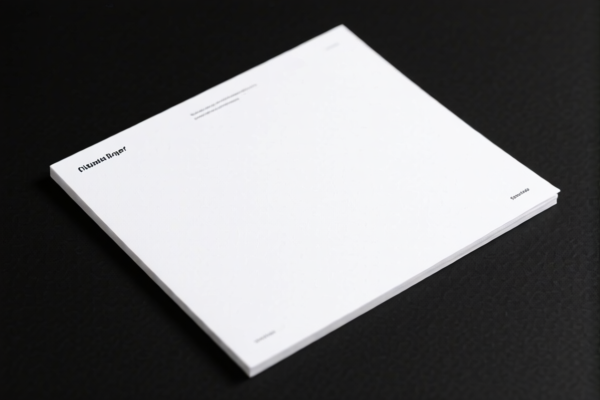
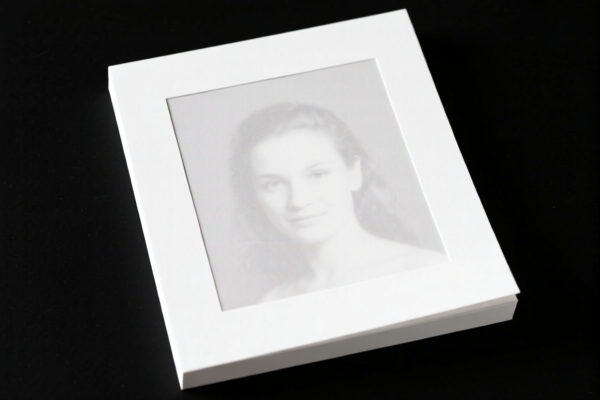
Archival photography paper base refers to the fundamental substrate (support layer) used in manufacturing professional-grade photographic papers. It is typically made from high-purity cellulose fibers (paper) or polymer films (plastic). Its primary function is to provide a stable, acid-free, and dimensionally stable foundation for light-sensitive emulsions.
In international trade, classification depends strictly on material composition and physical form:
1. Paper-Based Substrates (Cellulose):
If the base is made of paper (even if uncoated, bleached, or cut to size), it falls under Chapter 48 (Paper and Paperboard).
Key Characteristic: Natural fiber structure, absorbent or sized surface.
2. Plastic-Based Substrates (Polymer/PVC/PET):
If the base is a synthetic film (e.g., polyester, PVC, or polypropylene) often used for modern fine-art or inkjet papers, it falls under Chapter 39 (Plastics and Articles Thereof).
Key Characteristic: Non-absorbent, dimensionally stable, often transparent or semi-transparent before coating.
⚠️ Critical Distinction Point:
- If the product is pure paper/paperboard without photographic emulsion → Chapter 48
- If the product is a plastic film acting as a support → Chapter 39
- Do not confuse with "Photographic Paper" (already coated with emulsion), which is classified differently (usually 4809 or 4810). This inquiry is specifically about the BASE.
📦 II. HS Code Classification Details (2026 Latest Tariff Authority Comparison)
| HS Code | Product Description | Material | Application Scenario | Tax Rate (China Origin to US) |
|---|---|---|---|---|
4823.90.67.00 |
Other paper articles, cut to size or shape, not further worked than printed or surface-coated | Paper | Standard archival paper bases, cut sheets for darkroom use | 35.0% |
3926.90.87.00 |
Other articles of plastics, flexible plastic/film, flat shape | Plastic (PVC/Film) | Flexible plastic film bases for digital inkjet or fine art | 40.3% |
4823.90.86.80 |
Other paper/board articles, cut to specific dimensions/shapes | Paper | Paper substrates with specific cuts or shapes for professional printing | 35.0% |
4811.41.30.00 |
Self-adhesive paper/plastic backing, coated with adhesives | Paper | Paper bases with adhesive backing (for labels, transfers, or mounting) | 35.0% |
3926.90.99.89 |
Other plastic articles, unspecified, plastic backing/film | Plastic | Generic plastic backing films not classified elsewhere | 22.8% |
🔍 Key Reminder:
- All paper-based substrates (4823series) attract a 35% total tariff.
- Plastic-based substrates vary: Flexible films (3926.90.87) attract 40.3%, while other unspecified plastic articles (3926.90.99) attract 22.8%.
- Misclassification between Paper (48xx) and Plastic (39xx) is the #1 cause of customs delays and penalties.
💰 III. 2026 Latest Tariff Rate Breakdown (Including Surtaxes & Policy Add-ons)
✅ Applicable Country: United States (US)
✅ Origin: China (CN)
✅ Effective Date: Post-November 10, 2025 (Includes subsequent imports)
🎯 1. 4823.90.67.00 / 4823.90.86.80 / 4811.41.30.00 —— Paper-Based Archives (Paper Substrates)
| Item | Content |
|---|---|
| Basic Tariff | 0.0% (ad valorem) |
| USITC Surtax (Section 301) | +25.0% |
| IEEPA Surtax | +10.0% (Targeting China/HK products) |
| Total Tariff Rate | 35.0% |
| Tax Calculation | CIF Value × 35% |
| De Minimis Eligibility | ❌ NO (deny_de_minimis) |
| Legal Basis Path | IEEPA:9903.01.25 → USITC:4823.xx → FOOTNOTE:9903.88.01 |
📌 Explanation:
- Although the basic tariff for paper products is 0%, the Section 301 tariffs (25%) and IEEPA surtaxes (10%) apply heavily.
- Total 35% is considered a high import cost. Must be factored into pricing strategies.
- No de minimis exemption applies for small shipments; duties apply from the first unit.
🎯 2. 3926.90.87.00 —— Flexible Plastic Film Bases
| Item | Content |
|---|---|
| Basic Tariff | 5.3% |
| USITC Surtax (Section 301) | +25.0% |
| IEEPA Surtax | +10.0% |
| Total Tariff Rate | 40.3% |
| Tax Calculation | CIF Value × 40.3% |
| De Minimis Eligibility | ❌ NO (deny_de_minimis) |
| Legal Basis Path | IEEPA:9903.01.25 → USITC:3926.90.87.00 → FOOTNOTE:9903.88.01 |
📌 Note:
- Plastic films for photographic bases are classified as "Other plastic articles."
- The 40.3% rate is the highest among all listed options.
- Even if the plastic is "flexible" or "uncoated," the 301 tariffs apply.
🎯 3. 3926.90.99.89 —— Other Plastic Articles (Unspecified Plastic Bases)
| Item | Content |
|---|---|
| Basic Tariff | 5.3% |
| USITC Surtax (Section 301) | +7.5% (Note: Lower 301 rate for specific subcategories) |
| IEEPA Surtax | +10.0% |
| Total Tariff Rate | 22.8% |
| Tax Calculation | CIF Value × 22.8% |
| De Minimis Eligibility | ❌ NO (deny_de_minimis) |
| Legal Basis Path | IEEPA:9903.01.25 → USITC:3926.90.99.89 → FOOTNOTE:9903.88.01 |
📌 Strategic Insight:
- If the plastic base does not fit the "flexible film" description (3926.90.87), it may qualify for the lower 301 surtax of 7.5% instead of 25%.
- This results in a 22.8% total rate, significantly cheaper than the 40.3% or 35% rates.
- Crucial: Requires precise technical justification to avoid misclassification.
🛠️ IV. Customs Clearance Practical Advice (Battle-Tested Pitfall Avoidance)
✅ 1. Required Documentation Checklist (Non-Negotiable)
| Document | Mandatory | Explanation |
|---|---|---|
| ✅ Product Spec Sheet | ✔️ | Must specify: Material (Cellulose vs. Polyester/PVC), Thickness (Microns), Width, Length, Surface Treatment (e.g., sized, uncoated). |
| ✅ Material Safety Data Sheet (MSDS) | ✔️ | If any chemical coatings or adhesives are present. |
| ✅ Product Photos (Raw Base) | ✔️ | Show texture (fibrous for paper, smooth/transparent for plastic). |
| ✅ Commercial Invoice | ✔️ | Description must be precise: "Archival Paper Base, 100% Alpha Cellulose, Uncoated, 250gsm" OR "Polyester Film Base, Clear, 175μm". |
| ✅ Certificate of Origin | ✔️ | To verify China origin for 301/IEEPA applicability. |
| ✅ Packaging List | ✔️ | Confirm no photographic emulsion is included (if so, HS code changes to 4809/4810). |
✅ 2. Declaration Tips (Key Mantra)
🔥 "Material First, Form Second, Name Precise, Tax Rate Clear!"
| Scenario | Correct Declaration | Wrong Practice |
|---|---|---|
| Paper Base | "Archival Photography Paper Base, Uncoated, Cut Sheets" → 4823.90.67.00 |
Vague: "Photo Paper" → May be misclassified as coated paper (4809) → Different tariff |
| Plastic Film Base | "Polyester Film Base for Printing, Flexible, Uncoated" → 3926.90.87.00 |
Vague: "Plastic Sheet" → May be misclassified as rigid plastic → Higher tariff |
| Adhesive Backing | "Self-Adhesive Paper Backing" → 4811.41.30.00 |
Omitting "Adhesive" → Misclassification |
| Generic Plastic Base | "Other Plastic Support Film" → 3926.90.99.89 |
Over-specifying as "Flexible Film" when not applicable → 40.3% instead of 22.8% |
✅ 3. Special Cases Handling
| Scenario | Handling Advice |
|---|---|
| Hybrid Materials | If base is paper with a plastic coating → Usually Chapter 48 (Paper prevails if >50% by weight/value, or per HTS Note). |
| OEM Custom Sizes | Provide customer order + technical drawing. Prove "cut to size" to support 4823.90 classification. |
| Sample Shipments | Still subject to 35-40% duty. Do not declare as "Free Sample" to avoid customs penalties. |
| Returns/Replacements | Must provide original export documents to claim duty drawback if applicable. |
🌍 V. Global Market Customs Comparison (2026 Latest)
| Country/Region | Recommended HS Code | Tariff (China Origin) | Certification Req. | Notes |
|---|---|---|---|---|
| 🇺🇸 USA | 4823.90.67.00 / 3926.90.87.00 |
35% - 40.3% | None specific | High tariff burden. 301+IEEPA applies. |
| 🇨🇳 China | 4823.90 / 3926.90 |
~5-7% | None | Low duty. |
| 🇪🇺 EU | 4823.90 / 3926.90 |
6.5% - 10% | REACH Compliance | No Section 301 equivalent, but REACH registration may be needed for chemicals. |
| 🇬🇧 UK | 4823.90 / 3926.90 |
6.5% - 10% | UKCA Marking | Post-Brexit rules apply. |
| 🇯🇵 Japan | 4823.90 / 3926.90 |
0% - 3% | PSE (if electrical components involved) | Very favorable for paper/plastic substrates. |
📌 Conclusion:
- The US market is the most expensive due to layered tariffs (Base + 301 + IEEPA).
- EU/UK/Japan offer significantly lower duties but may have stricter environmental/chemical regulations (REACH).
- For US exports, accurate classification is critical to avoid overpaying or facing audits.
📌 VI. Common Errors & Pitfall Guide (Lessons Learned)
❌ Mistake 1: Declaring "Archival Paper" as "Photographic Paper" (HS 4809)
👉 Consequence: If no emulsion is present, this is misclassification. Customs may assess duties under 4809 (~10-20% base + surtaxes) or reject the entry.
Result: Delay, fines, or seizure.
❌ Mistake 2: Claiming "Plastic Base" is "Flexible Film" (3926.90.87) when it is actually a "Rigid Sheet" or "Other Plastic" (3926.90.99)
👉 Consequence: Overpaying tariffs (40.3% vs 22.8%).
Result: Lost profit margin.
❌ Mistake 3: Omitting "Uncoated" or "Base Only" in Description
👉 Consequence: Customs assumes coated/emulsified paper (higher scrutiny).
Result: Extended hold for examination.
❌ Mistake 4: Ignoring IEEPA Surtax
👉 Consequence: Under-declaring value by 10%.
Result: Penalties, interest, and potential trade fraud allegations.
✅ Correct Practice:
"Archival Photography Paper Base, 100% Alpha Cellulose, Uncoated, Acid-Free, Cut Sheets, 250gsm, Model XYZ"
OR
"Polyester Film Base for Inkjet Printing, Clear, Flexible, 175 Microns, Uncoated, Model ABC"
🎯 VII. Conclusion: Precision in Classification, Profit in Clearance
🎯 Remember the Mantra:
🔹 "Paper vs. Plastic, Define it Clear!"
🔹 "No Emulsion, No Photo Paper Code!"
🔹 "301 + IEEPA = 35-40%, Factor it In!"
🔹 "De Minimis is Dead, Pay Every Duty!"
📌 Pro Tip:
- If your product is plastic-based and fits the 3926.90.99.89 category, argue for the 7.5% Section 301 surtax instead of 25% if technically justifiable.
- For paper-based products, the 35% rate is fixed. Focus on volume discounts or supply chain optimization to mitigate costs.
- Apply for a Binding Ruling (CBP Ruling) before large shipments to lock in the HS Code and tariff rate.
📣 Immediate Action:
📞 Contact a Licensed Customs Broker + Provide Product Samples + Request a CBP Advance Ruling
🚀 Ensure your shipments clear smoothly, efficiently, and cost-effectively!
✨ Professional Clearance Starts with Accurate Classification!
💼 Every Percent of Duty Saved is Pure Profit!
用户评价
关于 HS 编码归类
协调制度(HS)是由世界海关组织(WCO)制定的国际贸易商品分类标准。全球 200 多个国家采用 HS 系统作为海关关税、贸易统计和进出口监管的基础。
每个 HS 编码遵循以下层级结构:
- 章(2 位)——商品大类(例如:第 84 章:机器和机械设备)
- 品目(4 位)——章内的更具体分类
- 子目(6 位)——国际通用细分,所有 WCO 成员国统一使用
- 本国细分(8-10 位)——各国自行扩展的细分编码,如美国 HTSUS 10 位编码
正确的 HS 编码归类对于顺利通关、准确缴纳关税和遵守贸易法规至关重要。错误归类可能导致海关延误、多缴关税或罚款。
从CN进口到US时,适用的关税税率可能包括:
- 最惠国(MFN)税率——适用于 WTO 成员国的标准关税税率
- 普通税率——适用于无贸易协定国家
- 贸易救济关税——附加关税,如 301 条款(反倾销)、232 条款(国家安全)或反补贴税
本页内容仅供参考。如需正式归类,请咨询当地海关或持牌报关代理。