Archival Photography Paper Base
CN → US| HS Code | Tariff Rate | Origin | Destination | Doc |
|---|---|---|---|---|
| 4823906700 | 35.0% | CN | US | Official Doc |
| 3926908700 | 40.3% | CN | US | Official Doc |
| 4823908680 | 35.0% | CN | US | Official Doc |
| 4811413000 | 35.0% | CN | US | Official Doc |
| 3926909989 | 22.8% | CN | US | Official Doc |
Product Images
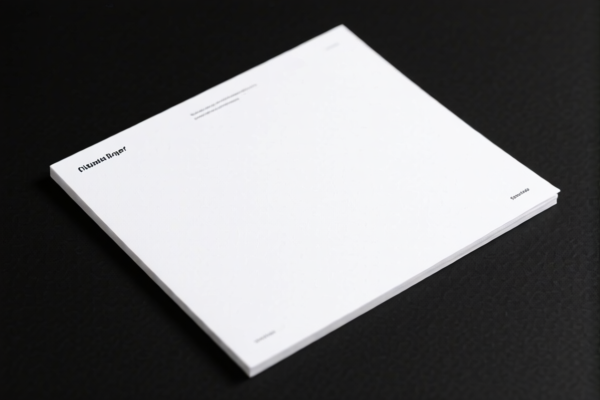
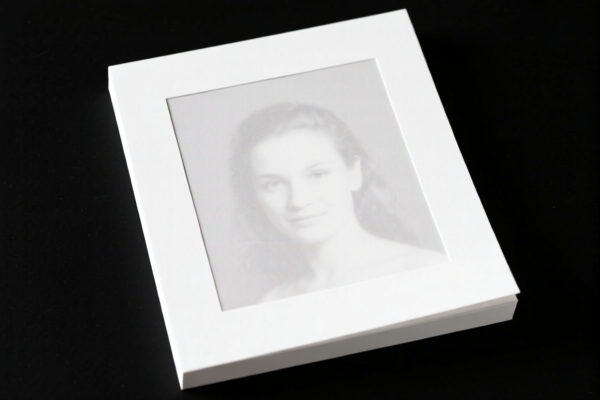

AI Analysis
📸 Archival Photography Paper Base
🌐 HS Code Reference & Customs Clearance Guide | 2026 Latest Tariff Analysis | Professional Clearance Strategy
📌 I. Product Definition & Classification: What Exactly is “Archival Photography Paper Base”?
Archival photography paper base refers to the fundamental substrate (support layer) used in manufacturing professional-grade photographic papers. It is typically made from high-purity cellulose fibers (paper) or polymer films (plastic). Its primary function is to provide a stable, acid-free, and dimensionally stable foundation for light-sensitive emulsions.
In international trade, classification depends strictly on material composition and physical form:
1. Paper-Based Substrates (Cellulose):
If the base is made of paper (even if uncoated, bleached, or cut to size), it falls under Chapter 48 (Paper and Paperboard).
Key Characteristic: Natural fiber structure, absorbent or sized surface.
2. Plastic-Based Substrates (Polymer/PVC/PET):
If the base is a synthetic film (e.g., polyester, PVC, or polypropylene) often used for modern fine-art or inkjet papers, it falls under Chapter 39 (Plastics and Articles Thereof).
Key Characteristic: Non-absorbent, dimensionally stable, often transparent or semi-transparent before coating.
⚠️ Critical Distinction Point:
- If the product is pure paper/paperboard without photographic emulsion → Chapter 48
- If the product is a plastic film acting as a support → Chapter 39
- Do not confuse with "Photographic Paper" (already coated with emulsion), which is classified differently (usually 4809 or 4810). This inquiry is specifically about the BASE.
📦 II. HS Code Classification Details (2026 Latest Tariff Authority Comparison)
| HS Code | Product Description | Material | Application Scenario | Tax Rate (China Origin to US) |
|---|---|---|---|---|
4823.90.67.00 |
Other paper articles, cut to size or shape, not further worked than printed or surface-coated | Paper | Standard archival paper bases, cut sheets for darkroom use | 35.0% |
3926.90.87.00 |
Other articles of plastics, flexible plastic/film, flat shape | Plastic (PVC/Film) | Flexible plastic film bases for digital inkjet or fine art | 40.3% |
4823.90.86.80 |
Other paper/board articles, cut to specific dimensions/shapes | Paper | Paper substrates with specific cuts or shapes for professional printing | 35.0% |
4811.41.30.00 |
Self-adhesive paper/plastic backing, coated with adhesives | Paper | Paper bases with adhesive backing (for labels, transfers, or mounting) | 35.0% |
3926.90.99.89 |
Other plastic articles, unspecified, plastic backing/film | Plastic | Generic plastic backing films not classified elsewhere | 22.8% |
🔍 Key Reminder:
- All paper-based substrates (4823series) attract a 35% total tariff.
- Plastic-based substrates vary: Flexible films (3926.90.87) attract 40.3%, while other unspecified plastic articles (3926.90.99) attract 22.8%.
- Misclassification between Paper (48xx) and Plastic (39xx) is the #1 cause of customs delays and penalties.
💰 III. 2026 Latest Tariff Rate Breakdown (Including Surtaxes & Policy Add-ons)
✅ Applicable Country: United States (US)
✅ Origin: China (CN)
✅ Effective Date: Post-November 10, 2025 (Includes subsequent imports)
🎯 1. 4823.90.67.00 / 4823.90.86.80 / 4811.41.30.00 —— Paper-Based Archives (Paper Substrates)
| Item | Content |
|---|---|
| Basic Tariff | 0.0% (ad valorem) |
| USITC Surtax (Section 301) | +25.0% |
| IEEPA Surtax | +10.0% (Targeting China/HK products) |
| Total Tariff Rate | 35.0% |
| Tax Calculation | CIF Value × 35% |
| De Minimis Eligibility | ❌ NO (deny_de_minimis) |
| Legal Basis Path | IEEPA:9903.01.25 → USITC:4823.xx → FOOTNOTE:9903.88.01 |
📌 Explanation:
- Although the basic tariff for paper products is 0%, the Section 301 tariffs (25%) and IEEPA surtaxes (10%) apply heavily.
- Total 35% is considered a high import cost. Must be factored into pricing strategies.
- No de minimis exemption applies for small shipments; duties apply from the first unit.
🎯 2. 3926.90.87.00 —— Flexible Plastic Film Bases
| Item | Content |
|---|---|
| Basic Tariff | 5.3% |
| USITC Surtax (Section 301) | +25.0% |
| IEEPA Surtax | +10.0% |
| Total Tariff Rate | 40.3% |
| Tax Calculation | CIF Value × 40.3% |
| De Minimis Eligibility | ❌ NO (deny_de_minimis) |
| Legal Basis Path | IEEPA:9903.01.25 → USITC:3926.90.87.00 → FOOTNOTE:9903.88.01 |
📌 Note:
- Plastic films for photographic bases are classified as "Other plastic articles."
- The 40.3% rate is the highest among all listed options.
- Even if the plastic is "flexible" or "uncoated," the 301 tariffs apply.
🎯 3. 3926.90.99.89 —— Other Plastic Articles (Unspecified Plastic Bases)
| Item | Content |
|---|---|
| Basic Tariff | 5.3% |
| USITC Surtax (Section 301) | +7.5% (Note: Lower 301 rate for specific subcategories) |
| IEEPA Surtax | +10.0% |
| Total Tariff Rate | 22.8% |
| Tax Calculation | CIF Value × 22.8% |
| De Minimis Eligibility | ❌ NO (deny_de_minimis) |
| Legal Basis Path | IEEPA:9903.01.25 → USITC:3926.90.99.89 → FOOTNOTE:9903.88.01 |
📌 Strategic Insight:
- If the plastic base does not fit the "flexible film" description (3926.90.87), it may qualify for the lower 301 surtax of 7.5% instead of 25%.
- This results in a 22.8% total rate, significantly cheaper than the 40.3% or 35% rates.
- Crucial: Requires precise technical justification to avoid misclassification.
🛠️ IV. Customs Clearance Practical Advice (Battle-Tested Pitfall Avoidance)
✅ 1. Required Documentation Checklist (Non-Negotiable)
| Document | Mandatory | Explanation |
|---|---|---|
| ✅ Product Spec Sheet | ✔️ | Must specify: Material (Cellulose vs. Polyester/PVC), Thickness (Microns), Width, Length, Surface Treatment (e.g., sized, uncoated). |
| ✅ Material Safety Data Sheet (MSDS) | ✔️ | If any chemical coatings or adhesives are present. |
| ✅ Product Photos (Raw Base) | ✔️ | Show texture (fibrous for paper, smooth/transparent for plastic). |
| ✅ Commercial Invoice | ✔️ | Description must be precise: "Archival Paper Base, 100% Alpha Cellulose, Uncoated, 250gsm" OR "Polyester Film Base, Clear, 175μm". |
| ✅ Certificate of Origin | ✔️ | To verify China origin for 301/IEEPA applicability. |
| ✅ Packaging List | ✔️ | Confirm no photographic emulsion is included (if so, HS code changes to 4809/4810). |
✅ 2. Declaration Tips (Key Mantra)
🔥 "Material First, Form Second, Name Precise, Tax Rate Clear!"
| Scenario | Correct Declaration | Wrong Practice |
|---|---|---|
| Paper Base | "Archival Photography Paper Base, Uncoated, Cut Sheets" → 4823.90.67.00 |
Vague: "Photo Paper" → May be misclassified as coated paper (4809) → Different tariff |
| Plastic Film Base | "Polyester Film Base for Printing, Flexible, Uncoated" → 3926.90.87.00 |
Vague: "Plastic Sheet" → May be misclassified as rigid plastic → Higher tariff |
| Adhesive Backing | "Self-Adhesive Paper Backing" → 4811.41.30.00 |
Omitting "Adhesive" → Misclassification |
| Generic Plastic Base | "Other Plastic Support Film" → 3926.90.99.89 |
Over-specifying as "Flexible Film" when not applicable → 40.3% instead of 22.8% |
✅ 3. Special Cases Handling
| Scenario | Handling Advice |
|---|---|
| Hybrid Materials | If base is paper with a plastic coating → Usually Chapter 48 (Paper prevails if >50% by weight/value, or per HTS Note). |
| OEM Custom Sizes | Provide customer order + technical drawing. Prove "cut to size" to support 4823.90 classification. |
| Sample Shipments | Still subject to 35-40% duty. Do not declare as "Free Sample" to avoid customs penalties. |
| Returns/Replacements | Must provide original export documents to claim duty drawback if applicable. |
🌍 V. Global Market Customs Comparison (2026 Latest)
| Country/Region | Recommended HS Code | Tariff (China Origin) | Certification Req. | Notes |
|---|---|---|---|---|
| 🇺🇸 USA | 4823.90.67.00 / 3926.90.87.00 |
35% - 40.3% | None specific | High tariff burden. 301+IEEPA applies. |
| 🇨🇳 China | 4823.90 / 3926.90 |
~5-7% | None | Low duty. |
| 🇪🇺 EU | 4823.90 / 3926.90 |
6.5% - 10% | REACH Compliance | No Section 301 equivalent, but REACH registration may be needed for chemicals. |
| 🇬🇧 UK | 4823.90 / 3926.90 |
6.5% - 10% | UKCA Marking | Post-Brexit rules apply. |
| 🇯🇵 Japan | 4823.90 / 3926.90 |
0% - 3% | PSE (if electrical components involved) | Very favorable for paper/plastic substrates. |
📌 Conclusion:
- The US market is the most expensive due to layered tariffs (Base + 301 + IEEPA).
- EU/UK/Japan offer significantly lower duties but may have stricter environmental/chemical regulations (REACH).
- For US exports, accurate classification is critical to avoid overpaying or facing audits.
📌 VI. Common Errors & Pitfall Guide (Lessons Learned)
❌ Mistake 1: Declaring "Archival Paper" as "Photographic Paper" (HS 4809)
👉 Consequence: If no emulsion is present, this is misclassification. Customs may assess duties under 4809 (~10-20% base + surtaxes) or reject the entry.
Result: Delay, fines, or seizure.
❌ Mistake 2: Claiming "Plastic Base" is "Flexible Film" (3926.90.87) when it is actually a "Rigid Sheet" or "Other Plastic" (3926.90.99)
👉 Consequence: Overpaying tariffs (40.3% vs 22.8%).
Result: Lost profit margin.
❌ Mistake 3: Omitting "Uncoated" or "Base Only" in Description
👉 Consequence: Customs assumes coated/emulsified paper (higher scrutiny).
Result: Extended hold for examination.
❌ Mistake 4: Ignoring IEEPA Surtax
👉 Consequence: Under-declaring value by 10%.
Result: Penalties, interest, and potential trade fraud allegations.
✅ Correct Practice:
"Archival Photography Paper Base, 100% Alpha Cellulose, Uncoated, Acid-Free, Cut Sheets, 250gsm, Model XYZ"
OR
"Polyester Film Base for Inkjet Printing, Clear, Flexible, 175 Microns, Uncoated, Model ABC"
🎯 VII. Conclusion: Precision in Classification, Profit in Clearance
🎯 Remember the Mantra:
🔹 "Paper vs. Plastic, Define it Clear!"
🔹 "No Emulsion, No Photo Paper Code!"
🔹 "301 + IEEPA = 35-40%, Factor it In!"
🔹 "De Minimis is Dead, Pay Every Duty!"
📌 Pro Tip:
- If your product is plastic-based and fits the 3926.90.99.89 category, argue for the 7.5% Section 301 surtax instead of 25% if technically justifiable.
- For paper-based products, the 35% rate is fixed. Focus on volume discounts or supply chain optimization to mitigate costs.
- Apply for a Binding Ruling (CBP Ruling) before large shipments to lock in the HS Code and tariff rate.
📣 Immediate Action:
📞 Contact a Licensed Customs Broker + Provide Product Samples + Request a CBP Advance Ruling
🚀 Ensure your shipments clear smoothly, efficiently, and cost-effectively!
✨ Professional Clearance Starts with Accurate Classification!
💼 Every Percent of Duty Saved is Pure Profit!
Customer Reviews
About HS Code Classification
The Harmonized System (HS) is an internationally standardized nomenclature developed by the World Customs Organization (WCO) to classify traded products. Over 200 countries use the HS system as the basis for customs tariffs, trade statistics, and import/export regulations.
Each HS code follows a hierarchical structure:
- Chapter (2 digits) — Broad category of goods (e.g., Chapter 84: Machinery and Mechanical Appliances)
- Heading (4 digits) — More specific grouping within the chapter
- Subheading (6 digits) — Internationally standardized breakdown, used by all WCO member countries
- National subdivisions (8-10 digits) — Country-specific extensions for further classification, such as US HTSUS 10-digit codes
Correct HS code classification is essential for smooth customs clearance, accurate duty payment, and compliance with trade regulations. Misclassification can lead to customs delays, overpayment of duties, or penalties.
When importing from CN to US, the applicable tariff rates may include:
- Most-Favored-Nation (MFN) rate — The standard duty rate applied to WTO members
- General rate — Applied to countries without trade agreements
- Trade remedy duties — Additional tariffs such as Section 301 (anti-dumping), Section 232 (national security), or countervailing duties
The information provided on this page is for reference purposes only. For official classification, please consult with your local customs authority or a licensed customs broker.