Aromatherapy
CN → US| HS编码 | 关税税率 | 原产国 | 目的国 | 文档 |
|---|---|---|---|---|
| 3307490000 | 41.0% | CN | US | 官方文档 |
| 3307410000 | 37.4% | CN | US | 官方文档 |
| 6307909875 | 17.0% | CN | US | 官方文档 |
| 6307909891 | 24.5% | CN | US | 官方文档 |
商品图片
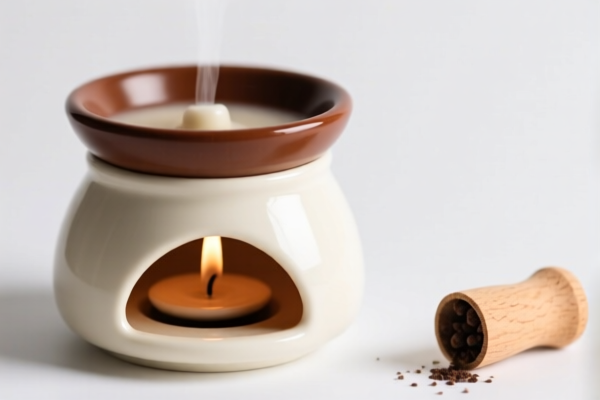
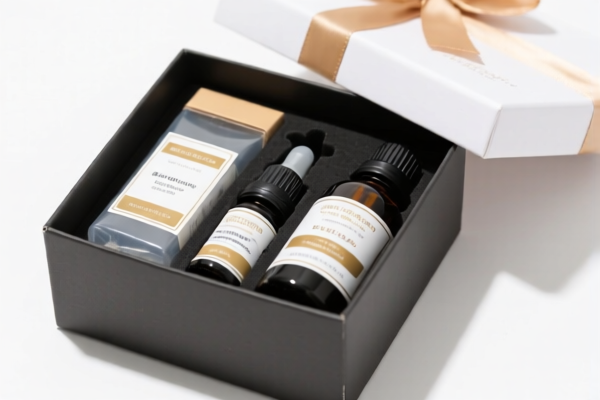
AI分析
🌿 Aromatherapy: Comprehensive HS Code Classification & Global Clearance Guide (2026 Edition)
🌐 Global Trade & Customs Strategy | 2026 HS Tariff Deep Dive | Aromatherapy Product Clearance Protocol
📌 I. Product Definition: What Exactly is "Aromatherapy"?
Aromatherapy products are essential for wellness, relaxation, and home ambiance. In international trade, they are not a single category but split based on form, function, and material composition:
🔥 Burning Fragrance Products (Liquid/Oil):
Products like reed diffusers, oil burners, or liquids designed to be evaporated via heat or wicks. These fall under Chemical/Oils classification (Chapter 33).
🎒 Fabric/Paper Sachets (Solid Bags):
Scented bags, pillows, or pouches made of textiles or paper, stuffed with dried herbs, potpourri, or scented beads. These fall under Textiles/Articles classification (Chapter 63).
⚠️ Critical Classification Trigger:
- Is it a liquid/oil formulation for diffusion? → Chapter 33
- Is it a fabric/paper bag containing scent? → Chapter 63
- Wrong classification = 40%+ tax penalty risk!
📦 II. HS Code Classification Breakdown (2026 Tariff Authority)
Based on your provided dataset, here is the exact classification for Aromatherapy products:
| HS Code | Product Summary | Key Characteristics | Material/Form |
|---|---|---|---|
| 3307.49.00.00 | Aromatherapy Diffusers/Bag Formulations | General "other" aromatherapy preparations for room fragrance or deodorizing. | Liquid/Chemical Formulation |
| 3307.41.00.00 | Burning Fragrance Preparations | Scented products designed to release odor via combustion (e.g., incense oils, burner liquids). | Burnable Liquid/Oil |
| 6307.90.98.75 | Textile Pouches (Scented Bags) | Finished articles (scented sachets/pillows). Material inferred as woven fabric or paper. | Fabric/Paper (Finished) |
| 6307.90.98.91 | Textile/Fiber Pouches (General) | Finished articles (scented sachets/pillows). Material inferred as woven fabric or fibers. | Fabric/Fiber (Finished) |
🔍 Key Differentiation:
- 3307.4x.x0.xx: Focuses on the chemical composition (the scent itself).
- 6307.90.98.xx: Focuses on the container/maker (the bag itself), regardless of the scent inside.
💰 III. 2026 Tariff Rate Analysis (Detailed Tax Breakdown)
✅ Context: Import from China (CN) to US (based on data)
✅ Applicable Regimes: Base Duty, Section 301 "Additional" Duty, 122-Section Duty
✅ Effective Date: 2025-11-10 onwards
🎯 1. HS Code: 3307.49.00.00 (General Aromatherapy Preparations)
Applies to: Room sprays, non-burning diffusers, deodorant formulations.
| Tax Component | Rate | Legal Basis |
|---|---|---|
| Base Duty | 6.0% | Standard MFN Rate |
| Section 301 Add-on | 25.0% | "Additional Duty" on Chinese goods |
| Section 122 Add-on | 10.0% | Specific 2024-2026 China-specific surcharge |
| 🚨 TOTAL TAX | 41.0% | 6% + 25% + 10% |
📌 Clarification:
- This is a high-risk category for liquid chemicals.
- The 25% is the standard Section 301 tariff; the 10% is an additional 122-section surcharge.
- Total impact: You pay 41 cents for every $1.00 of declared CIF value.
🎯 2. HS Code: 3307.41.00.00 (Burning Fragrance Preparations)
Applies to: Oil burners, liquid incense, products meant to be burned.
| Tax Component | Rate | Legal Basis |
|---|---|---|
| Base Duty | 2.4% | Low base rate for specific oils |
| Section 301 Add-on | 25.0% | Standard "Additional Duty" |
| Section 122 Add-on | 10.0% | Specific 2024-2026 China-specific surcharge |
| 🚨 TOTAL TAX | 37.4% | 2.4% + 25% + 10% |
📌 Clarification:
- Slightly lower base duty (2.4%) compared to general formulations (6.0%).
- Total is still 37.4% – the 25% and 10% surcharges dominate the cost structure.
- Note: Do not misclassify burning products as "Textiles" to avoid this; CBP (US Customs) checks the liquid content.
🎯 3. HS Code: 6307.90.98.75 (Scented Sachets - Woven/Paper)
Applies to: Fabric bags, paper sachets filled with scent.
| Tax Component | Rate | Legal Basis |
|---|---|---|
| Base Duty | 7.0% | Standard rate for other made-up articles |
| Section 301 Add-on | 0.0% | NO additional 301 duty applies |
| Section 122 Add-on | 10.0% | 122-section surcharge applies |
| 💡 TOTAL TAX | 17.0% | 7% + 0% + 10% |
📌 Clarification:
- This is the MOST cost-effective option!
- You save 24% compared to liquid products (41.0% vs 17.0%) because the 25% Section 301 add-on is waived.
- Key Strategy: If selling "scented bags," ensure they are classified as finished textile/paper articles, not just "bags containing oil."
🎯 4. HS Code: 6307.90.98.91 (Scented Sachets - General Fiber)
Applies to: Other fiber-based scent bags.
| Tax Component | Rate | Legal Basis |
|---|---|---|
| Base Duty | 7.0% | Standard rate for other made-up articles |
| Section 301 Add-on | 7.5% | Partial "Additional Duty" applies |
| Section 122 Add-on | 10.0% | 122-section surcharge applies |
| 🚨 TOTAL TAX | 24.5% | 7% + 7.5% + 10% |
📌 Clarification:
- Slightly better than liquids (24.5% vs 37.4%-41.0%) but worse than the 75 subcategory.
- The 7.5% add-on suggests a different sub-segment of the 301 list than the 0% exemption for 75.
🛠️ IV. Professional Clearance Strategy & Actionable Advice
✅ 1. Strategic Product Positioning (Cost Saving)
| Product Type | Recommended HS Code | Tax Rate | Savings vs. Liquids |
|---|---|---|---|
| Scented Sachet (Fabric/Paper) | 6307.90.98.75 |
17.0% | Save 24% (vs 41%) |
| Scented Sachet (Fiber) | 6307.90.98.91 |
24.5% | Save 16.5% |
| Liquid Diffuser/Oil | 3307.49.00.00 |
41.0% | Baseline (High Cost) |
| Burning Oil | 3307.41.00.00 |
37.4% | Baseline (High Cost) |
🚀 Action:
If you sell scented bags (e.g., dried lavender sachets), INSIST on classification6307.90.98.75.
Avoid classifying them as "containers of perfume" (which forces 3307 classification and 41% tax).
Proof: Provide a material composition sheet proving the bag is >95% woven fabric or paper.
✅ 2. Documentation Checklist for Customs (CBP)
| Document | Critical Content | Purpose |
|---|---|---|
| Commercial Invoice | Explicitly state "Scented Sachet" or "Room Deodorizer" | Avoid "Perfume Oil" ambiguity |
| Material Sheet | List % of fabric/paper vs. scent filler | Justifies 6307 over 3307 |
| Usage Description | "For use in drawers/rooms, not for burning or diffusion" | Proves it's a textile article, not a chemical |
| Photos | Clear view of the bag material (woven, non-woven) | Visual proof for Customs Officer |
| Safety Data Sheet (SDS) | If liquid-filled, proves no flammability hazards | Required for Chapter 33 |
✅ 3. Common Pitfalls & How to Avoid Them
| ❌ Mistake | ✅ Consequence | ✅ Solution |
|---|---|---|
| Mislabeling Sachets as "Oils" | Customs reclassifies to 3307 → 41% tax |
Change invoice to "Finished Scented Article" |
| Ignoring "122 Clause" | Assuming 25% is the only add-on → Underpaying | Always add the 10% 122-section surcharge |
| Mixing Liquid & Bag in One Shipment | High audit risk for the whole lot | Separate shipments or separate HS codes |
| Vague Description ("Fragrance") | Customs guesses high tax code | Use precise terms: "Woven Scented Pouch" |
✅ 4. Special Note on "122 Section" Duty
⚠️ The "122 Clause" (10%) is a 2024-2026 specific surcharge targeting Chinese-origin goods.
- It applies to ALL the HS codes listed above.
- Even if the base duty is 0% (rare), you still pay 10% + 25% (or 0% for 6307.75).
- DO NOT try to ship via third-country consolidation to bypass this; CBP has strict rules on transshipment.
📌 V. Conclusion & Final Recommendation
🎯 The Winning Strategy for Aromatherapy Exporters:
-
For Sachets: Push for
6307.90.98.75. The 17.0% total tax is the lowest possible rate for aromatherapy.
Why? You avoid the 25% Section 301 penalty entirely. -
For Liquids: Accept the 37.4% - 41.0% cost. There is no workaround; chemical oils are heavily taxed.
Tip: Adjust pricing strategies to absorb this cost or market in regions without Section 301. -
Documentation: Never let the invoice say just "Aromatherapy." Use "Scented Textile Sachet" or "Perfume Oil Preparation" to trigger the correct HS Code immediately.
📣 Call to Action:
Review your product packaging and invoices TODAY. If you are shipping scented bags, ensure your description matches6307.90.98.75to save 24% in duties.
Contact your freight forwarder to verify the HS Code before the next shipment!
✨ Smart Classification = Smart Profit!
💼 Your margin depends on the comma and the period!
用户评价
关于 HS 编码归类
协调制度(HS)是由世界海关组织(WCO)制定的国际贸易商品分类标准。全球 200 多个国家采用 HS 系统作为海关关税、贸易统计和进出口监管的基础。
每个 HS 编码遵循以下层级结构:
- 章(2 位)——商品大类(例如:第 84 章:机器和机械设备)
- 品目(4 位)——章内的更具体分类
- 子目(6 位)——国际通用细分,所有 WCO 成员国统一使用
- 本国细分(8-10 位)——各国自行扩展的细分编码,如美国 HTSUS 10 位编码
正确的 HS 编码归类对于顺利通关、准确缴纳关税和遵守贸易法规至关重要。错误归类可能导致海关延误、多缴关税或罚款。
从CN进口到US时,适用的关税税率可能包括:
- 最惠国(MFN)税率——适用于 WTO 成员国的标准关税税率
- 普通税率——适用于无贸易协定国家
- 贸易救济关税——附加关税,如 301 条款(反倾销)、232 条款(国家安全)或反补贴税
本页内容仅供参考。如需正式归类,请咨询当地海关或持牌报关代理。