Aromatherapy
CN → US| HS Code | Tariff Rate | Origin | Destination | Doc |
|---|---|---|---|---|
| 3307490000 | 41.0% | CN | US | Official Doc |
| 3307410000 | 37.4% | CN | US | Official Doc |
| 6307909875 | 17.0% | CN | US | Official Doc |
| 6307909891 | 24.5% | CN | US | Official Doc |
Product Images
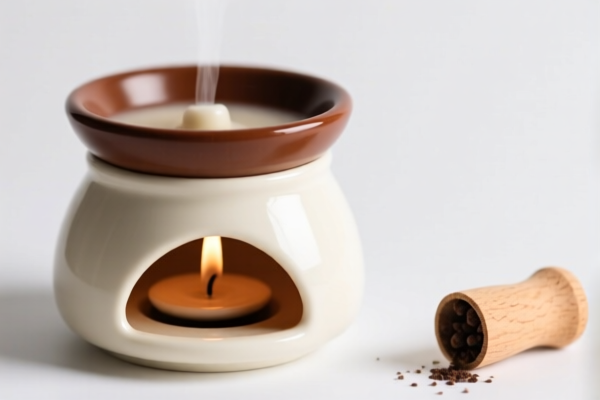
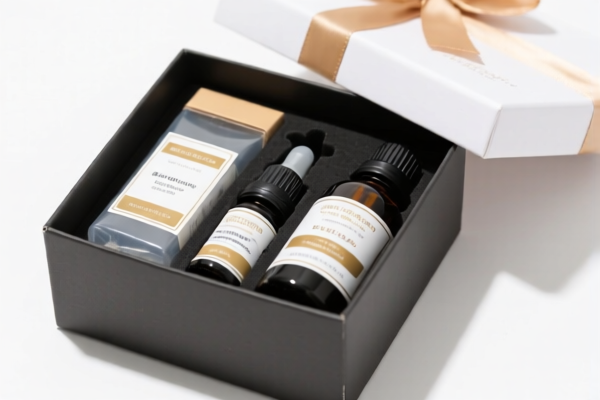
AI Analysis
🌿 Aromatherapy: Comprehensive HS Code Classification & Global Clearance Guide (2026 Edition)
🌐 Global Trade & Customs Strategy | 2026 HS Tariff Deep Dive | Aromatherapy Product Clearance Protocol
📌 I. Product Definition: What Exactly is "Aromatherapy"?
Aromatherapy products are essential for wellness, relaxation, and home ambiance. In international trade, they are not a single category but split based on form, function, and material composition:
🔥 Burning Fragrance Products (Liquid/Oil):
Products like reed diffusers, oil burners, or liquids designed to be evaporated via heat or wicks. These fall under Chemical/Oils classification (Chapter 33).
🎒 Fabric/Paper Sachets (Solid Bags):
Scented bags, pillows, or pouches made of textiles or paper, stuffed with dried herbs, potpourri, or scented beads. These fall under Textiles/Articles classification (Chapter 63).
⚠️ Critical Classification Trigger:
- Is it a liquid/oil formulation for diffusion? → Chapter 33
- Is it a fabric/paper bag containing scent? → Chapter 63
- Wrong classification = 40%+ tax penalty risk!
📦 II. HS Code Classification Breakdown (2026 Tariff Authority)
Based on your provided dataset, here is the exact classification for Aromatherapy products:
| HS Code | Product Summary | Key Characteristics | Material/Form |
|---|---|---|---|
| 3307.49.00.00 | Aromatherapy Diffusers/Bag Formulations | General "other" aromatherapy preparations for room fragrance or deodorizing. | Liquid/Chemical Formulation |
| 3307.41.00.00 | Burning Fragrance Preparations | Scented products designed to release odor via combustion (e.g., incense oils, burner liquids). | Burnable Liquid/Oil |
| 6307.90.98.75 | Textile Pouches (Scented Bags) | Finished articles (scented sachets/pillows). Material inferred as woven fabric or paper. | Fabric/Paper (Finished) |
| 6307.90.98.91 | Textile/Fiber Pouches (General) | Finished articles (scented sachets/pillows). Material inferred as woven fabric or fibers. | Fabric/Fiber (Finished) |
🔍 Key Differentiation:
- 3307.4x.x0.xx: Focuses on the chemical composition (the scent itself).
- 6307.90.98.xx: Focuses on the container/maker (the bag itself), regardless of the scent inside.
💰 III. 2026 Tariff Rate Analysis (Detailed Tax Breakdown)
✅ Context: Import from China (CN) to US (based on data)
✅ Applicable Regimes: Base Duty, Section 301 "Additional" Duty, 122-Section Duty
✅ Effective Date: 2025-11-10 onwards
🎯 1. HS Code: 3307.49.00.00 (General Aromatherapy Preparations)
Applies to: Room sprays, non-burning diffusers, deodorant formulations.
| Tax Component | Rate | Legal Basis |
|---|---|---|
| Base Duty | 6.0% | Standard MFN Rate |
| Section 301 Add-on | 25.0% | "Additional Duty" on Chinese goods |
| Section 122 Add-on | 10.0% | Specific 2024-2026 China-specific surcharge |
| 🚨 TOTAL TAX | 41.0% | 6% + 25% + 10% |
📌 Clarification:
- This is a high-risk category for liquid chemicals.
- The 25% is the standard Section 301 tariff; the 10% is an additional 122-section surcharge.
- Total impact: You pay 41 cents for every $1.00 of declared CIF value.
🎯 2. HS Code: 3307.41.00.00 (Burning Fragrance Preparations)
Applies to: Oil burners, liquid incense, products meant to be burned.
| Tax Component | Rate | Legal Basis |
|---|---|---|
| Base Duty | 2.4% | Low base rate for specific oils |
| Section 301 Add-on | 25.0% | Standard "Additional Duty" |
| Section 122 Add-on | 10.0% | Specific 2024-2026 China-specific surcharge |
| 🚨 TOTAL TAX | 37.4% | 2.4% + 25% + 10% |
📌 Clarification:
- Slightly lower base duty (2.4%) compared to general formulations (6.0%).
- Total is still 37.4% – the 25% and 10% surcharges dominate the cost structure.
- Note: Do not misclassify burning products as "Textiles" to avoid this; CBP (US Customs) checks the liquid content.
🎯 3. HS Code: 6307.90.98.75 (Scented Sachets - Woven/Paper)
Applies to: Fabric bags, paper sachets filled with scent.
| Tax Component | Rate | Legal Basis |
|---|---|---|
| Base Duty | 7.0% | Standard rate for other made-up articles |
| Section 301 Add-on | 0.0% | NO additional 301 duty applies |
| Section 122 Add-on | 10.0% | 122-section surcharge applies |
| 💡 TOTAL TAX | 17.0% | 7% + 0% + 10% |
📌 Clarification:
- This is the MOST cost-effective option!
- You save 24% compared to liquid products (41.0% vs 17.0%) because the 25% Section 301 add-on is waived.
- Key Strategy: If selling "scented bags," ensure they are classified as finished textile/paper articles, not just "bags containing oil."
🎯 4. HS Code: 6307.90.98.91 (Scented Sachets - General Fiber)
Applies to: Other fiber-based scent bags.
| Tax Component | Rate | Legal Basis |
|---|---|---|
| Base Duty | 7.0% | Standard rate for other made-up articles |
| Section 301 Add-on | 7.5% | Partial "Additional Duty" applies |
| Section 122 Add-on | 10.0% | 122-section surcharge applies |
| 🚨 TOTAL TAX | 24.5% | 7% + 7.5% + 10% |
📌 Clarification:
- Slightly better than liquids (24.5% vs 37.4%-41.0%) but worse than the 75 subcategory.
- The 7.5% add-on suggests a different sub-segment of the 301 list than the 0% exemption for 75.
🛠️ IV. Professional Clearance Strategy & Actionable Advice
✅ 1. Strategic Product Positioning (Cost Saving)
| Product Type | Recommended HS Code | Tax Rate | Savings vs. Liquids |
|---|---|---|---|
| Scented Sachet (Fabric/Paper) | 6307.90.98.75 |
17.0% | Save 24% (vs 41%) |
| Scented Sachet (Fiber) | 6307.90.98.91 |
24.5% | Save 16.5% |
| Liquid Diffuser/Oil | 3307.49.00.00 |
41.0% | Baseline (High Cost) |
| Burning Oil | 3307.41.00.00 |
37.4% | Baseline (High Cost) |
🚀 Action:
If you sell scented bags (e.g., dried lavender sachets), INSIST on classification6307.90.98.75.
Avoid classifying them as "containers of perfume" (which forces 3307 classification and 41% tax).
Proof: Provide a material composition sheet proving the bag is >95% woven fabric or paper.
✅ 2. Documentation Checklist for Customs (CBP)
| Document | Critical Content | Purpose |
|---|---|---|
| Commercial Invoice | Explicitly state "Scented Sachet" or "Room Deodorizer" | Avoid "Perfume Oil" ambiguity |
| Material Sheet | List % of fabric/paper vs. scent filler | Justifies 6307 over 3307 |
| Usage Description | "For use in drawers/rooms, not for burning or diffusion" | Proves it's a textile article, not a chemical |
| Photos | Clear view of the bag material (woven, non-woven) | Visual proof for Customs Officer |
| Safety Data Sheet (SDS) | If liquid-filled, proves no flammability hazards | Required for Chapter 33 |
✅ 3. Common Pitfalls & How to Avoid Them
| ❌ Mistake | ✅ Consequence | ✅ Solution |
|---|---|---|
| Mislabeling Sachets as "Oils" | Customs reclassifies to 3307 → 41% tax |
Change invoice to "Finished Scented Article" |
| Ignoring "122 Clause" | Assuming 25% is the only add-on → Underpaying | Always add the 10% 122-section surcharge |
| Mixing Liquid & Bag in One Shipment | High audit risk for the whole lot | Separate shipments or separate HS codes |
| Vague Description ("Fragrance") | Customs guesses high tax code | Use precise terms: "Woven Scented Pouch" |
✅ 4. Special Note on "122 Section" Duty
⚠️ The "122 Clause" (10%) is a 2024-2026 specific surcharge targeting Chinese-origin goods.
- It applies to ALL the HS codes listed above.
- Even if the base duty is 0% (rare), you still pay 10% + 25% (or 0% for 6307.75).
- DO NOT try to ship via third-country consolidation to bypass this; CBP has strict rules on transshipment.
📌 V. Conclusion & Final Recommendation
🎯 The Winning Strategy for Aromatherapy Exporters:
-
For Sachets: Push for
6307.90.98.75. The 17.0% total tax is the lowest possible rate for aromatherapy.
Why? You avoid the 25% Section 301 penalty entirely. -
For Liquids: Accept the 37.4% - 41.0% cost. There is no workaround; chemical oils are heavily taxed.
Tip: Adjust pricing strategies to absorb this cost or market in regions without Section 301. -
Documentation: Never let the invoice say just "Aromatherapy." Use "Scented Textile Sachet" or "Perfume Oil Preparation" to trigger the correct HS Code immediately.
📣 Call to Action:
Review your product packaging and invoices TODAY. If you are shipping scented bags, ensure your description matches6307.90.98.75to save 24% in duties.
Contact your freight forwarder to verify the HS Code before the next shipment!
✨ Smart Classification = Smart Profit!
💼 Your margin depends on the comma and the period!
Customer Reviews
About HS Code Classification
The Harmonized System (HS) is an internationally standardized nomenclature developed by the World Customs Organization (WCO) to classify traded products. Over 200 countries use the HS system as the basis for customs tariffs, trade statistics, and import/export regulations.
Each HS code follows a hierarchical structure:
- Chapter (2 digits) — Broad category of goods (e.g., Chapter 84: Machinery and Mechanical Appliances)
- Heading (4 digits) — More specific grouping within the chapter
- Subheading (6 digits) — Internationally standardized breakdown, used by all WCO member countries
- National subdivisions (8-10 digits) — Country-specific extensions for further classification, such as US HTSUS 10-digit codes
Correct HS code classification is essential for smooth customs clearance, accurate duty payment, and compliance with trade regulations. Misclassification can lead to customs delays, overpayment of duties, or penalties.
When importing from CN to US, the applicable tariff rates may include:
- Most-Favored-Nation (MFN) rate — The standard duty rate applied to WTO members
- General rate — Applied to countries without trade agreements
- Trade remedy duties — Additional tariffs such as Section 301 (anti-dumping), Section 232 (national security), or countervailing duties
The information provided on this page is for reference purposes only. For official classification, please consult with your local customs authority or a licensed customs broker.