Aromatic Modified Sand Core Curing Agent
CN → US| HS编码 | 关税税率 | 原产国 | 目的国 | 文档 |
|---|---|---|---|---|
| 3824100000 | 41.0% | CN | US | 官方文档 |
| 3824992900 | 41.5% | CN | US | 官方文档 |
| 3816002050 | 38.0% | CN | US | 官方文档 |
| 3816002010 | 38.0% | CN | US | 官方文档 |
| 2916397900 | 24.0% | CN | US | 官方文档 |
| 2916394600 | 41.5% | CN | US | 官方文档 |
商品图片
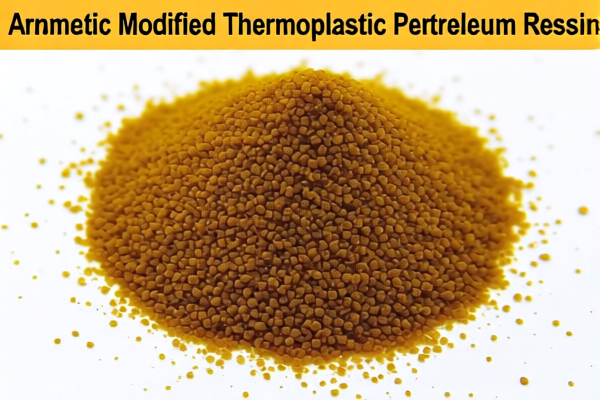
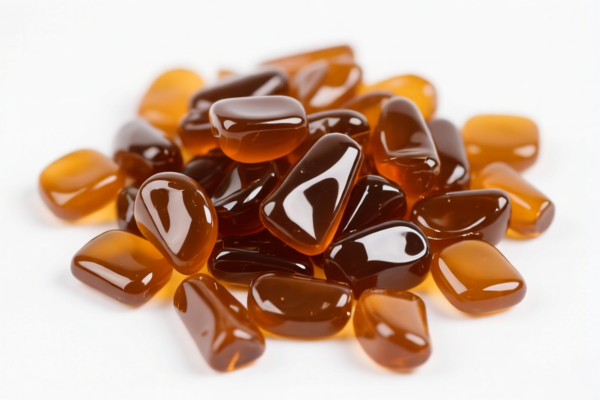
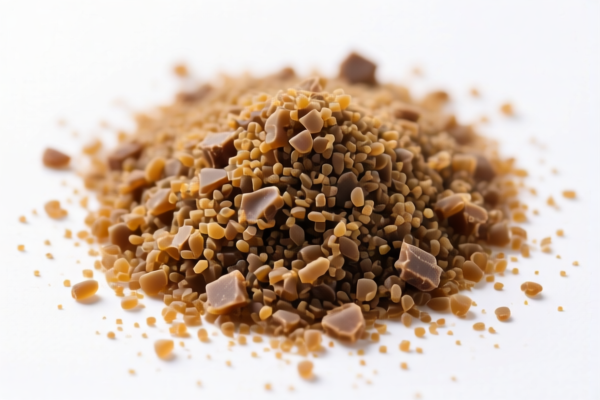
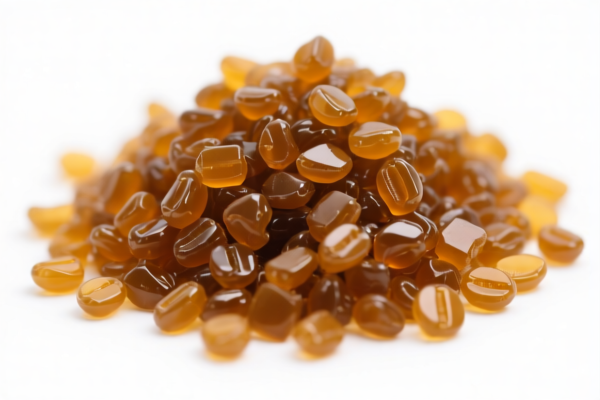
AI分析
🏭 Aromatic Modified Sand Core Curing Agent (Foundry Chemicals)
🌐 HS Code Reference & Customs Clearance Guide | 2026 Latest Tariff Breakdown | Professional Compliance Strategy
📌 I. Product Definition & Classification: What Exactly is a "Sand Core Curing Agent"?
A Sand Core Curing Agent (also known as a core hardener) is a critical chemical additive used in the foundry industry during the sand casting process. Its primary function is to accelerate the hardening (curing) of resin-bonded sand cores.
In international trade, these products are complex because they blend organic chemistry with industrial application. To classify them correctly, we must distinguish between: 1. Pure Chemicals (Chapter 29): Single aromatic acids or derivatives. 2. Prepared Industrial Products (Chapter 38): Mixtures, preparations, or binders designed for specific industrial uses (like foundry molds).
⚠️ Key Distinction Point:
- If the product is a single, pure aromatic carboxylic acid (e.g., pure Benzoic Acid) with no other functional ingredients → It may fall under Chapter 29.
- If the product is a mixture, preparation, or specialized binder/hardener containing aromatic substances or modified components intended specifically for foundry molds or cores → It falls under Chapter 38 (Specifically 3816 or 3824).Analysis of Your Product: "Aromatic Modified" suggests a tailored chemical mixture or preparation for a specific industrial purpose (foundry), rather than a generic commodity chemical. Therefore, it is most likely classified under Chapter 38.
📦 II. HS Code Classification Details (2026 Authorized List)
Based on the provided data <DATA>, here are the relevant HS Codes for chemical and industrial products. Note that while the prompt asks for "Aromatic Modified Sand Core Curing Agent," the <DATA> contains specific entries for Refractory Cements/Mortars and Prepared Binders/Chemical Products.
| HS Code | Product Description (from Data) | Tax Rate (Base + Additional) | Total Tax | Likely Applicability |
|---|---|---|---|---|
3824.10.00.00 |
Prepared binders for foundry molds or cores | Base: 6.0%, Additional: 25.0% | 31.0% | ✅ Highest Probability. If the curing agent is technically classified as a "prepared binder" or part of the core-making preparation system. |
3816.00.20.10 |
Refractory cements, mortars... Other Clay | Base: 3.0%, Additional: 25.0% | 28.0% | ❌ Unlikely. Unless the curing agent is clay-based (rare for aromatic resins). |
3816.00.20.50 |
Refractory cements, mortars... Other Other | Base: 3.0%, Additional 25.0% | 28.0% | ❌ Unlikely. Same as above; refractory materials are distinct from chemical curing agents. |
3824.99.29.00 |
Chemical products... Mixtures containing 5%+ aromatic substances | Base: 6.5%, Additional: 25.0% | 31.5% | ⚠️ Possible. If the product is a "chemical preparation" not elsewhere specified, containing >5% aromatic substances. |
2916.39.79.00 |
Aromatic monocarboxylic acids... Other | Base: 0.0%, Additional: 0.0% | 0.0% | ❌ Risk Alert. Only applicable if the product is a pure aromatic acid, not a mixture/preparation. |
2916.39.46.00 |
Aromatic monocarboxylic acids... Products in US Note 3 to Section VI | Base: 0.0%, Additional: 0.0% | 0.0% | ❌ Risk Alert. Specific legal note required; rarely applies to complex industrial mixtures. |
🔍 Critical Insight:
- The term "Prepared binders for foundry molds or cores" (3824.10.00.00) is the most precise fit for industrial core-making chemicals.
- If the agent is a simple aromatic acid derivative used as a binder, it might be3824.99.29.00(31.5%).
- Do NOT assume2916.39.79.00(0% tax) applies unless you can prove it is a pure substance and not a "preparation." Customs often reclassify pure chemicals as "preparations" if they contain solvents or additives for industrial use.
💰 III. 2026 Tariff Rate Breakdown (Detailed Explanation)
✅ Applicable Country: USA (US)
✅ Origin: China (CN) – Assuming standard origin unless specified otherwise
✅ Effective Date: Current 2026 tariffs apply (Section 301 & IEEPA surcharges included)
🎯 1. 3824.10.00.00 – Prepared Binders for Foundry Molds/Cores
| Item | Detail |
|---|---|
| Base Tariff | 6.0% (Ad Valorem) |
| USITC Additional Tariff | +25.0% (Section 301) |
| Total Tariff | 31.0% |
| De Minimis Exemption | ❌ Not Eligible (Usually denied for chemical preparations from China) |
| Legal Basis | USITC:3824.10.00.00 → FOOTNOTE:301 |
📌 Explanation:
- This code is specifically for industrial preparations. The 6% base rate is standard for many chemical products, but the 25% Section 301 tariff significantly increases the cost.
- Total Cost Impact: 31% of the CIF value.
🎯 2. 3824.99.29.00 – Other Chemical Preparations (>5% Aromatic)
| Item | Detail |
|---|---|
| Base Tariff | 6.5% (Ad Valorem) |
| USITC Additional Tariff | +25.0% (Section 301) |
| Total Tariff | 31.5% |
| De Minimis Exemption | ❌ Not Eligible |
| Legal Basis | USITC:3824.99.29.00 → FOOTNOTE:301 |
📌 Explanation:
- This is a "catch-all" for chemical mixtures. If the curing agent doesn't fit "prepared binders" exactly (e.g., it's a hardener additive rather than a binder), this code is used.
- Slightly higher rate (31.5%) due to a higher base tariff (6.5%).
⚠️ WARNING: The "Pure Chemical" Trap (2916.39.79.00 - 0%)
| Item | Detail |
|---|---|
| Base Tariff | 0.0% |
| Additional Tariff | 0.0% |
| Total Tariff | 0.0% |
| Risk | HIGH. Customs may dispute this if the product is a mixture. |
📌 Why this is risky:
- If you declare an "Aromatic Modified Curing Agent" as a pure aromatic acid under2916.39.79.00, Customs may classify it as a "preparation" under Chapter 38.
- Consequence: Back taxes of ~31%, plus penalties and interest.
- Advice: Only use Chapter 29 if the product is 100% pure chemical substance with no solvents or functional additives.
🛠️ IV. Customs Clearance Practical Advice
✅ 1. Required Documentation Checklist
| Document | Must Provide? | Notes |
|---|---|---|
| ✅ Product Specification Sheet | ✔️ | Must clearly state: "Preparation for foundry core hardening," composition %, CAS numbers for aromatic components. |
| ✅ Formula / Composition List | ✔️ | Crucial for distinguishing between Chapter 29 (pure) and Chapter 38 (mixture). |
| ✅ Certificate of Origin | ✔️ | To apply Section 301 tariffs correctly. |
| ✅ SDS (Safety Data Sheet) | ✔️ | Must match the declared HS Code. Check Hazard Class. |
| ✅ Commercial Invoice | ✔️ | Description should NOT just say "Curing Agent." Use "Prepared Binder for Foundry Cores" or "Chemical Preparation Containing Aromatic Substances." |
| ✅ Packing List | ✔️ | Detail net/gross weight. |
✅ 2. Declaration Strategy (Key Mnemonic)
🔥 "If it's mixed, it's Ch38; If it's pure, Ch29 might work; But 'Modified' usually means Ch38!"
| Scenario | Correct HS Code | Tariff | Why? |
|---|---|---|---|
| Pure Aromatic Acid (No solvents/additives) | 2916.39.79.00 |
0% | Pure chemical substance. |
| Industrial Curing Agent (Mixture with solvents/catalysts) | 3824.10.00.00 |
31.0% | Classified as "Prepared Binder." |
| Other Chemical Mix (Not a binder, but >5% aromatic) | 3824.99.29.00 |
31.5% | Classified as "Other Chemical Preparation." |
| Refractory Mortar (Clay-based) | 3816.00.20.10 |
28.0% | Only if clay-based refractory. |
✅ 3. Special Handling for "Aromatic Modified"
-
Define "Modified":
- If "Modified" implies polymerization or blending with other chemicals for a specific industrial purpose, it is a Chapter 38 product.
- Do not use vague terms like "Specialty Chemical." Be specific: "Liquid Resin Hardener for Foundry Cores."
-
Aromatic Content:
- If the product contains >5% aromatic substances,
3824.99.29.00is a safe fallback if3824.10.00.00is disputed. - Ensure the invoice explicitly states "Contains >5% by weight of aromatic substances" to justify
3824.99.29.00.
- If the product contains >5% aromatic substances,
-
Avoid "Refractory" Codes:
- Sand cores are not refractory cements/mortars in the traditional sense (like furnace lining). Do not use
3816.00.20.x0unless you are supplying material for furnace linings, not cores.
- Sand cores are not refractory cements/mortars in the traditional sense (like furnace lining). Do not use
🌍 V. Global Market Comparison (2026)
| Market | Recommended HS Code | Approx. Tariff (China Origin) | Key Certification |
|---|---|---|---|
| 🇺🇸 USA | 3824.10.00.00 |
31.0% | None specific for customs, but EPA may apply. |
| 🇪🇺 EU | 3824.10.00 |
~6.5% + VAT | REACH Compliance (Critical) |
| 🇨🇳 China | 3824.10.00 |
6.5% (Import) | None |
| 🇲🇽 Mexico | 3824.10.00 |
0% (under USMCA if qualified) | None |
📌 Conclusion for USA Import:
- The 31.0% tariff is significant.
- If your product can be proven to be a pure aromatic acid (Chapter 29), you could save ~31%. However, this is rare for "curing agents" which are almost always mixtures.
- Recommendation: Prepare for 31.0% cost. Use3824.10.00.00as the primary code.
📌 VI. Common Mistakes & Pitfalls (Learn from Others' Losses)
❌ Mistake 1: Declaring as "Pure Aromatic Acid" (2916.39.79.00) to avoid tax.
👉 Result: Customs reclassifies as "Preparation" (3824.10.00.00) → Back taxes of 31% + penalties.
❌ Mistake 2: Using "Refractory Cement" (3816.00.20.50) for sand core agents.
👉 Result: Misclassification. Sand cores are not refractory mortars. Customs may reject or delay.
❌ Mistake 3: Vague Description "Chemical Agent."
👉 Result: Customs examiner has to guess → Likely defaults to highest tax or requests more info → Delays.
✅ Correct Approach:
"Prepared Binder for Foundry Cores, Liquid, Aromatic-Modified, CAS [Number], Net Weight [X]kg"
🎯 VII. Conclusion: Strategic Compliance
🎯 Remember:
🔹 "Modified = Mixture = Chapter 38"
🔹 "Pure = Chapter 29 (0% Risk)"
🔹 "Foundry Binder = 3824.10 (31% Tax)"
📌 Action Item:
1. Verify Composition: Check if your "Aromatic Modified" agent is a pure compound or a mixture.
2. If Mixture: Budget for 31.0% tariff.
3. Documentation: Ensure SDS and Spec Sheet match 3824.10.00.00.
4. Consult: If the product is complex, seek a Pre-Ruling from US Customs (CBP) to confirm classification before shipment.
✨ Smart Customs, Lower Costs!
💼 Accurate Classification Saves 31% of Your CIF Value.
用户评价
关于 HS 编码归类
协调制度(HS)是由世界海关组织(WCO)制定的国际贸易商品分类标准。全球 200 多个国家采用 HS 系统作为海关关税、贸易统计和进出口监管的基础。
每个 HS 编码遵循以下层级结构:
- 章(2 位)——商品大类(例如:第 84 章:机器和机械设备)
- 品目(4 位)——章内的更具体分类
- 子目(6 位)——国际通用细分,所有 WCO 成员国统一使用
- 本国细分(8-10 位)——各国自行扩展的细分编码,如美国 HTSUS 10 位编码
正确的 HS 编码归类对于顺利通关、准确缴纳关税和遵守贸易法规至关重要。错误归类可能导致海关延误、多缴关税或罚款。
从CN进口到US时,适用的关税税率可能包括:
- 最惠国(MFN)税率——适用于 WTO 成员国的标准关税税率
- 普通税率——适用于无贸易协定国家
- 贸易救济关税——附加关税,如 301 条款(反倾销)、232 条款(国家安全)或反补贴税
本页内容仅供参考。如需正式归类,请咨询当地海关或持牌报关代理。