Aromatic Modified Sand Core Curing Agent
CN → US| HS Code | Tariff Rate | Origin | Destination | Doc |
|---|---|---|---|---|
| 3824100000 | 41.0% | CN | US | Official Doc |
| 3824992900 | 41.5% | CN | US | Official Doc |
| 3816002050 | 38.0% | CN | US | Official Doc |
| 3816002010 | 38.0% | CN | US | Official Doc |
| 2916397900 | 24.0% | CN | US | Official Doc |
| 2916394600 | 41.5% | CN | US | Official Doc |
Product Images
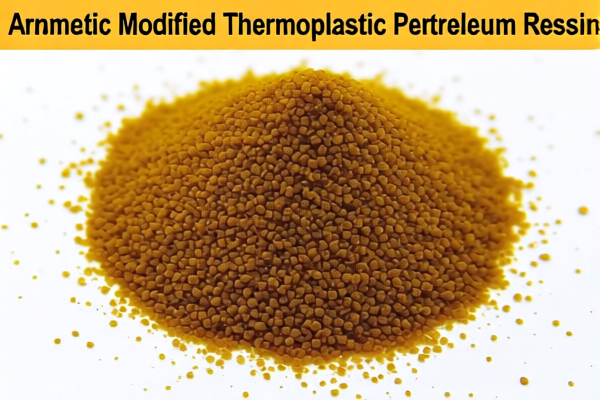
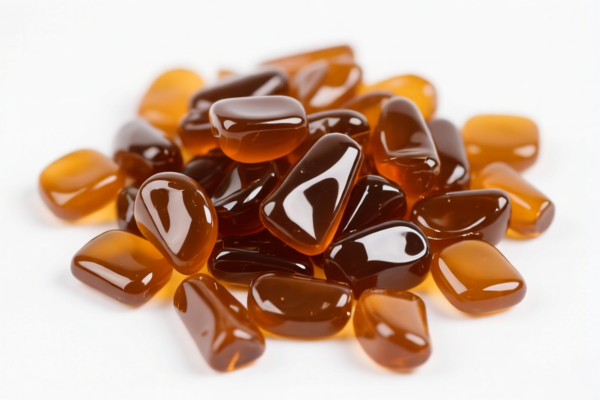
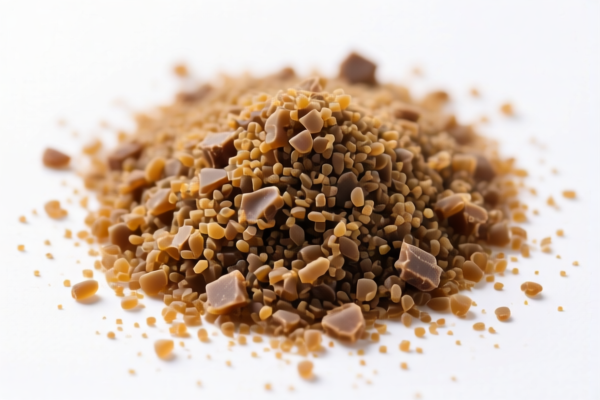
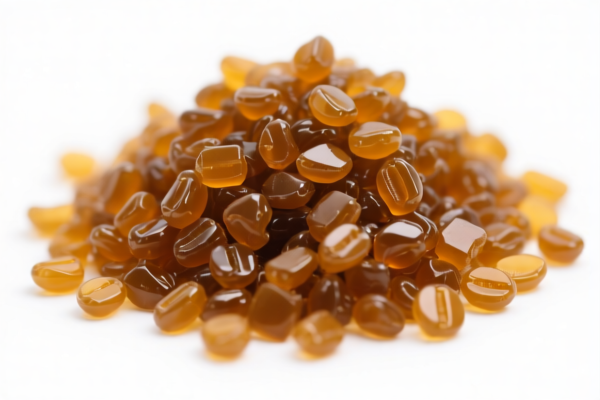
AI Analysis
🏭 Aromatic Modified Sand Core Curing Agent (Foundry Chemicals)
🌐 HS Code Reference & Customs Clearance Guide | 2026 Latest Tariff Breakdown | Professional Compliance Strategy
📌 I. Product Definition & Classification: What Exactly is a "Sand Core Curing Agent"?
A Sand Core Curing Agent (also known as a core hardener) is a critical chemical additive used in the foundry industry during the sand casting process. Its primary function is to accelerate the hardening (curing) of resin-bonded sand cores.
In international trade, these products are complex because they blend organic chemistry with industrial application. To classify them correctly, we must distinguish between: 1. Pure Chemicals (Chapter 29): Single aromatic acids or derivatives. 2. Prepared Industrial Products (Chapter 38): Mixtures, preparations, or binders designed for specific industrial uses (like foundry molds).
⚠️ Key Distinction Point:
- If the product is a single, pure aromatic carboxylic acid (e.g., pure Benzoic Acid) with no other functional ingredients → It may fall under Chapter 29.
- If the product is a mixture, preparation, or specialized binder/hardener containing aromatic substances or modified components intended specifically for foundry molds or cores → It falls under Chapter 38 (Specifically 3816 or 3824).Analysis of Your Product: "Aromatic Modified" suggests a tailored chemical mixture or preparation for a specific industrial purpose (foundry), rather than a generic commodity chemical. Therefore, it is most likely classified under Chapter 38.
📦 II. HS Code Classification Details (2026 Authorized List)
Based on the provided data <DATA>, here are the relevant HS Codes for chemical and industrial products. Note that while the prompt asks for "Aromatic Modified Sand Core Curing Agent," the <DATA> contains specific entries for Refractory Cements/Mortars and Prepared Binders/Chemical Products.
| HS Code | Product Description (from Data) | Tax Rate (Base + Additional) | Total Tax | Likely Applicability |
|---|---|---|---|---|
3824.10.00.00 |
Prepared binders for foundry molds or cores | Base: 6.0%, Additional: 25.0% | 31.0% | ✅ Highest Probability. If the curing agent is technically classified as a "prepared binder" or part of the core-making preparation system. |
3816.00.20.10 |
Refractory cements, mortars... Other Clay | Base: 3.0%, Additional: 25.0% | 28.0% | ❌ Unlikely. Unless the curing agent is clay-based (rare for aromatic resins). |
3816.00.20.50 |
Refractory cements, mortars... Other Other | Base: 3.0%, Additional 25.0% | 28.0% | ❌ Unlikely. Same as above; refractory materials are distinct from chemical curing agents. |
3824.99.29.00 |
Chemical products... Mixtures containing 5%+ aromatic substances | Base: 6.5%, Additional: 25.0% | 31.5% | ⚠️ Possible. If the product is a "chemical preparation" not elsewhere specified, containing >5% aromatic substances. |
2916.39.79.00 |
Aromatic monocarboxylic acids... Other | Base: 0.0%, Additional: 0.0% | 0.0% | ❌ Risk Alert. Only applicable if the product is a pure aromatic acid, not a mixture/preparation. |
2916.39.46.00 |
Aromatic monocarboxylic acids... Products in US Note 3 to Section VI | Base: 0.0%, Additional: 0.0% | 0.0% | ❌ Risk Alert. Specific legal note required; rarely applies to complex industrial mixtures. |
🔍 Critical Insight:
- The term "Prepared binders for foundry molds or cores" (3824.10.00.00) is the most precise fit for industrial core-making chemicals.
- If the agent is a simple aromatic acid derivative used as a binder, it might be3824.99.29.00(31.5%).
- Do NOT assume2916.39.79.00(0% tax) applies unless you can prove it is a pure substance and not a "preparation." Customs often reclassify pure chemicals as "preparations" if they contain solvents or additives for industrial use.
💰 III. 2026 Tariff Rate Breakdown (Detailed Explanation)
✅ Applicable Country: USA (US)
✅ Origin: China (CN) – Assuming standard origin unless specified otherwise
✅ Effective Date: Current 2026 tariffs apply (Section 301 & IEEPA surcharges included)
🎯 1. 3824.10.00.00 – Prepared Binders for Foundry Molds/Cores
| Item | Detail |
|---|---|
| Base Tariff | 6.0% (Ad Valorem) |
| USITC Additional Tariff | +25.0% (Section 301) |
| Total Tariff | 31.0% |
| De Minimis Exemption | ❌ Not Eligible (Usually denied for chemical preparations from China) |
| Legal Basis | USITC:3824.10.00.00 → FOOTNOTE:301 |
📌 Explanation:
- This code is specifically for industrial preparations. The 6% base rate is standard for many chemical products, but the 25% Section 301 tariff significantly increases the cost.
- Total Cost Impact: 31% of the CIF value.
🎯 2. 3824.99.29.00 – Other Chemical Preparations (>5% Aromatic)
| Item | Detail |
|---|---|
| Base Tariff | 6.5% (Ad Valorem) |
| USITC Additional Tariff | +25.0% (Section 301) |
| Total Tariff | 31.5% |
| De Minimis Exemption | ❌ Not Eligible |
| Legal Basis | USITC:3824.99.29.00 → FOOTNOTE:301 |
📌 Explanation:
- This is a "catch-all" for chemical mixtures. If the curing agent doesn't fit "prepared binders" exactly (e.g., it's a hardener additive rather than a binder), this code is used.
- Slightly higher rate (31.5%) due to a higher base tariff (6.5%).
⚠️ WARNING: The "Pure Chemical" Trap (2916.39.79.00 - 0%)
| Item | Detail |
|---|---|
| Base Tariff | 0.0% |
| Additional Tariff | 0.0% |
| Total Tariff | 0.0% |
| Risk | HIGH. Customs may dispute this if the product is a mixture. |
📌 Why this is risky:
- If you declare an "Aromatic Modified Curing Agent" as a pure aromatic acid under2916.39.79.00, Customs may classify it as a "preparation" under Chapter 38.
- Consequence: Back taxes of ~31%, plus penalties and interest.
- Advice: Only use Chapter 29 if the product is 100% pure chemical substance with no solvents or functional additives.
🛠️ IV. Customs Clearance Practical Advice
✅ 1. Required Documentation Checklist
| Document | Must Provide? | Notes |
|---|---|---|
| ✅ Product Specification Sheet | ✔️ | Must clearly state: "Preparation for foundry core hardening," composition %, CAS numbers for aromatic components. |
| ✅ Formula / Composition List | ✔️ | Crucial for distinguishing between Chapter 29 (pure) and Chapter 38 (mixture). |
| ✅ Certificate of Origin | ✔️ | To apply Section 301 tariffs correctly. |
| ✅ SDS (Safety Data Sheet) | ✔️ | Must match the declared HS Code. Check Hazard Class. |
| ✅ Commercial Invoice | ✔️ | Description should NOT just say "Curing Agent." Use "Prepared Binder for Foundry Cores" or "Chemical Preparation Containing Aromatic Substances." |
| ✅ Packing List | ✔️ | Detail net/gross weight. |
✅ 2. Declaration Strategy (Key Mnemonic)
🔥 "If it's mixed, it's Ch38; If it's pure, Ch29 might work; But 'Modified' usually means Ch38!"
| Scenario | Correct HS Code | Tariff | Why? |
|---|---|---|---|
| Pure Aromatic Acid (No solvents/additives) | 2916.39.79.00 |
0% | Pure chemical substance. |
| Industrial Curing Agent (Mixture with solvents/catalysts) | 3824.10.00.00 |
31.0% | Classified as "Prepared Binder." |
| Other Chemical Mix (Not a binder, but >5% aromatic) | 3824.99.29.00 |
31.5% | Classified as "Other Chemical Preparation." |
| Refractory Mortar (Clay-based) | 3816.00.20.10 |
28.0% | Only if clay-based refractory. |
✅ 3. Special Handling for "Aromatic Modified"
-
Define "Modified":
- If "Modified" implies polymerization or blending with other chemicals for a specific industrial purpose, it is a Chapter 38 product.
- Do not use vague terms like "Specialty Chemical." Be specific: "Liquid Resin Hardener for Foundry Cores."
-
Aromatic Content:
- If the product contains >5% aromatic substances,
3824.99.29.00is a safe fallback if3824.10.00.00is disputed. - Ensure the invoice explicitly states "Contains >5% by weight of aromatic substances" to justify
3824.99.29.00.
- If the product contains >5% aromatic substances,
-
Avoid "Refractory" Codes:
- Sand cores are not refractory cements/mortars in the traditional sense (like furnace lining). Do not use
3816.00.20.x0unless you are supplying material for furnace linings, not cores.
- Sand cores are not refractory cements/mortars in the traditional sense (like furnace lining). Do not use
🌍 V. Global Market Comparison (2026)
| Market | Recommended HS Code | Approx. Tariff (China Origin) | Key Certification |
|---|---|---|---|
| 🇺🇸 USA | 3824.10.00.00 |
31.0% | None specific for customs, but EPA may apply. |
| 🇪🇺 EU | 3824.10.00 |
~6.5% + VAT | REACH Compliance (Critical) |
| 🇨🇳 China | 3824.10.00 |
6.5% (Import) | None |
| 🇲🇽 Mexico | 3824.10.00 |
0% (under USMCA if qualified) | None |
📌 Conclusion for USA Import:
- The 31.0% tariff is significant.
- If your product can be proven to be a pure aromatic acid (Chapter 29), you could save ~31%. However, this is rare for "curing agents" which are almost always mixtures.
- Recommendation: Prepare for 31.0% cost. Use3824.10.00.00as the primary code.
📌 VI. Common Mistakes & Pitfalls (Learn from Others' Losses)
❌ Mistake 1: Declaring as "Pure Aromatic Acid" (2916.39.79.00) to avoid tax.
👉 Result: Customs reclassifies as "Preparation" (3824.10.00.00) → Back taxes of 31% + penalties.
❌ Mistake 2: Using "Refractory Cement" (3816.00.20.50) for sand core agents.
👉 Result: Misclassification. Sand cores are not refractory mortars. Customs may reject or delay.
❌ Mistake 3: Vague Description "Chemical Agent."
👉 Result: Customs examiner has to guess → Likely defaults to highest tax or requests more info → Delays.
✅ Correct Approach:
"Prepared Binder for Foundry Cores, Liquid, Aromatic-Modified, CAS [Number], Net Weight [X]kg"
🎯 VII. Conclusion: Strategic Compliance
🎯 Remember:
🔹 "Modified = Mixture = Chapter 38"
🔹 "Pure = Chapter 29 (0% Risk)"
🔹 "Foundry Binder = 3824.10 (31% Tax)"
📌 Action Item:
1. Verify Composition: Check if your "Aromatic Modified" agent is a pure compound or a mixture.
2. If Mixture: Budget for 31.0% tariff.
3. Documentation: Ensure SDS and Spec Sheet match 3824.10.00.00.
4. Consult: If the product is complex, seek a Pre-Ruling from US Customs (CBP) to confirm classification before shipment.
✨ Smart Customs, Lower Costs!
💼 Accurate Classification Saves 31% of Your CIF Value.
Customer Reviews
About HS Code Classification
The Harmonized System (HS) is an internationally standardized nomenclature developed by the World Customs Organization (WCO) to classify traded products. Over 200 countries use the HS system as the basis for customs tariffs, trade statistics, and import/export regulations.
Each HS code follows a hierarchical structure:
- Chapter (2 digits) — Broad category of goods (e.g., Chapter 84: Machinery and Mechanical Appliances)
- Heading (4 digits) — More specific grouping within the chapter
- Subheading (6 digits) — Internationally standardized breakdown, used by all WCO member countries
- National subdivisions (8-10 digits) — Country-specific extensions for further classification, such as US HTSUS 10-digit codes
Correct HS code classification is essential for smooth customs clearance, accurate duty payment, and compliance with trade regulations. Misclassification can lead to customs delays, overpayment of duties, or penalties.
When importing from CN to US, the applicable tariff rates may include:
- Most-Favored-Nation (MFN) rate — The standard duty rate applied to WTO members
- General rate — Applied to countries without trade agreements
- Trade remedy duties — Additional tariffs such as Section 301 (anti-dumping), Section 232 (national security), or countervailing duties
The information provided on this page is for reference purposes only. For official classification, please consult with your local customs authority or a licensed customs broker.