Artificial Graphite Thickener
CN → US| HS编码 | 关税税率 | 原产国 | 目的国 | 文档 |
|---|---|---|---|---|
| 3801105010 | 35.0% | CN | US | 官方文档 |
| 3801105090 | 35.0% | CN | US | 官方文档 |
| 2803000010 | 35.0% | CN | US | 官方文档 |
| 2803000050 | 35.0% | CN | US | 官方文档 |
| 3824999397 | 40.0% | CN | US | 官方文档 |
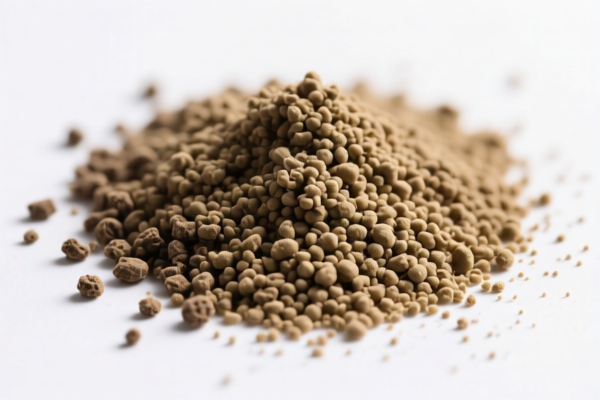
商品图片


AI分析
⚫ Artificial Graphite Thickener (and Rubber Modifiers)
🌐 HS Code Reference & Customs Clearance Guide | 2026 Latest Tariff Analysis | Professional Compliance Strategy
📌 Part I: Product Definition & Classification: What Exactly is "Artificial Graphite Thickener"?
In the international trade of chemical raw materials and industrial additives, "Artificial Graphite Thickener" (often referred to in trade as Artificial Graphite Rubber Modifier/Agent) is a critical component used in manufacturing processes, particularly in rubber compounding and chemical mixtures.
It is generally classified into two main categories based on its physical state and chemical function: 1. Chemical Additive/Modifier: A specific formulation used to modify the properties of rubber or other polymers. 2. Raw Carbon Material: A form of carbon (graphite) used as a base material or filler.
⚠️ Key Classification Distinction: - If it is a specific formulated modifier for rubber/chemicals → Look at Chapter 38 (Artificial Graphite Rubber Modifiers). - If it is considered a raw form of carbon → Look at Chapter 28 (Other Forms of Carbon). - If it is a general chemical preparation not specifically named elsewhere → Look at the Residual Category (Chapter 38, Heading 3824).
📦 Part II: HS Code Classification Details (2026 Latest Tariff Authority Comparison)
Based on the provided data for "Artificial Graphite Rubber Modifiers," here are the potential HS Codes and their logical justifications:
| HS Code | Product Description & Logic | Application Scenario | Material Logic |
|---|---|---|---|
3801.10.50.10 |
Artificial Graphite Rubber Modifier (Specific): Classified as a graphite-based modifier, specifically categorized under "artificial graphite" form with "modified" additive attributes. | Specific rubber compounding additives, specialized industrial modifiers. | ✅ Matches "Artificial Graphite" category + "Modifier" form. |
3801.10.50.90 |
Artificial Graphite Rubber Modifier (Non-Specific): Classified under "non-specific form" graphite products, based on the chemical attribute of being a "modifier." | General purpose graphite modifiers, unspecified forms. | ✅ Non-specific graphite product, chemical modifier attribute. |
2803.00.00.10 |
Other Forms of Carbon (Variant 1): The "modifier" is viewed as a chemical additive; logically consistent with carbon classification in HS 2803. | Raw carbon feedstock, basic graphite powder for various industries. | ✅ Carbon form; "modifier" function does not conflict with carbon nature. |
2803.00.00.50 |
Other Forms of Carbon (Variant 2): Contains graphite components, classified as a form of carbon, meeting the "other forms of carbon" material requirement. | Generic graphite powders, carbon fillers. | ✅ Matches "other forms of carbon" material requirement. |
3824.99.93.97 |
Other Chemical Preparations (Residual): Classified as a chemical industry preparation, fitting the "other chemical products and preparations" catch-all category. | General chemical mixtures, proprietary blends not elsewhere specified. | ✅ Fits "Other Chemical Preparations" residual category. |
🔍 Critical Reminder: - The classification heavily depends on how the product is marketed and used. - If it is sold specifically as a "Rubber Modifier",
3801.10.50.xxis the most direct fit. - If it is sold as pure graphite powder used as a thickener/modifier,2803.00.00.xxmay apply. - If it is a complex chemical mixture with no specific heading,3824.99.93.97is the fallback.
💰 Part III: 2026 Latest Tariff Rate Breakdown (Including Surtaxes & Policy Add-ons)
✅ Applicable Country: United States (US)
✅ Country of Origin: China (CN)
✅ Effective Date: November 10, 2025 onwards (including subsequent imports)
🎯 1. 3801.10.50.10 & 3801.10.50.90 — Artificial Graphite Rubber Modifiers
| Item | Content |
|---|---|
| Base Tariff Rate | 0.0% (ad valorem) |
| USITC Surcharge (Section 301) | +25.0% |
| IEEPA Surcharge (122 Clause) | +10.0% |
| Total Effective Rate | 35.0% |
| Tax Calculation | CIF Value × 35% |
| De Minimis Exemption? | ❌ No (Not eligible for de minimis) |
| Legal Basis Path | USITC:3801.10.50.10/90 → FOOTNOTE:Section 301 → IEEPA:Clause 122 |
📌 Explanation: - Although the base tariff for graphite products (
3801) is 0%, Section 301 tariffs apply a +25% surcharge on Chinese goods. - The 122 Clause IEEPA surcharge adds an additional +10%. - Total: 35%. This is a significant cost factor that must be priced into the product.
🎯 2. 2803.00.00.10 & 2803.00.00.50 — Other Forms of Carbon
| Item | Content |
|---|---|
| Base Tariff Rate | 0.0% (ad valorem) |
| USITC Surcharge (Section 301) | +25.0% |
| IEEPA Surcharge (122 Clause) | +10.0% |
| Total Effective Rate | 35.0% |
| Tax Calculation | CIF Value × 35% |
| De Minimis Exemption? | ❌ No |
| Legal Basis Path | USITC:2803.00.00.10/50 → FOOTNOTE:Section 301 → IEEPA:Clause 122 |
📌 Note: - Even if classified under Chapter 28 (Carbon), the same surcharges apply. - The logic is that these are still Chinese-origin goods subject to current trade remedies.
🎯 3. 3824.99.93.97 — Other Chemical Preparations (Residual)
| Item | Content |
|---|---|
| Base Tariff Rate | 5.0% (ad valorem) |
| USITC Surcharge (Section 301) | +25.0% |
| IEEPA Surcharge (122 Clause) | +10.0% |
| Total Effective Rate | 40.0% |
| Tax Calculation | CIF Value × 40% |
| De Minimis Exemption? | ❌ No |
| Legal Basis Path | USITC:3824.99.93.97 → FOOTNOTE:Section 301 → IEEPA:Clause 122 |
📌 Warning: - This is the highest tax bracket among the options. - If the customs broker incorrectly classifies the product as a generic "chemical preparation" instead of a specific "graphite modifier," you will pay 5% base + 35% surcharges = 40%. - Always argue for
3801or2803if possible, as they have a 0% base rate, saving you 5% on the CIF value.
🛠️ Part IV: Customs Clearance Practical Advice (Field Avoidance Guide)
✅ 1. Required Documentation Checklist (Non-negotiable)
| Document | Mandatory? | Explanation |
|---|---|---|
| ✅ Product Specification Sheet | ✔️ | Must detail chemical composition, graphite content %, and physical form (powder, paste, etc.). |
| ✅ Formula/Composition Breakdown | ✔️ | To prove it is a "Graphite Modifier" (3801) and not just a generic mix (3824). |
| ✅ Product Photos (Label/Packaging) | ✔️ | Clear view of name, batch number, and intended use (e.g., "For Rubber Modification"). |
| ✅ Commercial Invoice | ✔️ | Must explicitly state: "Artificial Graphite Rubber Modifier" or "Graphite-based Thickener for Rubber". |
| ✅ Certificate of Origin (CO) | ✔️ | Essential for verifying Chinese origin and applying correct surcharges. |
| ✅ Bill of Lading | ✔️ | Ensure no misleading descriptions like "Black Powder" without context. |
✅ 2. Declaration Tips (Key Mnemonics)
🔥 "Be Specific, Avoid Generic, Prove the Function!"
| Scenario | Correct Declaration | Incorrect Declaration | Consequence |
|---|---|---|---|
| Specific Rubber Modifier | "Artificial Graphite Rubber Modifier, for compounding elastomers" | "Black Chemical Powder" | Risk of 3824 classification → 40% Tax |
| Pure Graphite Powder | "Artificial Graphite, Amorphous Form, for industrial filler" | "Graphite Rubber Additive" | Risk of misclassification audit → Delay |
| Mixed Chemical Blend | "Chemical Preparation Containing Graphite, HS 3824.99" | "Graphite Product" | Correct if no specific modifier heading applies |
✅ 3. Special Circumstances Handling
| Situation | Handling Advice |
|---|---|
| OEM Private Label | Provide the customer’s technical specification sheet to prove the "modifier" function. |
| Import as Sample | Still subject to 35-40% tax if value exceeds de minimis ($800). No exemption for commercial samples in bulk. |
| Packaging Size | Large industrial drums vs. small lab bottles do not change HS code, but ensure labels match. |
| Origin Shift | If re-exported from a third country, ensure no substantial transformation occurred. Otherwise, CN origin persists. |
🌍 Part V: Global Main Market Clearance Comparison (2026 Latest)
| Country/Region | Recommended HS Code | Tariff Rate | Certification Requirements | Notes |
|---|---|---|---|---|
| 🇺🇸 United States | 3801.10.50.10/90 |
35% (301+IEEPA) | None specific (General Customs) | High tax; ensure correct 3801 classification to avoid 40%. |
| 🇨🇳 China | 3801.10.50.10 |
5% (Import Duty) | None | No 301 tariffs; significant cost advantage if imported into China. |
| 🇪🇺 European Union | 3801.10.00 |
0% - 4.5% | REACH Registration | REACH compliance is critical for chemical imports. |
| 🇬🇧 United Kingdom | 3801.10.00 |
4.5% | UK REACH | Post-Brexit rules apply; UK REACH registration needed. |
| 🇦🇺 Australia | 3801.10.00 |
5% | AICIS | Industrial Chemicals Notification Scheme compliance required. |
📌 Conclusion: - USA is the most expensive market due to the 35% combined surcharge. - EU/UK focus on chemical safety (REACH) rather than high tariffs, but compliance costs are high. - China offers the lowest duty rate for domestic reformulation.
📌 Part VI: Common Mistakes & Pitfalls (Blood and Tears Lessons)
❌ Mistake 1: Declaring as "Carbon Powder" or "Black Filler" without specifying "Artificial Graphite."
👉 Consequence: Customs may classify under 3824.99.93.97 (Other Chemicals) → 40% Tax.
✅ Fix: Explicitly state "Artificial Graphite" and "Rubber Modifier."
❌ Mistake 2: Not providing a formula or composition percentage.
👉 Consequence: Customs cannot verify if it fits 3801 (Graphite) or 3824 (Other). → Audit & Delay.
✅ Fix: Provide a Material Safety Data Sheet (MSDS) and Composition Sheet.
❌ Mistake 3: Assuming "Thickener" means it’s a cosmetic or food additive.
👉 Consequence: Wrong chapter entirely (e.g., Chapter 33 or 21) → Severe Penalty.
✅ Fix: Clarify it is for industrial rubber/chemical use, not consumer goods.
❌ Mistake 4: Ignoring the 122 Clause IEEPA surcharge.
👉 Consequence: Under-declaring tax by 10% → Back Taxes + Interest.
✅ Fix: Always include IEEPA 10% in cost calculations for Chinese goods.
🎯 Part VII: Conclusion: Professional Declaration, Save Cost, Ensure Compliance!
🎯 Remember the Mnemonic:
🔹 "Graphite is 3801, Carbon is 2803, Generic is 3824."
🔹 "Base 0% + 35% Surtaxes = 35% Total. Base 5% + 35% Surtaxes = 40% Total."
🔹 "Specify 'Artificial Graphite Rubber Modifier' to avoid the 40% trap!"
📌 Pro Tip:
If your product is critical for rubber manufacturing, ensure the technical datasheet highlights its role as a "modifier" and "thickener" to support the 3801.10 classification.
Consider applying for an Advance Ruling (Customs Ruling) if the classification is ambiguous, to lock in the 35% rate instead of risking the 40% rate.
📣 Immediate Action:
📞 Engage a licensed customs broker + Provide detailed chemical composition + Use precise product naming in invoices
🚀 Clear customs smoothly, control costs, and optimize your supply chain!
✨ Professional Clearance Starts with Accurate Classification!
💼 Every percentage point matters in global trade!
用户评价
关于 HS 编码归类
协调制度(HS)是由世界海关组织(WCO)制定的国际贸易商品分类标准。全球 200 多个国家采用 HS 系统作为海关关税、贸易统计和进出口监管的基础。
每个 HS 编码遵循以下层级结构:
- 章(2 位)——商品大类(例如:第 84 章:机器和机械设备)
- 品目(4 位)——章内的更具体分类
- 子目(6 位)——国际通用细分,所有 WCO 成员国统一使用
- 本国细分(8-10 位)——各国自行扩展的细分编码,如美国 HTSUS 10 位编码
正确的 HS 编码归类对于顺利通关、准确缴纳关税和遵守贸易法规至关重要。错误归类可能导致海关延误、多缴关税或罚款。
从CN进口到US时,适用的关税税率可能包括:
- 最惠国(MFN)税率——适用于 WTO 成员国的标准关税税率
- 普通税率——适用于无贸易协定国家
- 贸易救济关税——附加关税,如 301 条款(反倾销)、232 条款(国家安全)或反补贴税
本页内容仅供参考。如需正式归类,请咨询当地海关或持牌报关代理。