Artificial Graphite Thickener
CN → US| HS Code | Tariff Rate | Origin | Destination | Doc |
|---|---|---|---|---|
| 3801105010 | 35.0% | CN | US | Official Doc |
| 3801105090 | 35.0% | CN | US | Official Doc |
| 2803000010 | 35.0% | CN | US | Official Doc |
| 2803000050 | 35.0% | CN | US | Official Doc |
| 3824999397 | 40.0% | CN | US | Official Doc |
Product Images
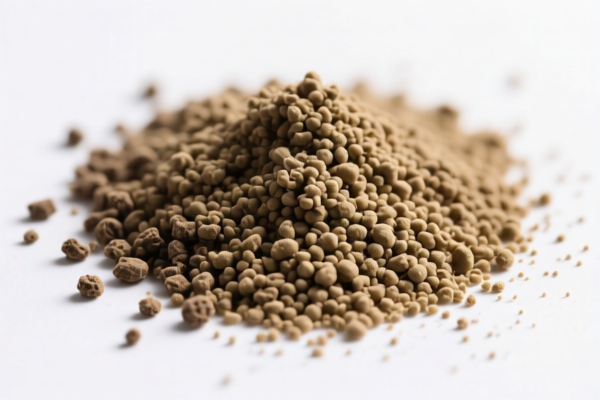


AI Analysis
⚫ Artificial Graphite Thickener (and Rubber Modifiers)
🌐 HS Code Reference & Customs Clearance Guide | 2026 Latest Tariff Analysis | Professional Compliance Strategy
📌 Part I: Product Definition & Classification: What Exactly is "Artificial Graphite Thickener"?
In the international trade of chemical raw materials and industrial additives, "Artificial Graphite Thickener" (often referred to in trade as Artificial Graphite Rubber Modifier/Agent) is a critical component used in manufacturing processes, particularly in rubber compounding and chemical mixtures.
It is generally classified into two main categories based on its physical state and chemical function: 1. Chemical Additive/Modifier: A specific formulation used to modify the properties of rubber or other polymers. 2. Raw Carbon Material: A form of carbon (graphite) used as a base material or filler.
⚠️ Key Classification Distinction: - If it is a specific formulated modifier for rubber/chemicals → Look at Chapter 38 (Artificial Graphite Rubber Modifiers). - If it is considered a raw form of carbon → Look at Chapter 28 (Other Forms of Carbon). - If it is a general chemical preparation not specifically named elsewhere → Look at the Residual Category (Chapter 38, Heading 3824).
📦 Part II: HS Code Classification Details (2026 Latest Tariff Authority Comparison)
Based on the provided data for "Artificial Graphite Rubber Modifiers," here are the potential HS Codes and their logical justifications:
| HS Code | Product Description & Logic | Application Scenario | Material Logic |
|---|---|---|---|
3801.10.50.10 |
Artificial Graphite Rubber Modifier (Specific): Classified as a graphite-based modifier, specifically categorized under "artificial graphite" form with "modified" additive attributes. | Specific rubber compounding additives, specialized industrial modifiers. | ✅ Matches "Artificial Graphite" category + "Modifier" form. |
3801.10.50.90 |
Artificial Graphite Rubber Modifier (Non-Specific): Classified under "non-specific form" graphite products, based on the chemical attribute of being a "modifier." | General purpose graphite modifiers, unspecified forms. | ✅ Non-specific graphite product, chemical modifier attribute. |
2803.00.00.10 |
Other Forms of Carbon (Variant 1): The "modifier" is viewed as a chemical additive; logically consistent with carbon classification in HS 2803. | Raw carbon feedstock, basic graphite powder for various industries. | ✅ Carbon form; "modifier" function does not conflict with carbon nature. |
2803.00.00.50 |
Other Forms of Carbon (Variant 2): Contains graphite components, classified as a form of carbon, meeting the "other forms of carbon" material requirement. | Generic graphite powders, carbon fillers. | ✅ Matches "other forms of carbon" material requirement. |
3824.99.93.97 |
Other Chemical Preparations (Residual): Classified as a chemical industry preparation, fitting the "other chemical products and preparations" catch-all category. | General chemical mixtures, proprietary blends not elsewhere specified. | ✅ Fits "Other Chemical Preparations" residual category. |
🔍 Critical Reminder: - The classification heavily depends on how the product is marketed and used. - If it is sold specifically as a "Rubber Modifier",
3801.10.50.xxis the most direct fit. - If it is sold as pure graphite powder used as a thickener/modifier,2803.00.00.xxmay apply. - If it is a complex chemical mixture with no specific heading,3824.99.93.97is the fallback.
💰 Part III: 2026 Latest Tariff Rate Breakdown (Including Surtaxes & Policy Add-ons)
✅ Applicable Country: United States (US)
✅ Country of Origin: China (CN)
✅ Effective Date: November 10, 2025 onwards (including subsequent imports)
🎯 1. 3801.10.50.10 & 3801.10.50.90 — Artificial Graphite Rubber Modifiers
| Item | Content |
|---|---|
| Base Tariff Rate | 0.0% (ad valorem) |
| USITC Surcharge (Section 301) | +25.0% |
| IEEPA Surcharge (122 Clause) | +10.0% |
| Total Effective Rate | 35.0% |
| Tax Calculation | CIF Value × 35% |
| De Minimis Exemption? | ❌ No (Not eligible for de minimis) |
| Legal Basis Path | USITC:3801.10.50.10/90 → FOOTNOTE:Section 301 → IEEPA:Clause 122 |
📌 Explanation: - Although the base tariff for graphite products (
3801) is 0%, Section 301 tariffs apply a +25% surcharge on Chinese goods. - The 122 Clause IEEPA surcharge adds an additional +10%. - Total: 35%. This is a significant cost factor that must be priced into the product.
🎯 2. 2803.00.00.10 & 2803.00.00.50 — Other Forms of Carbon
| Item | Content |
|---|---|
| Base Tariff Rate | 0.0% (ad valorem) |
| USITC Surcharge (Section 301) | +25.0% |
| IEEPA Surcharge (122 Clause) | +10.0% |
| Total Effective Rate | 35.0% |
| Tax Calculation | CIF Value × 35% |
| De Minimis Exemption? | ❌ No |
| Legal Basis Path | USITC:2803.00.00.10/50 → FOOTNOTE:Section 301 → IEEPA:Clause 122 |
📌 Note: - Even if classified under Chapter 28 (Carbon), the same surcharges apply. - The logic is that these are still Chinese-origin goods subject to current trade remedies.
🎯 3. 3824.99.93.97 — Other Chemical Preparations (Residual)
| Item | Content |
|---|---|
| Base Tariff Rate | 5.0% (ad valorem) |
| USITC Surcharge (Section 301) | +25.0% |
| IEEPA Surcharge (122 Clause) | +10.0% |
| Total Effective Rate | 40.0% |
| Tax Calculation | CIF Value × 40% |
| De Minimis Exemption? | ❌ No |
| Legal Basis Path | USITC:3824.99.93.97 → FOOTNOTE:Section 301 → IEEPA:Clause 122 |
📌 Warning: - This is the highest tax bracket among the options. - If the customs broker incorrectly classifies the product as a generic "chemical preparation" instead of a specific "graphite modifier," you will pay 5% base + 35% surcharges = 40%. - Always argue for
3801or2803if possible, as they have a 0% base rate, saving you 5% on the CIF value.
🛠️ Part IV: Customs Clearance Practical Advice (Field Avoidance Guide)
✅ 1. Required Documentation Checklist (Non-negotiable)
| Document | Mandatory? | Explanation |
|---|---|---|
| ✅ Product Specification Sheet | ✔️ | Must detail chemical composition, graphite content %, and physical form (powder, paste, etc.). |
| ✅ Formula/Composition Breakdown | ✔️ | To prove it is a "Graphite Modifier" (3801) and not just a generic mix (3824). |
| ✅ Product Photos (Label/Packaging) | ✔️ | Clear view of name, batch number, and intended use (e.g., "For Rubber Modification"). |
| ✅ Commercial Invoice | ✔️ | Must explicitly state: "Artificial Graphite Rubber Modifier" or "Graphite-based Thickener for Rubber". |
| ✅ Certificate of Origin (CO) | ✔️ | Essential for verifying Chinese origin and applying correct surcharges. |
| ✅ Bill of Lading | ✔️ | Ensure no misleading descriptions like "Black Powder" without context. |
✅ 2. Declaration Tips (Key Mnemonics)
🔥 "Be Specific, Avoid Generic, Prove the Function!"
| Scenario | Correct Declaration | Incorrect Declaration | Consequence |
|---|---|---|---|
| Specific Rubber Modifier | "Artificial Graphite Rubber Modifier, for compounding elastomers" | "Black Chemical Powder" | Risk of 3824 classification → 40% Tax |
| Pure Graphite Powder | "Artificial Graphite, Amorphous Form, for industrial filler" | "Graphite Rubber Additive" | Risk of misclassification audit → Delay |
| Mixed Chemical Blend | "Chemical Preparation Containing Graphite, HS 3824.99" | "Graphite Product" | Correct if no specific modifier heading applies |
✅ 3. Special Circumstances Handling
| Situation | Handling Advice |
|---|---|
| OEM Private Label | Provide the customer’s technical specification sheet to prove the "modifier" function. |
| Import as Sample | Still subject to 35-40% tax if value exceeds de minimis ($800). No exemption for commercial samples in bulk. |
| Packaging Size | Large industrial drums vs. small lab bottles do not change HS code, but ensure labels match. |
| Origin Shift | If re-exported from a third country, ensure no substantial transformation occurred. Otherwise, CN origin persists. |
🌍 Part V: Global Main Market Clearance Comparison (2026 Latest)
| Country/Region | Recommended HS Code | Tariff Rate | Certification Requirements | Notes |
|---|---|---|---|---|
| 🇺🇸 United States | 3801.10.50.10/90 |
35% (301+IEEPA) | None specific (General Customs) | High tax; ensure correct 3801 classification to avoid 40%. |
| 🇨🇳 China | 3801.10.50.10 |
5% (Import Duty) | None | No 301 tariffs; significant cost advantage if imported into China. |
| 🇪🇺 European Union | 3801.10.00 |
0% - 4.5% | REACH Registration | REACH compliance is critical for chemical imports. |
| 🇬🇧 United Kingdom | 3801.10.00 |
4.5% | UK REACH | Post-Brexit rules apply; UK REACH registration needed. |
| 🇦🇺 Australia | 3801.10.00 |
5% | AICIS | Industrial Chemicals Notification Scheme compliance required. |
📌 Conclusion: - USA is the most expensive market due to the 35% combined surcharge. - EU/UK focus on chemical safety (REACH) rather than high tariffs, but compliance costs are high. - China offers the lowest duty rate for domestic reformulation.
📌 Part VI: Common Mistakes & Pitfalls (Blood and Tears Lessons)
❌ Mistake 1: Declaring as "Carbon Powder" or "Black Filler" without specifying "Artificial Graphite."
👉 Consequence: Customs may classify under 3824.99.93.97 (Other Chemicals) → 40% Tax.
✅ Fix: Explicitly state "Artificial Graphite" and "Rubber Modifier."
❌ Mistake 2: Not providing a formula or composition percentage.
👉 Consequence: Customs cannot verify if it fits 3801 (Graphite) or 3824 (Other). → Audit & Delay.
✅ Fix: Provide a Material Safety Data Sheet (MSDS) and Composition Sheet.
❌ Mistake 3: Assuming "Thickener" means it’s a cosmetic or food additive.
👉 Consequence: Wrong chapter entirely (e.g., Chapter 33 or 21) → Severe Penalty.
✅ Fix: Clarify it is for industrial rubber/chemical use, not consumer goods.
❌ Mistake 4: Ignoring the 122 Clause IEEPA surcharge.
👉 Consequence: Under-declaring tax by 10% → Back Taxes + Interest.
✅ Fix: Always include IEEPA 10% in cost calculations for Chinese goods.
🎯 Part VII: Conclusion: Professional Declaration, Save Cost, Ensure Compliance!
🎯 Remember the Mnemonic:
🔹 "Graphite is 3801, Carbon is 2803, Generic is 3824."
🔹 "Base 0% + 35% Surtaxes = 35% Total. Base 5% + 35% Surtaxes = 40% Total."
🔹 "Specify 'Artificial Graphite Rubber Modifier' to avoid the 40% trap!"
📌 Pro Tip:
If your product is critical for rubber manufacturing, ensure the technical datasheet highlights its role as a "modifier" and "thickener" to support the 3801.10 classification.
Consider applying for an Advance Ruling (Customs Ruling) if the classification is ambiguous, to lock in the 35% rate instead of risking the 40% rate.
📣 Immediate Action:
📞 Engage a licensed customs broker + Provide detailed chemical composition + Use precise product naming in invoices
🚀 Clear customs smoothly, control costs, and optimize your supply chain!
✨ Professional Clearance Starts with Accurate Classification!
💼 Every percentage point matters in global trade!
Customer Reviews
About HS Code Classification
The Harmonized System (HS) is an internationally standardized nomenclature developed by the World Customs Organization (WCO) to classify traded products. Over 200 countries use the HS system as the basis for customs tariffs, trade statistics, and import/export regulations.
Each HS code follows a hierarchical structure:
- Chapter (2 digits) — Broad category of goods (e.g., Chapter 84: Machinery and Mechanical Appliances)
- Heading (4 digits) — More specific grouping within the chapter
- Subheading (6 digits) — Internationally standardized breakdown, used by all WCO member countries
- National subdivisions (8-10 digits) — Country-specific extensions for further classification, such as US HTSUS 10-digit codes
Correct HS code classification is essential for smooth customs clearance, accurate duty payment, and compliance with trade regulations. Misclassification can lead to customs delays, overpayment of duties, or penalties.
When importing from CN to US, the applicable tariff rates may include:
- Most-Favored-Nation (MFN) rate — The standard duty rate applied to WTO members
- General rate — Applied to countries without trade agreements
- Trade remedy duties — Additional tariffs such as Section 301 (anti-dumping), Section 232 (national security), or countervailing duties
The information provided on this page is for reference purposes only. For official classification, please consult with your local customs authority or a licensed customs broker.