Automatic Soap Dispenser
CN → US| HS编码 | 关税税率 | 原产国 | 目的国 | 文档 |
|---|---|---|---|---|
| 7323999030 | 88.4% | CN | US | 官方文档 |
| 3924104000 | 13.4% | CN | US | 官方文档 |
| 7323999080 | 88.4% | CN | US | 官方文档 |
商品图片
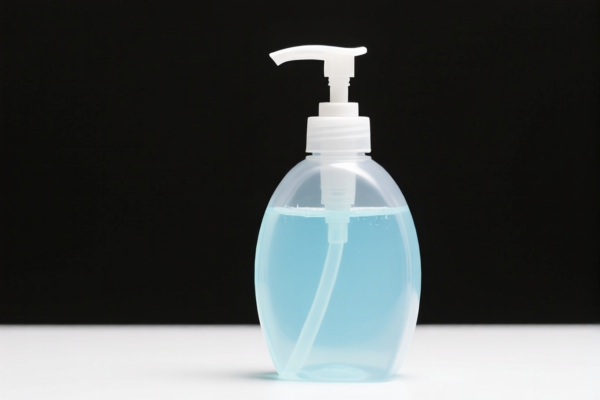
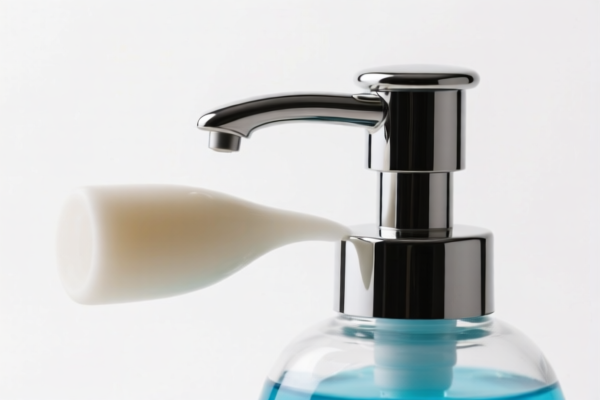
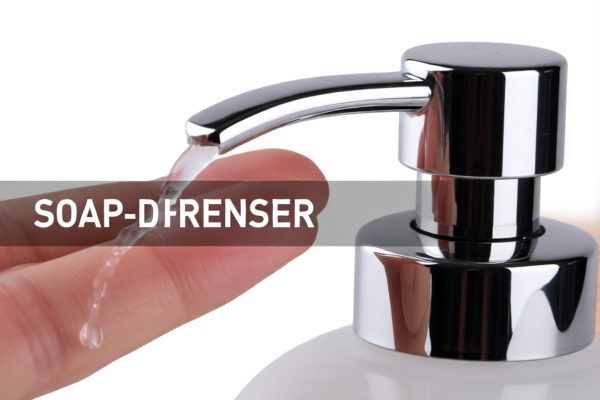

AI分析
🧼 Automatic Soap Dispenser (Infrared Sensor Models)
🌐 HS Code Reference & Customs Clearance Guide | 2026 Tax Rate Breakdown | Professional Entry Strategy
📌 Section 1: Product Definition & Classification – Do You Know "Automatic Soap Dispenser"?
An Automatic Soap Dispenser is a touch-free, sensor-activated device designed to dispense liquid soap, sanitizer, or lotion. In international trade, it is primarily classified based on its material composition and intended use:
Two Main Categories:
- Metal-Based Units (Iron/Steel/Stainless Steel): Used in commercial, industrial, or high-end residential settings.
- Plastic-Based Units: Typically used in domestic, sanitary, or commercial restrooms for hygiene purposes.
⚠️ Critical Differentiation Point:
- If made of iron, steel, or stainless steel → Likely classified under HS Code 7323.99.90.30 or 7323.99.90.80
- If made of plastic → Likely classified under HS Code 3924.10.40.00
📦 Section 2: HS Code Classification Details (2026 Official Tariff Schedule)
| HS Code | Product Description | Application Scenario | Material |
|---|---|---|---|
7323.99.90.30 |
Metal (Iron/Steel) Kitchen or Dining Table Dispensing Device | Commercial kitchens, high-end homes, hotels | ✅ Iron/Steel |
7323.99.90.80 |
Household/Kitchen Utensils Made of Iron, Steel, or Stainless Steel | General domestic use, stainless steel models | ✅ Iron/Steel/Stainless Steel |
3924.10.40.00 |
Plastic Sanitary or Toilet Articles | Household restrooms, hospitals, offices | ✅ Plastic |
🔍 Key Reminder:
- All metal-based automatic dispensers (with or without electronic sensors) fall under Chapter 73 (Articles of Iron or Steel).
- All plastic-based automatic dispensers fall under Chapter 39 (Plastics and Articles Thereof).
- Electronic components do not change the primary material classification unless the device is deemed a "machine" under Chapter 84/85 (not typical for soap dispensers).
💰 Section 3: 2026 Tax Rate Breakdown (Including Additional Duties & Policy Surcharges)
✅ Applicable Country: United States (US)
✅ Origin: China (CN)
✅ Effective Date: As of November 10, 2025 (including subsequent imports)
🎯 1. 7323.99.90.30 — Metal Kitchen/Dining Dispenser (Iron/Steel)
| Item | Content |
|---|---|
| Base Tariff Rate | 3.4% |
| Additional Duty (Section 232 / 122) | 25.0% |
| Section 122 Tariff (Steel/Aluminum/Copper) | 50.0% |
| Total Tariff Rate | 88.4% |
| Tax Calculation | CIF Value × 88.4% |
| De Minimis Exemption Eligible? | ❌ No |
| Legal Basis Path | Section 232:7323.99.90.30 → Section 122:Steel → Section 301:Additional 25% |
📌 Explanation:
- The 25% additional duty is imposed under Section 301 of the Trade Act of 1974 against Chinese-origin steel products.
- The 50% surcharge is applied under Section 122, targeting specific steel, aluminum, and copper goods from China.
- Combined total of 88.4% makes this a highly taxed category, requiring careful cost planning.
🎯 2. 7323.99.90.80 — Stainless Steel Household/Kitchen Utensil
| Item | Content |
|---|---|
| Base Tariff Rate | 3.4% |
| Additional Duty (Section 301) | 25.0% |
| Section 122 Tariff (Steel) | 50.0% |
| Total Tariff Rate | 88.4% |
| Tax Calculation | CIF Value × 88.4% |
| De Minimis Exemption Eligible? | ❌ No |
| Legal Basis Path | Section 301:7323.99.90.80 → Section 122:Steel |
📌 Note:
- This applies to stainless steel models used in homes or kitchens.
- Even if labeled as "household", the material dominates classification, resulting in the same high tariff as7323.99.90.30.
🎯 3. 3924.10.40.00 — Plastic Sanitary/Toilet Articles
| Item | Content |
|---|---|
| Base Tariff Rate | 3.4% |
| Additional Duty (Section 301) | 0.0% |
| Section 122 Tariff | 10.0% |
| Total Tariff Rate | 13.4% |
| Tax Calculation | CIF Value × 13.4% |
| De Minimis Exemption Eligible? | ✅ Yes (if under $800 per shipment) |
| Legal Basis Path | Section 122:Plastics |
📌 Key Advantage:
- No 301 additional duty applies to plastic products.
- Only 10% Section 122 surcharge is applied to certain plastic goods from China.
- Lowest tax burden among all automatic soap dispenser categories.
🛠️ Section 4: Customs Clearance Practical Tips (Avoiding Common Pitfalls)
✅ 1. Required Documentation Checklist (All Items Required)
| Document | Must Provide | Purpose |
|---|---|---|
| ✅ Product Specification Sheet | ✔️ | Include sensor type, material, capacity, voltage, dimensions |
| ✅ Material Composition Certificate | ✔️ | Prove whether it's plastic or metal-based |
| ✅ Product Photos (With Label) | ✔️ | Show model number, material indication, brand |
| ✅ Third-Party Test Report | ✔️ | FCC, CE, RoHS, UL (if applicable) |
| ✅ Commercial Invoice | ✔️ | Clearly state "Automatic Soap Dispenser" and material |
| ✅ Origin Certificate (CO) | ✔️ | If not China-origin, may reduce or eliminate surcharges |
| ✅ Packing List | ✔️ | Clarify unit vs. accessory relationship |
✅ 2. Declaration Strategy (Key Mantra)
🔥 "Material Matters, Classify Accurately, Name Specifically, Save Thousands!"
| Scenario | Correct Declaration | Incorrect Practice |
|---|---|---|
| Stainless Steel Unit | 7323.99.90.80 |
Declare as Plastic → 13.4% instead of 88.4% (Risk of Penalty) |
| Plastic Unit | 3924.10.40.00 |
Declare as Metal → 88.4% instead of 13.4% |
| Mixed Material (Metal + Plastic Parts) | Primary Material Determines Class | Split declaration → Higher duty per item |
| Sensor/Electronic Component | Do NOT overstate as "Machine" | Misclassify as Electronics → Chapter 84/85 (Unlikely) |
✅ 3. Special Cases Handling
| Situation | Recommendation |
|---|---|
| OEM Customized Dispensers | Provide OEM agreement + design drawings to avoid "non-standard" classification |
| Dual Material Units | Declare based on primary structural material |
| Dispenser with Pump Mechanism Only | Still classified under 7323 or 3924, not as pump machinery |
| Commercial vs. Domestic Use | Does not affect HS Code, only marketing labeling |
🌍 Section 5: Global Market Comparison (2026 Customs Regime)
| Country/Region | Recommended HS Code | Tariff | Certification | Notes |
|---|---|---|---|---|
| 🇺🇸 United States | 7323.99.90.30/80 or 3924.10.40.00 |
88.4% (Metal), 13.4% (Plastic) | FCC + RoHS | Highest duty for metal units |
| 🇨🇳 China | 7323.99.90.30/80 or 3924.10.40.00 |
3.4% | CCC + RoHS | No additional duties |
| 🇪🇺 European Union | 7323.99.90.30/80 or 3924.10.40.00 |
0% (if CE certified) | CE + RoHS | No surcharges |
| 🇦🇺 Australia | 7323.99.90.30/80 or 3924.10.40.00 |
5% | RCM | Moderate duty |
| 🇯🇵 Japan | 7323.99.90.30/80 or 3924.10.40.00 |
0% | PSE | No surcharges |
📌 Conclusion:
- The U.S. is the only market imposing 88.4% duty on metal automatic soap dispensers.
- Plastic models are far more cost-effective for U.S. export.
- Consider shifting production to Vietnam, Mexico, or India for U.S. market access to avoid surcharges.
📌 Section 6: Common Mistakes & Avoidance Tips (From Real Cases)
❌ Mistake 1: Classifying metal dispensers as plastic to avoid 88.4% duty
👉 Consequence: Audit, back taxes, fines, and possible seizure.
❌ Mistake 2: Splitting metal and plastic parts into separate shipments
👉 Consequence: Each item taxed separately → Total duty still 88.4% + administrative cost.
❌ Mistake 3: Omitting material details in commercial invoice
👉 Consequence: Customs cannot verify classification → Delay or reclassification.
❌ Mistake 4: Calling it "Automatic Sanitizer Machine"
👉 Consequence: May trigger Chapter 84/85 classification → Higher complexity and cost.
✅ Correct Practice:
"Automatic Soap Dispenser, Plastic Body, Infrared Sensor, 500ml Capacity, Model XYZ, FCC & RoHS Certified"
🎯 Section 7: Conclusion – Accurate Classification = Cost Efficiency!
🎯 Remember This Mantra:
🔹 "Metal = 88.4%, Plastic = 13.4%, Misclassify = Penalty!"
🔹 "HS Code is the Key to Profitability – One Wrong Step = Thousands Lost!"
📌 Pro Tip:
If your plastic dispensers are originally manufactured in Vietnam, Mexico, Thailand, or Malaysia, you may be eligible for Section 122 exemption or 0% duty under USMCA or other FTAs.
→ Recommendation: Request Advance Ruling (Advance Classification) from U.S. Customs and Border Protection (CBP) before shipping.
📣 Take Action Now:
📞 Contact a licensed Customs Broker + Submit Product Photos + Apply for HS Code Pre-Ruling
🚀 Let your Automatic Soap Dispenser clear customs smoothly, boost profit margins, and scale globally!
✨ Professional Customs Clearance Starts with Precise Classification!
💼 Every cent of your cost deserves precise calculation!
用户评价
关于 HS 编码归类
协调制度(HS)是由世界海关组织(WCO)制定的国际贸易商品分类标准。全球 200 多个国家采用 HS 系统作为海关关税、贸易统计和进出口监管的基础。
每个 HS 编码遵循以下层级结构:
- 章(2 位)——商品大类(例如:第 84 章:机器和机械设备)
- 品目(4 位)——章内的更具体分类
- 子目(6 位)——国际通用细分,所有 WCO 成员国统一使用
- 本国细分(8-10 位)——各国自行扩展的细分编码,如美国 HTSUS 10 位编码
正确的 HS 编码归类对于顺利通关、准确缴纳关税和遵守贸易法规至关重要。错误归类可能导致海关延误、多缴关税或罚款。
从CN进口到US时,适用的关税税率可能包括:
- 最惠国(MFN)税率——适用于 WTO 成员国的标准关税税率
- 普通税率——适用于无贸易协定国家
- 贸易救济关税——附加关税,如 301 条款(反倾销)、232 条款(国家安全)或反补贴税
本页内容仅供参考。如需正式归类,请咨询当地海关或持牌报关代理。