Automatic Soap Dispenser
CN → US| HS Code | Tariff Rate | Origin | Destination | Doc |
|---|---|---|---|---|
| 7323999030 | 88.4% | CN | US | Official Doc |
| 3924104000 | 13.4% | CN | US | Official Doc |
| 7323999080 | 88.4% | CN | US | Official Doc |
Product Images
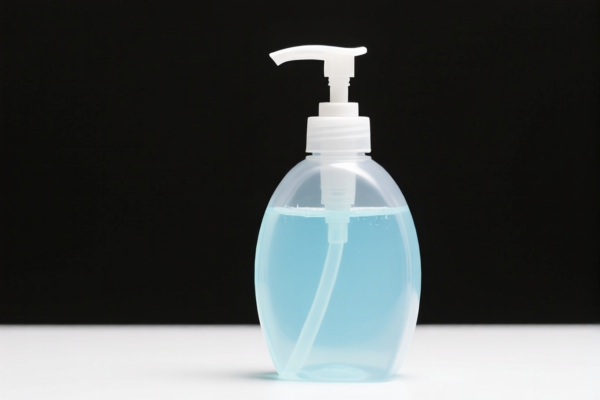
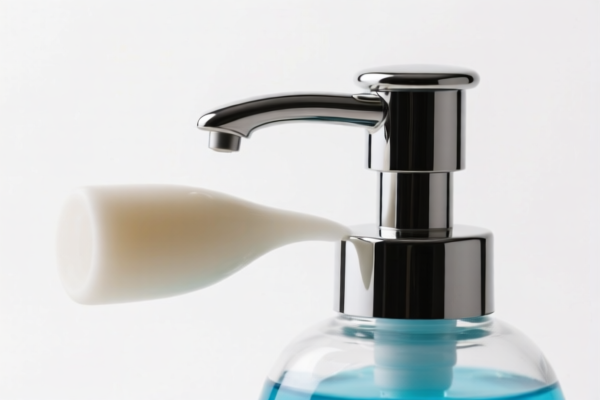
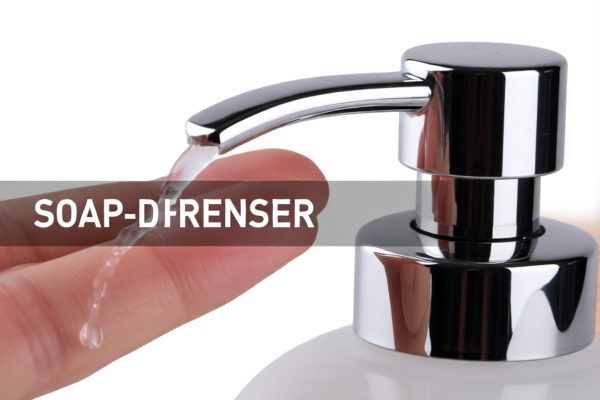

AI Analysis
🧼 Automatic Soap Dispenser (Infrared Sensor Models)
🌐 HS Code Reference & Customs Clearance Guide | 2026 Tax Rate Breakdown | Professional Entry Strategy
📌 Section 1: Product Definition & Classification – Do You Know "Automatic Soap Dispenser"?
An Automatic Soap Dispenser is a touch-free, sensor-activated device designed to dispense liquid soap, sanitizer, or lotion. In international trade, it is primarily classified based on its material composition and intended use:
Two Main Categories:
- Metal-Based Units (Iron/Steel/Stainless Steel): Used in commercial, industrial, or high-end residential settings.
- Plastic-Based Units: Typically used in domestic, sanitary, or commercial restrooms for hygiene purposes.
⚠️ Critical Differentiation Point:
- If made of iron, steel, or stainless steel → Likely classified under HS Code 7323.99.90.30 or 7323.99.90.80
- If made of plastic → Likely classified under HS Code 3924.10.40.00
📦 Section 2: HS Code Classification Details (2026 Official Tariff Schedule)
| HS Code | Product Description | Application Scenario | Material |
|---|---|---|---|
7323.99.90.30 |
Metal (Iron/Steel) Kitchen or Dining Table Dispensing Device | Commercial kitchens, high-end homes, hotels | ✅ Iron/Steel |
7323.99.90.80 |
Household/Kitchen Utensils Made of Iron, Steel, or Stainless Steel | General domestic use, stainless steel models | ✅ Iron/Steel/Stainless Steel |
3924.10.40.00 |
Plastic Sanitary or Toilet Articles | Household restrooms, hospitals, offices | ✅ Plastic |
🔍 Key Reminder:
- All metal-based automatic dispensers (with or without electronic sensors) fall under Chapter 73 (Articles of Iron or Steel).
- All plastic-based automatic dispensers fall under Chapter 39 (Plastics and Articles Thereof).
- Electronic components do not change the primary material classification unless the device is deemed a "machine" under Chapter 84/85 (not typical for soap dispensers).
💰 Section 3: 2026 Tax Rate Breakdown (Including Additional Duties & Policy Surcharges)
✅ Applicable Country: United States (US)
✅ Origin: China (CN)
✅ Effective Date: As of November 10, 2025 (including subsequent imports)
🎯 1. 7323.99.90.30 — Metal Kitchen/Dining Dispenser (Iron/Steel)
| Item | Content |
|---|---|
| Base Tariff Rate | 3.4% |
| Additional Duty (Section 232 / 122) | 25.0% |
| Section 122 Tariff (Steel/Aluminum/Copper) | 50.0% |
| Total Tariff Rate | 88.4% |
| Tax Calculation | CIF Value × 88.4% |
| De Minimis Exemption Eligible? | ❌ No |
| Legal Basis Path | Section 232:7323.99.90.30 → Section 122:Steel → Section 301:Additional 25% |
📌 Explanation:
- The 25% additional duty is imposed under Section 301 of the Trade Act of 1974 against Chinese-origin steel products.
- The 50% surcharge is applied under Section 122, targeting specific steel, aluminum, and copper goods from China.
- Combined total of 88.4% makes this a highly taxed category, requiring careful cost planning.
🎯 2. 7323.99.90.80 — Stainless Steel Household/Kitchen Utensil
| Item | Content |
|---|---|
| Base Tariff Rate | 3.4% |
| Additional Duty (Section 301) | 25.0% |
| Section 122 Tariff (Steel) | 50.0% |
| Total Tariff Rate | 88.4% |
| Tax Calculation | CIF Value × 88.4% |
| De Minimis Exemption Eligible? | ❌ No |
| Legal Basis Path | Section 301:7323.99.90.80 → Section 122:Steel |
📌 Note:
- This applies to stainless steel models used in homes or kitchens.
- Even if labeled as "household", the material dominates classification, resulting in the same high tariff as7323.99.90.30.
🎯 3. 3924.10.40.00 — Plastic Sanitary/Toilet Articles
| Item | Content |
|---|---|
| Base Tariff Rate | 3.4% |
| Additional Duty (Section 301) | 0.0% |
| Section 122 Tariff | 10.0% |
| Total Tariff Rate | 13.4% |
| Tax Calculation | CIF Value × 13.4% |
| De Minimis Exemption Eligible? | ✅ Yes (if under $800 per shipment) |
| Legal Basis Path | Section 122:Plastics |
📌 Key Advantage:
- No 301 additional duty applies to plastic products.
- Only 10% Section 122 surcharge is applied to certain plastic goods from China.
- Lowest tax burden among all automatic soap dispenser categories.
🛠️ Section 4: Customs Clearance Practical Tips (Avoiding Common Pitfalls)
✅ 1. Required Documentation Checklist (All Items Required)
| Document | Must Provide | Purpose |
|---|---|---|
| ✅ Product Specification Sheet | ✔️ | Include sensor type, material, capacity, voltage, dimensions |
| ✅ Material Composition Certificate | ✔️ | Prove whether it's plastic or metal-based |
| ✅ Product Photos (With Label) | ✔️ | Show model number, material indication, brand |
| ✅ Third-Party Test Report | ✔️ | FCC, CE, RoHS, UL (if applicable) |
| ✅ Commercial Invoice | ✔️ | Clearly state "Automatic Soap Dispenser" and material |
| ✅ Origin Certificate (CO) | ✔️ | If not China-origin, may reduce or eliminate surcharges |
| ✅ Packing List | ✔️ | Clarify unit vs. accessory relationship |
✅ 2. Declaration Strategy (Key Mantra)
🔥 "Material Matters, Classify Accurately, Name Specifically, Save Thousands!"
| Scenario | Correct Declaration | Incorrect Practice |
|---|---|---|
| Stainless Steel Unit | 7323.99.90.80 |
Declare as Plastic → 13.4% instead of 88.4% (Risk of Penalty) |
| Plastic Unit | 3924.10.40.00 |
Declare as Metal → 88.4% instead of 13.4% |
| Mixed Material (Metal + Plastic Parts) | Primary Material Determines Class | Split declaration → Higher duty per item |
| Sensor/Electronic Component | Do NOT overstate as "Machine" | Misclassify as Electronics → Chapter 84/85 (Unlikely) |
✅ 3. Special Cases Handling
| Situation | Recommendation |
|---|---|
| OEM Customized Dispensers | Provide OEM agreement + design drawings to avoid "non-standard" classification |
| Dual Material Units | Declare based on primary structural material |
| Dispenser with Pump Mechanism Only | Still classified under 7323 or 3924, not as pump machinery |
| Commercial vs. Domestic Use | Does not affect HS Code, only marketing labeling |
🌍 Section 5: Global Market Comparison (2026 Customs Regime)
| Country/Region | Recommended HS Code | Tariff | Certification | Notes |
|---|---|---|---|---|
| 🇺🇸 United States | 7323.99.90.30/80 or 3924.10.40.00 |
88.4% (Metal), 13.4% (Plastic) | FCC + RoHS | Highest duty for metal units |
| 🇨🇳 China | 7323.99.90.30/80 or 3924.10.40.00 |
3.4% | CCC + RoHS | No additional duties |
| 🇪🇺 European Union | 7323.99.90.30/80 or 3924.10.40.00 |
0% (if CE certified) | CE + RoHS | No surcharges |
| 🇦🇺 Australia | 7323.99.90.30/80 or 3924.10.40.00 |
5% | RCM | Moderate duty |
| 🇯🇵 Japan | 7323.99.90.30/80 or 3924.10.40.00 |
0% | PSE | No surcharges |
📌 Conclusion:
- The U.S. is the only market imposing 88.4% duty on metal automatic soap dispensers.
- Plastic models are far more cost-effective for U.S. export.
- Consider shifting production to Vietnam, Mexico, or India for U.S. market access to avoid surcharges.
📌 Section 6: Common Mistakes & Avoidance Tips (From Real Cases)
❌ Mistake 1: Classifying metal dispensers as plastic to avoid 88.4% duty
👉 Consequence: Audit, back taxes, fines, and possible seizure.
❌ Mistake 2: Splitting metal and plastic parts into separate shipments
👉 Consequence: Each item taxed separately → Total duty still 88.4% + administrative cost.
❌ Mistake 3: Omitting material details in commercial invoice
👉 Consequence: Customs cannot verify classification → Delay or reclassification.
❌ Mistake 4: Calling it "Automatic Sanitizer Machine"
👉 Consequence: May trigger Chapter 84/85 classification → Higher complexity and cost.
✅ Correct Practice:
"Automatic Soap Dispenser, Plastic Body, Infrared Sensor, 500ml Capacity, Model XYZ, FCC & RoHS Certified"
🎯 Section 7: Conclusion – Accurate Classification = Cost Efficiency!
🎯 Remember This Mantra:
🔹 "Metal = 88.4%, Plastic = 13.4%, Misclassify = Penalty!"
🔹 "HS Code is the Key to Profitability – One Wrong Step = Thousands Lost!"
📌 Pro Tip:
If your plastic dispensers are originally manufactured in Vietnam, Mexico, Thailand, or Malaysia, you may be eligible for Section 122 exemption or 0% duty under USMCA or other FTAs.
→ Recommendation: Request Advance Ruling (Advance Classification) from U.S. Customs and Border Protection (CBP) before shipping.
📣 Take Action Now:
📞 Contact a licensed Customs Broker + Submit Product Photos + Apply for HS Code Pre-Ruling
🚀 Let your Automatic Soap Dispenser clear customs smoothly, boost profit margins, and scale globally!
✨ Professional Customs Clearance Starts with Precise Classification!
💼 Every cent of your cost deserves precise calculation!
Customer Reviews
About HS Code Classification
The Harmonized System (HS) is an internationally standardized nomenclature developed by the World Customs Organization (WCO) to classify traded products. Over 200 countries use the HS system as the basis for customs tariffs, trade statistics, and import/export regulations.
Each HS code follows a hierarchical structure:
- Chapter (2 digits) — Broad category of goods (e.g., Chapter 84: Machinery and Mechanical Appliances)
- Heading (4 digits) — More specific grouping within the chapter
- Subheading (6 digits) — Internationally standardized breakdown, used by all WCO member countries
- National subdivisions (8-10 digits) — Country-specific extensions for further classification, such as US HTSUS 10-digit codes
Correct HS code classification is essential for smooth customs clearance, accurate duty payment, and compliance with trade regulations. Misclassification can lead to customs delays, overpayment of duties, or penalties.
When importing from CN to US, the applicable tariff rates may include:
- Most-Favored-Nation (MFN) rate — The standard duty rate applied to WTO members
- General rate — Applied to countries without trade agreements
- Trade remedy duties — Additional tariffs such as Section 301 (anti-dumping), Section 232 (national security), or countervailing duties
The information provided on this page is for reference purposes only. For official classification, please consult with your local customs authority or a licensed customs broker.