Automatic Wire Winding Box
CN → US| HS编码 | 关税税率 | 原产国 | 目的国 | 文档 |
|---|---|---|---|---|
| 7326908605 | 87.9% | CN | US | 官方文档 |
| 8479810000 | 35.0% | CN | US | 官方文档 |
| 8543709860 | 37.6% | CN | US | 官方文档 |
| 7326908688 | 87.9% | CN | US | 官方文档 |
| 8479909565 | 35.0% | CN | US | 官方文档 |
商品图片
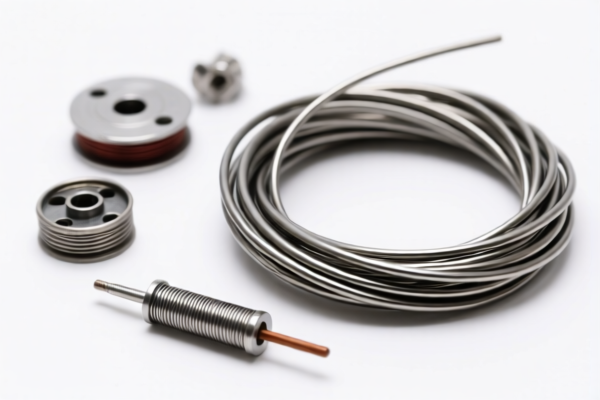
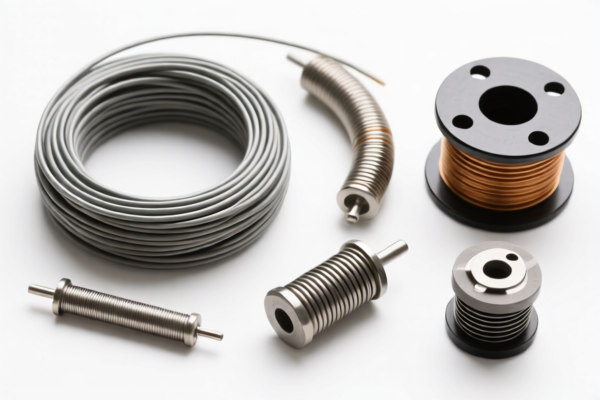
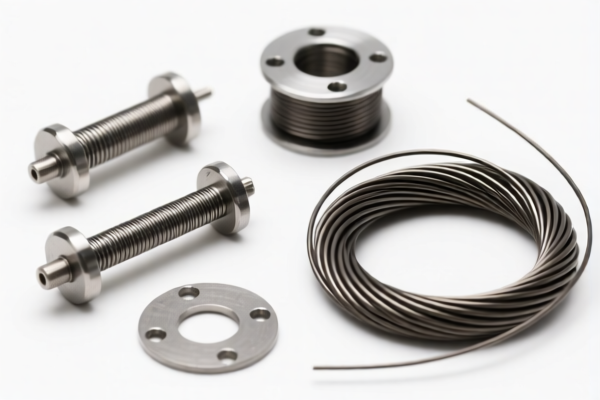
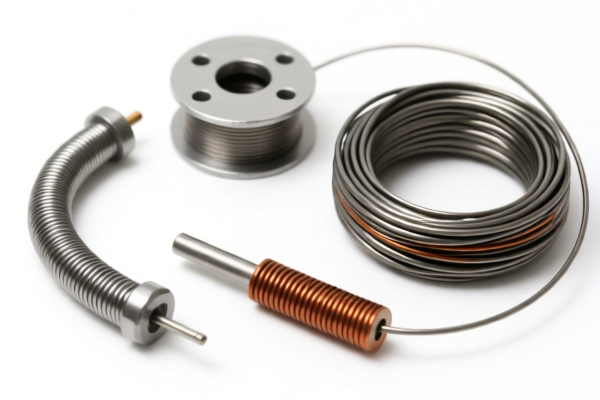
AI分析
🧵 Automatic Wire Winding Box (Automatic Wire Winding Device)
🌐 HS Code Reference & Customs Clearance Guide | 2026 Latest Tariff Full Analysis | Professional Level Clearance Strategy
📌 I. Product Definition & Classification: Do You Really Understand "Automatic Wire Winding Boxes"?
An Automatic Wire Winding Box is a specialized mechanical/electrical device used in manufacturing processes to automatically wind wires onto spools, bobbins, or transformers. In international trade, its classification depends heavily on its functional nature (is it a standalone machine, a part, or an electrical apparatus?) and its structural composition.
The device falls into two main categories in customs classification: 1. Machinery/Equipment Category: If it performs a specific mechanical function (winding) as a standalone unit with control systems, it is classified under machinery chapters (Chapter 84 or 85). 2. Parts/Components Category: If it is considered a component or accessory to a larger winding machine or production line, it may fall under parts chapters (Chapter 73 or 84).
⚠️ Key Distinction Point:
- If the device is a complete, standalone unit capable of independent operation with its own motor, control panel, and winding mechanism → It leans towards Machinery/Apparatus (8479or8543).
- If the device is a sub-assembly, bracket, or basic mechanical frame without independent control/logic → It leans towards Parts/Components (7326or8479.90).
📦 II. HS Code Classification Details (2026 Latest Tariff Authority Comparison)
Based on the provided data, here are the 5 potential HS Codes and their rationales:
| HS Code | Product Description & Rationale | Tax Rate | Key Tax Details |
|---|---|---|---|
7326.90.86.05 |
Mechanical Parts/Components: Classified as mechanical/electrical parts. Default tendency matches "spare parts/components" rules. Material inferred as metal/plastic, fitting the "other articles of iron/steel" catch-all category. | 87.9% | Base: 2.9% Add'l: 25% Sec 232: +50% (Steel/Aluminum/Copper) |
8479.81.00.00 |
Machinery for Processing Metals/Winding: Fits the description of "machines for processing metal" and wire winding equipment. It is viewed as a functional device for handling wires. | 35.0% | Base: 0.0% Add'l: 25% Sec 232: +10% |
8543.70.98.60 |
Electrical Apparatus with Independent Function: Classified as an electrical device with independent functions, fitting the definition of "other machines and apparatus." This assumes the device has significant electronic control/logic capabilities. | 37.6% | Base: 2.6% Add'l: 25% Sec 232: +10% |
7326.90.86.88 |
Other Metal Articles (Catch-all): Classified as a mechanical part, inferred material is metal or plastic. Fits the "other articles of iron or steel" catch-all category. | 87.9% | Base: 2.9% Add'l: 25% Sec 232: +50% (Steel/Aluminum/Copper) |
8479.90.95.65 |
Parts of Machinery: Inferred as a part or accessory for metal-processing machines or mechanical appliances. Fits the "parts" catch-all matching principle. | 35.0% | Base: 0.0% Add'l: 25% Sec 232: +10% |
🔍 Key Insight:
- The lowest tax rates (35%-37.6%) apply when classified as Machinery (8479) or Independent Electrical Apparatus (8543).
- The highest tax rates (87.9%) apply when classified as Metal Parts/Articles (7326), especially due to the 50% Section 232 tariff on steel/aluminum/copper products.
- Critical Decision: Is this a machine or a part? This distinction drives the tax rate difference from ~35% to ~88%.
💰 III. 2026 Latest Tariff Rate Breakdown (Including Add-ons & Policy Surcharges)
✅ Applicable Country: United States (US)
✅ Origin: China (CN)
✅ Effective Date: 2025/2026 (Current Trade Regulations)
🎯 1. 7326.90.86.05 & 7326.90.86.88 —— Other Articles of Iron/Steel (High Risk/High Cost)
| Item | Content |
|---|---|
| Base Tariff | 2.9% (ad valorem) |
| Section 301 Additional Tariff | +25% (USITC Footnote 9903.88.01) |
| Section 232 Additional Tariff | +50% (For Steel, Aluminum, or Copper articles) |
| Total Tariff | 87.9% |
| Tax Calculation | CIF Value × 87.9% |
| De Minimis Exemption | ❌ Not Eligible (High rate disqualifies from de minimis) |
| Legal Basis Path | Section 232:7326 → Section 301:7326 |
📌 Explanation:
- The 50% Section 232 tariff is the primary driver of the high cost. This applies if the box is primarily made of steel, aluminum, or copper.
- Even if classified as a "part," the material triggers the higher tariff.
- Total 87.9% is extremely high and likely makes this classification economically unviable unless the item is exempt or reclassified.
🎯 2. 8479.81.00.00 —— Machines for Processing Metal/Winding (Optimal for Machinery)
| Item | Content |
|---|---|
| Base Tariff | 0.0% |
| Section 301 Additional Tariff | +25% |
| Section 232 Additional Tariff | +10% (If applicable to certain metal-processing machines) |
| Total Tariff | 35.0% |
| Tax Calculation | CIF Value × 35.0% |
| De Minimis Exemption | ❌ Not Eligible (Standard for machinery) |
| Legal Basis Path | Section 301:8479 → Section 232:8479 |
📌 Note:
- Base rate is 0%, making this the most tax-efficient classification for machinery.
- The 25% Section 301 tariff is standard for Chinese machinery.
- The 10% Section 232 tariff may apply if the machine is deemed to process steel/aluminum, but it is lower than the 50% for raw parts.
- Total 35.0% is significantly better than the 87.9% part classification.
🎯 3. 8479.90.95.65 —— Parts of Machinery (Mid-Range Option)
| Item | Content |
|---|---|
| Base Tariff | 0.0% |
| Section 301 Additional Tariff | +25% |
| Section 232 Additional Tariff | +10% |
| Total Tariff | 35.0% |
| Tax Calculation | CIF Value × 35.0% |
| De Minimis Exemption | ❌ Not Eligible |
| Legal Basis Path | Section 301:8479.90 → Section 232:8479.90 |
📌 Note:
- Same rate as the complete machine (8479.81).
- Useful if the product is explicitly sold as a replacement part or component for a larger winding machine.
- Ensure documentation clearly states "Part for Automatic Winding Machine" to justify this code.
🎯 4. 8543.70.98.60 —— Electrical Apparatus (Alternative for High-Tech Units)
| Item | Content |
|---|---|
| Base Tariff | 2.6% |
| Section 301 Additional Tariff | +25% |
| Section 232 Additional Tariff | +10% |
| Total Tariff | 37.6% |
| Tax Calculation | CIF Value × 37.6% |
| De Minimis Exemption | ❌ Not Eligible |
| Legal Basis Path | Section 301:8543 → Section 232:8543 |
📌 Note:
- Slightly higher than8479due to the 2.6% base rate.
- Use this if the device’s primary function is electronic control rather than mechanical winding (e.g., a smart control box for winding).
- Justification: "Independent electrical apparatus with specific function."
🛠️ IV. Customs Clearance Practical Advice (Battle-Tested Pitfall Avoidance Guide)
✅ 1. Documentation Checklist (Non-Negotiable)
| Document | Required? | Explanation |
|---|---|---|
| ✅ Product Specification Sheet | ✔️ | Must detail: Winding speed, motor type, control system, dimensions, weight. |
| ✅ Technical Diagram/Schematic | ✔️ | Crucial for distinguishing between "Machinery" (8479/8543) and "Part" (7326). |
| ✅ Product Photos (with Nameplate) | ✔️ | Clear view of model number, electrical ratings, and mechanical structure. |
| ✅ Third-Party Test Reports | ✔️ | UL, CE, FCC, RoHS (if applicable). Proves it is a finished electrical/mechanical unit. |
| ✅ Commercial Invoice | ✔️ | Crucial Description: "Automatic Wire Winding Machine" or "Wire Winding Apparatus," NOT "Metal Box" or "Part." |
| ✅ Packing List | ✔️ | Show if items are shipped as a single unit or disassembled. |
✅ 2. Declaration Strategy (Key Mantra)
🔥 "Describe Function, Not Just Form; Avoid 'Part' Traps, Choose 'Machine' Path!"
| Scenario | Correct Declaration | Wrong Practice |
|---|---|---|
| Standalone Winding Device | 8479.81.00.00 |
Misdeclare as "Metal Box" → 87.9% |
| Device with Control Panel | 8543.70.98.60 |
Ignore electronic function → Miss opportunity |
| Replacement Part for Machine | 8479.90.95.65 |
Declare as machine when it's a part → Audit risk |
| Simple Metal Frame | 7326.90.86.05 |
High risk; try to avoid unless unavoidable |
✅ 3. Special Situation Handling
| Situation | Recommendation |
|---|---|
| OEM Custom Winding Box | Provide customer design specs and bills of material (BOM) to prove it is a specialized machine, not a generic part. |
| Integrated Control System | Emphasize the electronic control aspect to justify 8543 or 8479. Avoid 7326 which is purely mechanical/material-based. |
| Shipped Disassembled | If major components are shipped together for assembly, declare as a single unit under 8479 or 8543 to avoid part classification. |
| Steel/Aluminum Content | If >50% value is steel/aluminum, argue for Section 232 applicability (10%) rather than raw material tariff (50%) by proving it is a machine (8479), not a "section 232 article" (7326). |
🌍 V. Global Market Comparison (2026 Latest)
| Country/Region | Recommended HS Code | Tariff Rate | Certification | Notes |
|---|---|---|---|---|
| 🇺🇸 USA | 8479.81.00.00 |
35.0% | UL, FCC | Avoid 7326 (87.9%). Machinery classification is optimal. |
| 🇨🇳 China | 8479.81.00.00 |
5-10% | CCC | Lower tariffs; standard machinery classification. |
| 🇪🇺 EU | 8479.89.00 |
0-3% | CE, RoHS | No Section 232/301 equivalents. Standard duty. |
| 🇨🇦 Canada | 8479.89.00 |
0% | IC | Free trade under CUSMA if eligible. |
| 🇬🇧 UK | 8479.89.00 |
0-5% | UKCA | Post-Brexit rules apply. |
📌 Conclusion:
- USA is the most complex market due to Section 232 and 301 tariffs.
- Classification as Machinery (8479) saves ~50% in taxes compared to Parts (7326).
- European markets are favorable with low/no tariffs.
📌 VI. Common Mistakes & Pitfalls (Lessons from Experience)
❌ Mistake 1: Declaring a complete winding machine as "Metal Parts" (7326)
👉 Consequence: Tax rate jumps from 35% to 87.9% → Massive cost increase!
❌ Mistake 2: Failing to provide technical specs for a "Box"
👉 Consequence: Customs assumes it's a generic metal container (7326) → High duty + Delay
❌ Mistake 3: Ignoring the "Section 232" impact on steel parts
👉 Consequence: Unexpected 50% surcharge on steel components → Profit Margin Erosion
✅ Correct Approach:
"Automatic Wire Winding Machine, Model XYZ, with Motor & Control System, UL Certified, for Industrial Coil Production"
🎯 VII. Conclusion: Professional Declaration Saves Money!
🎯 Remember the Mantra:
🔹 "Machine vs. Part: 35% vs. 88%, Choose Carefully!"
🔹 "Section 232 is the Enemy of Parts, Friend of Machines!"
🔹 "Documentation is Key: Specs, Diagrams, Photos Save Your Wallet!"
📌 Pro Tip:
If your product is high-tech (smart controls, AI-driven tensioning), consider
8543.70.98.60to argue for "Electrical Apparatus."
If it's purely mechanical,8479.81.00.00is your best bet.
Avoid7326unless necessary due to the 87.9% rate.
📣 Immediate Action:
📞 Consult a licensed customs broker for HS Code Pre-Ruling.
🚀 Optimize your supply chain tax burden by classifying correctly!
✨ Professional Customs Clearance Starts with Accurate Classification!
💼 Every Percentage Point Matters in International Trade!
用户评价
关于 HS 编码归类
协调制度(HS)是由世界海关组织(WCO)制定的国际贸易商品分类标准。全球 200 多个国家采用 HS 系统作为海关关税、贸易统计和进出口监管的基础。
每个 HS 编码遵循以下层级结构:
- 章(2 位)——商品大类(例如:第 84 章:机器和机械设备)
- 品目(4 位)——章内的更具体分类
- 子目(6 位)——国际通用细分,所有 WCO 成员国统一使用
- 本国细分(8-10 位)——各国自行扩展的细分编码,如美国 HTSUS 10 位编码
正确的 HS 编码归类对于顺利通关、准确缴纳关税和遵守贸易法规至关重要。错误归类可能导致海关延误、多缴关税或罚款。
从CN进口到US时,适用的关税税率可能包括:
- 最惠国(MFN)税率——适用于 WTO 成员国的标准关税税率
- 普通税率——适用于无贸易协定国家
- 贸易救济关税——附加关税,如 301 条款(反倾销)、232 条款(国家安全)或反补贴税
本页内容仅供参考。如需正式归类,请咨询当地海关或持牌报关代理。