Automotive Interior Boot Leather
CN → US| HS编码 | 关税税率 | 原产国 | 目的国 | 文档 |
|---|---|---|---|---|
| 4205001000 | 35.0% | CN | US | 官方文档 |
| 4205008000 | 35.0% | CN | US | 官方文档 |
| 3926305000 | 22.8% | CN | US | 官方文档 |
| 3926909989 | 22.8% | CN | US | 官方文档 |
| 8708295160 | 0.0% | CN | US | 官方文档 |
| 8708295110 | 0.0% | CN | US | 官方文档 |
商品图片
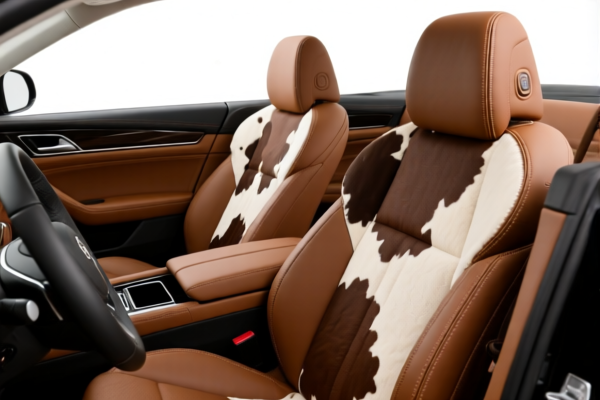
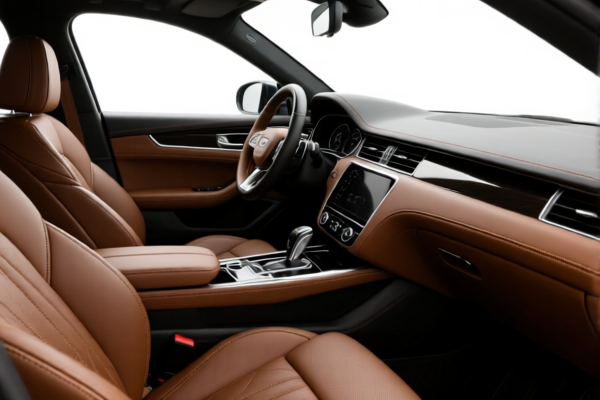
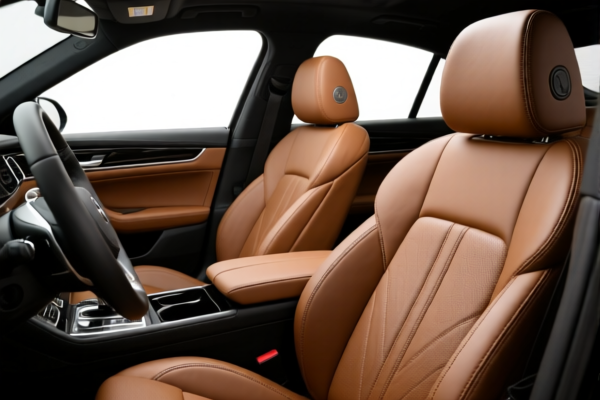
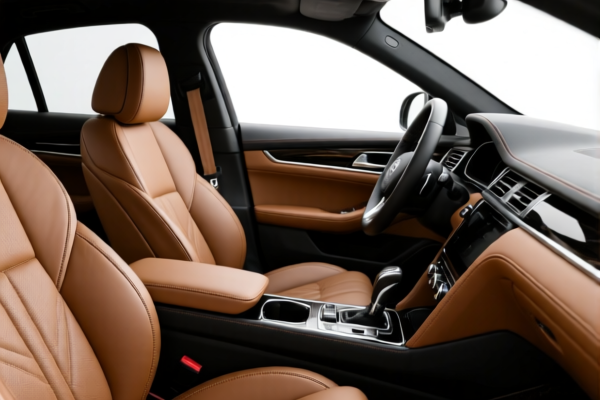
AI分析
🚗 Automotive Interior Boot Leather
🌐 HS Code Reference & Customs Clearance Guide | 2026 Latest Tariff Analysis | Professional-Level Strategy
📌 I. Product Definition & Classification: What is "Boot Leather"?
Automotive Interior Boot Leather refers to leather articles specifically designed or used for the cargo area (boot/trunk) of motor vehicles. These items include: * Leather Floor Mats/Liners for the trunk. * Protective Pads/Covers for the spare tire well. * Leather Trim/Accessories specific to the cargo compartment.
In international trade, the classification depends heavily on the material composition and technical function. It is not a single HS code but splits into two main categories: 1. Pure Leather/Composition Leather Articles: If the product is made primarily of leather or composition leather, regardless of whether it is "technical." 2. Plastic/Other Material Articles: If the product is made of plastics or other materials (e.g., PVC, TPU, rubber) and is not primarily leather.
⚠️ Key Distinction:
- If the product is 100% Leather or Composition Leather → Go to Chapter 42.
- If the product is Plastic/Polymer based → Go to Chapter 39.
📦 II. HS Code Classification Details (2026 Latest Tariff Authority)
Based on your input data, here are the specific HS Codes and their rationales:
| HS Code | Product Description | Material/Type | Technical Use? |
|---|---|---|---|
4205.00.10.00 |
Other articles of leather or of composition leather: Of a kind used in machinery or mechanical appliances or for other technical uses: Other | Leather / Composition Leather | ✅ Yes (Technical/Industrial Use) |
4205.00.80.00 |
Other articles of leather or of composition leather: Other: Other: Other | Leather / Composition Leather | ❌ No (General Consumer Use) |
3926.30.50.00 |
Other articles of plastics...: Fittings for furniture, coachwork or the like: Other | Plastics / Polymers | N/A (Fittings/Trim) |
3926.90.99.89 |
Other articles of plastics...: Other: Other Other | Plastics / Polymers | ❌ No (General Use) |
8708.29.51.60 |
Parts and accessories of motor vehicles...: Other parts and accessories of bodies...: Other Other | Metal/Steel/Aluminum/Copper (Stampings) | ✅ Yes (Vehicle Part) |
8708.29.51.10 |
Parts and accessories of motor vehicles...: Other parts and accessories of bodies...: Other: Other Stampings | Metal (Stampings) | ✅ Yes (Vehicle Part) |
🔍 Critical Clarification on "Boot Leather":
- The term "Leather" strongly points to HS 4205. However, many "leather-looking" boot liners are actually PVC/TPU (Plastics), which fall under HS 3926.
- HS 8708 codes in your data are for Metal Stampings (steel/aluminum parts). Unless your "boot leather" is actually a metal chassis plate or structural stamping covered in leather, these codes are likely incorrect for a standard leather boot liner. They are included below because they were in your provided data, but apply only to metal vehicle body parts.
💰 III. 2026 Latest Tariff Rate Details (With Surcharges)
✅ Applicable Country: USA (US)
✅ Origin: China (CN)
✅ Effective Date: Current Trade War Rates (Section 301 + IEEPA)
🎯 1. 4205.00.10.00 – Leather Articles (Technical Use)
Best for: High-end, specialized leather boot liners used for heavy-duty protection or industrial vehicles.
| Item | Detail |
|---|---|
| Base Tariff | 0.0% |
| Surcharge (Section 301) | +25.0% |
| Total Tax Rate | 25.0% |
| Tax Calculation | CIF Value × 25% |
| De Minimis Exemption | ❌ Not Applicable (Section 301 goods are excluded) |
| Legal Basis | USITC Footnote regarding Section 301 List 4C/4F |
📌 Explanation:
- "Technical use" implies the leather is used for machinery or specific functional purposes beyond simple decoration.
- If Customs deems this "technical," the rate is 25%.
- If deems "general use," it falls under4205.00.80.00(also 25%).
🎯 2. 4205.00.80.00 – Leather Articles (General Use)
Best for: Standard decorative leather boot mats/liners for passenger cars.
| Item | Detail |
|---|---|
| Base Tariff | 0.0% |
| Surcharge (Section 301) | +25.0% |
| Total Tax Rate | 25.0% |
| Tax Calculation | CIF Value × 25% |
| De Minimis Exemption | ❌ Not Applicable |
📌 Explanation:
- This is the "Catch-all" for leather goods not classified elsewhere.
- Same 25% rate as the technical category.
- Why two codes? The distinction affects statistical tracking and potential future duty-free programs, but currently, both are taxed at 25%.
🎯 3. 3926.30.50.00 – Plastic Fittings for Coachwork
Best for: Plastic/PVC boot liners that act as "fittings" or trim for the vehicle body.
| Item | Detail |
|---|---|
| Base Tariff | 0.0% |
| Surcharge | 0.0% |
| Total Tax Rate | 0.0% |
| Tax Calculation | CIF Value × 0% |
| De Minimis Exemption | ✅ Potentially Applicable (if value < $800 and not excluded) |
📌 Explanation:
- If your product is plastic (PVC/TPU) and considered a "fitting for coachwork," it enjoys 0% duty.
- CRITICAL: You must prove it is NOT leather. If it has a leather grain or leather content, Customs may reclassify it to 4205 (25%).
🎯 4. 3926.90.99.89 – Other Plastic Articles
Best for: Generic plastic boot trays/mats not considered "fittings."
| Item | Detail |
|---|---|
| Base Tariff | 5.3% |
| Surcharge | +7.5% |
| Total Tax Rate | 12.8% |
| Tax Calculation | CIF Value × 12.8% |
| De Minimis Exemption | ❌ Not Applicable (Section 301) |
🎯 5. 8708.29.51.60 & 8708.29.51.10 – Metal Parts (Stampings)
Warning: These codes are for Metal parts, not leather.
| Item | Detail |
|---|---|
| Base Tariff | 2.5% |
| Surcharge | +25.0% (General) + 50% (if Steel/Aluminum/Copper) |
| Total Tax Rate | 27.5% or 52.5% |
| Note | Do not use for leather products. Only use if the "boot leather" is actually a metal stamping with leather trim. |
🛠️ IV. Customs Clearance Practical Advice
✅ 1. Preparation Checklist (Non-Negotiable)
| Document | Required | Reason |
|---|---|---|
| Product Composition Report | ✔️ | Must specify % of Leather vs. Plastic vs. Metal. Critical for HS Code. |
| Material Safety Data Sheet (MSDS) | ✔️ | If plastic/rubber components are involved. |
| Commercial Invoice | ✔️ | Must explicitly state: "Leather Boot Liner" OR "Plastic Boot Tray." Do not just write "Auto Parts." |
| Photos of Product | ✔️ | Show texture (leather grain) or structure (plastic mold). |
| Proof of Origin | ✔️ | To check for any potential exemptions (though rare for China-origin leather/plastic). |
✅ 2. Declaration Strategy (Key Mantra)
🔥 "Material First, Function Second. Name Specifics, Tariff Saves!"
| Scenario | Correct HS Code | Why? |
|---|---|---|
| Real Leather Boot Mat | 4205.00.10.00 or 4205.00.80.00 |
Material is Leather. Tariff: 25%. |
| PVC/TPU Boot Mat | 3926.30.50.00 |
Material is Plastic. Tariff: 0%. |
| Metal Frame with Leather Cover | 8708.29.51.10 |
Core component is Metal Stamping. Tariff: 52.5% (High Risk!). |
| Generic Plastic Tray | 3926.90.99.89 |
No specific "fitting" function. Tariff: 12.8%. |
✅ 3. Common Pitfalls & Avoidance
❌ Mistake 1: Calling a Plastic product "Leather" to sound premium.
👉 Result: Customs will test the material. If found to be plastic, you might get caught under 3926 (12.8% or 0%), but misdeclaration penalties apply. If you claim it's leather but it's plastic, you underpay duty.
❌ Mistake 2: Calling a Leather product "Plastic Fitting" to get 0% duty.
👉 Result: High risk of audit. Leather goods are strictly regulated. If Customs finds leather, they will reclassify to 4205 and charge 25% + penalties.
❌ Mistake 3: Using 8708 codes for leather.
👉 Result: 8708 is for mechanical parts. A leather mat is not a "part of the body" in the mechanical sense. It is a "leather article." Misclassification can lead to seizure.
✅ Correct Approach:
"Custom Leather Boot Liner, 100% Genuine Leather, Model XYZ, For SUV Trunk" → HS 4205.00.10.00
"PVC Boot Tray, Non-Slip, Model ABC, For Sedan" → HS 3926.30.50.00
🌍 V. Global Market Comparison (2026)
| Market | Recommended HS Code (Leather) | Tariff | Remarks |
|---|---|---|---|
| 🇺🇸 USA | 4205.00.10.00 / 4205.00.80.00 |
25% | Section 301 applies. No exemption. |
| 🇪🇺 EU | 4205.00 |
4% - 12% | Varies by specific leather type. No Section 301. |
| 🇨🇳 China | 4205.00 |
8% - 10% | Standard MFN rate. |
| 🇬🇧 UK | 4205.00 |
4% - 12% | Post-Brexit tariffs similar to EU. |
📌 Conclusion:
- The USA is the only market with the 25% surcharge on leather goods from China.
- If possible, consider sourcing plastic/PVC alternatives if cost is the primary driver, as they may qualify for 0% or 12.8%.
- However, if the product is Genuine Leather, you must pay 25%. Do not attempt to misdeclare.
📌 VI. Final Recommendations for Clearing Customs
- Verify Material: Conduct a lab test to confirm if the "boot leather" is genuine leather, bonded leather, or synthetic. This is the #1 determinant for HS Code.
- Precise Description: On the invoice, use:
- "100% Leather Boot Liner, Automotive Accessory"
- "PVC Boot Mat, Non-Cloning, Automotive Accessory"
- Pre-Ruling: If the product is complex (e.g., leather with plastic backing, or plastic with leather grain), apply for an Advance Ruling from US Customs to avoid delays.
- Cost Calculation: Factor in the 25% tariff for leather. For plastics, factor in 0-12.8%. Metal parts (
8708) are expensive (52.5%) and should be avoided unless absolutely necessary.
🎯 VII. Conclusion: Precision Saves Money
🎯 Remember the Mantra:
🔹 "Leather = 25%, Plastic = 0-12%, Metal = 52%+!"
🔹 "Know your material, choose your code, save your margin!"
📌 Tip:
If your product is 100% Plastic, use 3926.30.50.00 for the best rate (0%).
If your product is 100% Leather, use 4205.00.10.00 (25%).
Never mix codes or misdeclare materials.
📣 Immediate Action:
📞 Consult a Customs Broker with product samples.
🚀 Declare Accurately to ensure smooth clearance and predictable costs.
✨ Professional Clearance Starts with Accurate Classification!
💼 Every Dollar of Tariff is a Dollar of Profit Lost – Keep it Accurate!
用户评价
关于 HS 编码归类
协调制度(HS)是由世界海关组织(WCO)制定的国际贸易商品分类标准。全球 200 多个国家采用 HS 系统作为海关关税、贸易统计和进出口监管的基础。
每个 HS 编码遵循以下层级结构:
- 章(2 位)——商品大类(例如:第 84 章:机器和机械设备)
- 品目(4 位)——章内的更具体分类
- 子目(6 位)——国际通用细分,所有 WCO 成员国统一使用
- 本国细分(8-10 位)——各国自行扩展的细分编码,如美国 HTSUS 10 位编码
正确的 HS 编码归类对于顺利通关、准确缴纳关税和遵守贸易法规至关重要。错误归类可能导致海关延误、多缴关税或罚款。
从CN进口到US时,适用的关税税率可能包括:
- 最惠国(MFN)税率——适用于 WTO 成员国的标准关税税率
- 普通税率——适用于无贸易协定国家
- 贸易救济关税——附加关税,如 301 条款(反倾销)、232 条款(国家安全)或反补贴税
本页内容仅供参考。如需正式归类,请咨询当地海关或持牌报关代理。