Automotive Interior Boot Leather
CN → US| HS Code | Tariff Rate | Origin | Destination | Doc |
|---|---|---|---|---|
| 4205001000 | 35.0% | CN | US | Official Doc |
| 4205008000 | 35.0% | CN | US | Official Doc |
| 3926305000 | 22.8% | CN | US | Official Doc |
| 3926909989 | 22.8% | CN | US | Official Doc |
| 8708295160 | 0.0% | CN | US | Official Doc |
| 8708295110 | 0.0% | CN | US | Official Doc |
Product Images
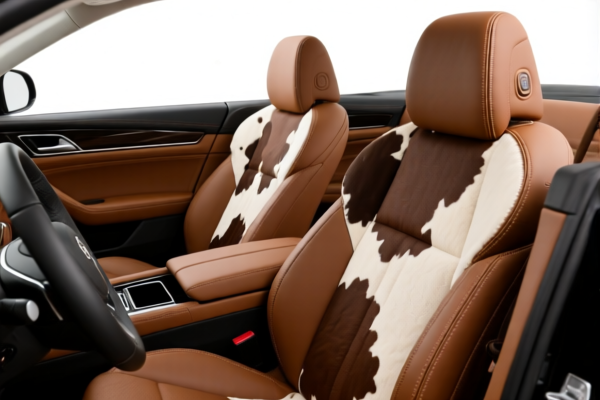
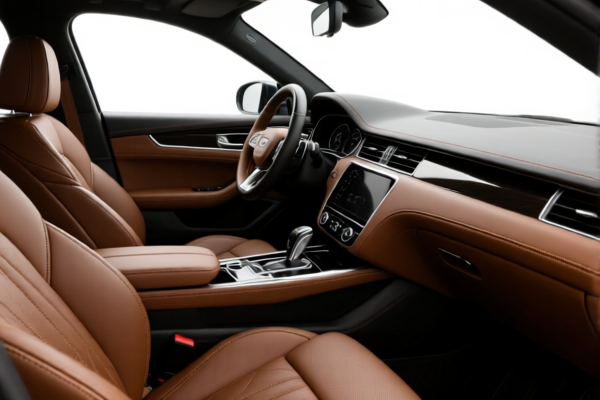
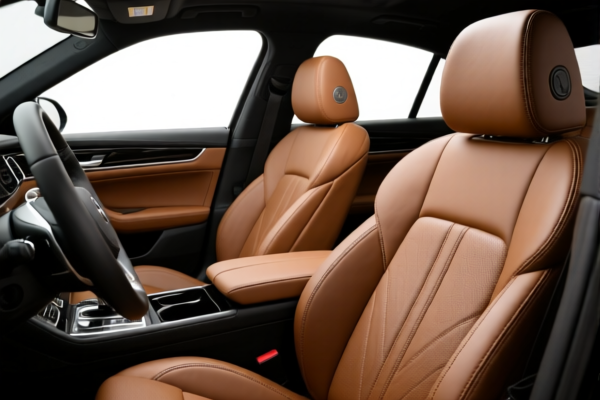
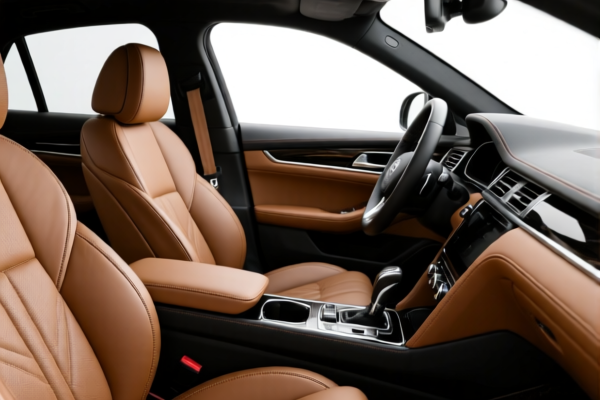
AI Analysis
🚗 Automotive Interior Boot Leather
🌐 HS Code Reference & Customs Clearance Guide | 2026 Latest Tariff Analysis | Professional-Level Strategy
📌 I. Product Definition & Classification: What is "Boot Leather"?
Automotive Interior Boot Leather refers to leather articles specifically designed or used for the cargo area (boot/trunk) of motor vehicles. These items include: * Leather Floor Mats/Liners for the trunk. * Protective Pads/Covers for the spare tire well. * Leather Trim/Accessories specific to the cargo compartment.
In international trade, the classification depends heavily on the material composition and technical function. It is not a single HS code but splits into two main categories: 1. Pure Leather/Composition Leather Articles: If the product is made primarily of leather or composition leather, regardless of whether it is "technical." 2. Plastic/Other Material Articles: If the product is made of plastics or other materials (e.g., PVC, TPU, rubber) and is not primarily leather.
⚠️ Key Distinction:
- If the product is 100% Leather or Composition Leather → Go to Chapter 42.
- If the product is Plastic/Polymer based → Go to Chapter 39.
📦 II. HS Code Classification Details (2026 Latest Tariff Authority)
Based on your input data, here are the specific HS Codes and their rationales:
| HS Code | Product Description | Material/Type | Technical Use? |
|---|---|---|---|
4205.00.10.00 |
Other articles of leather or of composition leather: Of a kind used in machinery or mechanical appliances or for other technical uses: Other | Leather / Composition Leather | ✅ Yes (Technical/Industrial Use) |
4205.00.80.00 |
Other articles of leather or of composition leather: Other: Other: Other | Leather / Composition Leather | ❌ No (General Consumer Use) |
3926.30.50.00 |
Other articles of plastics...: Fittings for furniture, coachwork or the like: Other | Plastics / Polymers | N/A (Fittings/Trim) |
3926.90.99.89 |
Other articles of plastics...: Other: Other Other | Plastics / Polymers | ❌ No (General Use) |
8708.29.51.60 |
Parts and accessories of motor vehicles...: Other parts and accessories of bodies...: Other Other | Metal/Steel/Aluminum/Copper (Stampings) | ✅ Yes (Vehicle Part) |
8708.29.51.10 |
Parts and accessories of motor vehicles...: Other parts and accessories of bodies...: Other: Other Stampings | Metal (Stampings) | ✅ Yes (Vehicle Part) |
🔍 Critical Clarification on "Boot Leather":
- The term "Leather" strongly points to HS 4205. However, many "leather-looking" boot liners are actually PVC/TPU (Plastics), which fall under HS 3926.
- HS 8708 codes in your data are for Metal Stampings (steel/aluminum parts). Unless your "boot leather" is actually a metal chassis plate or structural stamping covered in leather, these codes are likely incorrect for a standard leather boot liner. They are included below because they were in your provided data, but apply only to metal vehicle body parts.
💰 III. 2026 Latest Tariff Rate Details (With Surcharges)
✅ Applicable Country: USA (US)
✅ Origin: China (CN)
✅ Effective Date: Current Trade War Rates (Section 301 + IEEPA)
🎯 1. 4205.00.10.00 – Leather Articles (Technical Use)
Best for: High-end, specialized leather boot liners used for heavy-duty protection or industrial vehicles.
| Item | Detail |
|---|---|
| Base Tariff | 0.0% |
| Surcharge (Section 301) | +25.0% |
| Total Tax Rate | 25.0% |
| Tax Calculation | CIF Value × 25% |
| De Minimis Exemption | ❌ Not Applicable (Section 301 goods are excluded) |
| Legal Basis | USITC Footnote regarding Section 301 List 4C/4F |
📌 Explanation:
- "Technical use" implies the leather is used for machinery or specific functional purposes beyond simple decoration.
- If Customs deems this "technical," the rate is 25%.
- If deems "general use," it falls under4205.00.80.00(also 25%).
🎯 2. 4205.00.80.00 – Leather Articles (General Use)
Best for: Standard decorative leather boot mats/liners for passenger cars.
| Item | Detail |
|---|---|
| Base Tariff | 0.0% |
| Surcharge (Section 301) | +25.0% |
| Total Tax Rate | 25.0% |
| Tax Calculation | CIF Value × 25% |
| De Minimis Exemption | ❌ Not Applicable |
📌 Explanation:
- This is the "Catch-all" for leather goods not classified elsewhere.
- Same 25% rate as the technical category.
- Why two codes? The distinction affects statistical tracking and potential future duty-free programs, but currently, both are taxed at 25%.
🎯 3. 3926.30.50.00 – Plastic Fittings for Coachwork
Best for: Plastic/PVC boot liners that act as "fittings" or trim for the vehicle body.
| Item | Detail |
|---|---|
| Base Tariff | 0.0% |
| Surcharge | 0.0% |
| Total Tax Rate | 0.0% |
| Tax Calculation | CIF Value × 0% |
| De Minimis Exemption | ✅ Potentially Applicable (if value < $800 and not excluded) |
📌 Explanation:
- If your product is plastic (PVC/TPU) and considered a "fitting for coachwork," it enjoys 0% duty.
- CRITICAL: You must prove it is NOT leather. If it has a leather grain or leather content, Customs may reclassify it to 4205 (25%).
🎯 4. 3926.90.99.89 – Other Plastic Articles
Best for: Generic plastic boot trays/mats not considered "fittings."
| Item | Detail |
|---|---|
| Base Tariff | 5.3% |
| Surcharge | +7.5% |
| Total Tax Rate | 12.8% |
| Tax Calculation | CIF Value × 12.8% |
| De Minimis Exemption | ❌ Not Applicable (Section 301) |
🎯 5. 8708.29.51.60 & 8708.29.51.10 – Metal Parts (Stampings)
Warning: These codes are for Metal parts, not leather.
| Item | Detail |
|---|---|
| Base Tariff | 2.5% |
| Surcharge | +25.0% (General) + 50% (if Steel/Aluminum/Copper) |
| Total Tax Rate | 27.5% or 52.5% |
| Note | Do not use for leather products. Only use if the "boot leather" is actually a metal stamping with leather trim. |
🛠️ IV. Customs Clearance Practical Advice
✅ 1. Preparation Checklist (Non-Negotiable)
| Document | Required | Reason |
|---|---|---|
| Product Composition Report | ✔️ | Must specify % of Leather vs. Plastic vs. Metal. Critical for HS Code. |
| Material Safety Data Sheet (MSDS) | ✔️ | If plastic/rubber components are involved. |
| Commercial Invoice | ✔️ | Must explicitly state: "Leather Boot Liner" OR "Plastic Boot Tray." Do not just write "Auto Parts." |
| Photos of Product | ✔️ | Show texture (leather grain) or structure (plastic mold). |
| Proof of Origin | ✔️ | To check for any potential exemptions (though rare for China-origin leather/plastic). |
✅ 2. Declaration Strategy (Key Mantra)
🔥 "Material First, Function Second. Name Specifics, Tariff Saves!"
| Scenario | Correct HS Code | Why? |
|---|---|---|
| Real Leather Boot Mat | 4205.00.10.00 or 4205.00.80.00 |
Material is Leather. Tariff: 25%. |
| PVC/TPU Boot Mat | 3926.30.50.00 |
Material is Plastic. Tariff: 0%. |
| Metal Frame with Leather Cover | 8708.29.51.10 |
Core component is Metal Stamping. Tariff: 52.5% (High Risk!). |
| Generic Plastic Tray | 3926.90.99.89 |
No specific "fitting" function. Tariff: 12.8%. |
✅ 3. Common Pitfalls & Avoidance
❌ Mistake 1: Calling a Plastic product "Leather" to sound premium.
👉 Result: Customs will test the material. If found to be plastic, you might get caught under 3926 (12.8% or 0%), but misdeclaration penalties apply. If you claim it's leather but it's plastic, you underpay duty.
❌ Mistake 2: Calling a Leather product "Plastic Fitting" to get 0% duty.
👉 Result: High risk of audit. Leather goods are strictly regulated. If Customs finds leather, they will reclassify to 4205 and charge 25% + penalties.
❌ Mistake 3: Using 8708 codes for leather.
👉 Result: 8708 is for mechanical parts. A leather mat is not a "part of the body" in the mechanical sense. It is a "leather article." Misclassification can lead to seizure.
✅ Correct Approach:
"Custom Leather Boot Liner, 100% Genuine Leather, Model XYZ, For SUV Trunk" → HS 4205.00.10.00
"PVC Boot Tray, Non-Slip, Model ABC, For Sedan" → HS 3926.30.50.00
🌍 V. Global Market Comparison (2026)
| Market | Recommended HS Code (Leather) | Tariff | Remarks |
|---|---|---|---|
| 🇺🇸 USA | 4205.00.10.00 / 4205.00.80.00 |
25% | Section 301 applies. No exemption. |
| 🇪🇺 EU | 4205.00 |
4% - 12% | Varies by specific leather type. No Section 301. |
| 🇨🇳 China | 4205.00 |
8% - 10% | Standard MFN rate. |
| 🇬🇧 UK | 4205.00 |
4% - 12% | Post-Brexit tariffs similar to EU. |
📌 Conclusion:
- The USA is the only market with the 25% surcharge on leather goods from China.
- If possible, consider sourcing plastic/PVC alternatives if cost is the primary driver, as they may qualify for 0% or 12.8%.
- However, if the product is Genuine Leather, you must pay 25%. Do not attempt to misdeclare.
📌 VI. Final Recommendations for Clearing Customs
- Verify Material: Conduct a lab test to confirm if the "boot leather" is genuine leather, bonded leather, or synthetic. This is the #1 determinant for HS Code.
- Precise Description: On the invoice, use:
- "100% Leather Boot Liner, Automotive Accessory"
- "PVC Boot Mat, Non-Cloning, Automotive Accessory"
- Pre-Ruling: If the product is complex (e.g., leather with plastic backing, or plastic with leather grain), apply for an Advance Ruling from US Customs to avoid delays.
- Cost Calculation: Factor in the 25% tariff for leather. For plastics, factor in 0-12.8%. Metal parts (
8708) are expensive (52.5%) and should be avoided unless absolutely necessary.
🎯 VII. Conclusion: Precision Saves Money
🎯 Remember the Mantra:
🔹 "Leather = 25%, Plastic = 0-12%, Metal = 52%+!"
🔹 "Know your material, choose your code, save your margin!"
📌 Tip:
If your product is 100% Plastic, use 3926.30.50.00 for the best rate (0%).
If your product is 100% Leather, use 4205.00.10.00 (25%).
Never mix codes or misdeclare materials.
📣 Immediate Action:
📞 Consult a Customs Broker with product samples.
🚀 Declare Accurately to ensure smooth clearance and predictable costs.
✨ Professional Clearance Starts with Accurate Classification!
💼 Every Dollar of Tariff is a Dollar of Profit Lost – Keep it Accurate!
Customer Reviews
About HS Code Classification
The Harmonized System (HS) is an internationally standardized nomenclature developed by the World Customs Organization (WCO) to classify traded products. Over 200 countries use the HS system as the basis for customs tariffs, trade statistics, and import/export regulations.
Each HS code follows a hierarchical structure:
- Chapter (2 digits) — Broad category of goods (e.g., Chapter 84: Machinery and Mechanical Appliances)
- Heading (4 digits) — More specific grouping within the chapter
- Subheading (6 digits) — Internationally standardized breakdown, used by all WCO member countries
- National subdivisions (8-10 digits) — Country-specific extensions for further classification, such as US HTSUS 10-digit codes
Correct HS code classification is essential for smooth customs clearance, accurate duty payment, and compliance with trade regulations. Misclassification can lead to customs delays, overpayment of duties, or penalties.
When importing from CN to US, the applicable tariff rates may include:
- Most-Favored-Nation (MFN) rate — The standard duty rate applied to WTO members
- General rate — Applied to countries without trade agreements
- Trade remedy duties — Additional tariffs such as Section 301 (anti-dumping), Section 232 (national security), or countervailing duties
The information provided on this page is for reference purposes only. For official classification, please consult with your local customs authority or a licensed customs broker.