Autumn Wool Vest
CN → US| HS编码 | 关税税率 | 原产国 | 目的国 | 文档 |
|---|---|---|---|---|
| 6110110060 | 33.5% | CN | US | 官方文档 |
| 6201203500 | 26.0% | CN | US | 官方文档 |
| 6211393040 | 29.5% | CN | US | 官方文档 |
| 6110110050 | 33.5% | CN | US | 官方文档 |
| 6201201900 | 26.0% | CN | US | 官方文档 |
商品图片
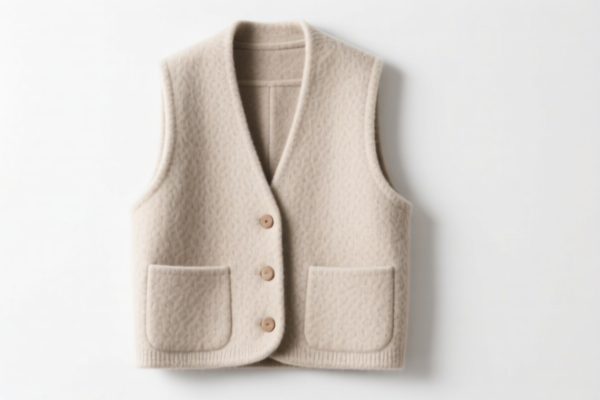

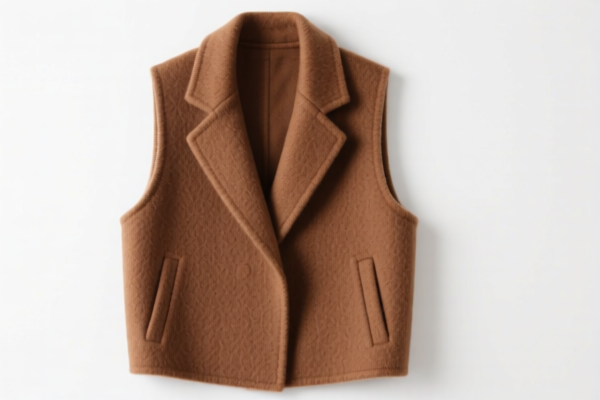

AI分析
🧥 Autumn Wool Vest (羊毛材质背心)
🌐 HS Code Reference & Customs Clearance Guide | 2024/2025 Latest Tariff Analysis | Professional Clearance Strategy
📌 I. Product Definition & Classification: What Exactly is a "Wool Vest"?
The "Autumn Wool Vest" is a versatile outerwear or mid-layer garment made primarily from wool. In international trade, its classification depends strictly on its construction method (knitted vs. woven) and structural form (pullover vs. vest/jacket). Misclassification here can lead to significant duty discrepancies.
There are two main categories for wool vests:
- Knitted Wool Vests (Non-Pullovers): Made from knitted fabric, typically with armholes and no sleeves. These fall under Chapter 61.
- Woven Wool Vests (Jackets/Vests): Made from woven fabric. These are further divided based on whether they are treated as simple vests (Chapter 62) or classified as "other made-up wearing apparel" like jackets depending on specific design features (e.g., pockets, closures).
⚠️ Critical Distinction Point:
- If the vest is Knitted (looped structure, stretchy) → Look at Heading 6110.
- If the vest is Woven (interlaced threads, structured) → Look at Heading 6201 or 6211.
- Pullover vs. Open Front: A vest that is put on over the head is a "Pullover." A vest with an opening (zipper/buttons) and no sleeves is often classified differently than a "Jacket."
📦 II. HS Code Classification Details (Authoritative 2024/2025对照)
Based on the provided data, here are the four specific HS Codes applicable to "Autumn Wool Vest," categorized by material structure and form:
| HS Code | Summary Description | Product Form | Key Characteristics |
|--------|--------------------------|--------------------------|
| 6110.11.00.60 | Knitted Wool Vest | Non-Pullover Vest | Knitted fabric; fits the definition of a knitted wool vest that is not a pullover. |
| 6110.11.00.50 | Knitted Wool Vest | Non-Pullover Vest | Knitted fabric; fits the definition of a knitted wool vest (identical tax treatment to above). |
| 6201.20.35.00 | Woven Wool Vest | Padded Sleeveless Jacket | Woven fabric; classified structurally as a padded sleeveless jacket/coat. |
| 6201.20.19.00 | Woven Wool Vest | Padded Sleeveless Jacket | Woven fabric; classified structurally as a padded sleeveless jacket/coat. |
| 6211.39.30.40 | Woven Wool Vest | General Made-Up Apparel | Woven fabric; fully conforms to material and category features for "other" wool vests. |
🔍 Key Insight:
- Knitted (6110) vests generally carry a higher base tariff (16.0%).
- Woven (6201) vests classified as jackets often have a lower base tariff (8.5%).
- Woven (6211) vests classified as general apparel have a medium base tariff (12.0%).
- Note: All options include significant additional duties (Section 301, 122, etc.), making the base rate crucial for cost calculation.
💰 III. Detailed Tariff Breakdown (Including Additional Duties & Policies)
✅ Applicable Country: United States (US)
✅ Origin: China (CN)
✅ Effective Time: Current Regulations (Subject to annual updates)
🎯 1. 6110.11.00.60 & 6110.11.00.50 — Knitted Wool Vests (Non-Pullover)
These two codes are functionally identical in terms of tax treatment. They apply to knitted wool vests that are not pulled over the head (i.e., they open at the front).
| Item | Details |
|---|---|
| Base Tariff | 16.0% (Ad Valorem) |
| Section 301 Additional Duty | +7.5% |
| Section 122 Duty | +10.0% |
| Total Effective Rate | 33.5% |
| Tax Calculation | CIF Value × 33.5% |
| De Minimis Exemption? | ❌ No (Not eligible for $800 de minimis exemption) |
| Legal Basis Path | HTSUS:6110.11.00 → Section 301 Footnote 9903.04.17 → Section 122 Authority |
📌 Explanation:
- The 16% base rate reflects the higher duty on knitted wool apparel from China.
- The 7.5% Section 301 duty is a longstanding trade war tariff.
- The 10% Section 122 duty is a recent addition targeting specific imports.
- Total 33.5% is a significant cost burden. Producers often try to avoid this by shifting to woven fabrics if design allows.
🎯 2. 6201.20.35.00 & 6201.20.19.00 — Woven Wool Vests (Padded Sleeveless Jacket)
These codes classify the vest as a "padded sleeveless jacket." This is a strategic classification if the vest has some padding or structure that meets the definition of a light jacket.
| Item | Details |
|---|---|
| Base Tariff | 8.5% (Ad Valorem) |
| Section 301 Additional Duty | +7.5% |
| Section 122 Duty | +10.0% |
| Total Effective Rate | 26.0% |
| Tax Calculation | CIF Value × 26.0% |
| De Minimis Exemption? | ❌ No |
| Legal Basis Path | HTSUS:6201.20.19 / 6201.20.35 → Section 301 → Section 122 |
📌 Explanation:
- The 8.5% base rate is significantly lower than knitted vests.
- Even with the same 7.5% (301) and 10% (122) additional duties, the total is only 26.0%.
- Savings: 7.5% lower than knitted vests. This is a key optimization point if the vest design permits "jacket" classification.
🎯 3. 6211.39.30.40 — Woven Wool Vest (General Category)
This code applies to wool vests that are woven but do not fit the "jacket" definition strictly, or are classified under "other" made-up apparel.
| Item | Details |
|---|---|
| Base Tariff | 12.0% (Ad Valorem) |
| Section 301 Additional Duty | +7.5% |
| Section 122 Duty | +10.0% |
| Total Effective Rate | 29.5% |
| Tax Calculation | CIF Value × 29.5% |
| De Minimis Exemption? | ❌ No |
| Legal Basis Path | HTSUS:6211.39.30 → Section 301 → Section 122 |
📌 Explanation:
- The 12.0% base rate is mid-range.
- Total 29.5% is higher than the "jacket" classification (26.0%) but lower than knitted vests (33.5%).
- Use this when the vest is clearly a vest, not a jacket, and woven.
🛠️ IV. Customs Clearance Practical Advice (Pitfall Avoidance Guide)
✅ 1. Required Documentation Checklist
| Document | Mandatory? | Notes |
|---|---|---|
| ✅ Product Specification Sheet | ✔️ | Must specify: Material (100% Wool or %), Knitted/Woven, Closure Type (Zip/Button), Padding (Yes/No). |
| ✅ Construction Diagram | ✔️ | Crucial to prove "Knitted" vs. "Woven" and "Vest" vs. "Jacket." |
| ✅ Product Photos | ✔️ | Front, back, inside lining, label, and closure mechanism. |
| ✅ Commercial Invoice | ✔️ | Must match HS Code description exactly. |
| ✅ Packing List | ✔️ | Detail items per carton. |
| ✅ Certificate of Origin | ✔️ | Required for US import. |
✅ 2. Classification Strategy (The "Golden Rules")
🔥 "Knitted is 33.5%, Woven Jacket is 26%, Woven Vest is 29.5%!"
| Scenario | Recommended HS Code | Reason |
|---|---|---|
| Knitted, no sleeves, open front | 6110.11.00.50 / .60 |
By definition, knitted wool vests fall here. Base duty 16%. |
| Woven, has padding/structure, looks like a vest-jacket | 6201.20.35.00 / .19.00 |
If it can be argued as a "padded sleeveless jacket," the 8.5% base rate applies. |
| Woven, simple vest, no padding, standard cut | 6211.39.30.40 |
Fallback for woven vests that don't qualify as jackets. Base duty 12%. |
⚠️ Warning:
- Do NOT misclassify a knitted vest as a woven one. CBP will check the fabric structure.
- Do NOT claim "jacket" status for a thin, unstructured vest. It must have some padding or structural integrity to qualify for6201.
✅ 3. Special Cases
| Situation | Handling Advice |
|---|---|
| Mixed Material (e.g., Wool Blend) | If wool is <50%, it may not qualify as "Wool Vest." Check specific subheadings. |
| Children's vs. Adult's | Ensure the HS Code matches the age group (e.g., 6201 is often for men/boys, but 6204 is for women/girls. Note: The provided data uses 6201, implying adult/male classification. Verify if your product is female-specific.) |
| Sample vs. Bulk | Samples may still be subject to duty if over $800 value or if not properly declared as samples. |
🌍 V. Global Market Comparison (2024/2025)
| Country/Region | Recommended HS Code | Approx. Total Duty (China Origin) | Notes |
|---|---|---|---|
| 🇺🇸 USA | See Above | 26% - 33.5% | High additional duties (301 + 122). |
| 🇨🇳 China | 6110.11 / 6211.39 | 9% - 10% | Lower base duties, no US-style additional tariffs. |
| 🇪🇺 EU | 6110.20 / 6211.42 | 12% - 16% | No Section 301/122 equivalents, but higher VAT. |
| 🇬🇧 UK | 6110.20 / 6211.42 | 12% - 16% | Post-Brexit tariffs similar to EU. |
📌 Conclusion:
- The US market is the most expensive due to political tariffs.
- Woven jackets (6201) offer the best cost advantage in the US if design permits.
- Knitted vests (6110) are the most expensive to import into the US.
📌 VI. Common Errors & Pitfalls (Lessons Learned)
❌ Error 1: Misidentifying Knitted vs. Woven
👉 Consequence: Wrong HS Code → Audit → Back Duties + Penalties.
👉 Fix: Always test fabric stretch and loop structure.
❌ Error 2: Claiming "Jacket" for a simple Vest
👉 Consequence: Rejection of 26% rate, forced to pay 33.5% or 29.5%.
👉 Fix: Ensure the vest has padding or structural features to justify 6201.
❌ Error 3: Ignoring Section 122 Duties
👉 Consequence: Underestimating landed cost.
👉 Fix: Include the +10% in all financial models.
✅ Correct Declaration Example:
"Wool Vest, Woven, Padded, Sleeveless, Adult Men's, Model XYZ, 100% Wool" →
6201.20.35.00
🎯 VII. Conclusion: Strategic Classification for Cost Optimization
🎯 Key Takeaway:
🔹 "Woven Jacket (26%) < Woven Vest (29.5%) < Knitted Vest (33.5%)"
🔹 Optimization Strategy: If your vest design allows, consider adding subtle padding or structure to qualify for6201(Woven Jacket) classification, saving 7.5% on duties compared to knitted alternatives.
🔹 Compliance: Always have fabric composition reports and construction diagrams ready for CBP scrutiny.
📌 Pro Tip:
If you are shipping to the US, always include the Section 122 and Section 301 duties in your margin calculations. They are mandatory for Chinese-origin wool vests.
📣 Immediate Action:
📞 Verify your fabric type (Knitted vs. Woven).
📐 Check if your vest design can be argued as a "padded sleeveless jacket."
📄 Prepare documentation to support your HS Code choice.
🚀 Clear customs efficiently, minimize duty costs, maximize profit!
✨ Professional customs classification saves money and prevents delays!
💼 Every percentage point matters in international trade!
用户评价
关于 HS 编码归类
协调制度(HS)是由世界海关组织(WCO)制定的国际贸易商品分类标准。全球 200 多个国家采用 HS 系统作为海关关税、贸易统计和进出口监管的基础。
每个 HS 编码遵循以下层级结构:
- 章(2 位)——商品大类(例如:第 84 章:机器和机械设备)
- 品目(4 位)——章内的更具体分类
- 子目(6 位)——国际通用细分,所有 WCO 成员国统一使用
- 本国细分(8-10 位)——各国自行扩展的细分编码,如美国 HTSUS 10 位编码
正确的 HS 编码归类对于顺利通关、准确缴纳关税和遵守贸易法规至关重要。错误归类可能导致海关延误、多缴关税或罚款。
从CN进口到US时,适用的关税税率可能包括:
- 最惠国(MFN)税率——适用于 WTO 成员国的标准关税税率
- 普通税率——适用于无贸易协定国家
- 贸易救济关税——附加关税,如 301 条款(反倾销)、232 条款(国家安全)或反补贴税
本页内容仅供参考。如需正式归类,请咨询当地海关或持牌报关代理。