Autumn Wool Vest
CN → US| HS Code | Tariff Rate | Origin | Destination | Doc |
|---|---|---|---|---|
| 6110110060 | 33.5% | CN | US | Official Doc |
| 6201203500 | 26.0% | CN | US | Official Doc |
| 6211393040 | 29.5% | CN | US | Official Doc |
| 6110110050 | 33.5% | CN | US | Official Doc |
| 6201201900 | 26.0% | CN | US | Official Doc |
Product Images
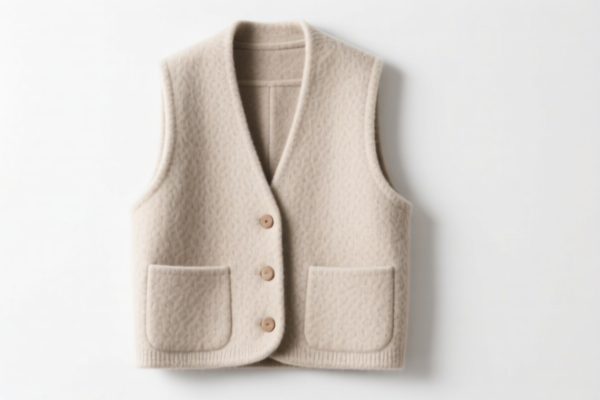

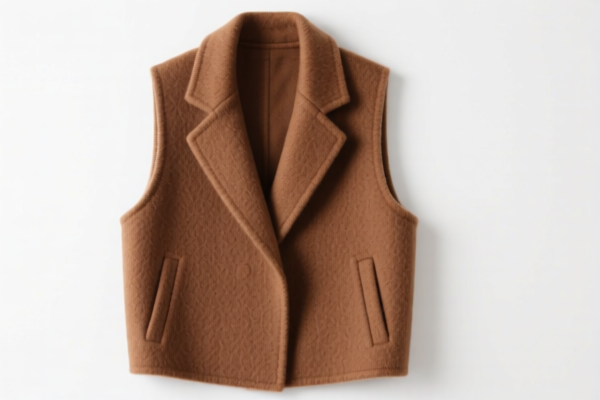

AI Analysis
🧥 Autumn Wool Vest (羊毛材质背心)
🌐 HS Code Reference & Customs Clearance Guide | 2024/2025 Latest Tariff Analysis | Professional Clearance Strategy
📌 I. Product Definition & Classification: What Exactly is a "Wool Vest"?
The "Autumn Wool Vest" is a versatile outerwear or mid-layer garment made primarily from wool. In international trade, its classification depends strictly on its construction method (knitted vs. woven) and structural form (pullover vs. vest/jacket). Misclassification here can lead to significant duty discrepancies.
There are two main categories for wool vests:
- Knitted Wool Vests (Non-Pullovers): Made from knitted fabric, typically with armholes and no sleeves. These fall under Chapter 61.
- Woven Wool Vests (Jackets/Vests): Made from woven fabric. These are further divided based on whether they are treated as simple vests (Chapter 62) or classified as "other made-up wearing apparel" like jackets depending on specific design features (e.g., pockets, closures).
⚠️ Critical Distinction Point:
- If the vest is Knitted (looped structure, stretchy) → Look at Heading 6110.
- If the vest is Woven (interlaced threads, structured) → Look at Heading 6201 or 6211.
- Pullover vs. Open Front: A vest that is put on over the head is a "Pullover." A vest with an opening (zipper/buttons) and no sleeves is often classified differently than a "Jacket."
📦 II. HS Code Classification Details (Authoritative 2024/2025对照)
Based on the provided data, here are the four specific HS Codes applicable to "Autumn Wool Vest," categorized by material structure and form:
| HS Code | Summary Description | Product Form | Key Characteristics |
|--------|--------------------------|--------------------------|
| 6110.11.00.60 | Knitted Wool Vest | Non-Pullover Vest | Knitted fabric; fits the definition of a knitted wool vest that is not a pullover. |
| 6110.11.00.50 | Knitted Wool Vest | Non-Pullover Vest | Knitted fabric; fits the definition of a knitted wool vest (identical tax treatment to above). |
| 6201.20.35.00 | Woven Wool Vest | Padded Sleeveless Jacket | Woven fabric; classified structurally as a padded sleeveless jacket/coat. |
| 6201.20.19.00 | Woven Wool Vest | Padded Sleeveless Jacket | Woven fabric; classified structurally as a padded sleeveless jacket/coat. |
| 6211.39.30.40 | Woven Wool Vest | General Made-Up Apparel | Woven fabric; fully conforms to material and category features for "other" wool vests. |
🔍 Key Insight:
- Knitted (6110) vests generally carry a higher base tariff (16.0%).
- Woven (6201) vests classified as jackets often have a lower base tariff (8.5%).
- Woven (6211) vests classified as general apparel have a medium base tariff (12.0%).
- Note: All options include significant additional duties (Section 301, 122, etc.), making the base rate crucial for cost calculation.
💰 III. Detailed Tariff Breakdown (Including Additional Duties & Policies)
✅ Applicable Country: United States (US)
✅ Origin: China (CN)
✅ Effective Time: Current Regulations (Subject to annual updates)
🎯 1. 6110.11.00.60 & 6110.11.00.50 — Knitted Wool Vests (Non-Pullover)
These two codes are functionally identical in terms of tax treatment. They apply to knitted wool vests that are not pulled over the head (i.e., they open at the front).
| Item | Details |
|---|---|
| Base Tariff | 16.0% (Ad Valorem) |
| Section 301 Additional Duty | +7.5% |
| Section 122 Duty | +10.0% |
| Total Effective Rate | 33.5% |
| Tax Calculation | CIF Value × 33.5% |
| De Minimis Exemption? | ❌ No (Not eligible for $800 de minimis exemption) |
| Legal Basis Path | HTSUS:6110.11.00 → Section 301 Footnote 9903.04.17 → Section 122 Authority |
📌 Explanation:
- The 16% base rate reflects the higher duty on knitted wool apparel from China.
- The 7.5% Section 301 duty is a longstanding trade war tariff.
- The 10% Section 122 duty is a recent addition targeting specific imports.
- Total 33.5% is a significant cost burden. Producers often try to avoid this by shifting to woven fabrics if design allows.
🎯 2. 6201.20.35.00 & 6201.20.19.00 — Woven Wool Vests (Padded Sleeveless Jacket)
These codes classify the vest as a "padded sleeveless jacket." This is a strategic classification if the vest has some padding or structure that meets the definition of a light jacket.
| Item | Details |
|---|---|
| Base Tariff | 8.5% (Ad Valorem) |
| Section 301 Additional Duty | +7.5% |
| Section 122 Duty | +10.0% |
| Total Effective Rate | 26.0% |
| Tax Calculation | CIF Value × 26.0% |
| De Minimis Exemption? | ❌ No |
| Legal Basis Path | HTSUS:6201.20.19 / 6201.20.35 → Section 301 → Section 122 |
📌 Explanation:
- The 8.5% base rate is significantly lower than knitted vests.
- Even with the same 7.5% (301) and 10% (122) additional duties, the total is only 26.0%.
- Savings: 7.5% lower than knitted vests. This is a key optimization point if the vest design permits "jacket" classification.
🎯 3. 6211.39.30.40 — Woven Wool Vest (General Category)
This code applies to wool vests that are woven but do not fit the "jacket" definition strictly, or are classified under "other" made-up apparel.
| Item | Details |
|---|---|
| Base Tariff | 12.0% (Ad Valorem) |
| Section 301 Additional Duty | +7.5% |
| Section 122 Duty | +10.0% |
| Total Effective Rate | 29.5% |
| Tax Calculation | CIF Value × 29.5% |
| De Minimis Exemption? | ❌ No |
| Legal Basis Path | HTSUS:6211.39.30 → Section 301 → Section 122 |
📌 Explanation:
- The 12.0% base rate is mid-range.
- Total 29.5% is higher than the "jacket" classification (26.0%) but lower than knitted vests (33.5%).
- Use this when the vest is clearly a vest, not a jacket, and woven.
🛠️ IV. Customs Clearance Practical Advice (Pitfall Avoidance Guide)
✅ 1. Required Documentation Checklist
| Document | Mandatory? | Notes |
|---|---|---|
| ✅ Product Specification Sheet | ✔️ | Must specify: Material (100% Wool or %), Knitted/Woven, Closure Type (Zip/Button), Padding (Yes/No). |
| ✅ Construction Diagram | ✔️ | Crucial to prove "Knitted" vs. "Woven" and "Vest" vs. "Jacket." |
| ✅ Product Photos | ✔️ | Front, back, inside lining, label, and closure mechanism. |
| ✅ Commercial Invoice | ✔️ | Must match HS Code description exactly. |
| ✅ Packing List | ✔️ | Detail items per carton. |
| ✅ Certificate of Origin | ✔️ | Required for US import. |
✅ 2. Classification Strategy (The "Golden Rules")
🔥 "Knitted is 33.5%, Woven Jacket is 26%, Woven Vest is 29.5%!"
| Scenario | Recommended HS Code | Reason |
|---|---|---|
| Knitted, no sleeves, open front | 6110.11.00.50 / .60 |
By definition, knitted wool vests fall here. Base duty 16%. |
| Woven, has padding/structure, looks like a vest-jacket | 6201.20.35.00 / .19.00 |
If it can be argued as a "padded sleeveless jacket," the 8.5% base rate applies. |
| Woven, simple vest, no padding, standard cut | 6211.39.30.40 |
Fallback for woven vests that don't qualify as jackets. Base duty 12%. |
⚠️ Warning:
- Do NOT misclassify a knitted vest as a woven one. CBP will check the fabric structure.
- Do NOT claim "jacket" status for a thin, unstructured vest. It must have some padding or structural integrity to qualify for6201.
✅ 3. Special Cases
| Situation | Handling Advice |
|---|---|
| Mixed Material (e.g., Wool Blend) | If wool is <50%, it may not qualify as "Wool Vest." Check specific subheadings. |
| Children's vs. Adult's | Ensure the HS Code matches the age group (e.g., 6201 is often for men/boys, but 6204 is for women/girls. Note: The provided data uses 6201, implying adult/male classification. Verify if your product is female-specific.) |
| Sample vs. Bulk | Samples may still be subject to duty if over $800 value or if not properly declared as samples. |
🌍 V. Global Market Comparison (2024/2025)
| Country/Region | Recommended HS Code | Approx. Total Duty (China Origin) | Notes |
|---|---|---|---|
| 🇺🇸 USA | See Above | 26% - 33.5% | High additional duties (301 + 122). |
| 🇨🇳 China | 6110.11 / 6211.39 | 9% - 10% | Lower base duties, no US-style additional tariffs. |
| 🇪🇺 EU | 6110.20 / 6211.42 | 12% - 16% | No Section 301/122 equivalents, but higher VAT. |
| 🇬🇧 UK | 6110.20 / 6211.42 | 12% - 16% | Post-Brexit tariffs similar to EU. |
📌 Conclusion:
- The US market is the most expensive due to political tariffs.
- Woven jackets (6201) offer the best cost advantage in the US if design permits.
- Knitted vests (6110) are the most expensive to import into the US.
📌 VI. Common Errors & Pitfalls (Lessons Learned)
❌ Error 1: Misidentifying Knitted vs. Woven
👉 Consequence: Wrong HS Code → Audit → Back Duties + Penalties.
👉 Fix: Always test fabric stretch and loop structure.
❌ Error 2: Claiming "Jacket" for a simple Vest
👉 Consequence: Rejection of 26% rate, forced to pay 33.5% or 29.5%.
👉 Fix: Ensure the vest has padding or structural features to justify 6201.
❌ Error 3: Ignoring Section 122 Duties
👉 Consequence: Underestimating landed cost.
👉 Fix: Include the +10% in all financial models.
✅ Correct Declaration Example:
"Wool Vest, Woven, Padded, Sleeveless, Adult Men's, Model XYZ, 100% Wool" →
6201.20.35.00
🎯 VII. Conclusion: Strategic Classification for Cost Optimization
🎯 Key Takeaway:
🔹 "Woven Jacket (26%) < Woven Vest (29.5%) < Knitted Vest (33.5%)"
🔹 Optimization Strategy: If your vest design allows, consider adding subtle padding or structure to qualify for6201(Woven Jacket) classification, saving 7.5% on duties compared to knitted alternatives.
🔹 Compliance: Always have fabric composition reports and construction diagrams ready for CBP scrutiny.
📌 Pro Tip:
If you are shipping to the US, always include the Section 122 and Section 301 duties in your margin calculations. They are mandatory for Chinese-origin wool vests.
📣 Immediate Action:
📞 Verify your fabric type (Knitted vs. Woven).
📐 Check if your vest design can be argued as a "padded sleeveless jacket."
📄 Prepare documentation to support your HS Code choice.
🚀 Clear customs efficiently, minimize duty costs, maximize profit!
✨ Professional customs classification saves money and prevents delays!
💼 Every percentage point matters in international trade!
Customer Reviews
About HS Code Classification
The Harmonized System (HS) is an internationally standardized nomenclature developed by the World Customs Organization (WCO) to classify traded products. Over 200 countries use the HS system as the basis for customs tariffs, trade statistics, and import/export regulations.
Each HS code follows a hierarchical structure:
- Chapter (2 digits) — Broad category of goods (e.g., Chapter 84: Machinery and Mechanical Appliances)
- Heading (4 digits) — More specific grouping within the chapter
- Subheading (6 digits) — Internationally standardized breakdown, used by all WCO member countries
- National subdivisions (8-10 digits) — Country-specific extensions for further classification, such as US HTSUS 10-digit codes
Correct HS code classification is essential for smooth customs clearance, accurate duty payment, and compliance with trade regulations. Misclassification can lead to customs delays, overpayment of duties, or penalties.
When importing from CN to US, the applicable tariff rates may include:
- Most-Favored-Nation (MFN) rate — The standard duty rate applied to WTO members
- General rate — Applied to countries without trade agreements
- Trade remedy duties — Additional tariffs such as Section 301 (anti-dumping), Section 232 (national security), or countervailing duties
The information provided on this page is for reference purposes only. For official classification, please consult with your local customs authority or a licensed customs broker.