Avocado Style Carpet
CN → US| HS编码 | 关税税率 | 原产国 | 目的国 | 文档 |
|---|---|---|---|---|
| 5703292090 | 41.7% | CN | US | 官方文档 |
| 5701902090 | 35.0% | CN | US | 官方文档 |
| 5703392090 | 41.0% | CN | US | 官方文档 |
| 5701901090 | 35.0% | CN | US | 官方文档 |
| 5702422080 | 35.0% | CN | US | 官方文档 |
| 5702491080 | 35.0% | CN | US | 官方文档 |
商品图片
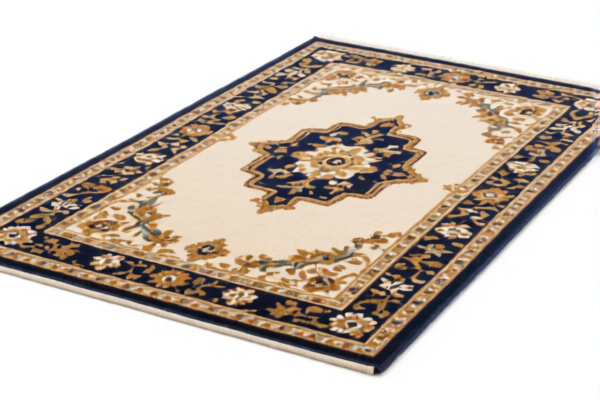
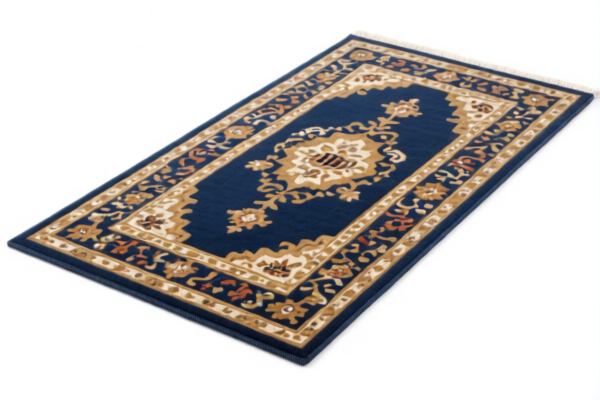
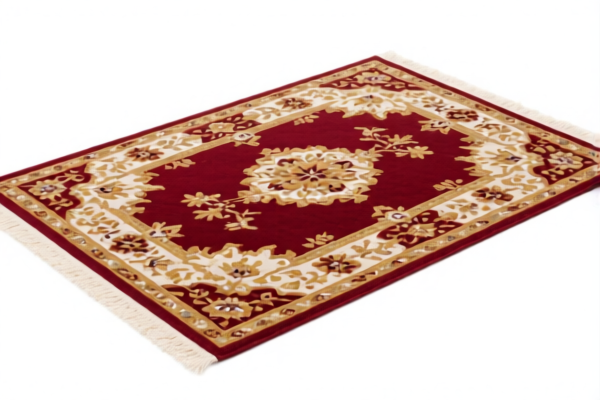
AI分析
🌿 Avocado Style Carpet (Textile Floor Coverings)
🌐 HS Code Reference & Customs Clearance Guide | 2024-2025 Latest Tariff Analysis | Professional Logistics Strategy
📌 I. Product Definition & Classification: Do You Really Understand "Avocado Style Carpets"?
An "Avocado Style Carpet" is a decorative floor covering characterized by green hues, natural motifs, or avocado-shaped designs. In international trade, the key to accurate classification lies not in the design (avocado), but in the material composition and manufacturing method.
Under Harmonized System (HS) rules: * "Style" is irrelevant for HS coding; it is a marketing term. * "Carpet" falls under Chapter 57: Carpeting and other textile floor coverings. * The critical distinction is between Tufted (stitched), Woven (interlaced), and Non-Woven (felted/matted) structures, and whether the material is Natural (wool/cotton) or Synthetic/Man-made (polyester/nylon/polypropylene).
⚠️ Key Distinction Point:
- If the carpet is Tufted with synthetic fibers → Likely 5703;
- If the carpet is Woven (like a rag rug or tapestry style) → Likely 5701 or 5702;
- If made of Man-made fibers vs. Natural fibers, the duty rates vary significantly.
📦 II. HS Code Classification Details (Latest Tariff Data)
Based on the provided data, here are the potential HS Codes for an "Avocado Style Carpet," categorized by material and structure.
| HS Code | Product Description & Material Inference | Application / Use Case | Material Type |
|---|---|---|---|
5703.29.20.90 |
Tufted Carpet: Shape is carpet, inferred material is textile fiber. Fits general textile floor covering requirements. | High-pile tufted carpets, likely synthetic/blend. | Mixed/General Textile |
5701.90.20.90 |
Woven Carpet: Shape is carpet, used as floor covering, inferred material is textile material. | Hand-woven, rag rugs, or flat-woven natural fiber carpets. | Natural/General Textile |
5703.39.20.90 |
Tufted Carpet: Shape is carpet, used as floor covering, inferred material is artificial/man-made textile material. | Tufted carpets made from nylon, polyester, or acrylic. | Man-made Fiber |
5701.90.10.90 |
Woven Carpet: Shape is carpet, used as floor covering, inferred material is textile material, classified under "Other". | Other woven carpets not specified elsewhere. | Natural/General Textile |
5702.42.20.80 |
Woven Floor Covering: Shape is carpet, inferred material is fiber-based. Fits "Other" or "Man-made" fallback logic. | Less common woven types, possibly synthetic blends. | Man-made/Fallback |
5702.49.10.80 |
Woven Floor Covering: Shape is carpet, used as floor covering, inferred material is textile material. Fits "Other textile materials" category. | Other woven textiles for floors. | General Textile |
🔍 Important Note:
- The term "Avocado Style" does not appear in the HS Code dictionary. It must be described by its physical properties (e.g., "Synthetic Fiber Tufted Carpet, Green Pattern").
- Misclassification can lead to significant tax differences (e.g., 35% vs. 41%).
- Always provide composition labels (e.g., "100% Polyester") during customs declaration.
💰 III. 2024-2025 Tariff Rate Breakdown (Including Additional Duties)
✅ Applicable Country: United States (US)
✅ Country of Origin: China (CN)
✅ Effective Period: Current Trade Policies (Section 301 & IEEPA)
🎯 1. 5703.29.20.90 – Tufted Carpet (General Textile)
| Item | Content |
|---|---|
| Base Duty Rate | 6.7% (Ad Valorem) |
| Section 301 Additional Duty | +25.0% (USITC Footnote) |
| Section 122 / IEEPA Additional Duty | +10.0% (Targeting specific Chinese imports) |
| Total Tax Rate | 41.7% |
| Tax Calculation | CIF Value × 41.7% |
| De Minimis Exemption | ❌ Not Applicable (Merchandise value > $800 threshold requires formal entry) |
📌 Explanation:
- The 6.7% base rate is standard for many tufted carpets.
- The +25% is the Section 301 tariff on Chinese goods.
- The +10% is an additional layer often applied under IEEPA or specific Section 122 provisions for certain textile/flooring categories from China.
- Total Burden: 41.7% – This is a high-duty category. Cost-saving strategies are essential.
🎯 2. 5701.90.20.90 & 5701.90.10.90 – Woven Carpets (Natural/General Textile)
| Item | Content |
|---|---|
| Base Duty Rate | 0.0% (Ad Valorem) |
| Section 301 Additional Duty | +25.0% |
| Section 122 / IEEPA Additional Duty | +10.0% |
| Total Tax Rate | 35.0% |
| Tax Calculation | CIF Value × 35.0% |
| De Minimis Exemption | ❌ Not Applicable |
📌 Explanation:
- Woven carpets (Chapter 5701) often have a 0% base rate.
- However, the 35% total (25% + 10%) remains significant.
- This classification is cheaper than5703.29by 6.7 percentage points.
🎯 3. 5703.39.20.90 – Tufted Carpet (Man-made Fibers)
| Item | Content |
|---|---|
| Base Duty Rate | 6.0% |
| Section 301 Additional Duty | +25.0% |
| Section 122 / IEEPA Additional Duty | +10.0% |
| Total Tax Rate | 41.0% |
| Tax Calculation | CIF Value × 41.0% |
| De Minimis Exemption | ❌ Not Applicable |
📌 Explanation:
- Very similar to5703.29, but slightly lower base rate (6.0% vs 6.7%).
- Applicable if the carpet is explicitly made of man-made fibers (e.g., polyester, nylon).
🎯 4. 5702.42.20.80 & 5702.49.10.80 – Other Woven Floor Coverings
| Item | Content |
|---|---|
| Base Duty Rate | 0.0% |
| Section 301 Additional Duty | +25.0% |
| Section 122 / IEEPA Additional Duty | +10.0% |
| Total Tax Rate | 35.0% |
| Tax Calculation | CIF Value × 35.0% |
| De Minimis Exemption | ❌ Not Applicable |
📌 Explanation:
- These codes also benefit from the 0% base rate.
- Total duty is 35.0%.
- Ensure the product truly fits "Woven" (interlaced yarns) and not "Tufted" (yarn inserted into backing).
🛠️ IV. Customs Clearance Practical Advice (Battle-Tested Pitfall Avoidance)
✅ 1. Documentation Checklist (Non-Negotiable)
| Document | Required | Notes |
|---|---|---|
| ✅ Product Specification Sheet | ✔️ | Must state: Material Composition (% Wool, % Polyester, etc.), Construction (Tufted/Woven), Dimensions. |
| ✅ Commercial Invoice | ✔️ | Description should be: "Textile Floor Covering, [Material] [Construction] Carpet, Avocado Pattern" – Avoid just "Avocado Carpet." |
| ✅ Packing List | ✔️ | Include net/gross weight, number of rolls/pieces. |
| ✅ Proof of Origin (CO) | ✔️ | Essential for verifying Country of Origin (China) to apply correct Section 301 rates. |
| ✅ Product Photos | ✔️ | Clear shots of the back (showing backing material) and front (showing weave/tuft). |
✅ 2. Declaration Tips (Crucial for Accuracy)
🔥 "Material is King, Construction is Queen!"
| Scenario | Correct Declaration | Risk if Incorrect |
|---|---|---|
| Carpet is Polyester Tufted | 5703.39.20.90 (41.0%) |
Misdeclare as Woven → Penalty for misclassification |
| Carpet is Wool Woven | 5701.90.20.90 (35.0%) |
Misdeclare as Tufted → Overpay taxes |
| Carpet is Non-Woven/Felt | Check if it fits 5702 or other chapters |
Wrong Chapter → Seizure or heavy fines |
✅ 3. Special Cases & Strategies
| Situation | Recommendation |
|---|---|
| Small Quantity (< $800) | May qualify for De Minimis (Section 321), but verify if Section 301/122 duties still apply. Recent rulings suggest some duties apply even to de minimis. |
| Mixed Materials | Declare the predominant material. If 51% polyester, classify under Man-made. |
| Samples vs. Commercial | Samples declared as "Samples" may have different duty treatment, but must be clearly marked. |
| Origin Non-China | If produced in Vietnam, Bangladesh, or India, Section 301 (25%) and Section 122 (10%) do NOT apply. Total duty could drop to 0-6%. |
🌍 V. Global Market Comparison (2024-2025)
| Country/Region | Recommended HS Code (Example) | Est. Total Duty (China Origin) | Key Requirements | Notes |
|---|---|---|---|---|
| 🇺🇸 USA | 5703.39.20.90 |
41.0% | FCC (if electronic), but mostly standard textile rules | High duties due to Section 301 & 122 |
| 🇪🇺 EU | 5703.39 (varies) |
~0-6% | CE, REACH, EPR | No Section 301; standard WTO rates |
| 🇨🇳 China | 5703.39 |
5-10% | CCC (if applicable) | Lower export duties, but focus on import cost |
| 🇬🇧 UK | 5703.39 |
~0-6% | UKCA | Post-Brexit rules similar to EU |
| 🇦🇺 Australia | 5703.39 |
5% | N/A | Low duty environment |
📌 Conclusion:
- USA is the most expensive market for Chinese-made carpets due to political tariffs.
- Consider supply chain diversification (e.g., produce in Vietnam) to reduce duty from 41.7% to ~6%.
📌 VI. Common Mistakes & Pitfalls (Lessons from the Field)
❌ Mistake 1: Declaring "Avocado Carpet" without material specification
👉 Consequence: Customs holds shipment for verification, causing delay + storage fees.
❌ Mistake 2: Confusing "Tufted" (5703) with "Woven" (5701/5702)
👉 Consequence: Wrong duty rate (35% vs 41.7%). Even if small per unit, it adds up on large orders.
❌ Mistake 3: Ignoring Section 122 / IEEPA 10% duty
👉 Consequence: Unexpected tax bill at border. Some importers only account for Section 301 (25%) and forget the extra 10%.
✅ Correct Approach:
"Handmade Wool Woven Rug, Natural Dye, Avocado Motif" →
5701.90.20.90(35%)
"Machine-Made Polyester Tufted Carpet, Green Pattern" →5703.39.20.90(41%)
🎯 VII. Conclusion: Smart Classification, Higher Margins!
🎯 Remember the Golden Rules:
🔹 "Material defines the Code, Construction confirms it."
🔹 "Woven = 35% Total, Tufted = 41% Total (China Origin)."
🔹 "Avocado is just a pattern; Polyester is the truth."
📌 Pro Tip:
If your carpets are sourced from non-China countries (e.g., India, Nepal, Vietnam), you can avoid the 35% surcharge, dropping the total duty to 0-6%.
For US-bound shipments, pre-classification rulings are highly recommended to avoid disputes.
📣 Immediate Action:
📞 Contact your freight forwarder with material breakdown and construction type.
🚀 Optimize your HS Code to save up to 6.7% in duties.
📉 Lower your landed cost, increase your profit margin!
✨ Professional Customs Clearance Starts with Precise Classification!
💼 Every Percentage Point Saved is Pure Profit!
用户评价
关于 HS 编码归类
协调制度(HS)是由世界海关组织(WCO)制定的国际贸易商品分类标准。全球 200 多个国家采用 HS 系统作为海关关税、贸易统计和进出口监管的基础。
每个 HS 编码遵循以下层级结构:
- 章(2 位)——商品大类(例如:第 84 章:机器和机械设备)
- 品目(4 位)——章内的更具体分类
- 子目(6 位)——国际通用细分,所有 WCO 成员国统一使用
- 本国细分(8-10 位)——各国自行扩展的细分编码,如美国 HTSUS 10 位编码
正确的 HS 编码归类对于顺利通关、准确缴纳关税和遵守贸易法规至关重要。错误归类可能导致海关延误、多缴关税或罚款。
从CN进口到US时,适用的关税税率可能包括:
- 最惠国(MFN)税率——适用于 WTO 成员国的标准关税税率
- 普通税率——适用于无贸易协定国家
- 贸易救济关税——附加关税,如 301 条款(反倾销)、232 条款(国家安全)或反补贴税
本页内容仅供参考。如需正式归类,请咨询当地海关或持牌报关代理。