Avocado Style Carpet
CN → US| HS Code | Tariff Rate | Origin | Destination | Doc |
|---|---|---|---|---|
| 5703292090 | 41.7% | CN | US | Official Doc |
| 5701902090 | 35.0% | CN | US | Official Doc |
| 5703392090 | 41.0% | CN | US | Official Doc |
| 5701901090 | 35.0% | CN | US | Official Doc |
| 5702422080 | 35.0% | CN | US | Official Doc |
| 5702491080 | 35.0% | CN | US | Official Doc |
Product Images
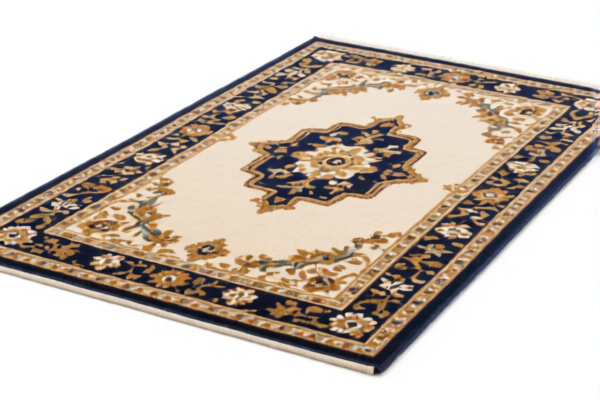
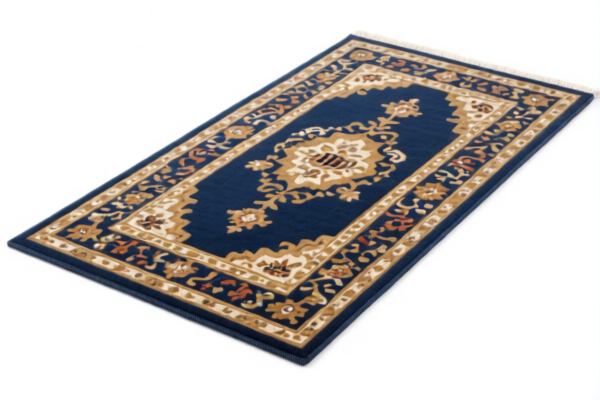
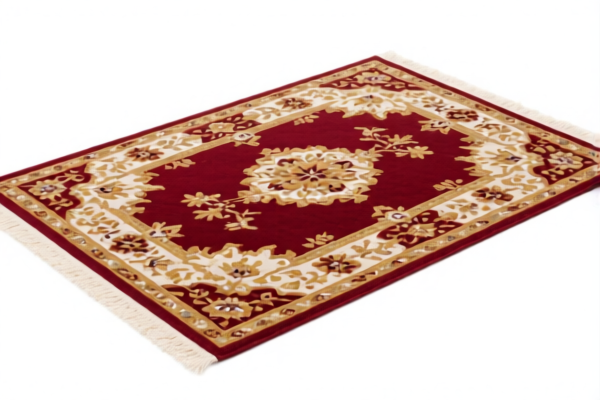
AI Analysis
🌿 Avocado Style Carpet (Textile Floor Coverings)
🌐 HS Code Reference & Customs Clearance Guide | 2024-2025 Latest Tariff Analysis | Professional Logistics Strategy
📌 I. Product Definition & Classification: Do You Really Understand "Avocado Style Carpets"?
An "Avocado Style Carpet" is a decorative floor covering characterized by green hues, natural motifs, or avocado-shaped designs. In international trade, the key to accurate classification lies not in the design (avocado), but in the material composition and manufacturing method.
Under Harmonized System (HS) rules: * "Style" is irrelevant for HS coding; it is a marketing term. * "Carpet" falls under Chapter 57: Carpeting and other textile floor coverings. * The critical distinction is between Tufted (stitched), Woven (interlaced), and Non-Woven (felted/matted) structures, and whether the material is Natural (wool/cotton) or Synthetic/Man-made (polyester/nylon/polypropylene).
⚠️ Key Distinction Point:
- If the carpet is Tufted with synthetic fibers → Likely 5703;
- If the carpet is Woven (like a rag rug or tapestry style) → Likely 5701 or 5702;
- If made of Man-made fibers vs. Natural fibers, the duty rates vary significantly.
📦 II. HS Code Classification Details (Latest Tariff Data)
Based on the provided data, here are the potential HS Codes for an "Avocado Style Carpet," categorized by material and structure.
| HS Code | Product Description & Material Inference | Application / Use Case | Material Type |
|---|---|---|---|
5703.29.20.90 |
Tufted Carpet: Shape is carpet, inferred material is textile fiber. Fits general textile floor covering requirements. | High-pile tufted carpets, likely synthetic/blend. | Mixed/General Textile |
5701.90.20.90 |
Woven Carpet: Shape is carpet, used as floor covering, inferred material is textile material. | Hand-woven, rag rugs, or flat-woven natural fiber carpets. | Natural/General Textile |
5703.39.20.90 |
Tufted Carpet: Shape is carpet, used as floor covering, inferred material is artificial/man-made textile material. | Tufted carpets made from nylon, polyester, or acrylic. | Man-made Fiber |
5701.90.10.90 |
Woven Carpet: Shape is carpet, used as floor covering, inferred material is textile material, classified under "Other". | Other woven carpets not specified elsewhere. | Natural/General Textile |
5702.42.20.80 |
Woven Floor Covering: Shape is carpet, inferred material is fiber-based. Fits "Other" or "Man-made" fallback logic. | Less common woven types, possibly synthetic blends. | Man-made/Fallback |
5702.49.10.80 |
Woven Floor Covering: Shape is carpet, used as floor covering, inferred material is textile material. Fits "Other textile materials" category. | Other woven textiles for floors. | General Textile |
🔍 Important Note:
- The term "Avocado Style" does not appear in the HS Code dictionary. It must be described by its physical properties (e.g., "Synthetic Fiber Tufted Carpet, Green Pattern").
- Misclassification can lead to significant tax differences (e.g., 35% vs. 41%).
- Always provide composition labels (e.g., "100% Polyester") during customs declaration.
💰 III. 2024-2025 Tariff Rate Breakdown (Including Additional Duties)
✅ Applicable Country: United States (US)
✅ Country of Origin: China (CN)
✅ Effective Period: Current Trade Policies (Section 301 & IEEPA)
🎯 1. 5703.29.20.90 – Tufted Carpet (General Textile)
| Item | Content |
|---|---|
| Base Duty Rate | 6.7% (Ad Valorem) |
| Section 301 Additional Duty | +25.0% (USITC Footnote) |
| Section 122 / IEEPA Additional Duty | +10.0% (Targeting specific Chinese imports) |
| Total Tax Rate | 41.7% |
| Tax Calculation | CIF Value × 41.7% |
| De Minimis Exemption | ❌ Not Applicable (Merchandise value > $800 threshold requires formal entry) |
📌 Explanation:
- The 6.7% base rate is standard for many tufted carpets.
- The +25% is the Section 301 tariff on Chinese goods.
- The +10% is an additional layer often applied under IEEPA or specific Section 122 provisions for certain textile/flooring categories from China.
- Total Burden: 41.7% – This is a high-duty category. Cost-saving strategies are essential.
🎯 2. 5701.90.20.90 & 5701.90.10.90 – Woven Carpets (Natural/General Textile)
| Item | Content |
|---|---|
| Base Duty Rate | 0.0% (Ad Valorem) |
| Section 301 Additional Duty | +25.0% |
| Section 122 / IEEPA Additional Duty | +10.0% |
| Total Tax Rate | 35.0% |
| Tax Calculation | CIF Value × 35.0% |
| De Minimis Exemption | ❌ Not Applicable |
📌 Explanation:
- Woven carpets (Chapter 5701) often have a 0% base rate.
- However, the 35% total (25% + 10%) remains significant.
- This classification is cheaper than5703.29by 6.7 percentage points.
🎯 3. 5703.39.20.90 – Tufted Carpet (Man-made Fibers)
| Item | Content |
|---|---|
| Base Duty Rate | 6.0% |
| Section 301 Additional Duty | +25.0% |
| Section 122 / IEEPA Additional Duty | +10.0% |
| Total Tax Rate | 41.0% |
| Tax Calculation | CIF Value × 41.0% |
| De Minimis Exemption | ❌ Not Applicable |
📌 Explanation:
- Very similar to5703.29, but slightly lower base rate (6.0% vs 6.7%).
- Applicable if the carpet is explicitly made of man-made fibers (e.g., polyester, nylon).
🎯 4. 5702.42.20.80 & 5702.49.10.80 – Other Woven Floor Coverings
| Item | Content |
|---|---|
| Base Duty Rate | 0.0% |
| Section 301 Additional Duty | +25.0% |
| Section 122 / IEEPA Additional Duty | +10.0% |
| Total Tax Rate | 35.0% |
| Tax Calculation | CIF Value × 35.0% |
| De Minimis Exemption | ❌ Not Applicable |
📌 Explanation:
- These codes also benefit from the 0% base rate.
- Total duty is 35.0%.
- Ensure the product truly fits "Woven" (interlaced yarns) and not "Tufted" (yarn inserted into backing).
🛠️ IV. Customs Clearance Practical Advice (Battle-Tested Pitfall Avoidance)
✅ 1. Documentation Checklist (Non-Negotiable)
| Document | Required | Notes |
|---|---|---|
| ✅ Product Specification Sheet | ✔️ | Must state: Material Composition (% Wool, % Polyester, etc.), Construction (Tufted/Woven), Dimensions. |
| ✅ Commercial Invoice | ✔️ | Description should be: "Textile Floor Covering, [Material] [Construction] Carpet, Avocado Pattern" – Avoid just "Avocado Carpet." |
| ✅ Packing List | ✔️ | Include net/gross weight, number of rolls/pieces. |
| ✅ Proof of Origin (CO) | ✔️ | Essential for verifying Country of Origin (China) to apply correct Section 301 rates. |
| ✅ Product Photos | ✔️ | Clear shots of the back (showing backing material) and front (showing weave/tuft). |
✅ 2. Declaration Tips (Crucial for Accuracy)
🔥 "Material is King, Construction is Queen!"
| Scenario | Correct Declaration | Risk if Incorrect |
|---|---|---|
| Carpet is Polyester Tufted | 5703.39.20.90 (41.0%) |
Misdeclare as Woven → Penalty for misclassification |
| Carpet is Wool Woven | 5701.90.20.90 (35.0%) |
Misdeclare as Tufted → Overpay taxes |
| Carpet is Non-Woven/Felt | Check if it fits 5702 or other chapters |
Wrong Chapter → Seizure or heavy fines |
✅ 3. Special Cases & Strategies
| Situation | Recommendation |
|---|---|
| Small Quantity (< $800) | May qualify for De Minimis (Section 321), but verify if Section 301/122 duties still apply. Recent rulings suggest some duties apply even to de minimis. |
| Mixed Materials | Declare the predominant material. If 51% polyester, classify under Man-made. |
| Samples vs. Commercial | Samples declared as "Samples" may have different duty treatment, but must be clearly marked. |
| Origin Non-China | If produced in Vietnam, Bangladesh, or India, Section 301 (25%) and Section 122 (10%) do NOT apply. Total duty could drop to 0-6%. |
🌍 V. Global Market Comparison (2024-2025)
| Country/Region | Recommended HS Code (Example) | Est. Total Duty (China Origin) | Key Requirements | Notes |
|---|---|---|---|---|
| 🇺🇸 USA | 5703.39.20.90 |
41.0% | FCC (if electronic), but mostly standard textile rules | High duties due to Section 301 & 122 |
| 🇪🇺 EU | 5703.39 (varies) |
~0-6% | CE, REACH, EPR | No Section 301; standard WTO rates |
| 🇨🇳 China | 5703.39 |
5-10% | CCC (if applicable) | Lower export duties, but focus on import cost |
| 🇬🇧 UK | 5703.39 |
~0-6% | UKCA | Post-Brexit rules similar to EU |
| 🇦🇺 Australia | 5703.39 |
5% | N/A | Low duty environment |
📌 Conclusion:
- USA is the most expensive market for Chinese-made carpets due to political tariffs.
- Consider supply chain diversification (e.g., produce in Vietnam) to reduce duty from 41.7% to ~6%.
📌 VI. Common Mistakes & Pitfalls (Lessons from the Field)
❌ Mistake 1: Declaring "Avocado Carpet" without material specification
👉 Consequence: Customs holds shipment for verification, causing delay + storage fees.
❌ Mistake 2: Confusing "Tufted" (5703) with "Woven" (5701/5702)
👉 Consequence: Wrong duty rate (35% vs 41.7%). Even if small per unit, it adds up on large orders.
❌ Mistake 3: Ignoring Section 122 / IEEPA 10% duty
👉 Consequence: Unexpected tax bill at border. Some importers only account for Section 301 (25%) and forget the extra 10%.
✅ Correct Approach:
"Handmade Wool Woven Rug, Natural Dye, Avocado Motif" →
5701.90.20.90(35%)
"Machine-Made Polyester Tufted Carpet, Green Pattern" →5703.39.20.90(41%)
🎯 VII. Conclusion: Smart Classification, Higher Margins!
🎯 Remember the Golden Rules:
🔹 "Material defines the Code, Construction confirms it."
🔹 "Woven = 35% Total, Tufted = 41% Total (China Origin)."
🔹 "Avocado is just a pattern; Polyester is the truth."
📌 Pro Tip:
If your carpets are sourced from non-China countries (e.g., India, Nepal, Vietnam), you can avoid the 35% surcharge, dropping the total duty to 0-6%.
For US-bound shipments, pre-classification rulings are highly recommended to avoid disputes.
📣 Immediate Action:
📞 Contact your freight forwarder with material breakdown and construction type.
🚀 Optimize your HS Code to save up to 6.7% in duties.
📉 Lower your landed cost, increase your profit margin!
✨ Professional Customs Clearance Starts with Precise Classification!
💼 Every Percentage Point Saved is Pure Profit!
Customer Reviews
About HS Code Classification
The Harmonized System (HS) is an internationally standardized nomenclature developed by the World Customs Organization (WCO) to classify traded products. Over 200 countries use the HS system as the basis for customs tariffs, trade statistics, and import/export regulations.
Each HS code follows a hierarchical structure:
- Chapter (2 digits) — Broad category of goods (e.g., Chapter 84: Machinery and Mechanical Appliances)
- Heading (4 digits) — More specific grouping within the chapter
- Subheading (6 digits) — Internationally standardized breakdown, used by all WCO member countries
- National subdivisions (8-10 digits) — Country-specific extensions for further classification, such as US HTSUS 10-digit codes
Correct HS code classification is essential for smooth customs clearance, accurate duty payment, and compliance with trade regulations. Misclassification can lead to customs delays, overpayment of duties, or penalties.
When importing from CN to US, the applicable tariff rates may include:
- Most-Favored-Nation (MFN) rate — The standard duty rate applied to WTO members
- General rate — Applied to countries without trade agreements
- Trade remedy duties — Additional tariffs such as Section 301 (anti-dumping), Section 232 (national security), or countervailing duties
The information provided on this page is for reference purposes only. For official classification, please consult with your local customs authority or a licensed customs broker.