Balata Natural Rubber
CN → US| HS编码 | 关税税率 | 原产国 | 目的国 | 文档 |
|---|---|---|---|---|
| 4001300005 | 35.0% | CN | US | 官方文档 |
| 4001300055 | 35.0% | CN | US | 官方文档 |
商品图片
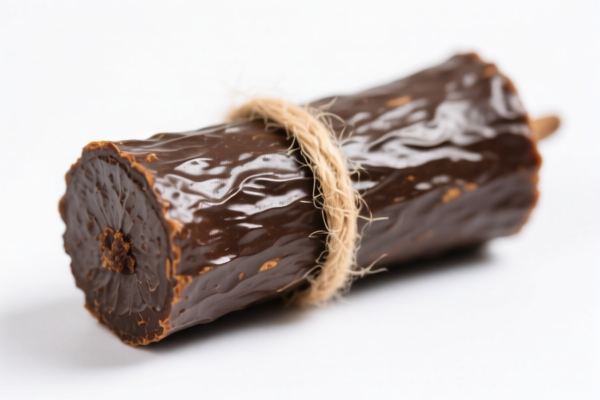
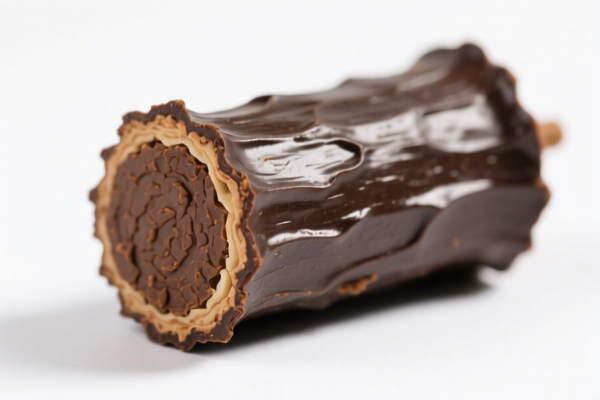
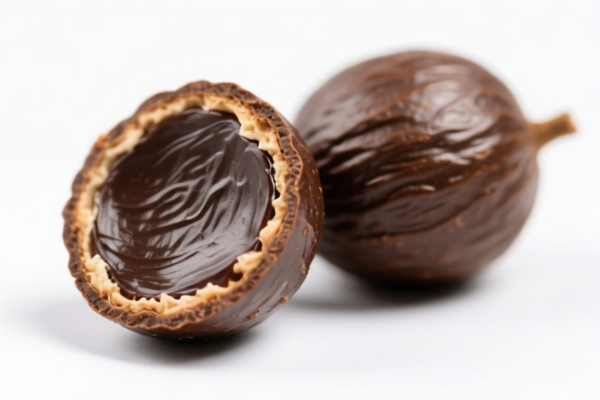
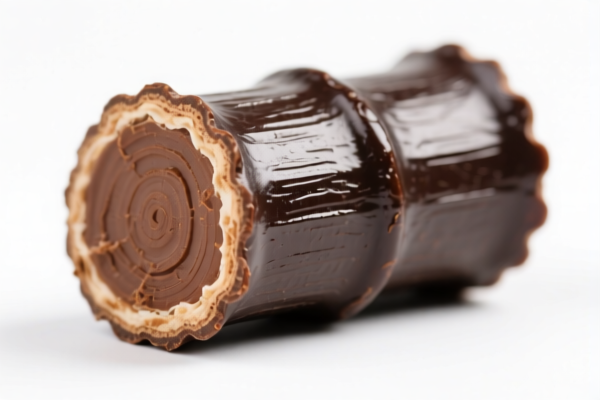
AI分析
🌿 Balata Natural Rubber (Balata)
🌐 HS Code Classification & Customs Clearance Guide | 2026 Tariff Analysis | Professional Compliance Strategy
📌 I. Product Definition: What Exactly is "Balata"?
Balata, scientifically known as Manilkara bidentata latex, is a natural gum derived from the latex of the balatá tree, native to Central and South America (particularly Guyana, Suriname, and Venezuela). It is chemically and physically similar to gutta-percha but distinct from Hevea rubber.
Key Characteristics: * Physical State: Hard, elastic, and thermoplastic when heated. * Color: Typically pale yellow, cream, or grayish-white. * Uses: Historically used for golf ball covers, electrical insulation, dental impressions, and industrial belts due to its high resistance to wear and chemical corrosion.
⚠️ Critical Distinction:
- Balata is NOT Hevea brasiliensis (standard natural rubber, HS 4001.10/4001.20/4001.30.00.05 is excluded for Balata).
- Balata is NOT Gutta-percha (HS 4001.30.00.05 covers Balata; HS 4001.30.00.55 covers "Other" like gutta-percha/chicle).
- It is classified under "Balata, gutta-percha, guayule, chicle and similar natural gums" as a specific sub-category.
📦 II. HS Code Classification Details (2026 Authoritative Reference)
According to the provided , Balata falls under Heading 4001.30. The specific 8-digit HS codes for US Customs and Border Protection (CBP) are:
| HS Code | Product Description | Specific Classification | Physical Form |
|---|---|---|---|
4001.30.00.05 |
Natural rubber, balata, gutta-percha...: Balata | Specific: Balata | Primary forms, plates, sheets, or strip |
4001.30.00.55 |
Natural rubber, balata, gutta-percha...: Other | Other (e.g., Gutta-percha, Guayule, Chicle) | Primary forms, plates, sheets, or strip |
🔍 Key Insight for Classification:
- If your product is pure Balata, it must be declared under4001.30.00.05.
- If your product is a mixture or misidentified as another natural gum (like Gutta-percha), it falls under4001.30.00.55.
- Do NOT classify Balata under4001.10,4001.20, or4001.30.00.05(which is for standard Hevea rubber in some contexts, but here4001.30.00.05is explicitly for Balata in this dataset).
- Note: The dataset explicitly lists4001.30.00.05for "Balata" and4001.30.00.55for "Other".
💰 III. 2026 Latest Tariff Rate Breakdown
✅ Applicable Country: United States (US)
✅ Origin: China (CN) [Assumed based on standard trade context, verify if origin differs]
✅ Effective Date: Current (2026)
🎯 1. HS Code 4001.30.00.05 — Balata
| Item | Detail |
|---|---|
| Base Tariff Rate | 0.0% (Ad Valorem) |
| Additional Duty (Section 301 / China) | +25.0% |
| Total Effective Tax Rate | 25.0% |
| Tax Calculation | CIF Value × 25.0% |
| De Minimis Exemption | ❌ Not Eligible (Section 301 duties generally apply regardless of value) |
| Legal Authority | HTSUS 4001.30.00.05 + USITC Footnote for Section 301 |
📌 Explanation:
- While the base Most Favored Nation (MFN) rate for natural gums is 0%, products originating from China are subject to an additional 25% duty under Section 301 of the Trade Act of 1974.
- This 25% is non-negotiable for standard commercial imports from China.
- There are no additional IEEPA surcharges listed in the provided data for this specific code (unlike electronics), so the total remains 25%.
🎯 2. HS Code 4001.30.00.55 — Other Natural Gums (e.g., Gutta-Percha)
| Item | Detail |
|---|---|
| Base Tariff Rate | 0.0% |
| Additional Duty (Section 301 / China) | +25.0% |
| Total Effective Tax Rate | 25.0% |
| Tax Calculation | CIF Value × 25.0% |
| De Minimis Exemption | ❌ Not Eligible |
📌 Note: If you mistakenly classify Balata as "Other" (gutata-percha), the tax rate is identical (25%), but misclassification is a major compliance risk. Always declare as Balata (
4001.30.00.05) if the product is indeed Balata.
🛠️ IV. Customs Clearance Practical Advice
✅ 1. Required Documentation Checklist
| Document | Mandatory? | Details |
|---|---|---|
| Commercial Invoice | ✅ Yes | Must clearly state "Balata Natural Rubber" or "Natural Gum: Balata". Avoid vague terms like "Rubber Lump". |
| Packing List | ✅ Yes | Detail weights, dimensions, and number of plates/sheets. |
| Certificate of Origin | ✅ Yes | Crucial for verifying origin (China vs. other countries). If from Guyana/USA, different rates may apply (verify FTAs). |
| Product Specification Sheet | ✅ Yes | Confirm chemical composition and physical form (primary, sheet, strip). |
| Harmonized Tariff Schedule (HTS) Confirmation | ✅ Yes | Internal review confirming 4001.30.00.05. |
✅ 2. Declaration Best Practices
🔥 "Specify the Gum: Balata vs. Other, Get It Right, Avoid Fines!"
| Scenario | Correct Declaration | Incorrect Declaration | Consequence |
|---|---|---|---|
| Pure Balata | 4001.30.00.05 - Balata |
4001.20.00.00 (Hevea Rubber) |
Major Misclassification → Penalties, audits, potential seizure |
| Balata in Sheet Form | 4001.30.00.05 |
4001.30.00.55 (Other) |
Minor error if tax same, but audit risk if product differs |
| Vulcanized Balata | ❌ Not 4001 | 4001.30.00.05 |
Wrong HS! Vulcanized rubber goes to Chapter 40 other headings (e.g., 4008, 4009). Only natural gums in primary forms go to 4001. |
⚠️ Critical Warning:
- HS Code 4001 applies ONLY to natural rubber/gums in primary forms (raw, unprocessed) or in plates, sheets, or strip.
- If Balata is vulcanized (hardened/processed into tires, belts, etc.), it NO LONGER falls under 4001. It may fall under 4008.99 or 4009.
- Do not declare processed Balata products as "Natural Rubber in Primary Forms."
✅ 3. Special Considerations
| Situation | Advice |
|---|---|
| Origin is NOT China | If Balata is imported from Guyana or Venezuela (traditional sources), Section 301 duties (25%) DO NOT APPLY. Check for preferential rates. |
| Mixed Shipments | If a shipment contains both Balata (4001.30.00.05) and Gutta-percha (4001.30.00.55), declare each separately on the bill of lading. |
| Sample vs. Commercial | Even for samples, Section 301 duties may apply if value exceeds de minimis thresholds or if flagged. |
🌍 V. Global Market Comparison (2026)
| Country/Region | HS Code | Tariff (China Origin) | Notes |
|---|---|---|---|
| 🇺🇸 USA | 4001.30.00.05 |
25% (25% Section 301) | High barrier for Chinese origin. |
| 🇨🇳 China | 4001.30 |
Varies (0-10%) | Import duty into China for Balata? (Usually low for raw materials). |
| 🇪🇺 EU | 4001.30 |
0% | No additional duties for natural gums from most origins, but verify rules of origin. |
| 🇮🇳 India | 4001.30 |
Varies | Check specific ITC-HS codes. |
📌 Conclusion:
- The USA imposes a significant 25% additional duty on Chinese-origin Balata.
- EU and other major markets often have 0% base duty for natural gums, making them more competitive for re-export or processing.
- Supply Chain Tip: Consider sourcing Balata from non-China origins (e.g., South America) to avoid the 25% US duty if targeting the US market.
📌 VI. Common Errors & Pitfalls (Lessons Learned)
❌ Error 1: Classifying vulcanized Balata parts (e.g., belts) under 4001.30.00.05.
👉 Consequence: HS Code error. Vulcanized rubber is processed, not "primary form." May face higher duties (up to 5-6.5% base + 25% if China origin) and legal penalties.
❌ Error 2: Describing Balata simply as "Natural Rubber" without specifying "Balata."
👉 Consequence: Customs may misclassify as Hevea Rubber (4001.10/20/30), leading to audits and re-classification fees.
❌ Error 3: Assuming all natural gums have the same tax rate.
👉 Consequence: While currently both 4001.30 sub-codes have 25% for China, future policy changes could differentiate. Specificity is key.
✅ Correct Approach:
"Balata Natural Gum, in Sheets, Raw, Unvulcanized, Origin: [Country], HS: 4001.30.00.05"
🎯 VII. Conclusion: Precision in Classification Saves Costs
🎯 Key Takeaways:
🔹 HS Code
4001.30.00.05is for Balata only.
🔹 Total US Duty for Chinese Origin: 25% (Section 301).
🔹 Ensure the product is in "Primary Form" (raw sheets/strips) to stay in 4001.
🔹 Vulcanized Balata = Different HS Code (4008+).
📌 Pro Tip:
If your Balata is vulcanized, do NOT use
4001. Contact a customs broker to determine the correct code for articles of rubber (e.g.,4008.99). Misclassification can lead to back taxes + penalties.
📣 Immediate Action:
📞 Verify Origin: If from China, budget for 25% additional duty.
📄 Clarify Product State: Is it raw sheets (4001) or processed parts (4008+)?
📦 Document Correctly: Use "Balata Natural Gum" in invoices, not just "Rubber."
✨ Accurate Classification, Predictable Costs, Smooth Clearance!
💼 Balance precision in HS Codes with strategic sourcing to minimize duty burdens!
用户评价
关于 HS 编码归类
协调制度(HS)是由世界海关组织(WCO)制定的国际贸易商品分类标准。全球 200 多个国家采用 HS 系统作为海关关税、贸易统计和进出口监管的基础。
每个 HS 编码遵循以下层级结构:
- 章(2 位)——商品大类(例如:第 84 章:机器和机械设备)
- 品目(4 位)——章内的更具体分类
- 子目(6 位)——国际通用细分,所有 WCO 成员国统一使用
- 本国细分(8-10 位)——各国自行扩展的细分编码,如美国 HTSUS 10 位编码
正确的 HS 编码归类对于顺利通关、准确缴纳关税和遵守贸易法规至关重要。错误归类可能导致海关延误、多缴关税或罚款。
从CN进口到US时,适用的关税税率可能包括:
- 最惠国(MFN)税率——适用于 WTO 成员国的标准关税税率
- 普通税率——适用于无贸易协定国家
- 贸易救济关税——附加关税,如 301 条款(反倾销)、232 条款(国家安全)或反补贴税
本页内容仅供参考。如需正式归类,请咨询当地海关或持牌报关代理。