Balata Natural Rubber
CN → US| HS Code | Tariff Rate | Origin | Destination | Doc |
|---|---|---|---|---|
| 4001300005 | 35.0% | CN | US | Official Doc |
| 4001300055 | 35.0% | CN | US | Official Doc |
Product Images
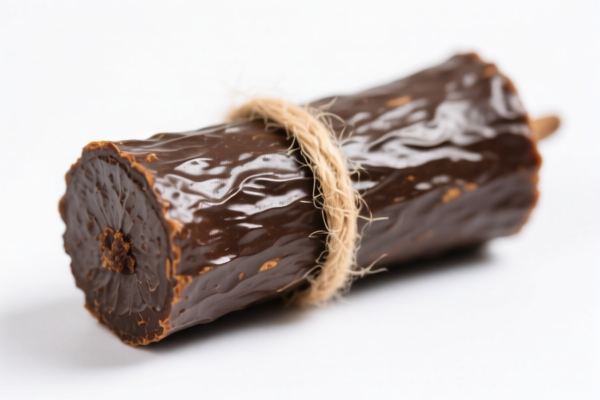
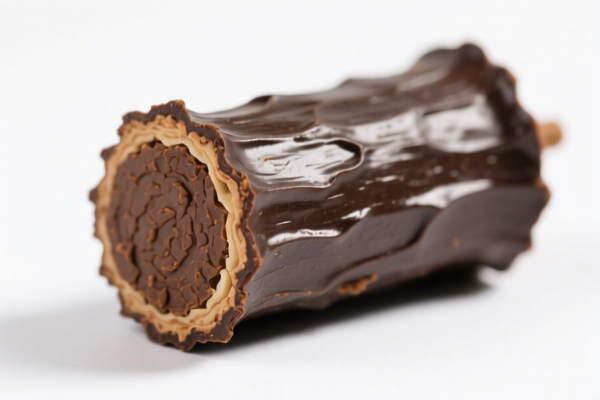
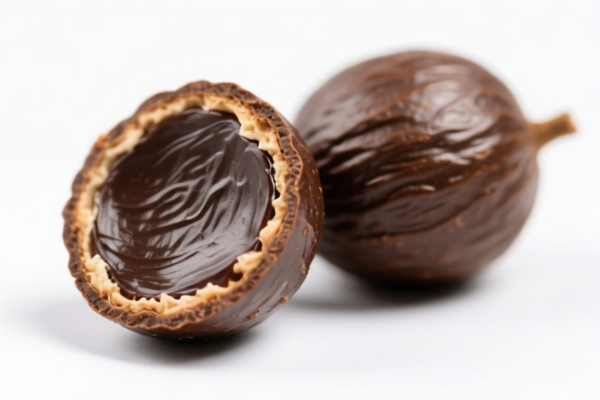
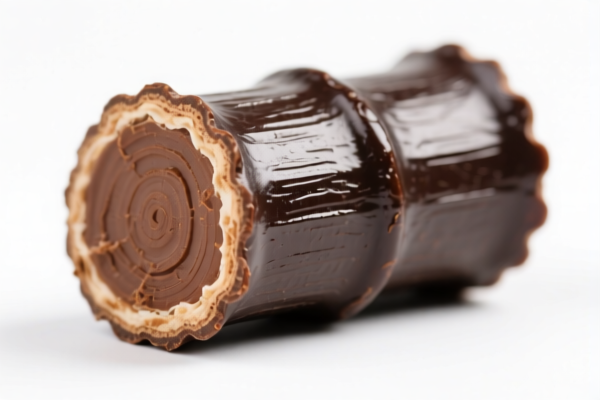
AI Analysis
🌿 Balata Natural Rubber (Balata)
🌐 HS Code Classification & Customs Clearance Guide | 2026 Tariff Analysis | Professional Compliance Strategy
📌 I. Product Definition: What Exactly is "Balata"?
Balata, scientifically known as Manilkara bidentata latex, is a natural gum derived from the latex of the balatá tree, native to Central and South America (particularly Guyana, Suriname, and Venezuela). It is chemically and physically similar to gutta-percha but distinct from Hevea rubber.
Key Characteristics: * Physical State: Hard, elastic, and thermoplastic when heated. * Color: Typically pale yellow, cream, or grayish-white. * Uses: Historically used for golf ball covers, electrical insulation, dental impressions, and industrial belts due to its high resistance to wear and chemical corrosion.
⚠️ Critical Distinction:
- Balata is NOT Hevea brasiliensis (standard natural rubber, HS 4001.10/4001.20/4001.30.00.05 is excluded for Balata).
- Balata is NOT Gutta-percha (HS 4001.30.00.05 covers Balata; HS 4001.30.00.55 covers "Other" like gutta-percha/chicle).
- It is classified under "Balata, gutta-percha, guayule, chicle and similar natural gums" as a specific sub-category.
📦 II. HS Code Classification Details (2026 Authoritative Reference)
According to the provided , Balata falls under Heading 4001.30. The specific 8-digit HS codes for US Customs and Border Protection (CBP) are:
| HS Code | Product Description | Specific Classification | Physical Form |
|---|---|---|---|
4001.30.00.05 |
Natural rubber, balata, gutta-percha...: Balata | Specific: Balata | Primary forms, plates, sheets, or strip |
4001.30.00.55 |
Natural rubber, balata, gutta-percha...: Other | Other (e.g., Gutta-percha, Guayule, Chicle) | Primary forms, plates, sheets, or strip |
🔍 Key Insight for Classification:
- If your product is pure Balata, it must be declared under4001.30.00.05.
- If your product is a mixture or misidentified as another natural gum (like Gutta-percha), it falls under4001.30.00.55.
- Do NOT classify Balata under4001.10,4001.20, or4001.30.00.05(which is for standard Hevea rubber in some contexts, but here4001.30.00.05is explicitly for Balata in this dataset).
- Note: The dataset explicitly lists4001.30.00.05for "Balata" and4001.30.00.55for "Other".
💰 III. 2026 Latest Tariff Rate Breakdown
✅ Applicable Country: United States (US)
✅ Origin: China (CN) [Assumed based on standard trade context, verify if origin differs]
✅ Effective Date: Current (2026)
🎯 1. HS Code 4001.30.00.05 — Balata
| Item | Detail |
|---|---|
| Base Tariff Rate | 0.0% (Ad Valorem) |
| Additional Duty (Section 301 / China) | +25.0% |
| Total Effective Tax Rate | 25.0% |
| Tax Calculation | CIF Value × 25.0% |
| De Minimis Exemption | ❌ Not Eligible (Section 301 duties generally apply regardless of value) |
| Legal Authority | HTSUS 4001.30.00.05 + USITC Footnote for Section 301 |
📌 Explanation:
- While the base Most Favored Nation (MFN) rate for natural gums is 0%, products originating from China are subject to an additional 25% duty under Section 301 of the Trade Act of 1974.
- This 25% is non-negotiable for standard commercial imports from China.
- There are no additional IEEPA surcharges listed in the provided data for this specific code (unlike electronics), so the total remains 25%.
🎯 2. HS Code 4001.30.00.55 — Other Natural Gums (e.g., Gutta-Percha)
| Item | Detail |
|---|---|
| Base Tariff Rate | 0.0% |
| Additional Duty (Section 301 / China) | +25.0% |
| Total Effective Tax Rate | 25.0% |
| Tax Calculation | CIF Value × 25.0% |
| De Minimis Exemption | ❌ Not Eligible |
📌 Note: If you mistakenly classify Balata as "Other" (gutata-percha), the tax rate is identical (25%), but misclassification is a major compliance risk. Always declare as Balata (
4001.30.00.05) if the product is indeed Balata.
🛠️ IV. Customs Clearance Practical Advice
✅ 1. Required Documentation Checklist
| Document | Mandatory? | Details |
|---|---|---|
| Commercial Invoice | ✅ Yes | Must clearly state "Balata Natural Rubber" or "Natural Gum: Balata". Avoid vague terms like "Rubber Lump". |
| Packing List | ✅ Yes | Detail weights, dimensions, and number of plates/sheets. |
| Certificate of Origin | ✅ Yes | Crucial for verifying origin (China vs. other countries). If from Guyana/USA, different rates may apply (verify FTAs). |
| Product Specification Sheet | ✅ Yes | Confirm chemical composition and physical form (primary, sheet, strip). |
| Harmonized Tariff Schedule (HTS) Confirmation | ✅ Yes | Internal review confirming 4001.30.00.05. |
✅ 2. Declaration Best Practices
🔥 "Specify the Gum: Balata vs. Other, Get It Right, Avoid Fines!"
| Scenario | Correct Declaration | Incorrect Declaration | Consequence |
|---|---|---|---|
| Pure Balata | 4001.30.00.05 - Balata |
4001.20.00.00 (Hevea Rubber) |
Major Misclassification → Penalties, audits, potential seizure |
| Balata in Sheet Form | 4001.30.00.05 |
4001.30.00.55 (Other) |
Minor error if tax same, but audit risk if product differs |
| Vulcanized Balata | ❌ Not 4001 | 4001.30.00.05 |
Wrong HS! Vulcanized rubber goes to Chapter 40 other headings (e.g., 4008, 4009). Only natural gums in primary forms go to 4001. |
⚠️ Critical Warning:
- HS Code 4001 applies ONLY to natural rubber/gums in primary forms (raw, unprocessed) or in plates, sheets, or strip.
- If Balata is vulcanized (hardened/processed into tires, belts, etc.), it NO LONGER falls under 4001. It may fall under 4008.99 or 4009.
- Do not declare processed Balata products as "Natural Rubber in Primary Forms."
✅ 3. Special Considerations
| Situation | Advice |
|---|---|
| Origin is NOT China | If Balata is imported from Guyana or Venezuela (traditional sources), Section 301 duties (25%) DO NOT APPLY. Check for preferential rates. |
| Mixed Shipments | If a shipment contains both Balata (4001.30.00.05) and Gutta-percha (4001.30.00.55), declare each separately on the bill of lading. |
| Sample vs. Commercial | Even for samples, Section 301 duties may apply if value exceeds de minimis thresholds or if flagged. |
🌍 V. Global Market Comparison (2026)
| Country/Region | HS Code | Tariff (China Origin) | Notes |
|---|---|---|---|
| 🇺🇸 USA | 4001.30.00.05 |
25% (25% Section 301) | High barrier for Chinese origin. |
| 🇨🇳 China | 4001.30 |
Varies (0-10%) | Import duty into China for Balata? (Usually low for raw materials). |
| 🇪🇺 EU | 4001.30 |
0% | No additional duties for natural gums from most origins, but verify rules of origin. |
| 🇮🇳 India | 4001.30 |
Varies | Check specific ITC-HS codes. |
📌 Conclusion:
- The USA imposes a significant 25% additional duty on Chinese-origin Balata.
- EU and other major markets often have 0% base duty for natural gums, making them more competitive for re-export or processing.
- Supply Chain Tip: Consider sourcing Balata from non-China origins (e.g., South America) to avoid the 25% US duty if targeting the US market.
📌 VI. Common Errors & Pitfalls (Lessons Learned)
❌ Error 1: Classifying vulcanized Balata parts (e.g., belts) under 4001.30.00.05.
👉 Consequence: HS Code error. Vulcanized rubber is processed, not "primary form." May face higher duties (up to 5-6.5% base + 25% if China origin) and legal penalties.
❌ Error 2: Describing Balata simply as "Natural Rubber" without specifying "Balata."
👉 Consequence: Customs may misclassify as Hevea Rubber (4001.10/20/30), leading to audits and re-classification fees.
❌ Error 3: Assuming all natural gums have the same tax rate.
👉 Consequence: While currently both 4001.30 sub-codes have 25% for China, future policy changes could differentiate. Specificity is key.
✅ Correct Approach:
"Balata Natural Gum, in Sheets, Raw, Unvulcanized, Origin: [Country], HS: 4001.30.00.05"
🎯 VII. Conclusion: Precision in Classification Saves Costs
🎯 Key Takeaways:
🔹 HS Code
4001.30.00.05is for Balata only.
🔹 Total US Duty for Chinese Origin: 25% (Section 301).
🔹 Ensure the product is in "Primary Form" (raw sheets/strips) to stay in 4001.
🔹 Vulcanized Balata = Different HS Code (4008+).
📌 Pro Tip:
If your Balata is vulcanized, do NOT use
4001. Contact a customs broker to determine the correct code for articles of rubber (e.g.,4008.99). Misclassification can lead to back taxes + penalties.
📣 Immediate Action:
📞 Verify Origin: If from China, budget for 25% additional duty.
📄 Clarify Product State: Is it raw sheets (4001) or processed parts (4008+)?
📦 Document Correctly: Use "Balata Natural Gum" in invoices, not just "Rubber."
✨ Accurate Classification, Predictable Costs, Smooth Clearance!
💼 Balance precision in HS Codes with strategic sourcing to minimize duty burdens!
Customer Reviews
About HS Code Classification
The Harmonized System (HS) is an internationally standardized nomenclature developed by the World Customs Organization (WCO) to classify traded products. Over 200 countries use the HS system as the basis for customs tariffs, trade statistics, and import/export regulations.
Each HS code follows a hierarchical structure:
- Chapter (2 digits) — Broad category of goods (e.g., Chapter 84: Machinery and Mechanical Appliances)
- Heading (4 digits) — More specific grouping within the chapter
- Subheading (6 digits) — Internationally standardized breakdown, used by all WCO member countries
- National subdivisions (8-10 digits) — Country-specific extensions for further classification, such as US HTSUS 10-digit codes
Correct HS code classification is essential for smooth customs clearance, accurate duty payment, and compliance with trade regulations. Misclassification can lead to customs delays, overpayment of duties, or penalties.
When importing from CN to US, the applicable tariff rates may include:
- Most-Favored-Nation (MFN) rate — The standard duty rate applied to WTO members
- General rate — Applied to countries without trade agreements
- Trade remedy duties — Additional tariffs such as Section 301 (anti-dumping), Section 232 (national security), or countervailing duties
The information provided on this page is for reference purposes only. For official classification, please consult with your local customs authority or a licensed customs broker.