Bamboo Disposable Plate (Biodegradable)
CN → US| HS编码 | 关税税率 | 原产国 | 目的国 | 文档 |
|---|---|---|---|---|
| 4602110900 | 45.0% | CN | US | 官方文档 |
| 4602110700 | 35.0% | CN | US | 官方文档 |
| 4823610040 | 35.0% | CN | US | 官方文档 |
| 4823610020 | 35.0% | CN | US | 官方文档 |
商品图片
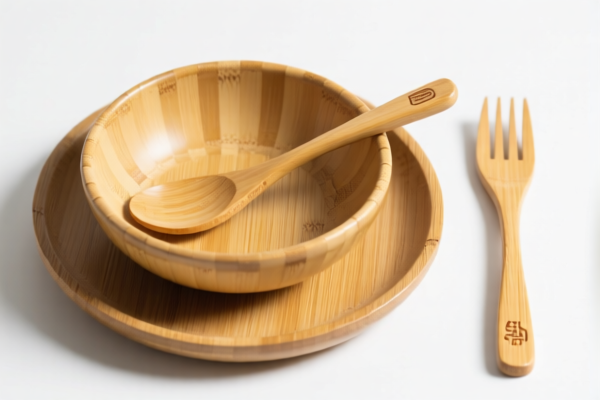
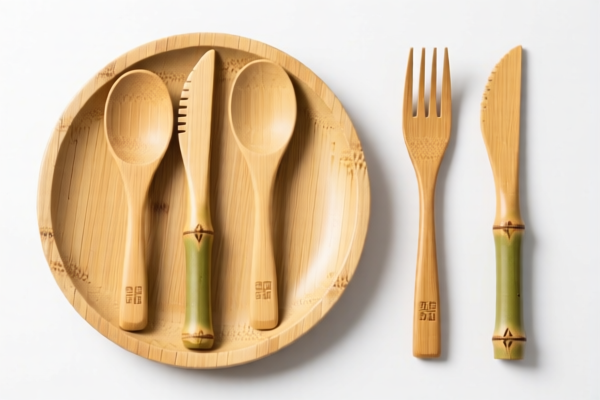
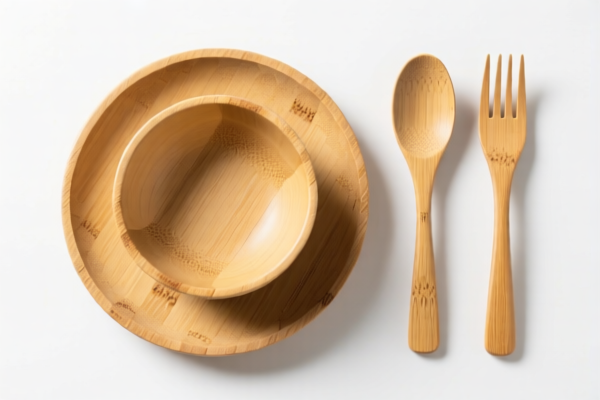
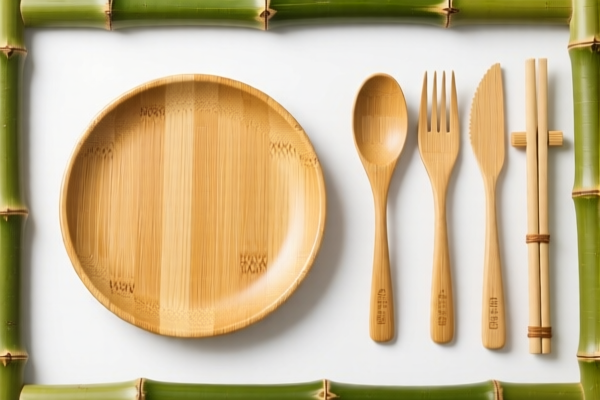
AI分析
🎋 Bamboo Disposable Plates (Biodegradable)
🌐 HS Code Reference & Customs Clearance Guide | 2026 Latest Tariff Analysis | Professional Level Strategy
📌 I. Product Definition & Classification: Do You Really Know "Bamboo Plates"?
Bamboo disposable plates are eco-friendly tableware made from bamboo pulp or processed bamboo fibers. In international trade, they fall under Chapter 48 (Paper/Paperboard) or Chapter 46 (Basketwork/Wickerwork), depending on the manufacturing process and structural integrity.
Key Distinction Logic: * Paper/Paperboard Classification (HS 4823.61): If the product is made from bamboo pulp or fibers compressed into a flat shape (like traditional paper plates but made of bamboo material), it is classified as "Paper/Paperboard articles". * Wicker/Basketwork Classification (HS 4602.11): If the product is made by weaving, plaiting, or pressing solid bamboo strips/splints directly into a basket-like shape (holding its form through structure rather than pulp binding), it is classified as "Basketwork/Wickerwork".
⚠️ Critical Distinction Point:
- If it feels like a rigid, molded fiber plate (smooth surface, pulp texture) → HS 4823.61
- If it has woven texture, visible bamboo strands, or basket-weave structure → HS 4602.11
📦 II. HS Code Classification Details (2026 Latest Tariff Authority Cross-Reference)
| HS Code | Product Description | Application Scenario | Material/Process |
|---|---|---|---|
4823.61.00.20 |
Trays, dishes, plates, cups... of paper/paperboard: Of bamboo: Cups and round nested food containers | Round, molded bamboo fiber plates/cups; nested stackable designs | ✅ Bamboo Fiber/Pulp |
4823.61.00.40 |
Trays, dishes, plates, cups... of paper/paperboard: Of bamboo: Other | Square/rectangular bamboo fiber plates; non-nested; flat sheets cut to size | ✅ Bamboo Fiber/Pulp |
4602.11.07.00 |
Basketwork, wickerwork... of vegetable materials: Of bamboo: Other baskets/bags: Wickerwork | Woven bamboo strips; basket-weave pattern; structural integrity from weaving | ✅ Bamboo Strips/Splints |
4602.11.09.00 |
Basketwork, wickerwork... of vegetable materials: Of bamboo: Other baskets/bags: Other | Other bamboo woven articles not fitting "wickerwork" definition; mixed materials | ✅ Bamboo Strips/Splints |
🔍 Key Reminder:
- "Of Bamboo" is the critical sub-heading for both Chapter 48 and 46 in this context.
- Molded Pulp Plates (common for disposable eco-tableware) usually fall under 4823.61, not 4602, unless they are explicitly woven baskets.
- Woven Plates (rare for disposable food, more for storage/baskets) fall under 4602.
💰 III. 2026 Latest Tariff Rate Breakdown (Including Additional Taxes, Policy Surcharges)
✅ Applicable Country: United States (US)
✅ Country of Origin: China (CN)
✅ Effective Date: November 10, 2025 onwards (including subsequent imports)
🎯 1. 4823.61.00.20 —— Bamboo Cups and Round Nested Food Containers (Molded Fiber)
| Item | Content |
|---|---|
| Base Tariff Rate | 0% (Ad Valorem) |
| USITC Additional Tax | 0% (No Section 301 or IEEPA surcharge for this specific subheading) |
| IEEPA Additional Tax | 0% (Not targeted under current IEEPA orders for this code) |
| Total Tax Rate | 0% |
| Tax Calculation | CIF Value × 0% |
| De Minimis Eligibility | ✅ Yes (If value <$800, may qualify for Section 321 exemption, but check specific carrier rules) |
| Legal Basis Path | USITC:4823.61.00.20 → No Footnote Surcharge |
📌 Interpretation:
- This is a highly favorable code for US importers.
- Despite the general "25% Section 301" tariff on many Chinese goods, specific subheadings under 4823.61.00.20 are excluded from the 25% surcharge.
- No IEEPA 10% penalty either.
- Total landed cost impact from tariff: $0.
🎯 2. 4823.61.00.40 —— Other Bamboo Paper/Paperboard Articles (Non-Nested/Non-Round)
| Item | Content |
|---|---|
| Base Tariff Rate | 0% |
| USITC Additional Tax | +25% (Section 301 Tariff) |
| IEEPA Additional Tax | 0% (Not targeted under IEEPA for this specific code) |
| Total Tax Rate | 25.0% |
| Tax Calculation | CIF Value × 25% |
| De Minimis Eligibility | ❌ No (Denied de minimis for Section 301 goods) |
| Legal Basis Path | IEEPA:9903.01.24 (if applicable) → USITC:4823.61.00.40 → FOOTNOTE:9903.88.01 (301 Footnote) |
📌 Interpretation:
- This code is subject to the 25% Section 301 tariff.
- It is not subject to the additional 10% IEEPA tariff, but the 25% base surcharge is significant.
- Total: 25%. Must declare as subject to Section 301; no de minimis exemption.
🎯 3. 4602.11.07.00 —— Wickerwork Baskets (Bamboo Woven)
| Item | Content |
|---|---|
| Base Tariff Rate | 0% |
| USITC Additional Tax | +25% (Section 301 Tariff) |
| IEEPA Additional Tax | 0% |
| Total Tax Rate | 25.0% |
| Tax Calculation | CIF Value × 25% |
| De Minimis Eligibility | ❌ No |
| Legal Basis Path | USITC:4602.11.07.00 → FOOTNOTE:9903.88.01 |
📌 Interpretation:
- Same as 4823.61.00.40: 25% Section 301 tariff.
- No IEEPA surcharge, but 25% is still substantial.
🎯 4. 4602.11.09.00 —— Other Basketwork Articles (Bamboo Woven)
| Item | Content |
|---|---|
| Base Tariff Rate | 10% |
| USITC Additional Tax | +25% (Section 301 Tariff) |
| IEEPA Additional Tax | 0% |
| Total Tax Rate | 35.0% |
| Tax Calculation | CIF Value × 35% |
| De Minimis Eligibility | ❌ No |
| Legal Basis Path | USITC:4602.11.09.00 → FOOTNOTE:9903.88.01 |
📌 Interpretation:
- This is the most expensive category.
- Base tariff is 10%, plus 25% Section 301 surcharge.
- Total: 35%. High cost, requires careful margin analysis.
🛠️ IV. Customs Clearance Practical Advice (Real-World Pitfall Guide)
✅ 1. Required Documentation Checklist (Non-negotiable)
| Document | Must Provide | Notes |
|---|---|---|
| ✅ Product Spec Sheet | ✔️ | Must specify: Material (Bamboo Pulp vs. Bamboo Strips), Processing Method (Molded vs. Woven), Dimensions |
| ✅ Material Composition Statement | ✔️ | Explicitly state: "100% Bamboo Fiber Pulp" or "Woven Bamboo Splints" |
| ✅ Product Photos | ✔️ | Clear shots showing texture (pulp vs. weave), shape (nested vs. flat), and packaging |
| ✅ Bill of Lading / Commercial Invoice | ✔️ | Must match HS Code description exactly |
| ✅ Country of Origin Certificate | ✔️ | Required for Section 301 determination |
| ✅ FDA Compliance Letter (if applicable) | ✔️ | For food-contact items, ensure FDA compliance for bamboo-based tableware |
✅ 2. Declaration Tips (Key Mantras)
🔥 "Pulp is 4823, Weave is 4602. Round Nest is 0%, Other is 25%!"
| Scenario | Correct HS Code | Wrong Approach |
|---|---|---|
| Round, molded bamboo fiber plate | 4823.61.00.20 |
Misdeclare as 4823.61.00.40 → Pay 25% unnecessarily |
| Square, flat bamboo fiber plate | 4823.61.00.40 |
Misdeclare as 4602.11.09.00 → Pay 35% unnecessarily |
| Woven bamboo basket-like plate | 4602.11.07.00 or 09 |
Misdeclare as paper plate → Risk of fraud penalty |
| Mix of nested and non-nested | Split Declaration | Mix codes → Customs seizure |
✅ 3. Special Circumstances Handling
| Situation | Handling Advice |
|---|---|
| Biodegradable Certification | Provide ASTM D6400 or EN 13432 certificates. Not directly affecting HS, but may help with FDA/customs scrutiny |
| Mixed Packaging | If bamboo plates are packed with plastic cutlery, declare separately. Plastic cutlery may have different HS codes and tariffs |
| OEM Custom Shapes | Ensure description matches the "Of Bamboo" subheading precisely. Use technical terms like "Molded Bamboo Fiber Pulp" |
| Small Sample Shipments | Even samples are subject to Section 301 if value >$800 and code is not exempt. Use 4823.61.00.20 for sample efficiency |
🌍 V. Global Market Customs Comparison (2026 Latest)
| Country/Region | Recommended HS Code | Tariff Rate (China Origin) | Certification Required | Notes |
|---|---|---|---|---|
| 🇺🇸 USA | 4823.61.00.20 |
0% | FDA (if food contact) | Best option for US |
| 🇨🇳 China | 4823.61.00.20 |
5% (Import) | None | No additional tariffs |
| 🇪🇺 EU | 4823.61 |
4% | CE (if applicable), Ecolabel | No Section 301 equivalent |
| 🇬🇧 UK | 4823.61 |
4% | UKCA | Post-Brexit rules apply |
| 🇦🇺 Australia | 4823.61 |
5% | None | No major surcharges |
📌 Conclusion:
- The US is the only major market with significant tariffs, but4823.61.00.20is exempt from the 25% Section 301 tariff.
- Product design (Round/Nested) is the key to saving 25% in the US.
- Woven products (4602) are taxed at 25-35% in the US, making them less competitive against pulp-molded plates.
📌 VI. Common Mistakes & Pitfalls (Lessons Learned)
❌ Mistake 1: Calling all bamboo plates "Paper Plates" and using 4823.69
👉 Consequence: Wrong HS code → Delayed clearance + Potential penalty. Must use 4823.61 for Of Bamboo.
❌ Mistake 2: Declaring round nested plates as 4823.61.00.40 (Other)
👉 Consequence: Paying 25% tax instead of 0%. $25,000 extra tax on $100k shipment!
❌ Mistake 3: Misidentifying woven bamboo as "molded pulp"
👉 Consequence: If actually woven, it should be 4602 (25-35% tax), not 4823 (0-25% tax). Customs may reclassify and charge back-taxes + interest.
❌ Mistake 4: Ignoring "De Minimis" for low-value shipments
👉 Consequence: If value >$800 and code is 4823.61.00.40, you cannot use de minimis exemption. Must file formal entry.
✅ Correct Practice:
"Round, Nested, Molded Bamboo Fiber Disposable Plates, Biodegradable, 100% Bamboo Pulp, ASTM D6400 Certified, Model XYZ"
🎯 VII. Conclusion: Smart Classification, Maximize Profit!
🎯 Remember the Mantra:
🔹 "Round & Nested = 0% (USA)! Square & Flat = 25% (USA)! Woven = 25-35% (USA)!"
🔹 "HS Code is King. One digit difference saves 25%!"
🔹 "Design for Duty: Make them round and nestable to save taxes in the US!"
📌 Pro Tip:
If your business sells heavily to the US, prioritize manufacturing round, nested bamboo fiber plates. This simple design change moves your product from a 25% tariff bracket to a 0% tariff bracket, giving you a 25% cost advantage over competitors using flat/woven designs.
🚀 Action Item:
- ✅ Review your product designs: Can they be made round and nested?
- ✅ Confirm material: Is it pulp/molded (4823) or woven (4602)?
- ✅ Declare accurately: Use4823.61.00.20for eligible products.
- ✅ Save 25% on US imports instantly!
✨ Professional Clearance Starts with Accurate Classification!
💼 Your Every Penny Counts. Optimize Your HS Code, Maximize Your Margin!
用户评价
关于 HS 编码归类
协调制度(HS)是由世界海关组织(WCO)制定的国际贸易商品分类标准。全球 200 多个国家采用 HS 系统作为海关关税、贸易统计和进出口监管的基础。
每个 HS 编码遵循以下层级结构:
- 章(2 位)——商品大类(例如:第 84 章:机器和机械设备)
- 品目(4 位)——章内的更具体分类
- 子目(6 位)——国际通用细分,所有 WCO 成员国统一使用
- 本国细分(8-10 位)——各国自行扩展的细分编码,如美国 HTSUS 10 位编码
正确的 HS 编码归类对于顺利通关、准确缴纳关税和遵守贸易法规至关重要。错误归类可能导致海关延误、多缴关税或罚款。
从CN进口到US时,适用的关税税率可能包括:
- 最惠国(MFN)税率——适用于 WTO 成员国的标准关税税率
- 普通税率——适用于无贸易协定国家
- 贸易救济关税——附加关税,如 301 条款(反倾销)、232 条款(国家安全)或反补贴税
本页内容仅供参考。如需正式归类,请咨询当地海关或持牌报关代理。