Bamboo Disposable Plate (Biodegradable)
CN → US| HS Code | Tariff Rate | Origin | Destination | Doc |
|---|---|---|---|---|
| 4602110900 | 45.0% | CN | US | Official Doc |
| 4602110700 | 35.0% | CN | US | Official Doc |
| 4823610040 | 35.0% | CN | US | Official Doc |
| 4823610020 | 35.0% | CN | US | Official Doc |
Product Images
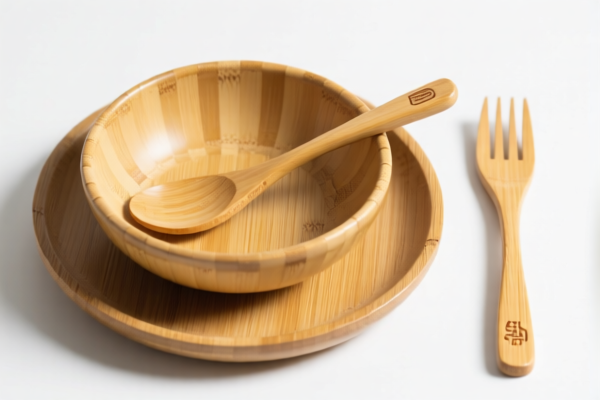
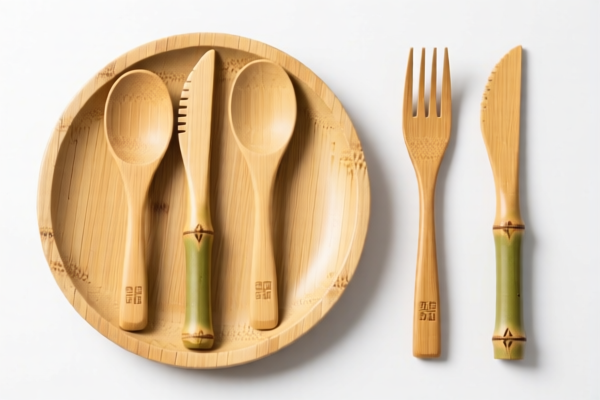
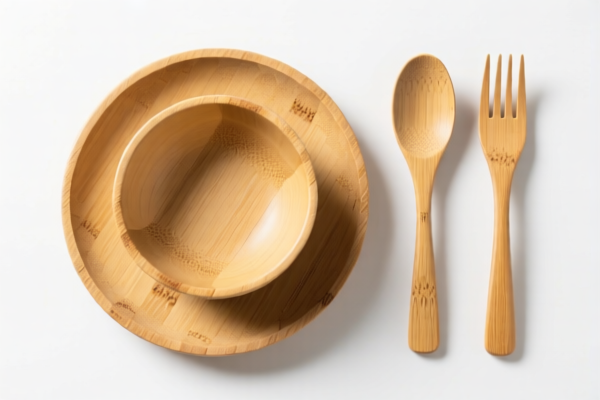
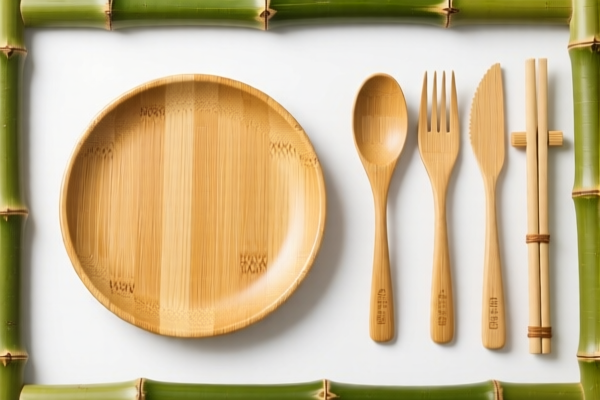
AI Analysis
🎋 Bamboo Disposable Plates (Biodegradable)
🌐 HS Code Reference & Customs Clearance Guide | 2026 Latest Tariff Analysis | Professional Level Strategy
📌 I. Product Definition & Classification: Do You Really Know "Bamboo Plates"?
Bamboo disposable plates are eco-friendly tableware made from bamboo pulp or processed bamboo fibers. In international trade, they fall under Chapter 48 (Paper/Paperboard) or Chapter 46 (Basketwork/Wickerwork), depending on the manufacturing process and structural integrity.
Key Distinction Logic: * Paper/Paperboard Classification (HS 4823.61): If the product is made from bamboo pulp or fibers compressed into a flat shape (like traditional paper plates but made of bamboo material), it is classified as "Paper/Paperboard articles". * Wicker/Basketwork Classification (HS 4602.11): If the product is made by weaving, plaiting, or pressing solid bamboo strips/splints directly into a basket-like shape (holding its form through structure rather than pulp binding), it is classified as "Basketwork/Wickerwork".
⚠️ Critical Distinction Point:
- If it feels like a rigid, molded fiber plate (smooth surface, pulp texture) → HS 4823.61
- If it has woven texture, visible bamboo strands, or basket-weave structure → HS 4602.11
📦 II. HS Code Classification Details (2026 Latest Tariff Authority Cross-Reference)
| HS Code | Product Description | Application Scenario | Material/Process |
|---|---|---|---|
4823.61.00.20 |
Trays, dishes, plates, cups... of paper/paperboard: Of bamboo: Cups and round nested food containers | Round, molded bamboo fiber plates/cups; nested stackable designs | ✅ Bamboo Fiber/Pulp |
4823.61.00.40 |
Trays, dishes, plates, cups... of paper/paperboard: Of bamboo: Other | Square/rectangular bamboo fiber plates; non-nested; flat sheets cut to size | ✅ Bamboo Fiber/Pulp |
4602.11.07.00 |
Basketwork, wickerwork... of vegetable materials: Of bamboo: Other baskets/bags: Wickerwork | Woven bamboo strips; basket-weave pattern; structural integrity from weaving | ✅ Bamboo Strips/Splints |
4602.11.09.00 |
Basketwork, wickerwork... of vegetable materials: Of bamboo: Other baskets/bags: Other | Other bamboo woven articles not fitting "wickerwork" definition; mixed materials | ✅ Bamboo Strips/Splints |
🔍 Key Reminder:
- "Of Bamboo" is the critical sub-heading for both Chapter 48 and 46 in this context.
- Molded Pulp Plates (common for disposable eco-tableware) usually fall under 4823.61, not 4602, unless they are explicitly woven baskets.
- Woven Plates (rare for disposable food, more for storage/baskets) fall under 4602.
💰 III. 2026 Latest Tariff Rate Breakdown (Including Additional Taxes, Policy Surcharges)
✅ Applicable Country: United States (US)
✅ Country of Origin: China (CN)
✅ Effective Date: November 10, 2025 onwards (including subsequent imports)
🎯 1. 4823.61.00.20 —— Bamboo Cups and Round Nested Food Containers (Molded Fiber)
| Item | Content |
|---|---|
| Base Tariff Rate | 0% (Ad Valorem) |
| USITC Additional Tax | 0% (No Section 301 or IEEPA surcharge for this specific subheading) |
| IEEPA Additional Tax | 0% (Not targeted under current IEEPA orders for this code) |
| Total Tax Rate | 0% |
| Tax Calculation | CIF Value × 0% |
| De Minimis Eligibility | ✅ Yes (If value <$800, may qualify for Section 321 exemption, but check specific carrier rules) |
| Legal Basis Path | USITC:4823.61.00.20 → No Footnote Surcharge |
📌 Interpretation:
- This is a highly favorable code for US importers.
- Despite the general "25% Section 301" tariff on many Chinese goods, specific subheadings under 4823.61.00.20 are excluded from the 25% surcharge.
- No IEEPA 10% penalty either.
- Total landed cost impact from tariff: $0.
🎯 2. 4823.61.00.40 —— Other Bamboo Paper/Paperboard Articles (Non-Nested/Non-Round)
| Item | Content |
|---|---|
| Base Tariff Rate | 0% |
| USITC Additional Tax | +25% (Section 301 Tariff) |
| IEEPA Additional Tax | 0% (Not targeted under IEEPA for this specific code) |
| Total Tax Rate | 25.0% |
| Tax Calculation | CIF Value × 25% |
| De Minimis Eligibility | ❌ No (Denied de minimis for Section 301 goods) |
| Legal Basis Path | IEEPA:9903.01.24 (if applicable) → USITC:4823.61.00.40 → FOOTNOTE:9903.88.01 (301 Footnote) |
📌 Interpretation:
- This code is subject to the 25% Section 301 tariff.
- It is not subject to the additional 10% IEEPA tariff, but the 25% base surcharge is significant.
- Total: 25%. Must declare as subject to Section 301; no de minimis exemption.
🎯 3. 4602.11.07.00 —— Wickerwork Baskets (Bamboo Woven)
| Item | Content |
|---|---|
| Base Tariff Rate | 0% |
| USITC Additional Tax | +25% (Section 301 Tariff) |
| IEEPA Additional Tax | 0% |
| Total Tax Rate | 25.0% |
| Tax Calculation | CIF Value × 25% |
| De Minimis Eligibility | ❌ No |
| Legal Basis Path | USITC:4602.11.07.00 → FOOTNOTE:9903.88.01 |
📌 Interpretation:
- Same as 4823.61.00.40: 25% Section 301 tariff.
- No IEEPA surcharge, but 25% is still substantial.
🎯 4. 4602.11.09.00 —— Other Basketwork Articles (Bamboo Woven)
| Item | Content |
|---|---|
| Base Tariff Rate | 10% |
| USITC Additional Tax | +25% (Section 301 Tariff) |
| IEEPA Additional Tax | 0% |
| Total Tax Rate | 35.0% |
| Tax Calculation | CIF Value × 35% |
| De Minimis Eligibility | ❌ No |
| Legal Basis Path | USITC:4602.11.09.00 → FOOTNOTE:9903.88.01 |
📌 Interpretation:
- This is the most expensive category.
- Base tariff is 10%, plus 25% Section 301 surcharge.
- Total: 35%. High cost, requires careful margin analysis.
🛠️ IV. Customs Clearance Practical Advice (Real-World Pitfall Guide)
✅ 1. Required Documentation Checklist (Non-negotiable)
| Document | Must Provide | Notes |
|---|---|---|
| ✅ Product Spec Sheet | ✔️ | Must specify: Material (Bamboo Pulp vs. Bamboo Strips), Processing Method (Molded vs. Woven), Dimensions |
| ✅ Material Composition Statement | ✔️ | Explicitly state: "100% Bamboo Fiber Pulp" or "Woven Bamboo Splints" |
| ✅ Product Photos | ✔️ | Clear shots showing texture (pulp vs. weave), shape (nested vs. flat), and packaging |
| ✅ Bill of Lading / Commercial Invoice | ✔️ | Must match HS Code description exactly |
| ✅ Country of Origin Certificate | ✔️ | Required for Section 301 determination |
| ✅ FDA Compliance Letter (if applicable) | ✔️ | For food-contact items, ensure FDA compliance for bamboo-based tableware |
✅ 2. Declaration Tips (Key Mantras)
🔥 "Pulp is 4823, Weave is 4602. Round Nest is 0%, Other is 25%!"
| Scenario | Correct HS Code | Wrong Approach |
|---|---|---|
| Round, molded bamboo fiber plate | 4823.61.00.20 |
Misdeclare as 4823.61.00.40 → Pay 25% unnecessarily |
| Square, flat bamboo fiber plate | 4823.61.00.40 |
Misdeclare as 4602.11.09.00 → Pay 35% unnecessarily |
| Woven bamboo basket-like plate | 4602.11.07.00 or 09 |
Misdeclare as paper plate → Risk of fraud penalty |
| Mix of nested and non-nested | Split Declaration | Mix codes → Customs seizure |
✅ 3. Special Circumstances Handling
| Situation | Handling Advice |
|---|---|
| Biodegradable Certification | Provide ASTM D6400 or EN 13432 certificates. Not directly affecting HS, but may help with FDA/customs scrutiny |
| Mixed Packaging | If bamboo plates are packed with plastic cutlery, declare separately. Plastic cutlery may have different HS codes and tariffs |
| OEM Custom Shapes | Ensure description matches the "Of Bamboo" subheading precisely. Use technical terms like "Molded Bamboo Fiber Pulp" |
| Small Sample Shipments | Even samples are subject to Section 301 if value >$800 and code is not exempt. Use 4823.61.00.20 for sample efficiency |
🌍 V. Global Market Customs Comparison (2026 Latest)
| Country/Region | Recommended HS Code | Tariff Rate (China Origin) | Certification Required | Notes |
|---|---|---|---|---|
| 🇺🇸 USA | 4823.61.00.20 |
0% | FDA (if food contact) | Best option for US |
| 🇨🇳 China | 4823.61.00.20 |
5% (Import) | None | No additional tariffs |
| 🇪🇺 EU | 4823.61 |
4% | CE (if applicable), Ecolabel | No Section 301 equivalent |
| 🇬🇧 UK | 4823.61 |
4% | UKCA | Post-Brexit rules apply |
| 🇦🇺 Australia | 4823.61 |
5% | None | No major surcharges |
📌 Conclusion:
- The US is the only major market with significant tariffs, but4823.61.00.20is exempt from the 25% Section 301 tariff.
- Product design (Round/Nested) is the key to saving 25% in the US.
- Woven products (4602) are taxed at 25-35% in the US, making them less competitive against pulp-molded plates.
📌 VI. Common Mistakes & Pitfalls (Lessons Learned)
❌ Mistake 1: Calling all bamboo plates "Paper Plates" and using 4823.69
👉 Consequence: Wrong HS code → Delayed clearance + Potential penalty. Must use 4823.61 for Of Bamboo.
❌ Mistake 2: Declaring round nested plates as 4823.61.00.40 (Other)
👉 Consequence: Paying 25% tax instead of 0%. $25,000 extra tax on $100k shipment!
❌ Mistake 3: Misidentifying woven bamboo as "molded pulp"
👉 Consequence: If actually woven, it should be 4602 (25-35% tax), not 4823 (0-25% tax). Customs may reclassify and charge back-taxes + interest.
❌ Mistake 4: Ignoring "De Minimis" for low-value shipments
👉 Consequence: If value >$800 and code is 4823.61.00.40, you cannot use de minimis exemption. Must file formal entry.
✅ Correct Practice:
"Round, Nested, Molded Bamboo Fiber Disposable Plates, Biodegradable, 100% Bamboo Pulp, ASTM D6400 Certified, Model XYZ"
🎯 VII. Conclusion: Smart Classification, Maximize Profit!
🎯 Remember the Mantra:
🔹 "Round & Nested = 0% (USA)! Square & Flat = 25% (USA)! Woven = 25-35% (USA)!"
🔹 "HS Code is King. One digit difference saves 25%!"
🔹 "Design for Duty: Make them round and nestable to save taxes in the US!"
📌 Pro Tip:
If your business sells heavily to the US, prioritize manufacturing round, nested bamboo fiber plates. This simple design change moves your product from a 25% tariff bracket to a 0% tariff bracket, giving you a 25% cost advantage over competitors using flat/woven designs.
🚀 Action Item:
- ✅ Review your product designs: Can they be made round and nested?
- ✅ Confirm material: Is it pulp/molded (4823) or woven (4602)?
- ✅ Declare accurately: Use4823.61.00.20for eligible products.
- ✅ Save 25% on US imports instantly!
✨ Professional Clearance Starts with Accurate Classification!
💼 Your Every Penny Counts. Optimize Your HS Code, Maximize Your Margin!
Customer Reviews
About HS Code Classification
The Harmonized System (HS) is an internationally standardized nomenclature developed by the World Customs Organization (WCO) to classify traded products. Over 200 countries use the HS system as the basis for customs tariffs, trade statistics, and import/export regulations.
Each HS code follows a hierarchical structure:
- Chapter (2 digits) — Broad category of goods (e.g., Chapter 84: Machinery and Mechanical Appliances)
- Heading (4 digits) — More specific grouping within the chapter
- Subheading (6 digits) — Internationally standardized breakdown, used by all WCO member countries
- National subdivisions (8-10 digits) — Country-specific extensions for further classification, such as US HTSUS 10-digit codes
Correct HS code classification is essential for smooth customs clearance, accurate duty payment, and compliance with trade regulations. Misclassification can lead to customs delays, overpayment of duties, or penalties.
When importing from CN to US, the applicable tariff rates may include:
- Most-Favored-Nation (MFN) rate — The standard duty rate applied to WTO members
- General rate — Applied to countries without trade agreements
- Trade remedy duties — Additional tariffs such as Section 301 (anti-dumping), Section 232 (national security), or countervailing duties
The information provided on this page is for reference purposes only. For official classification, please consult with your local customs authority or a licensed customs broker.