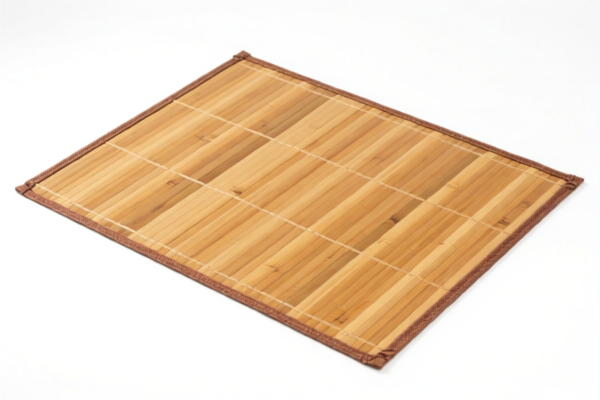
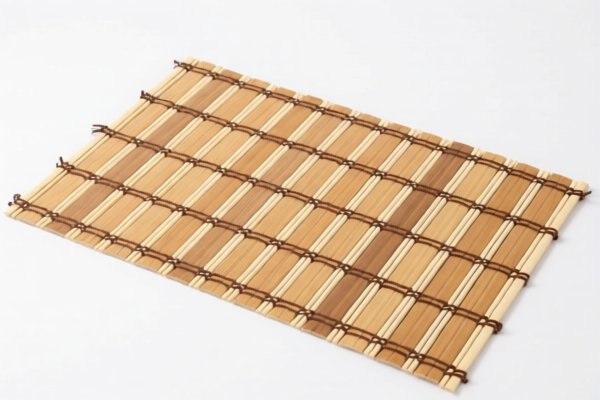
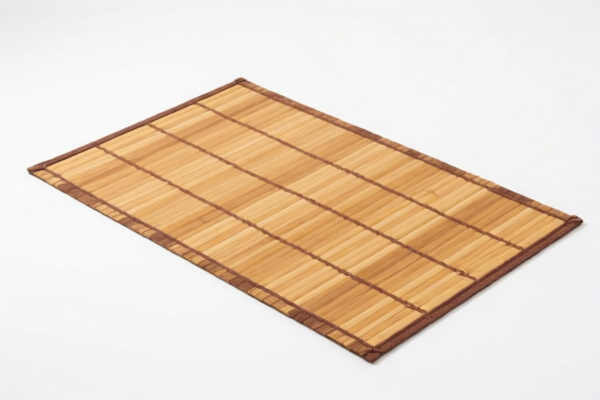
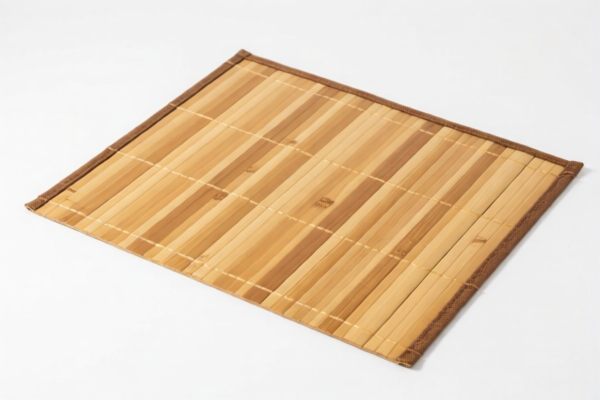
Bamboo Floor Mat with Reinforced Edges
CN → US| HS编码 | 关税税率 | 原产国 | 目的国 | 文档 |
|---|---|---|---|---|
| 5705002090 | 38.3% | CN | US | 官方文档 |
| 4421919880 | 38.3% | CN | US | 官方文档 |
| 4421999880 | 38.3% | CN | US | 官方文档 |
| 4602114500 | 41.6% | CN | US | 官方文档 |
| 4602110700 | 35.0% | CN | US | 官方文档 |
商品图片
AI分析
🎋 Bamboo Floor Mat with Reinforced Edges (Bamboo Floor Coverings)
🌐 HS Code Reference & Clearance Guide | 2026 Latest Tariff Analysis | Professional Customs Strategy
📌 I. Product Definition & Classification: What Exactly Is This "Bamboo Floor Mat"?
A Bamboo Floor Mat with Reinforced Edges is a textile-like floor covering made primarily from processed bamboo fibers or strips, woven or laminated into a mat format, often featuring strengthened borders to prevent fraying. In international trade, the classification hinges on two key factors: 1. Material Composition: Is it treated as a "Textile/Fiber" product or a "Wood/Bamboo" product? 2. Form & Function: Is it categorized under floor coverings (carpet/rug) or as a general bamboo craft/item?
⚠️ Key Distinction:
- If the product is dominated by textile/fiber processes and resembles a rug/mat → It may fall under Chapter 57 (Textile Floor Coverings).
- If the product is primarily woven bamboo strips (hard goods) → It falls under Chapter 44 (Wood/Bamboo Articles) or Chapter 46 (Basketry/Wickerwork).
📦 II. HS Code Classification Details (Based on Provided Data)
Below are the 5 potential HS Codes derived from the provided data, ranked by logical fit and tax implication.
| HS Code | Product Description | Classification Logic | Total Tax Rate |
|---|---|---|---|
| 5705.00.20.90 | Textile Floor Coverings: Other, of textile materials | Best Fit for "Mat" Form: Classified as a textile/fiber-based floor covering. The "mat" shape aligns with Chapter 57 definitions for floor coverings that are not carpets. | 38.3% |
| 4421.91.98.80 | Other Wood/Bamboo Articles: Bamboo Articles | Material Fit: Bamboo is treated as wood. This is a "other" category for bamboo items not specified elsewhere. No material conflict. | 38.3% |
| 4421.99.98.80 | Other Wood/Bamboo Articles: Other | Catch-All for Bamboo: Generic bamboo mat classification under "other wood products." Used when no specific bamboo mat code exists. | 38.3% |
| 4602.11.45.00 | Basketry & Wickerwork: Articles of bamboo | Craft Fit: If the mat is tightly woven like a basket/wicker, it falls here. "Reinforced edges" suggest a structured, craft-like finish. | 41.6% |
| 4602.11.07.00 | Basketry & Wickerwork: Other articles of bamboo | Alternative Craft Classification: Similar to above, but a different sub-category for bamboo wicker items. | 35.0% |
🔍 Critical Analysis:
- Chapter 57 (5705.00.20.90) is the strongest match if the product is marketed as a "floor mat" with textile-like properties.
- Chapter 44 (4421.xxxx) is the strongest match if the product is rigid or semi-rigid bamboo planks/strips.
- Chapter 46 (4602.xxxx) applies if the product is clearly woven wicker/basketry style.
💰 III. 2026 Tariff Rate Breakdown (USA Import from China)
✅ Applicable Country: United States (US)
✅ Origin: China (CN)
✅ Effective Date: Includes subsequent imports (as per data context)
🎯 1. HS Code: 5705.00.20.90 (Textile Floor Covering) & 4421.91.98.80 / 4421.99.98.80 (Bamboo Articles)
| Item | Details |
|---|---|
| Base Tariff | 3.3% |
| Section 301 Tariff | 25.0% (Add-on tariff on Chinese goods) |
| Section 122 Tariff | 10.0% (Specific tariff clause mentioned in data) |
| Total Effective Rate | 38.3% |
| Calculation | CIF Value × 38.3% |
| De Minimis Exemption | ❌ Not Eligible (Section 301 tariffs generally override de minimis for most goods) |
| Legal Basis | Section 301 (USTR List 3/4) + Section 122 (if applicable) |
📌 Explanation:
- The 38.3% rate is high and consistent across the first three HS codes. This reflects the aggressive US trade policy on Chinese manufactured goods, including home decor and bamboo products.
- Section 122 is a less common tariff authority (often related to national security or specific trade remedies), but it is explicitly listed in the source data.
🎯 2. HS Code: 4602.11.45.00 (Basketry/Wickerwork)
| Item | Details |
|---|---|
| Base Tariff | 6.6% |
| Section 301 Tariff | 25.0% |
| Section 122 Tariff | 10.0% |
| Total Effective Rate | 41.6% |
| Calculation | CIF Value × 41.6% |
| De Minimis Exemption | ❌ Not Eligible |
📌 Explanation:
- This code has the highest total tax rate (41.6%) due to a higher base tariff (6.6% vs 3.3%).
- Avoid this classification if possible, unless the product is undeniably a woven wicker item.
🎯 3. HS Code: 4602.11.07.00 (Other Bamboo Basketry)
| Item | Details |
|---|---|
| Base Tariff | 0.0% |
| Section 301 Tariff | 25.0% |
| Section 122 Tariff | 10.0% |
| Total Effective Rate | 35.0% |
| Calculation | CIF Value × 35.0% |
| De Minimis Exemption | ❌ Not Eligible |
📌 Explanation:
- This is the lowest total tax rate (35.0%) among all options.
- However, it requires the product to be classified as "basketry/wickerwork" under Chapter 46. If customs officers perceive the "reinforced edges" as a textile feature, they may reject this classification.
🛠️ IV. Customs Clearance Practical Advice (Pro Tips)
✅ 1. Documentation Checklist (Must-Have)
| Document | Required? | Notes |
|---|---|---|
| Product Description | ✔️ | Must specify "Bamboo," "Floor Mat," "Reinforced Edges," and material composition (e.g., "100% Bamboo Fiber" vs "Bamboo Strips"). |
| HS Code Justification | ✔️ | Provide a rationale for choosing Chapter 57 vs. Chapter 44/46. |
| Commercial Invoice | ✔️ | Must list item name, HS Code, Country of Origin (China), and CIF value. |
| Packing List | ✔️ | Include dimensions, weight, and number of pieces. |
| Photo of Product | ✔️ | Show the mat, the reinforced edges, and any labels. |
| Certificate of Origin | ✔️ | Required for determining applicability of Section 301/122 tariffs. |
✅ 2. Classification Strategy (How to Choose)
| Scenario | Recommended HS Code | Reason |
|---|---|---|
| Soft, Flexible Mat (Textile-like) | 5705.00.20.90 |
Best aligns with "Floor Covering" definition. Tax: 38.3%. |
| Rigid/Semi-Rigid Bamboo Strips | 4421.91.98.80 |
Best aligns with "Bamboo Article" definition. Tax: 38.3%. |
| Woven Wicker-Style Mat | 4602.11.07.00 |
Lowest tax (35.0%) but riskiest classification. Only use if clearly woven wicker. |
🔥 Key Tip:
- If the product is flexible and mats-like, use 5705.00.20.90.
- If the product is woven like a basket, try 4602.11.07.00 to save 3.3% (35.0% vs 38.3%).
- Do NOT use 4602.11.45.00 unless necessary, as it has the highest tax rate (41.6%).
✅ 3. Customs Clearance Pitfalls
| Pitfall | Consequence | Solution |
|---|---|---|
| Misclassifying as "Carpet" | Higher tax or rejection | Ensure description says "Mat" or "Floor Covering," not "Carpet." |
| Ignoring Section 122 | Unexpected tax bill | Always include the 10% Section 122 tariff in cost calculations. |
| Incorrect Material Declaration | Seizure or penalty | Clearly state "Bamboo" and "Reinforced Edges" to avoid being classified as generic "textile." |
| Failing to Provide Photos | Delay in clearance | Provide clear photos showing the material texture and edge construction. |
🌍 V. Global Market Comparison (2026)
| Market | Recommended HS Code | Est. Total Tax | Notes |
|---|---|---|---|
| 🇺🇸 USA | 5705.00.20.90 or 4602.11.07.00 |
35.0% - 38.3% | High tariffs due to Section 301/122. |
| 🇨🇳 China | 5705.00.20.90 |
~10-15% | Lower base tariffs, no Section 301. |
| 🇪🇺 EU | 5705.00.20.90 |
~5-8% | No Section 301/122. Standard EU duty. |
| 🇬🇧 UK | 5705.00.20.90 |
~5-8% | Post-Brexit duties. No Section 301/122. |
📌 Conclusion:
- The US market is the most expensive due to additional tariffs (Section 301 & 122).
- Cost optimization should focus on selecting the correct HS Code (e.g.,4602.11.07.00at 35.0% vs5705.00.20.90at 38.3%) if product characteristics allow.
📌 VI. Common Mistakes & Avoidance Guide
❌ Mistake 1: Using a generic HS Code like 6307.90 (Other Made-up Articles)
👉 Result: Incorrect classification, potential penalties.
✅ Fix: Always use specific Chapter 57, 44, or 46 codes.
❌ Mistake 2: Ignoring "Reinforced Edges" in description
👉 Result: Customs may classify as a simple bamboo mat, leading to disputes.
✅ Fix: Highlight "Reinforced Edges" to support "Mat" or "Wicker" classification.
❌ Mistake 3: Not accounting for Section 122 Tariff
👉 Result: Underquoting, unexpected tax bill at border.
✅ Fix: Always include the 10% Section 122 in your landed cost calculation.
🎯 VII. Final Recommendation
🎯 Best HS Code Choice:
- For Soft Mats: 5705.00.20.90 (38.3%) – Most accurate for "floor mat" functionality.
- For Woven Mats: 4602.11.07.00 (35.0%) – Lowest tax, if product is clearly woven wicker.
📌 Pro Tip:
"Choose Chapter 46 if woven, Chapter 57 if textile-like. Avoid Chapter 4602.11.45.00 due to high tax!"
📣 Action Item:
📞 Contact your customs broker with product photos and material specs.
📝 Request a Pre-Ruling if possible to confirm HS Code classification before shipment.
💰 Calculate Landed Cost including 35-41% tariff to ensure profitability.
✨ Smart Customs, Smarter Profits!
💼 Every percentage point of tax saved is pure profit.
用户评价
关于 HS 编码归类
协调制度(HS)是由世界海关组织(WCO)制定的国际贸易商品分类标准。全球 200 多个国家采用 HS 系统作为海关关税、贸易统计和进出口监管的基础。
每个 HS 编码遵循以下层级结构:
- 章(2 位)——商品大类(例如:第 84 章:机器和机械设备)
- 品目(4 位)——章内的更具体分类
- 子目(6 位)——国际通用细分,所有 WCO 成员国统一使用
- 本国细分(8-10 位)——各国自行扩展的细分编码,如美国 HTSUS 10 位编码
正确的 HS 编码归类对于顺利通关、准确缴纳关税和遵守贸易法规至关重要。错误归类可能导致海关延误、多缴关税或罚款。
从CN进口到US时,适用的关税税率可能包括:
- 最惠国(MFN)税率——适用于 WTO 成员国的标准关税税率
- 普通税率——适用于无贸易协定国家
- 贸易救济关税——附加关税,如 301 条款(反倾销)、232 条款(国家安全)或反补贴税
本页内容仅供参考。如需正式归类,请咨询当地海关或持牌报关代理。