Bamboo Floor Mat with Reinforced Edges
CN → US| HS Code | Tariff Rate | Origin | Destination | Doc |
|---|---|---|---|---|
| 5705002090 | 38.3% | CN | US | Official Doc |
| 4421919880 | 38.3% | CN | US | Official Doc |
| 4421999880 | 38.3% | CN | US | Official Doc |
| 4602114500 | 41.6% | CN | US | Official Doc |
| 4602110700 | 35.0% | CN | US | Official Doc |
Product Images
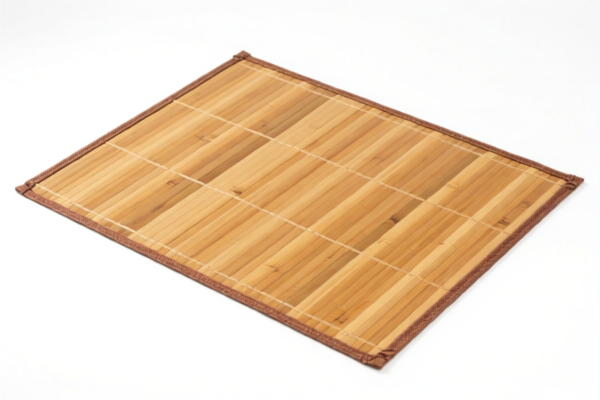
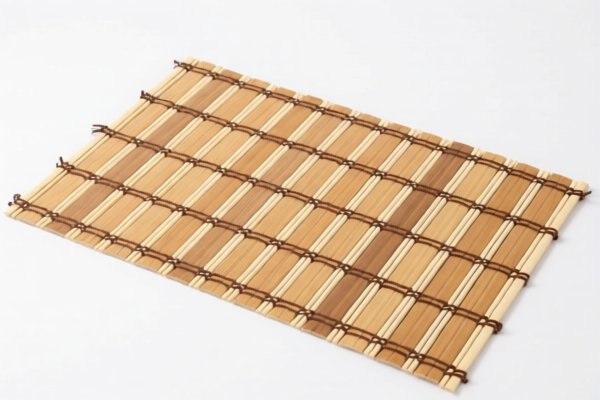
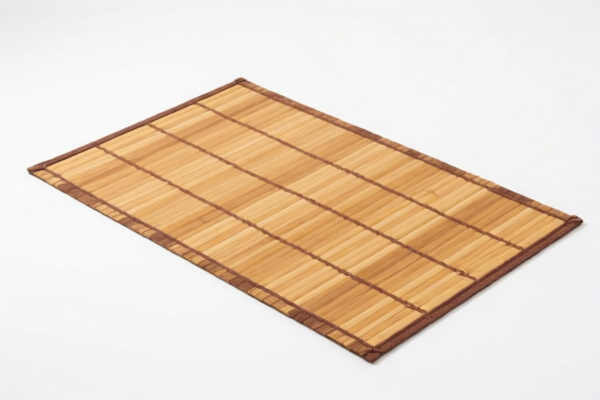
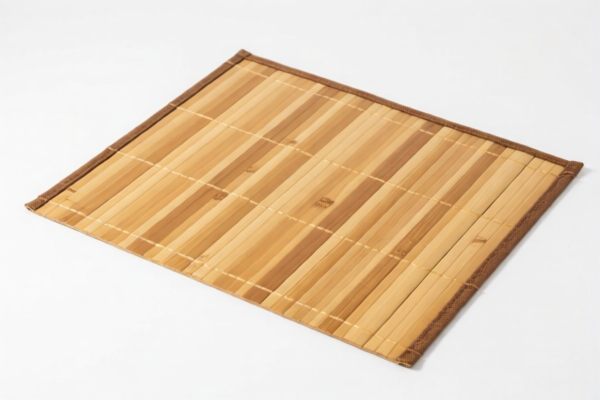
AI Analysis
🎋 Bamboo Floor Mat with Reinforced Edges (Bamboo Floor Coverings)
🌐 HS Code Reference & Clearance Guide | 2026 Latest Tariff Analysis | Professional Customs Strategy
📌 I. Product Definition & Classification: What Exactly Is This "Bamboo Floor Mat"?
A Bamboo Floor Mat with Reinforced Edges is a textile-like floor covering made primarily from processed bamboo fibers or strips, woven or laminated into a mat format, often featuring strengthened borders to prevent fraying. In international trade, the classification hinges on two key factors: 1. Material Composition: Is it treated as a "Textile/Fiber" product or a "Wood/Bamboo" product? 2. Form & Function: Is it categorized under floor coverings (carpet/rug) or as a general bamboo craft/item?
⚠️ Key Distinction:
- If the product is dominated by textile/fiber processes and resembles a rug/mat → It may fall under Chapter 57 (Textile Floor Coverings).
- If the product is primarily woven bamboo strips (hard goods) → It falls under Chapter 44 (Wood/Bamboo Articles) or Chapter 46 (Basketry/Wickerwork).
📦 II. HS Code Classification Details (Based on Provided Data)
Below are the 5 potential HS Codes derived from the provided data, ranked by logical fit and tax implication.
| HS Code | Product Description | Classification Logic | Total Tax Rate |
|---|---|---|---|
| 5705.00.20.90 | Textile Floor Coverings: Other, of textile materials | Best Fit for "Mat" Form: Classified as a textile/fiber-based floor covering. The "mat" shape aligns with Chapter 57 definitions for floor coverings that are not carpets. | 38.3% |
| 4421.91.98.80 | Other Wood/Bamboo Articles: Bamboo Articles | Material Fit: Bamboo is treated as wood. This is a "other" category for bamboo items not specified elsewhere. No material conflict. | 38.3% |
| 4421.99.98.80 | Other Wood/Bamboo Articles: Other | Catch-All for Bamboo: Generic bamboo mat classification under "other wood products." Used when no specific bamboo mat code exists. | 38.3% |
| 4602.11.45.00 | Basketry & Wickerwork: Articles of bamboo | Craft Fit: If the mat is tightly woven like a basket/wicker, it falls here. "Reinforced edges" suggest a structured, craft-like finish. | 41.6% |
| 4602.11.07.00 | Basketry & Wickerwork: Other articles of bamboo | Alternative Craft Classification: Similar to above, but a different sub-category for bamboo wicker items. | 35.0% |
🔍 Critical Analysis:
- Chapter 57 (5705.00.20.90) is the strongest match if the product is marketed as a "floor mat" with textile-like properties.
- Chapter 44 (4421.xxxx) is the strongest match if the product is rigid or semi-rigid bamboo planks/strips.
- Chapter 46 (4602.xxxx) applies if the product is clearly woven wicker/basketry style.
💰 III. 2026 Tariff Rate Breakdown (USA Import from China)
✅ Applicable Country: United States (US)
✅ Origin: China (CN)
✅ Effective Date: Includes subsequent imports (as per data context)
🎯 1. HS Code: 5705.00.20.90 (Textile Floor Covering) & 4421.91.98.80 / 4421.99.98.80 (Bamboo Articles)
| Item | Details |
|---|---|
| Base Tariff | 3.3% |
| Section 301 Tariff | 25.0% (Add-on tariff on Chinese goods) |
| Section 122 Tariff | 10.0% (Specific tariff clause mentioned in data) |
| Total Effective Rate | 38.3% |
| Calculation | CIF Value × 38.3% |
| De Minimis Exemption | ❌ Not Eligible (Section 301 tariffs generally override de minimis for most goods) |
| Legal Basis | Section 301 (USTR List 3/4) + Section 122 (if applicable) |
📌 Explanation:
- The 38.3% rate is high and consistent across the first three HS codes. This reflects the aggressive US trade policy on Chinese manufactured goods, including home decor and bamboo products.
- Section 122 is a less common tariff authority (often related to national security or specific trade remedies), but it is explicitly listed in the source data.
🎯 2. HS Code: 4602.11.45.00 (Basketry/Wickerwork)
| Item | Details |
|---|---|
| Base Tariff | 6.6% |
| Section 301 Tariff | 25.0% |
| Section 122 Tariff | 10.0% |
| Total Effective Rate | 41.6% |
| Calculation | CIF Value × 41.6% |
| De Minimis Exemption | ❌ Not Eligible |
📌 Explanation:
- This code has the highest total tax rate (41.6%) due to a higher base tariff (6.6% vs 3.3%).
- Avoid this classification if possible, unless the product is undeniably a woven wicker item.
🎯 3. HS Code: 4602.11.07.00 (Other Bamboo Basketry)
| Item | Details |
|---|---|
| Base Tariff | 0.0% |
| Section 301 Tariff | 25.0% |
| Section 122 Tariff | 10.0% |
| Total Effective Rate | 35.0% |
| Calculation | CIF Value × 35.0% |
| De Minimis Exemption | ❌ Not Eligible |
📌 Explanation:
- This is the lowest total tax rate (35.0%) among all options.
- However, it requires the product to be classified as "basketry/wickerwork" under Chapter 46. If customs officers perceive the "reinforced edges" as a textile feature, they may reject this classification.
🛠️ IV. Customs Clearance Practical Advice (Pro Tips)
✅ 1. Documentation Checklist (Must-Have)
| Document | Required? | Notes |
|---|---|---|
| Product Description | ✔️ | Must specify "Bamboo," "Floor Mat," "Reinforced Edges," and material composition (e.g., "100% Bamboo Fiber" vs "Bamboo Strips"). |
| HS Code Justification | ✔️ | Provide a rationale for choosing Chapter 57 vs. Chapter 44/46. |
| Commercial Invoice | ✔️ | Must list item name, HS Code, Country of Origin (China), and CIF value. |
| Packing List | ✔️ | Include dimensions, weight, and number of pieces. |
| Photo of Product | ✔️ | Show the mat, the reinforced edges, and any labels. |
| Certificate of Origin | ✔️ | Required for determining applicability of Section 301/122 tariffs. |
✅ 2. Classification Strategy (How to Choose)
| Scenario | Recommended HS Code | Reason |
|---|---|---|
| Soft, Flexible Mat (Textile-like) | 5705.00.20.90 |
Best aligns with "Floor Covering" definition. Tax: 38.3%. |
| Rigid/Semi-Rigid Bamboo Strips | 4421.91.98.80 |
Best aligns with "Bamboo Article" definition. Tax: 38.3%. |
| Woven Wicker-Style Mat | 4602.11.07.00 |
Lowest tax (35.0%) but riskiest classification. Only use if clearly woven wicker. |
🔥 Key Tip:
- If the product is flexible and mats-like, use 5705.00.20.90.
- If the product is woven like a basket, try 4602.11.07.00 to save 3.3% (35.0% vs 38.3%).
- Do NOT use 4602.11.45.00 unless necessary, as it has the highest tax rate (41.6%).
✅ 3. Customs Clearance Pitfalls
| Pitfall | Consequence | Solution |
|---|---|---|
| Misclassifying as "Carpet" | Higher tax or rejection | Ensure description says "Mat" or "Floor Covering," not "Carpet." |
| Ignoring Section 122 | Unexpected tax bill | Always include the 10% Section 122 tariff in cost calculations. |
| Incorrect Material Declaration | Seizure or penalty | Clearly state "Bamboo" and "Reinforced Edges" to avoid being classified as generic "textile." |
| Failing to Provide Photos | Delay in clearance | Provide clear photos showing the material texture and edge construction. |
🌍 V. Global Market Comparison (2026)
| Market | Recommended HS Code | Est. Total Tax | Notes |
|---|---|---|---|
| 🇺🇸 USA | 5705.00.20.90 or 4602.11.07.00 |
35.0% - 38.3% | High tariffs due to Section 301/122. |
| 🇨🇳 China | 5705.00.20.90 |
~10-15% | Lower base tariffs, no Section 301. |
| 🇪🇺 EU | 5705.00.20.90 |
~5-8% | No Section 301/122. Standard EU duty. |
| 🇬🇧 UK | 5705.00.20.90 |
~5-8% | Post-Brexit duties. No Section 301/122. |
📌 Conclusion:
- The US market is the most expensive due to additional tariffs (Section 301 & 122).
- Cost optimization should focus on selecting the correct HS Code (e.g.,4602.11.07.00at 35.0% vs5705.00.20.90at 38.3%) if product characteristics allow.
📌 VI. Common Mistakes & Avoidance Guide
❌ Mistake 1: Using a generic HS Code like 6307.90 (Other Made-up Articles)
👉 Result: Incorrect classification, potential penalties.
✅ Fix: Always use specific Chapter 57, 44, or 46 codes.
❌ Mistake 2: Ignoring "Reinforced Edges" in description
👉 Result: Customs may classify as a simple bamboo mat, leading to disputes.
✅ Fix: Highlight "Reinforced Edges" to support "Mat" or "Wicker" classification.
❌ Mistake 3: Not accounting for Section 122 Tariff
👉 Result: Underquoting, unexpected tax bill at border.
✅ Fix: Always include the 10% Section 122 in your landed cost calculation.
🎯 VII. Final Recommendation
🎯 Best HS Code Choice:
- For Soft Mats: 5705.00.20.90 (38.3%) – Most accurate for "floor mat" functionality.
- For Woven Mats: 4602.11.07.00 (35.0%) – Lowest tax, if product is clearly woven wicker.
📌 Pro Tip:
"Choose Chapter 46 if woven, Chapter 57 if textile-like. Avoid Chapter 4602.11.45.00 due to high tax!"
📣 Action Item:
📞 Contact your customs broker with product photos and material specs.
📝 Request a Pre-Ruling if possible to confirm HS Code classification before shipment.
💰 Calculate Landed Cost including 35-41% tariff to ensure profitability.
✨ Smart Customs, Smarter Profits!
💼 Every percentage point of tax saved is pure profit.
Customer Reviews
About HS Code Classification
The Harmonized System (HS) is an internationally standardized nomenclature developed by the World Customs Organization (WCO) to classify traded products. Over 200 countries use the HS system as the basis for customs tariffs, trade statistics, and import/export regulations.
Each HS code follows a hierarchical structure:
- Chapter (2 digits) — Broad category of goods (e.g., Chapter 84: Machinery and Mechanical Appliances)
- Heading (4 digits) — More specific grouping within the chapter
- Subheading (6 digits) — Internationally standardized breakdown, used by all WCO member countries
- National subdivisions (8-10 digits) — Country-specific extensions for further classification, such as US HTSUS 10-digit codes
Correct HS code classification is essential for smooth customs clearance, accurate duty payment, and compliance with trade regulations. Misclassification can lead to customs delays, overpayment of duties, or penalties.
When importing from CN to US, the applicable tariff rates may include:
- Most-Favored-Nation (MFN) rate — The standard duty rate applied to WTO members
- General rate — Applied to countries without trade agreements
- Trade remedy duties — Additional tariffs such as Section 301 (anti-dumping), Section 232 (national security), or countervailing duties
The information provided on this page is for reference purposes only. For official classification, please consult with your local customs authority or a licensed customs broker.