Bamboo Floor Mats Reinforced Edges
CN → US| HS编码 | 关税税率 | 原产国 | 目的国 | 文档 |
|---|---|---|---|---|
| 5705002090 | 38.3% | CN | US | 官方文档 |
| 4421919880 | 38.3% | CN | US | 官方文档 |
| 4421999880 | 38.3% | CN | US | 官方文档 |
| 4602114500 | 41.6% | CN | US | 官方文档 |
| 4602110700 | 35.0% | CN | US | 官方文档 |
商品图片
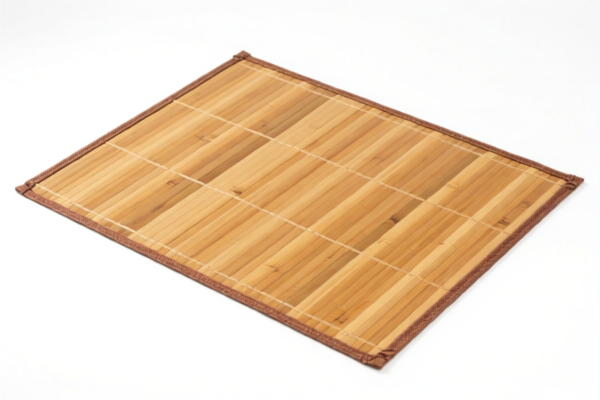
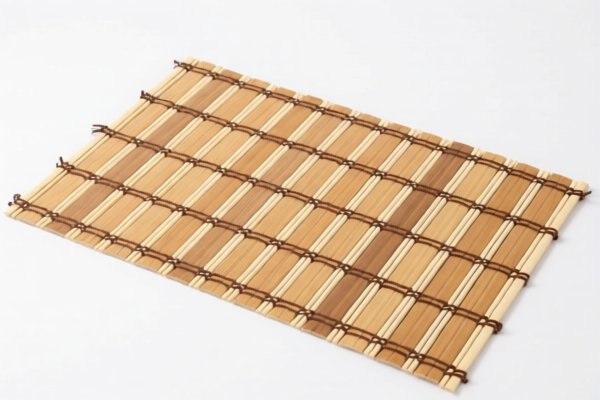
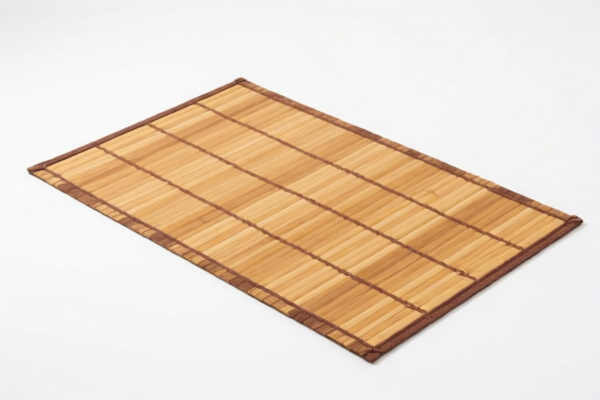
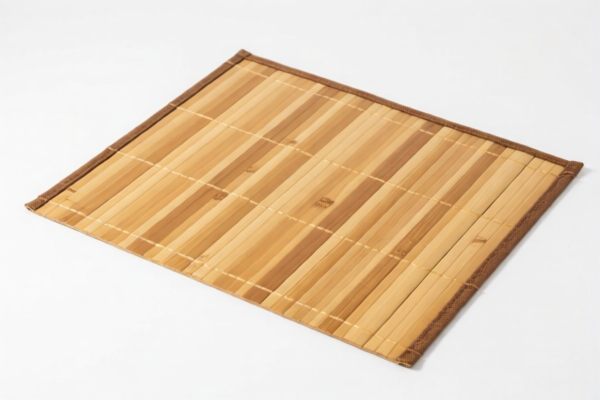
AI分析
🎋 Bamboo Floor Mats with Reinforced Edges (竹编地板垫)
🌐 HS Code Reference & Customs Clearance Guide | 2026 Latest Tariff Analysis | Professional Clearance Strategy
📌 I. Product Definition & Classification: What Exactly Are "Bamboo Floor Mats"?
Bamboo floor mats are decorative and functional textile-like floor coverings made from woven bamboo strips. In international trade, their classification is controversial because they straddle the line between textiles/fiber coverings and woven bamboo crafts/wood products. The presence of "reinforced edges" does not change the fundamental nature of the product but may affect durability perception.
Key Classification Dilemma: * Textile/Fiber Perspective (Heading 5705): Viewed as a "floor covering" similar to rugs or carpets. * Wood/Bamboo Perspective (Heading 44 or 46): Viewed as a "woven article" made from bamboo (a plant fiber often treated similarly to wood in customs contexts, or specifically under bamboo craft articles).
⚠️ Critical Distinction Point:
- If classified as a Floor Covering (5705), it falls under textile-like categories.
- If classified as a Woven Bamboo Article (4602) or Other Wood/Bamboo Articles (4421), it falls under material-specific categories.
- Note: The "Reinforced Edges" are considered integral to the mat and do not warrant separate classification or exemption from the main HS code.
📦 II. HS Code Classification Details (2026 Latest Tariff Authority Comparison)
| HS Code | Product Description | Classification Logic | Tax Rate (Total) |
|---|---|---|---|
5705.00.20.90 |
Bamboo Floor Mats as Floor Coverings | Classified under "Textiles/Fiber Floor Coverings". The form matches the definition of floor coverings. | 38.3% |
4421.91.98.80 |
Other Bamboo/Wood Articles (Other) | Classified under "Other articles of wood/bamboo". Bamboo is treated here as a woody material. | 38.3% |
4421.99.98.80 |
Other Wood Articles (Other) | A "catch-all" category for other wood products, including bamboo mats that don't fit specific wood subheadings. | 38.3% |
4602.11.45.00 |
Woven Bamboo Articles (Other) | Classified under "Basketry, wickerwork, etc." Made of bamboo (material specific) and woven (form specific). | 41.6% |
4602.11.07.00 |
Woven Bamboo Articles (Basketry/Bag-like) | Classified under specific woven products extending to mats/baskets. Uses bamboo material in woven form. | 35.0% |
🔍 Key Insight:
- Most Common Risk: Customs may dispute whether the mat is a "textile floor covering" (5705) or a "bamboo craft" (4602/4421).
- Price Impact: The tax rate varies from 35.0% to 41.6% depending on the final interpretation of the material and form.
- "Reinforced Edges": This feature is irrelevant to HS classification but may be used in product descriptions to justify higher quality/value if audited.
💰 III. 2026 Latest Tariff Rate Breakdown (Including Additional Taxes)
✅ Applicable Country: United States (US)
✅ Origin: China (CN)
✅ Effective Time: Post-2025 (Includes Section 301 & IEEPA tariffs)
🎯 1. 5705.00.20.90 —— Bamboo Floor Mats (Floor Covering Classification)
| Item | Content |
|---|---|
| Base Rate | 3.3% (ad valorem) |
| Section 301 Tariff | +25.0% (Trade Act of 1974, Section 301) |
| IEEPA Tariff | +10.0% (International Emergency Economic Powers Act) |
| Total Tax Rate | 38.3% |
| Calculation | CIF Value × 38.3% |
| De Minimis Exemption? | ❌ No (deny_de_minimis) |
| Legal Path | IEEPA:9903.01.24 → USITC:5705.00.20.90 → Section 301 |
📌 Explanation:
- The 3.3% is the standard Most Favored Nation (MFN) rate for floor coverings.
- The 25% is the heavy tariff imposed under Section 301 on Chinese goods.
- The 10% is the additional IEEPA tariff.
- Total: 38.3%. This is a significant cost burden.
🎯 2. 4421.91.98.80 & 4421.99.98.80 —— Other Bamboo/Wood Articles
| Item | Content |
|---|---|
| Base Rate | 3.3% (ad valorem) |
| Section 301 Tariff | +25.0% |
| IEEPA Tariff | +10.0% |
| Total Tax Rate | 38.3% |
| Calculation | CIF Value × 38.3% |
| De Minimis Exemption? | ❌ No |
| Legal Path | IEEPA:9903.01.24 → USITC:4421.91.98.80 |
📌 Explanation:
- Identical tax structure to5705.00.20.90.
- Bamboo is often grouped with wood products in Chapter 44.
- Total: 38.3%. No savings by choosing this classification over the textile one.
🎯 3. 4602.11.45.00 —— Woven Bamboo Articles
| Item | Content |
|---|---|
| Base Rate | 6.6% (ad valorem) |
| Section 301 Tariff | +25.0% |
| IEEPA Tariff | +10.0% |
| Total Tax Rate | 41.6% |
| Calculation | CIF Value × 41.6% |
| De Minimis Exemption? | ❌ No |
| Legal Path | IEEPA:9903.01.24 → USITC:4602.11.45.00 |
📌 Warning:
- This is the highest tax rate among the options.
- Chapter 46 covers "Wickerwork, basketry, etc." and has a higher base rate (6.6%) than wood/textile floor coverings.
- Avoid this classification if possible, unless the product is strictly defined as a "craft item" rather than a "floor covering."
🎯 4. 4602.11.07.00 —— Woven Bamboo Articles (Specific Subheading)
| Item | Content |
|---|---|
| Base Rate | 0.0% (ad valorem) |
| Section 301 Tariff | +25.0% |
| IEEPA Tariff | +10.0% |
| Total Tax Rate | 35.0% |
| Calculation | CIF Value × 35.0% |
| De Minimis Exemption? | ❌ No |
| Legal Path | IEEPA:9903.01.24 → USITC:4602.11.07.00 |
📌 Optimization Note:
- This is the lowest tax rate (35.0%) among the provided options.
- It relies on a 0% base rate for this specific woven basketry/wicker item.
- Risk: Customs may challenge this classification if the item is clearly a "floor mat" and not a "basket/wicker item." However, if argued as a "woven bamboo floor covering" under Chapter 46, it offers savings.
🛠️ IV. Customs Clearance Practical Advice (Real-World Pitfall Guide)
✅ 1. Documentation Checklist (Non-Negotiable)
| Document | Required? | Notes |
|---|---|---|
| ✅ Product Specification Sheet | ✔️ | Must specify: Material (100% Bamboo), Dimensions, Edge Type (Reinforced), Usage (Floor Mat). |
| ✅ Product Photos | ✔️ | Show the woven texture, reinforced edges, and overall appearance. Prove it's a mat, not a basket. |
| ✅ Commercial Invoice | ✔️ | Clearly describe as "Bamboo Woven Floor Mat with Reinforced Edges." Avoid vague terms like "Bamboo Craft." |
| ✅ Packing List | ✔️ | Detail quantity and packaging. |
| ✅ Origin Certificate | ✔️ | Essential for proving Chinese origin (triggers Section 301). |
| ✅ Structure Diagram | ✔️ | Optional but helpful to show layers (bamboo weave + edge reinforcement). |
✅ 2. Classification Strategy (Key Mantra)
🔥 "Material First, Form Second, Edge Irrelevant, Tax Optimization Key!"
| Scenario | Recommended HS Code | Expected Tax | Risk Level |
|---|---|---|---|
| Conservative Approach | 5705.00.20.90 or 4421.91.98.80 |
38.3% | 🟢 Low (Common interpretation) |
| Aggressive Optimization | 4602.11.07.00 |
35.0% | 🟡 Medium (Requires strong argument) |
| High-Risk/Avoid | 4602.11.45.00 |
41.6% | 🔴 High (Highest cost, similar risk) |
📌 Expert Tip:
- If you can prove the product is primarily a woven craft rather than a textile floor covering, argue for4602.11.07.00to save 3.3% (35.0% vs 38.3%).
- Do not choose4602.11.45.00unless you have no other option, as it is the most expensive.
- "Reinforced Edges" should be described as a manufacturing feature, not a separate component, to avoid parts classification issues.
✅ 3. Special Handling
| Situation | Advice |
|---|---|
| Customs Audit on Classification | Provide historical import data of similar bamboo mats. If previously cleared under 5705, stick to 5705 for consistency unless auditing is ongoing. |
| Origin Marking | Ensure products are clearly marked "Made in China" as per US CBP requirements. Failure can lead to detention. |
| De Minimis Exemption | ❌ Not Applicable. Do not attempt to split shipments into <800 USD to avoid tariffs. Section 301 and IEEPA tariffs apply regardless of value. |
🌍 V. Global Market Comparison (2026 Latest)
| Country/Region | Recommended HS Code | Tariff Rate | Notes |
|---|---|---|---|
| 🇺🇸 USA | 4602.11.07.00 (Optimal) |
35.0% | Includes 25% Section 301 + 10% IEEPA. |
| 🇺🇸 USA | 5705.00.20.90 (Standard) |
38.3% | Safer but more expensive. |
| 🇨🇳 China (Import) | 4602.11.07.00 |
~0-10% | Check local tax incentives for bamboo products. |
| 🇪🇺 EU | 4602.11.00 |
Varies (Often 0-4%) | No Section 301 equivalent. Check EU Bamboo Tariffs. |
| 🇬🇧 UK | 4602.11.00 |
Varies | Post-Brexit tariffs apply. |
📌 Conclusion:
- USA is the most expensive market due to additional tariffs.
- Optimization Opportunity: Arguing for4602.11.07.00saves 3.3% on the CIF value. For a $10,000 shipment, this is a $330 saving.
- For larger shipments, this adds up significantly.
📌 VI. Common Mistakes & Pitfalls (Lessons Learned)
❌ Mistake 1: Classifying as 4602.11.45.00 unknowingly.
👉 Consequence: Paying 41.6% instead of 35.0%. Unnecessary cost.
❌ Mistake 2: Describing as "Bamboo Rug" and using 5705.
👉 Consequence: Correct but higher tax (38.3%) than 4602.11.07.00 (35.0%). Missed optimization.
❌ Mistake 3: Splitting shipment to avoid tariffs.
👉 Consequence: Severe penalties, seizure, and blacklisting. De minimis does not apply.
❌ Mistake 4: Ignoring "Reinforced Edges" in description.
👉 Consequence: Customs may suspect hidden components (e.g., plastic, rubber) leading to additional duties or rejection.
✅ Correct Approach:
"Bamboo Woven Floor Mat, Reinforced Edges, 100% Natural Bamboo, for Residential Use."
HS Code:4602.11.07.00
Total Tax: 35.0%
🎯 VII. Conclusion: Professional Classification Saves Money!
🎯 Key Takeaway:
🔹 "Optimize to 4602.11.07.00 for 35% tax, avoid 4602.11.45.00 at 41.6%!"
🔹 "Reinforced edges do not change HS code, but accurate description prevents audits!"
🔹 "No De Minimis exemption for US-China bamboo mats!"
📌 Action Item:
📞 Contact your freight forwarder with the exact product description and photos.
📝 Request a Pre-Ruling from CBP if the shipment value is high.
🚀 Save 3.3% by choosing the optimal HS code!
✨ Professional Customs Clearance Starts with Accurate Classification!
💼 Every Percentage Point Counts in International Trade!
用户评价
关于 HS 编码归类
协调制度(HS)是由世界海关组织(WCO)制定的国际贸易商品分类标准。全球 200 多个国家采用 HS 系统作为海关关税、贸易统计和进出口监管的基础。
每个 HS 编码遵循以下层级结构:
- 章(2 位)——商品大类(例如:第 84 章:机器和机械设备)
- 品目(4 位)——章内的更具体分类
- 子目(6 位)——国际通用细分,所有 WCO 成员国统一使用
- 本国细分(8-10 位)——各国自行扩展的细分编码,如美国 HTSUS 10 位编码
正确的 HS 编码归类对于顺利通关、准确缴纳关税和遵守贸易法规至关重要。错误归类可能导致海关延误、多缴关税或罚款。
从CN进口到US时,适用的关税税率可能包括:
- 最惠国(MFN)税率——适用于 WTO 成员国的标准关税税率
- 普通税率——适用于无贸易协定国家
- 贸易救济关税——附加关税,如 301 条款(反倾销)、232 条款(国家安全)或反补贴税
本页内容仅供参考。如需正式归类,请咨询当地海关或持牌报关代理。