Bamboo Floor Mats Reinforced Edges
CN → US| HS Code | Tariff Rate | Origin | Destination | Doc |
|---|---|---|---|---|
| 5705002090 | 38.3% | CN | US | Official Doc |
| 4421919880 | 38.3% | CN | US | Official Doc |
| 4421999880 | 38.3% | CN | US | Official Doc |
| 4602114500 | 41.6% | CN | US | Official Doc |
| 4602110700 | 35.0% | CN | US | Official Doc |
Product Images
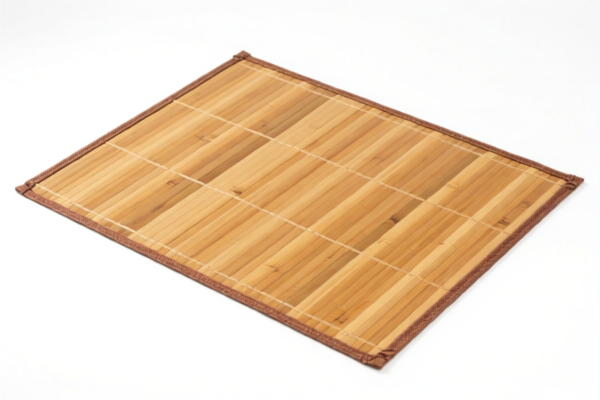
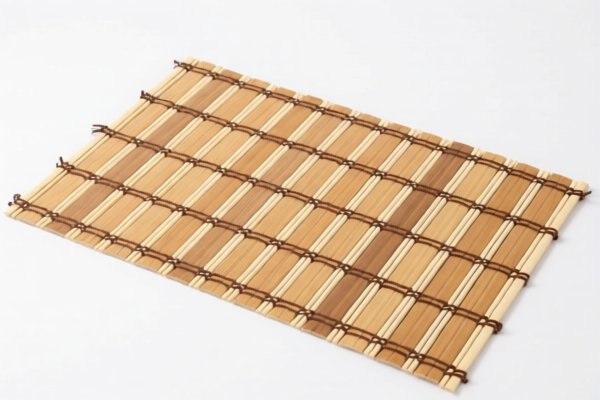
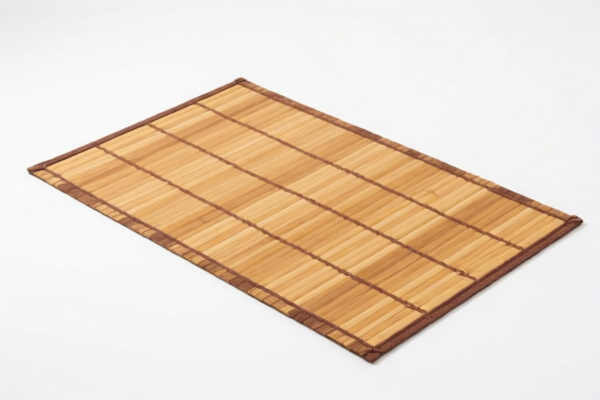
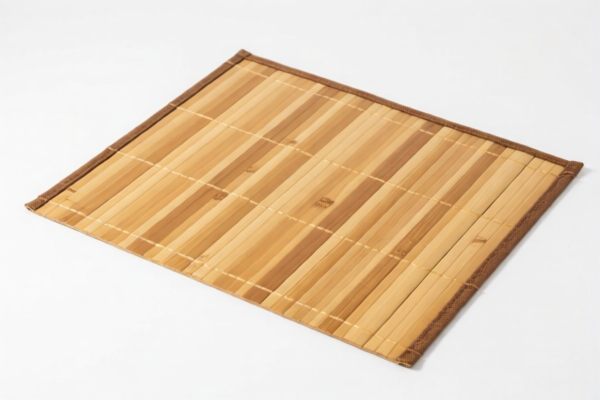
AI Analysis
🎋 Bamboo Floor Mats with Reinforced Edges (竹编地板垫)
🌐 HS Code Reference & Customs Clearance Guide | 2026 Latest Tariff Analysis | Professional Clearance Strategy
📌 I. Product Definition & Classification: What Exactly Are "Bamboo Floor Mats"?
Bamboo floor mats are decorative and functional textile-like floor coverings made from woven bamboo strips. In international trade, their classification is controversial because they straddle the line between textiles/fiber coverings and woven bamboo crafts/wood products. The presence of "reinforced edges" does not change the fundamental nature of the product but may affect durability perception.
Key Classification Dilemma: * Textile/Fiber Perspective (Heading 5705): Viewed as a "floor covering" similar to rugs or carpets. * Wood/Bamboo Perspective (Heading 44 or 46): Viewed as a "woven article" made from bamboo (a plant fiber often treated similarly to wood in customs contexts, or specifically under bamboo craft articles).
⚠️ Critical Distinction Point:
- If classified as a Floor Covering (5705), it falls under textile-like categories.
- If classified as a Woven Bamboo Article (4602) or Other Wood/Bamboo Articles (4421), it falls under material-specific categories.
- Note: The "Reinforced Edges" are considered integral to the mat and do not warrant separate classification or exemption from the main HS code.
📦 II. HS Code Classification Details (2026 Latest Tariff Authority Comparison)
| HS Code | Product Description | Classification Logic | Tax Rate (Total) |
|---|---|---|---|
5705.00.20.90 |
Bamboo Floor Mats as Floor Coverings | Classified under "Textiles/Fiber Floor Coverings". The form matches the definition of floor coverings. | 38.3% |
4421.91.98.80 |
Other Bamboo/Wood Articles (Other) | Classified under "Other articles of wood/bamboo". Bamboo is treated here as a woody material. | 38.3% |
4421.99.98.80 |
Other Wood Articles (Other) | A "catch-all" category for other wood products, including bamboo mats that don't fit specific wood subheadings. | 38.3% |
4602.11.45.00 |
Woven Bamboo Articles (Other) | Classified under "Basketry, wickerwork, etc." Made of bamboo (material specific) and woven (form specific). | 41.6% |
4602.11.07.00 |
Woven Bamboo Articles (Basketry/Bag-like) | Classified under specific woven products extending to mats/baskets. Uses bamboo material in woven form. | 35.0% |
🔍 Key Insight:
- Most Common Risk: Customs may dispute whether the mat is a "textile floor covering" (5705) or a "bamboo craft" (4602/4421).
- Price Impact: The tax rate varies from 35.0% to 41.6% depending on the final interpretation of the material and form.
- "Reinforced Edges": This feature is irrelevant to HS classification but may be used in product descriptions to justify higher quality/value if audited.
💰 III. 2026 Latest Tariff Rate Breakdown (Including Additional Taxes)
✅ Applicable Country: United States (US)
✅ Origin: China (CN)
✅ Effective Time: Post-2025 (Includes Section 301 & IEEPA tariffs)
🎯 1. 5705.00.20.90 —— Bamboo Floor Mats (Floor Covering Classification)
| Item | Content |
|---|---|
| Base Rate | 3.3% (ad valorem) |
| Section 301 Tariff | +25.0% (Trade Act of 1974, Section 301) |
| IEEPA Tariff | +10.0% (International Emergency Economic Powers Act) |
| Total Tax Rate | 38.3% |
| Calculation | CIF Value × 38.3% |
| De Minimis Exemption? | ❌ No (deny_de_minimis) |
| Legal Path | IEEPA:9903.01.24 → USITC:5705.00.20.90 → Section 301 |
📌 Explanation:
- The 3.3% is the standard Most Favored Nation (MFN) rate for floor coverings.
- The 25% is the heavy tariff imposed under Section 301 on Chinese goods.
- The 10% is the additional IEEPA tariff.
- Total: 38.3%. This is a significant cost burden.
🎯 2. 4421.91.98.80 & 4421.99.98.80 —— Other Bamboo/Wood Articles
| Item | Content |
|---|---|
| Base Rate | 3.3% (ad valorem) |
| Section 301 Tariff | +25.0% |
| IEEPA Tariff | +10.0% |
| Total Tax Rate | 38.3% |
| Calculation | CIF Value × 38.3% |
| De Minimis Exemption? | ❌ No |
| Legal Path | IEEPA:9903.01.24 → USITC:4421.91.98.80 |
📌 Explanation:
- Identical tax structure to5705.00.20.90.
- Bamboo is often grouped with wood products in Chapter 44.
- Total: 38.3%. No savings by choosing this classification over the textile one.
🎯 3. 4602.11.45.00 —— Woven Bamboo Articles
| Item | Content |
|---|---|
| Base Rate | 6.6% (ad valorem) |
| Section 301 Tariff | +25.0% |
| IEEPA Tariff | +10.0% |
| Total Tax Rate | 41.6% |
| Calculation | CIF Value × 41.6% |
| De Minimis Exemption? | ❌ No |
| Legal Path | IEEPA:9903.01.24 → USITC:4602.11.45.00 |
📌 Warning:
- This is the highest tax rate among the options.
- Chapter 46 covers "Wickerwork, basketry, etc." and has a higher base rate (6.6%) than wood/textile floor coverings.
- Avoid this classification if possible, unless the product is strictly defined as a "craft item" rather than a "floor covering."
🎯 4. 4602.11.07.00 —— Woven Bamboo Articles (Specific Subheading)
| Item | Content |
|---|---|
| Base Rate | 0.0% (ad valorem) |
| Section 301 Tariff | +25.0% |
| IEEPA Tariff | +10.0% |
| Total Tax Rate | 35.0% |
| Calculation | CIF Value × 35.0% |
| De Minimis Exemption? | ❌ No |
| Legal Path | IEEPA:9903.01.24 → USITC:4602.11.07.00 |
📌 Optimization Note:
- This is the lowest tax rate (35.0%) among the provided options.
- It relies on a 0% base rate for this specific woven basketry/wicker item.
- Risk: Customs may challenge this classification if the item is clearly a "floor mat" and not a "basket/wicker item." However, if argued as a "woven bamboo floor covering" under Chapter 46, it offers savings.
🛠️ IV. Customs Clearance Practical Advice (Real-World Pitfall Guide)
✅ 1. Documentation Checklist (Non-Negotiable)
| Document | Required? | Notes |
|---|---|---|
| ✅ Product Specification Sheet | ✔️ | Must specify: Material (100% Bamboo), Dimensions, Edge Type (Reinforced), Usage (Floor Mat). |
| ✅ Product Photos | ✔️ | Show the woven texture, reinforced edges, and overall appearance. Prove it's a mat, not a basket. |
| ✅ Commercial Invoice | ✔️ | Clearly describe as "Bamboo Woven Floor Mat with Reinforced Edges." Avoid vague terms like "Bamboo Craft." |
| ✅ Packing List | ✔️ | Detail quantity and packaging. |
| ✅ Origin Certificate | ✔️ | Essential for proving Chinese origin (triggers Section 301). |
| ✅ Structure Diagram | ✔️ | Optional but helpful to show layers (bamboo weave + edge reinforcement). |
✅ 2. Classification Strategy (Key Mantra)
🔥 "Material First, Form Second, Edge Irrelevant, Tax Optimization Key!"
| Scenario | Recommended HS Code | Expected Tax | Risk Level |
|---|---|---|---|
| Conservative Approach | 5705.00.20.90 or 4421.91.98.80 |
38.3% | 🟢 Low (Common interpretation) |
| Aggressive Optimization | 4602.11.07.00 |
35.0% | 🟡 Medium (Requires strong argument) |
| High-Risk/Avoid | 4602.11.45.00 |
41.6% | 🔴 High (Highest cost, similar risk) |
📌 Expert Tip:
- If you can prove the product is primarily a woven craft rather than a textile floor covering, argue for4602.11.07.00to save 3.3% (35.0% vs 38.3%).
- Do not choose4602.11.45.00unless you have no other option, as it is the most expensive.
- "Reinforced Edges" should be described as a manufacturing feature, not a separate component, to avoid parts classification issues.
✅ 3. Special Handling
| Situation | Advice |
|---|---|
| Customs Audit on Classification | Provide historical import data of similar bamboo mats. If previously cleared under 5705, stick to 5705 for consistency unless auditing is ongoing. |
| Origin Marking | Ensure products are clearly marked "Made in China" as per US CBP requirements. Failure can lead to detention. |
| De Minimis Exemption | ❌ Not Applicable. Do not attempt to split shipments into <800 USD to avoid tariffs. Section 301 and IEEPA tariffs apply regardless of value. |
🌍 V. Global Market Comparison (2026 Latest)
| Country/Region | Recommended HS Code | Tariff Rate | Notes |
|---|---|---|---|
| 🇺🇸 USA | 4602.11.07.00 (Optimal) |
35.0% | Includes 25% Section 301 + 10% IEEPA. |
| 🇺🇸 USA | 5705.00.20.90 (Standard) |
38.3% | Safer but more expensive. |
| 🇨🇳 China (Import) | 4602.11.07.00 |
~0-10% | Check local tax incentives for bamboo products. |
| 🇪🇺 EU | 4602.11.00 |
Varies (Often 0-4%) | No Section 301 equivalent. Check EU Bamboo Tariffs. |
| 🇬🇧 UK | 4602.11.00 |
Varies | Post-Brexit tariffs apply. |
📌 Conclusion:
- USA is the most expensive market due to additional tariffs.
- Optimization Opportunity: Arguing for4602.11.07.00saves 3.3% on the CIF value. For a $10,000 shipment, this is a $330 saving.
- For larger shipments, this adds up significantly.
📌 VI. Common Mistakes & Pitfalls (Lessons Learned)
❌ Mistake 1: Classifying as 4602.11.45.00 unknowingly.
👉 Consequence: Paying 41.6% instead of 35.0%. Unnecessary cost.
❌ Mistake 2: Describing as "Bamboo Rug" and using 5705.
👉 Consequence: Correct but higher tax (38.3%) than 4602.11.07.00 (35.0%). Missed optimization.
❌ Mistake 3: Splitting shipment to avoid tariffs.
👉 Consequence: Severe penalties, seizure, and blacklisting. De minimis does not apply.
❌ Mistake 4: Ignoring "Reinforced Edges" in description.
👉 Consequence: Customs may suspect hidden components (e.g., plastic, rubber) leading to additional duties or rejection.
✅ Correct Approach:
"Bamboo Woven Floor Mat, Reinforced Edges, 100% Natural Bamboo, for Residential Use."
HS Code:4602.11.07.00
Total Tax: 35.0%
🎯 VII. Conclusion: Professional Classification Saves Money!
🎯 Key Takeaway:
🔹 "Optimize to 4602.11.07.00 for 35% tax, avoid 4602.11.45.00 at 41.6%!"
🔹 "Reinforced edges do not change HS code, but accurate description prevents audits!"
🔹 "No De Minimis exemption for US-China bamboo mats!"
📌 Action Item:
📞 Contact your freight forwarder with the exact product description and photos.
📝 Request a Pre-Ruling from CBP if the shipment value is high.
🚀 Save 3.3% by choosing the optimal HS code!
✨ Professional Customs Clearance Starts with Accurate Classification!
💼 Every Percentage Point Counts in International Trade!
Customer Reviews
About HS Code Classification
The Harmonized System (HS) is an internationally standardized nomenclature developed by the World Customs Organization (WCO) to classify traded products. Over 200 countries use the HS system as the basis for customs tariffs, trade statistics, and import/export regulations.
Each HS code follows a hierarchical structure:
- Chapter (2 digits) — Broad category of goods (e.g., Chapter 84: Machinery and Mechanical Appliances)
- Heading (4 digits) — More specific grouping within the chapter
- Subheading (6 digits) — Internationally standardized breakdown, used by all WCO member countries
- National subdivisions (8-10 digits) — Country-specific extensions for further classification, such as US HTSUS 10-digit codes
Correct HS code classification is essential for smooth customs clearance, accurate duty payment, and compliance with trade regulations. Misclassification can lead to customs delays, overpayment of duties, or penalties.
When importing from CN to US, the applicable tariff rates may include:
- Most-Favored-Nation (MFN) rate — The standard duty rate applied to WTO members
- General rate — Applied to countries without trade agreements
- Trade remedy duties — Additional tariffs such as Section 301 (anti-dumping), Section 232 (national security), or countervailing duties
The information provided on this page is for reference purposes only. For official classification, please consult with your local customs authority or a licensed customs broker.