Bamboo Pulp Tableware Bamboo Fiber Pulp
CN → US| HS编码 | 关税税率 | 原产国 | 目的国 | 文档 |
|---|---|---|---|---|
| 4823610040 | 35.0% | CN | US | 官方文档 |
| 4823610020 | 35.0% | CN | US | 官方文档 |
| 4823700020 | 35.0% | CN | US | 官方文档 |
| 4706920100 | 35.0% | CN | US | 官方文档 |
| 4706300000 | 35.0% | CN | US | 官方文档 |
商品图片
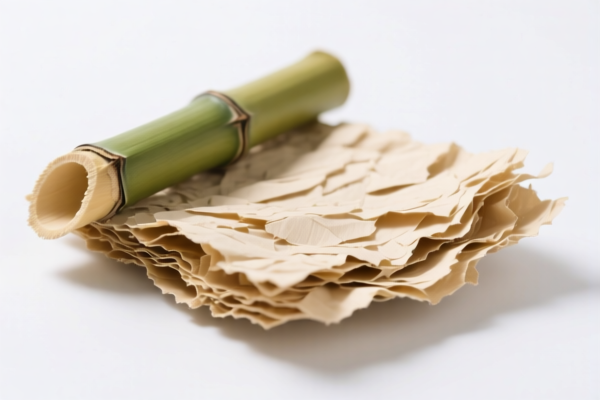
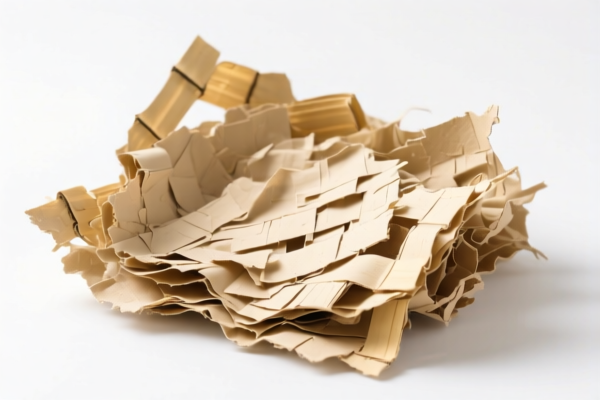
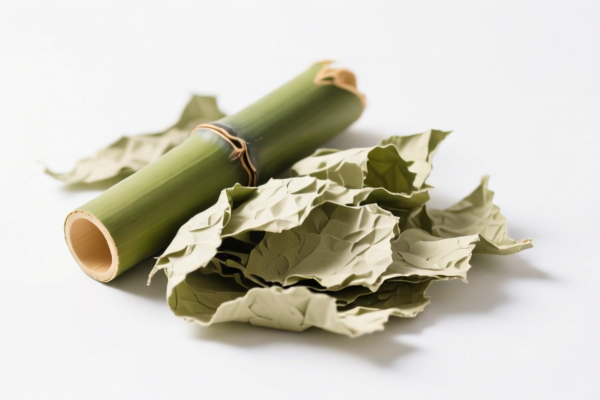
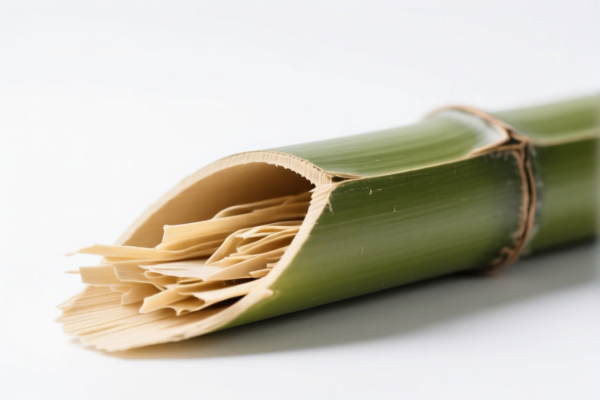
AI分析
🎋 Bamboo Pulp Tableware & Bamboo Fiber Pulp: The Ultimate Eco-Friendly Clearance Guide (2026 Update)
🌐 HS Code Reference & Customs Clearance Guide | 2026 Latest Tariff Analysis | Professional-Level Strategy
📌 1. Product Definition & Classification: What Exactly Is "Bamboo Pulp" in Trade?
Bamboo-based products are a fast-growing category in sustainable goods. However, customs classification depends heavily on the processing stage and final form:
- Bamboo Pulp (Paper Pulp): The raw or semi-processed material derived from bamboo fiber, used as a raw material for manufacturing paper or molded products. It falls under Chapter 47 (Chemical Wood Pulp).
- Bamboo Fiber Tableware: Finished or semi-finished dining ware (plates, bowls, cups, trays) made from bamboo pulp/paper. These are considered "Tableware, Kitchenware, Other Household Articles and Hygiene or Toilet Articles of Paper Pulp, Paper, Cellulose Fibre Board" and fall under Chapter 48.
⚠️ Critical Distinction: * If it is raw pulp (powder, sheets, or loose fiber) → Classify under Chapter 47. * If it is finished tableware (molded plates, cups) → Classify under Chapter 48. * Do not mix raw material declarations with finished goods declarations. This is the #1 cause of customs delays.
📦 2. HS Code Classification Details (2026 Authoritative Cross-Reference)
Based on the provided data, here are the precise HS Codes for Bamboo Pulp and Bamboo Fiber Tableware:
| HS Code | Product Description (Summary) | Application Scenario | Material/Form |
|---|---|---|---|
4823.61.00.40 |
Bamboo fiber pulp tableware: Material is bamboo fiber, form is paper tableware, classified as trays, saucers, plates, cups, and similar articles. | Finished disposable or durable bamboo fiber plates, cups, trays. | ✅ Finished Tableware |
4823.61.00.20 |
Bamboo fiber pulp tableware: Material is bamboo, form is paper tableware, covers cups and round nested food containers. | Molded bamboo fiber cups, nested food containers, bowls. | ✅ Finished Tableware |
4823.70.00.20 |
Bamboo fiber paper pulp for tableware: Material is bamboo fiber paper pulp, conforms to cellulose fiber attributes, used for tableware, consistent with shape of plates, bowls, or cups. | Semi-finished molded blanks or specific paper pulp items for tableware use. | ✅ Semi-finished/Specific Paper Pulp Item |
4706.92.01.00 |
Bamboo fiber paper pulp for tableware: Material is bamboo fiber, belongs to cellulose material, form is paper pulp, conforms to chemical pulp category. | Raw bamboo chemical pulp used as a raw material. | ❌ Raw Material (Pulp) |
4706.30.00.00 |
Bamboo fiber paper pulp for tableware: Material is bamboo fiber, conforms to bamboo limitation, form is paper pulp, classified as pulp made from cellulose materials. | Mechanical or semi-chemical bamboo pulp. | ❌ Raw Material (Pulp) |
🔍 Key Reminder: * Finished Goods (
4823.61.00.40,4823.61.00.20,4823.70.00.20) are treated as tableware. * Raw/Preliminary Materials (4706.92.01.00,4706.30.00.00) are treated as paper pulp. * Do not declare finished bamboo cups as "pulp" to avoid scrutiny, nor declare pulp as "tableware" if the form doesn't match.
💰 3. 2026 Latest Tariff Rate Details (Including Surtaxes & Policy Add-ons)
✅ Applicable Country: United States (US) ✅ Country of Origin: China (CN) ✅ Effective Date: From November 10, 2025 onwards
All listed HS Codes carry a Total Tax Rate of 35.0%. Below is the detailed breakdown:
🎯 1. Raw Material Category: 4706.92.01.00 & 4706.30.00.00 (Bamboo Pulp)
| Item | Content |
|---|---|
| Basic Tariff | 0.0% (ad valorem) |
| Additional Surcharge (Section 301) | +25.0% |
| IEEPA Surcharge (Section 122/301 related) | +10.0% |
| Total Tax Rate | 35.0% |
| Tax Calculation | CIF Value × 35% |
| De Minimis Exemption | ❌ Not Applicable |
| Legal Basis | Standard USITC schedule + Section 301 Footnotes + IEEPA provisions |
📌 Explanation: * Even though the base tariff is 0%, the Section 301 additional tariff (25%) applies to most Chinese-origin goods, including paper pulp. * An additional 10% is levied under specific trade action clauses (often referred to as Section 122 or related IEEPA actions depending on the specific year's enforcement), bringing the total to 35%. * Result: Importers must budget for a 35% duty cost on raw bamboo pulp.
🎯 2. Finished Product Category: 4823.61.00.40, 4823.61.00.20, 4823.70.00.20 (Bamboo Tableware)
| Item | Content |
|---|---|
| Basic Tariff | 0.0% (ad valorem) |
| Additional Surcharge (Section 301) | +25.0% |
| IEEPA Surcharge (Section 122/301 related) | +10.0% |
| Total Tax Rate | 35.0% |
| Tax Calculation | CIF Value × 35% |
| De Minimis Exemption | ❌ Not Applicable |
| Legal Basis | Standard USITC schedule + Section 301 Footnotes + IEEPA provisions |
📌 Note: * Finished bamboo fiber tableware faces the same 35% total duty rate. * There is no exemption for "eco-friendly" materials in the current US tariff schedule for Chinese origins. * Warning: Do not rely on "green product" narratives to avoid tariffs. The HS Code determines the rate, and these codes are subject to the full 35%.
🛠️ 4. Customs Clearance Practical Advice (Real-World Pitfall Guide)
✅ 1. Required Documentation Checklist (Non-negotiable)
| Document | Required | Explanation |
|---|---|---|
| ✅ Product Specification Sheet | ✔️ | Must clearly state: "Bamboo Fiber Pulp" vs. "Bamboo Fiber Tableware." Include material composition (e.g., 100% bamboo, or bamboo + PP). |
| ✅ Commercial Invoice | ✔️ | Must explicitly describe the goods using the summaries from the HS Code data above. Avoid vague terms like "Green Kitchenware." |
| ✅ Packing List | ✔️ | Detailed weight and volume. Ensure no mixing of raw pulp and finished tableware in one shipment unless declared separately. |
| ✅ Certificate of Origin (CO) | ✔️ | Critical for determining the 35% rate. If shipped from a third country (e.g., Vietnam) with minimal transformation, still subject to US rules. |
| ✅ Material Safety Data Sheet (MSDS) | ✔️ | Especially for pulp products, to prove non-hazardous nature. |
| ✅ FDA Compliance Document | ✔️ | Since these are "food contact" items, FDA compliance is mandatory for entry into the US. |
✅ 2. Declaration Tips (Key Mantra)
🔥 "Form Dictates Code, Pulp is Raw, Tableware is Final!"
| Scenario | Correct Declaration | Wrong Practice |
|---|---|---|
| Finished Bamboo Cup | 4823.61.00.20 (Tableware) |
Declare as "Pulp" → Risk of re-classification + penalties. |
| Raw Bamboo Fiber Powder | 4706.92.01.00 (Pulp) |
Declare as "Tableware" → Customs rejection. |
| Semi-finished Molded Blank | 4823.70.00.20 (Specific Pulp Item) |
Declare as raw pulp → Incorrect valuation. |
| Mixed Shipment (Pulp + Cups) | Separate Lines | Combine into one line → Customs will flag for ambiguity. |
✅ 3. Special Cases Handling
| Situation | Handling Advice |
|---|---|
| Bamboo + Plastic Mix | If the product contains significant plastic binding agents (PP), it may still fall under 4823 if paper is the essential character, but declare accurately to avoid FDA/Customs conflicts. |
| White vs. Unbleached Pulp | For 4706 codes, specify if it's chemically or mechanically processed, as this affects the sub-heading. |
| OEM Custom Tableware | Provide design drawings to prove it is a "finished article" (for 4823) and not a "blank" for further processing. |
🌍 5. Global Market Clearance Comparison (2026 Snapshot)
| Country/Region | Recommended HS Code | Tariff Rate (China Origin) | Certification Requirements | Notes |
|---|---|---|---|---|
| 🇺🇸 USA | 4823.61.00.20 / 4706.92.01.00 |
35% (Total: 0% Base + 25% Sec 301 + 10% IEEPA) | FDA Food Contact | High barrier due to 35% duty. |
| 🇨🇳 China | 4823.61.00.20 / 4706.92.01.00 |
Low (1-5%) | GB Standards | Domestic consumption benefits from low duty. |
| 🇪🇺 EU | 4823.61.00.20 / 4706.92.01.00 |
Varies (Typically 3-6%) | FDA/EFSA Compliance | No Section 301 equivalent, but strict eco-labels apply. |
| 🇯🇵 Japan | 4823.61.00.20 / 4706.92.01.00 |
Varies (Typically 3-5%) | Japan Food Hygiene Law | Focus on material safety documentation. |
📌 Conclusion: * The US market is the most expensive due to the cumulative 35% tariff. * EU and Japan offer better tariff rates but have stricter food safety and environmental certifications. * For US imports, consider supply chain diversification (e.g., processing in non-China countries) to mitigate the 35% duty, though origin rules are strict.
📌 6. Common Errors & Pitfall Guide (Lessons Learned)
❌ Error 1: Declaring finished bamboo cups as "Bamboo Pulp" to avoid higher duties. 👉 Consequence: Customs re-classifies, applies 35% anyway + penalties + delay.
❌ Error 2: Failing to declare FDA compliance for food-contact items. 👉 Consequence: Goods detained at port, potential destruction or return.
❌ Error 3: Mixing raw pulp and finished goods in one invoice line. 👉 Consequence: Customs requires separate HS codes, leading to manual review and delays.
❌ Error 4: Ignoring the "10% IEEPA" component. 👉 Consequence: Underpaying duties by 10%, resulting in back taxes and interest.
✅ Correct Practice:
"Bamboo Fiber Molded Tableware, Cup, 250ml, FDA Approved, Origin: China" HS Code:
4823.61.00.20Duty: 35%
🎯 7. Conclusion: Precision in Classification Saves Money!
🎯 Remember the Mantra:
🔹 "Pulp is Raw (Ch 47), Tableware is Finish (Ch 48), Both Bear the 35% Hit!" 🔹 "Check FDA, Check Origin, Avoid the 10% Surprise!"
📌 Pro Tip: If you are importing into the US, calculate the total landed cost including 35% duties before pricing. Consider pre-ruling with US Customs (CBP) if you are unsure about the classification of mixed-material items (e.g., bamboo + biodegradable plastic).
📣 Immediate Action:
📞 Engage a licensed customs broker 📄 Prepare FDA & Specification Docs 🚀 Optimize your supply chain to handle the 35% US tariff efficiently!
✨ Professional Clearance Starts with Accurate Classification! 💼 Every percentage point counts in your bottom line!
用户评价
关于 HS 编码归类
协调制度(HS)是由世界海关组织(WCO)制定的国际贸易商品分类标准。全球 200 多个国家采用 HS 系统作为海关关税、贸易统计和进出口监管的基础。
每个 HS 编码遵循以下层级结构:
- 章(2 位)——商品大类(例如:第 84 章:机器和机械设备)
- 品目(4 位)——章内的更具体分类
- 子目(6 位)——国际通用细分,所有 WCO 成员国统一使用
- 本国细分(8-10 位)——各国自行扩展的细分编码,如美国 HTSUS 10 位编码
正确的 HS 编码归类对于顺利通关、准确缴纳关税和遵守贸易法规至关重要。错误归类可能导致海关延误、多缴关税或罚款。
从CN进口到US时,适用的关税税率可能包括:
- 最惠国(MFN)税率——适用于 WTO 成员国的标准关税税率
- 普通税率——适用于无贸易协定国家
- 贸易救济关税——附加关税,如 301 条款(反倾销)、232 条款(国家安全)或反补贴税
本页内容仅供参考。如需正式归类,请咨询当地海关或持牌报关代理。