Bamboo Pulp Tableware Bamboo Fiber Pulp
CN → US| HS Code | Tariff Rate | Origin | Destination | Doc |
|---|---|---|---|---|
| 4823610040 | 35.0% | CN | US | Official Doc |
| 4823610020 | 35.0% | CN | US | Official Doc |
| 4823700020 | 35.0% | CN | US | Official Doc |
| 4706920100 | 35.0% | CN | US | Official Doc |
| 4706300000 | 35.0% | CN | US | Official Doc |
Product Images
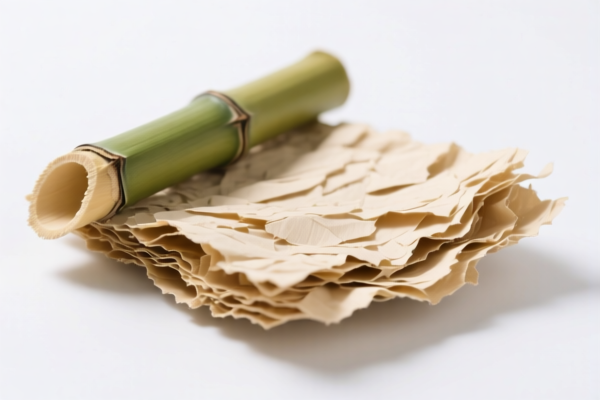
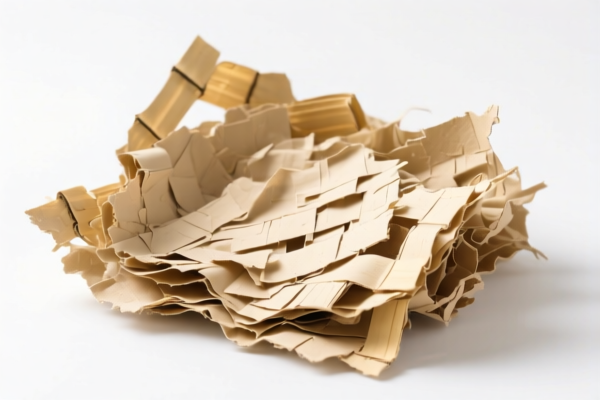
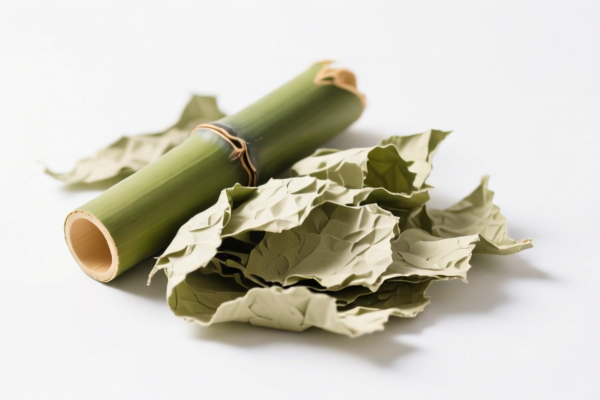
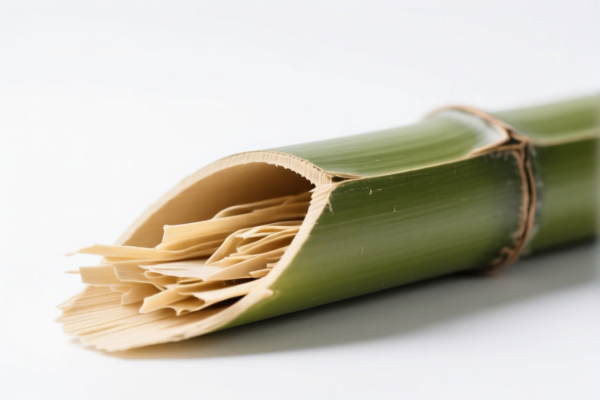
AI Analysis
🎋 Bamboo Pulp Tableware & Bamboo Fiber Pulp: The Ultimate Eco-Friendly Clearance Guide (2026 Update)
🌐 HS Code Reference & Customs Clearance Guide | 2026 Latest Tariff Analysis | Professional-Level Strategy
📌 1. Product Definition & Classification: What Exactly Is "Bamboo Pulp" in Trade?
Bamboo-based products are a fast-growing category in sustainable goods. However, customs classification depends heavily on the processing stage and final form:
- Bamboo Pulp (Paper Pulp): The raw or semi-processed material derived from bamboo fiber, used as a raw material for manufacturing paper or molded products. It falls under Chapter 47 (Chemical Wood Pulp).
- Bamboo Fiber Tableware: Finished or semi-finished dining ware (plates, bowls, cups, trays) made from bamboo pulp/paper. These are considered "Tableware, Kitchenware, Other Household Articles and Hygiene or Toilet Articles of Paper Pulp, Paper, Cellulose Fibre Board" and fall under Chapter 48.
⚠️ Critical Distinction: * If it is raw pulp (powder, sheets, or loose fiber) → Classify under Chapter 47. * If it is finished tableware (molded plates, cups) → Classify under Chapter 48. * Do not mix raw material declarations with finished goods declarations. This is the #1 cause of customs delays.
📦 2. HS Code Classification Details (2026 Authoritative Cross-Reference)
Based on the provided data, here are the precise HS Codes for Bamboo Pulp and Bamboo Fiber Tableware:
| HS Code | Product Description (Summary) | Application Scenario | Material/Form |
|---|---|---|---|
4823.61.00.40 |
Bamboo fiber pulp tableware: Material is bamboo fiber, form is paper tableware, classified as trays, saucers, plates, cups, and similar articles. | Finished disposable or durable bamboo fiber plates, cups, trays. | ✅ Finished Tableware |
4823.61.00.20 |
Bamboo fiber pulp tableware: Material is bamboo, form is paper tableware, covers cups and round nested food containers. | Molded bamboo fiber cups, nested food containers, bowls. | ✅ Finished Tableware |
4823.70.00.20 |
Bamboo fiber paper pulp for tableware: Material is bamboo fiber paper pulp, conforms to cellulose fiber attributes, used for tableware, consistent with shape of plates, bowls, or cups. | Semi-finished molded blanks or specific paper pulp items for tableware use. | ✅ Semi-finished/Specific Paper Pulp Item |
4706.92.01.00 |
Bamboo fiber paper pulp for tableware: Material is bamboo fiber, belongs to cellulose material, form is paper pulp, conforms to chemical pulp category. | Raw bamboo chemical pulp used as a raw material. | ❌ Raw Material (Pulp) |
4706.30.00.00 |
Bamboo fiber paper pulp for tableware: Material is bamboo fiber, conforms to bamboo limitation, form is paper pulp, classified as pulp made from cellulose materials. | Mechanical or semi-chemical bamboo pulp. | ❌ Raw Material (Pulp) |
🔍 Key Reminder: * Finished Goods (
4823.61.00.40,4823.61.00.20,4823.70.00.20) are treated as tableware. * Raw/Preliminary Materials (4706.92.01.00,4706.30.00.00) are treated as paper pulp. * Do not declare finished bamboo cups as "pulp" to avoid scrutiny, nor declare pulp as "tableware" if the form doesn't match.
💰 3. 2026 Latest Tariff Rate Details (Including Surtaxes & Policy Add-ons)
✅ Applicable Country: United States (US) ✅ Country of Origin: China (CN) ✅ Effective Date: From November 10, 2025 onwards
All listed HS Codes carry a Total Tax Rate of 35.0%. Below is the detailed breakdown:
🎯 1. Raw Material Category: 4706.92.01.00 & 4706.30.00.00 (Bamboo Pulp)
| Item | Content |
|---|---|
| Basic Tariff | 0.0% (ad valorem) |
| Additional Surcharge (Section 301) | +25.0% |
| IEEPA Surcharge (Section 122/301 related) | +10.0% |
| Total Tax Rate | 35.0% |
| Tax Calculation | CIF Value × 35% |
| De Minimis Exemption | ❌ Not Applicable |
| Legal Basis | Standard USITC schedule + Section 301 Footnotes + IEEPA provisions |
📌 Explanation: * Even though the base tariff is 0%, the Section 301 additional tariff (25%) applies to most Chinese-origin goods, including paper pulp. * An additional 10% is levied under specific trade action clauses (often referred to as Section 122 or related IEEPA actions depending on the specific year's enforcement), bringing the total to 35%. * Result: Importers must budget for a 35% duty cost on raw bamboo pulp.
🎯 2. Finished Product Category: 4823.61.00.40, 4823.61.00.20, 4823.70.00.20 (Bamboo Tableware)
| Item | Content |
|---|---|
| Basic Tariff | 0.0% (ad valorem) |
| Additional Surcharge (Section 301) | +25.0% |
| IEEPA Surcharge (Section 122/301 related) | +10.0% |
| Total Tax Rate | 35.0% |
| Tax Calculation | CIF Value × 35% |
| De Minimis Exemption | ❌ Not Applicable |
| Legal Basis | Standard USITC schedule + Section 301 Footnotes + IEEPA provisions |
📌 Note: * Finished bamboo fiber tableware faces the same 35% total duty rate. * There is no exemption for "eco-friendly" materials in the current US tariff schedule for Chinese origins. * Warning: Do not rely on "green product" narratives to avoid tariffs. The HS Code determines the rate, and these codes are subject to the full 35%.
🛠️ 4. Customs Clearance Practical Advice (Real-World Pitfall Guide)
✅ 1. Required Documentation Checklist (Non-negotiable)
| Document | Required | Explanation |
|---|---|---|
| ✅ Product Specification Sheet | ✔️ | Must clearly state: "Bamboo Fiber Pulp" vs. "Bamboo Fiber Tableware." Include material composition (e.g., 100% bamboo, or bamboo + PP). |
| ✅ Commercial Invoice | ✔️ | Must explicitly describe the goods using the summaries from the HS Code data above. Avoid vague terms like "Green Kitchenware." |
| ✅ Packing List | ✔️ | Detailed weight and volume. Ensure no mixing of raw pulp and finished tableware in one shipment unless declared separately. |
| ✅ Certificate of Origin (CO) | ✔️ | Critical for determining the 35% rate. If shipped from a third country (e.g., Vietnam) with minimal transformation, still subject to US rules. |
| ✅ Material Safety Data Sheet (MSDS) | ✔️ | Especially for pulp products, to prove non-hazardous nature. |
| ✅ FDA Compliance Document | ✔️ | Since these are "food contact" items, FDA compliance is mandatory for entry into the US. |
✅ 2. Declaration Tips (Key Mantra)
🔥 "Form Dictates Code, Pulp is Raw, Tableware is Final!"
| Scenario | Correct Declaration | Wrong Practice |
|---|---|---|
| Finished Bamboo Cup | 4823.61.00.20 (Tableware) |
Declare as "Pulp" → Risk of re-classification + penalties. |
| Raw Bamboo Fiber Powder | 4706.92.01.00 (Pulp) |
Declare as "Tableware" → Customs rejection. |
| Semi-finished Molded Blank | 4823.70.00.20 (Specific Pulp Item) |
Declare as raw pulp → Incorrect valuation. |
| Mixed Shipment (Pulp + Cups) | Separate Lines | Combine into one line → Customs will flag for ambiguity. |
✅ 3. Special Cases Handling
| Situation | Handling Advice |
|---|---|
| Bamboo + Plastic Mix | If the product contains significant plastic binding agents (PP), it may still fall under 4823 if paper is the essential character, but declare accurately to avoid FDA/Customs conflicts. |
| White vs. Unbleached Pulp | For 4706 codes, specify if it's chemically or mechanically processed, as this affects the sub-heading. |
| OEM Custom Tableware | Provide design drawings to prove it is a "finished article" (for 4823) and not a "blank" for further processing. |
🌍 5. Global Market Clearance Comparison (2026 Snapshot)
| Country/Region | Recommended HS Code | Tariff Rate (China Origin) | Certification Requirements | Notes |
|---|---|---|---|---|
| 🇺🇸 USA | 4823.61.00.20 / 4706.92.01.00 |
35% (Total: 0% Base + 25% Sec 301 + 10% IEEPA) | FDA Food Contact | High barrier due to 35% duty. |
| 🇨🇳 China | 4823.61.00.20 / 4706.92.01.00 |
Low (1-5%) | GB Standards | Domestic consumption benefits from low duty. |
| 🇪🇺 EU | 4823.61.00.20 / 4706.92.01.00 |
Varies (Typically 3-6%) | FDA/EFSA Compliance | No Section 301 equivalent, but strict eco-labels apply. |
| 🇯🇵 Japan | 4823.61.00.20 / 4706.92.01.00 |
Varies (Typically 3-5%) | Japan Food Hygiene Law | Focus on material safety documentation. |
📌 Conclusion: * The US market is the most expensive due to the cumulative 35% tariff. * EU and Japan offer better tariff rates but have stricter food safety and environmental certifications. * For US imports, consider supply chain diversification (e.g., processing in non-China countries) to mitigate the 35% duty, though origin rules are strict.
📌 6. Common Errors & Pitfall Guide (Lessons Learned)
❌ Error 1: Declaring finished bamboo cups as "Bamboo Pulp" to avoid higher duties. 👉 Consequence: Customs re-classifies, applies 35% anyway + penalties + delay.
❌ Error 2: Failing to declare FDA compliance for food-contact items. 👉 Consequence: Goods detained at port, potential destruction or return.
❌ Error 3: Mixing raw pulp and finished goods in one invoice line. 👉 Consequence: Customs requires separate HS codes, leading to manual review and delays.
❌ Error 4: Ignoring the "10% IEEPA" component. 👉 Consequence: Underpaying duties by 10%, resulting in back taxes and interest.
✅ Correct Practice:
"Bamboo Fiber Molded Tableware, Cup, 250ml, FDA Approved, Origin: China" HS Code:
4823.61.00.20Duty: 35%
🎯 7. Conclusion: Precision in Classification Saves Money!
🎯 Remember the Mantra:
🔹 "Pulp is Raw (Ch 47), Tableware is Finish (Ch 48), Both Bear the 35% Hit!" 🔹 "Check FDA, Check Origin, Avoid the 10% Surprise!"
📌 Pro Tip: If you are importing into the US, calculate the total landed cost including 35% duties before pricing. Consider pre-ruling with US Customs (CBP) if you are unsure about the classification of mixed-material items (e.g., bamboo + biodegradable plastic).
📣 Immediate Action:
📞 Engage a licensed customs broker 📄 Prepare FDA & Specification Docs 🚀 Optimize your supply chain to handle the 35% US tariff efficiently!
✨ Professional Clearance Starts with Accurate Classification! 💼 Every percentage point counts in your bottom line!
Customer Reviews
About HS Code Classification
The Harmonized System (HS) is an internationally standardized nomenclature developed by the World Customs Organization (WCO) to classify traded products. Over 200 countries use the HS system as the basis for customs tariffs, trade statistics, and import/export regulations.
Each HS code follows a hierarchical structure:
- Chapter (2 digits) — Broad category of goods (e.g., Chapter 84: Machinery and Mechanical Appliances)
- Heading (4 digits) — More specific grouping within the chapter
- Subheading (6 digits) — Internationally standardized breakdown, used by all WCO member countries
- National subdivisions (8-10 digits) — Country-specific extensions for further classification, such as US HTSUS 10-digit codes
Correct HS code classification is essential for smooth customs clearance, accurate duty payment, and compliance with trade regulations. Misclassification can lead to customs delays, overpayment of duties, or penalties.
When importing from CN to US, the applicable tariff rates may include:
- Most-Favored-Nation (MFN) rate — The standard duty rate applied to WTO members
- General rate — Applied to countries without trade agreements
- Trade remedy duties — Additional tariffs such as Section 301 (anti-dumping), Section 232 (national security), or countervailing duties
The information provided on this page is for reference purposes only. For official classification, please consult with your local customs authority or a licensed customs broker.