Bamboo Pulp for Agricultural Use
CN → US| HS编码 | 关税税率 | 原产国 | 目的国 | 文档 |
|---|---|---|---|---|
| 3913902090 | 40.8% | CN | US | 官方文档 |
| 3913905000 | 41.5% | CN | US | 官方文档 |
| 4706300000 | 35.0% | CN | US | 官方文档 |
| 4706930100 | 35.0% | CN | US | 官方文档 |
| 3505100020 | 0.0% | CN | US | 官方文档 |
商品图片
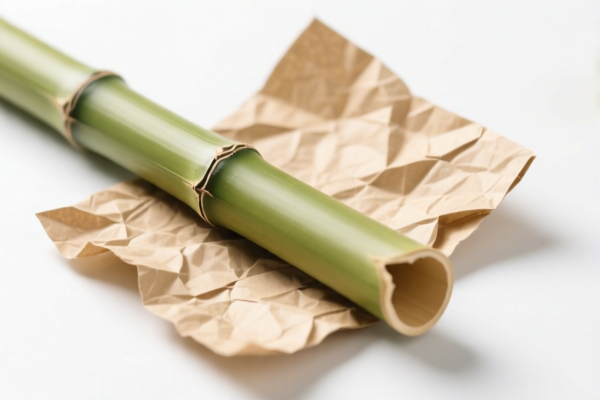
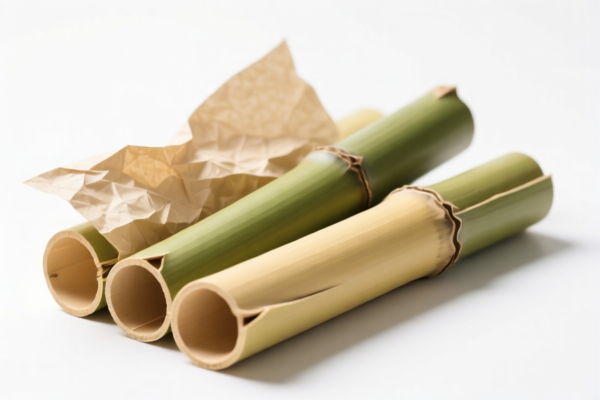
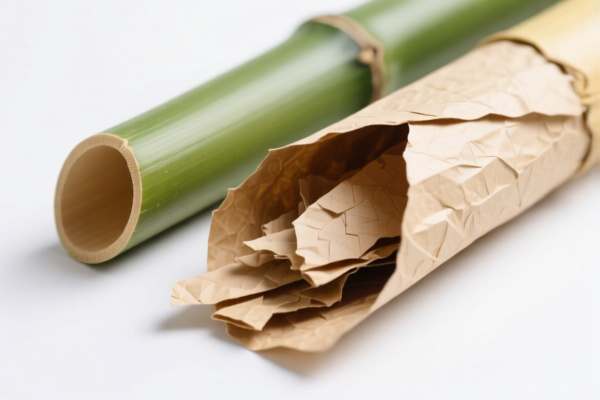
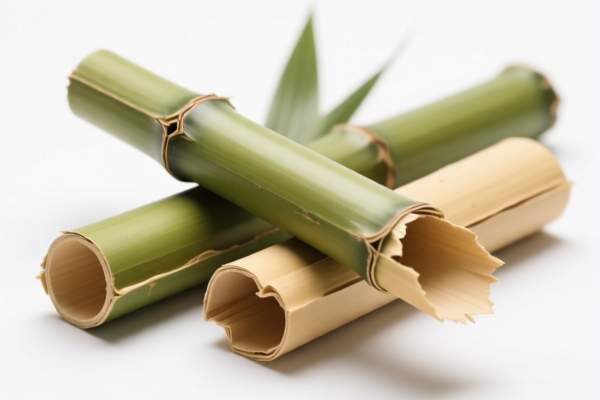
AI分析
🎋 Bamboo Pulp (Bamboo Pulp for Agricultural Use)
🌐 HS Code Reference & Customs Clearance Guide | 2026 Latest Tariff Analysis | Professional Entry Strategy
📌 Part 1: Product Definition & Classification: What is "Bamboo Pulp"?
Bamboo pulp is a cellulosic raw material derived from bamboo fibers. In international trade, its classification hinges on whether it is treated as a polymer/plastic precursor (Ch. 39) or a wood/vegetable fiber paper pulp (Ch. 47). The ambiguity often leads to different tariff burdens.
Key Classification Ambiguity: - As a Polymer/Plastic Material: If viewed primarily as cellulose derivatives or natural polymers suitable for plastic manufacturing or industrial chemical use → Chapter 39. - As a Fiber/Paper Raw Material: If viewed as a processed vegetable fiber (similar to wood pulp) used for paper, board, or even agricultural mulch sheets → Chapter 47.
⚠️ Critical Distinction Point: - If the pulp is primarily for plastic/polymer synthesis or generic chemical use → Classify under 3913.90.xxxxx (Other polymers). - If the pulp is processed vegetable fiber (even from bamboo, which is technically a grass but often classified with woods in pulp contexts) → Classify under 4706 (Other paper pulp).
📦 Part 2: HS Code Classification Matrix (2026 Latest Tariff Authority)
| HS Code | Product Description | Rationale from Data | Total Tax Rate |
|---|---|---|---|
3913.90.20.90 |
Other polymers: Cellulose and its chemical derivatives (Other) | "Bamboo pulp" consists of natural polysaccharides (cellulose) and derivatives. It fits the "Other" catch-all for natural polymers. | 40.8% |
3913.90.50.00 |
Other polymers: Natural polymers (Other) | Inferred as primary form raw material of natural polymers (cellulose). No conflict in form or use. | 41.5% |
4706.30.00.00 |
Paper pulp: Other (Vegetable fibers) | Explicitly mentions "bamboo" material. "Pulp" is a cellulosic material form. No conflict in material or form. | 35.0% |
4706.93.01.00 |
Paper pulp: Other | Matches material attributes as "recycled fiber pulp" (cellulose raw material). No form/use conflict. | 35.0% |
3505.10.00.20 |
Dextrins and other modified starches: Other | Low probability/risky classification. Based on inference that it might be classified as starch/fiber raw material for adhesives. | 0.7¢/kg + 17.5% |
🔍 Important Note: - Ch. 47 (35.0%) offers the lowest ad valorem rate among standard classifications. - Ch. 39 (40.8% - 41.5%) is the highest but technically sound if the product is sold as a chemical/polymer intermediate. - Ch. 35 (17.5%) is the lowest rate but carries high compliance risk as bamboo is not a starch. Avoid unless explicitly agreed with customs.
💰 Part 3: 2026 Latest Tariff Rate Details (Including Surcharges & Policy Add-ons)
✅ Applicable Country: United States (US)
✅ Country of Origin: China (CN)
✅ Effective Date: November 10, 2025 onwards (including subsequent imports)
🎯 1. 3913.90.20.90 & 3913.90.50.00 — Natural Polymers/Cellulose Derivatives
| Item | Details |
|---|---|
| Base Tariff | 5.8% - 6.5% (Ad valorem) |
| Section 301 Surcharge | +25.0% |
| IEEPA Surcharge | +10.0% (Specific to China/HK products, effective Nov 10, 2025) |
| Total Tariff | 40.8% - 41.5% |
| Tax Calculation | CIF Value × Total Rate |
| De Minimis Exemption? | ❌ No (Denied) |
| Legal Basis Path | IEEPA:9903.01.25 → USITC:3913.90.20.90 → FOOTNOTE:301 |
📌 Explanation: - The 25% is the Section 301 tariff on Chinese goods. - The 10% is the IEEPA surcharge targeting Chinese-origin goods. - Total ~41% is extremely high. This classification is costly for importers.
🎯 2. 4706.30.00.00 & 4706.93.01.00 — Paper Pulp (Vegetable Fiber)
| Item | Details |
|---|---|
| Base Tariff | 0.0% (Ad valorem) |
| Section 301 Surcharge | +25.0% |
| IEEPA Surcharge | +10.0% (Specific to China/HK products, effective Nov 10, 2025) |
| Total Tariff | 35.0% |
| Tax Calculation | CIF Value × 35% |
| De Minimis Exemption? | ❌ No (Denied) |
| Legal Basis Path | IEEPA:9903.01.25 → USITC:4706.30.00.00 → FOOTNOTE:301 |
📌 Note: - While the base rate is 0%, the 25% + 10% surcharges apply, resulting in 35%. - This is 1.5% - 6.5% cheaper than the Ch. 39 classification. - Bamboo is legally treated as a "vegetable fiber" akin to wood pulp for HS purposes.
🎯 3. 3505.10.00.20 — Modified Starches/Dextrins
| Item | Details |
|---|---|
| Base Tariff | 0.7¢/kg + 0% ad valorem |
| Section 301 Surcharge | +7.5% |
| IEEPA Surcharge | +10.0% |
| Total Effective Rate | ~17.5% (approx. based on value) |
| Tax Calculation | Specific Duty (0.7¢/kg) + Ad Valorem (17.5%) |
| De Minimis Exemption? | ❌ No (Denied) |
| Legal Basis Path | IEEPA:9903.01.25 → USITC:3505.10.00.20 → FOOTNOTE:301 |
📌 Warning: - This classification relies on the inference that bamboo pulp is a "starch/fiber raw material" for adhesives. - Risk: Bamboo is cellulose, not starch. Customs may reject this classification during inspection, leading to penalties. Not recommended for standard declarations.
🛠️ Part 4: Customs Clearance Practical Advice (Real-World Pitfall Guide)
✅ 1. Documentation Checklist (Mandatory)
| Document | Required | Purpose |
|---|---|---|
| ✅ Product Specification Sheet | ✔️ | Defines form (powder, flakes, fibers), moisture content, chemical treatment. |
| ✅ Material Safety Data Sheet (MSDS) | ✔️ | Proves chemical nature (cellulose vs. starch). |
| ✅ Commercial Invoice | ✔️ | Clearly state "Bamboo Pulp for Agricultural Use" or "Industrial Use". |
| ✅ Certificate of Origin (CO) | ✔️ | Must specify China origin for accurate surcharge calculation. |
| ✅ Usage Declaration | ✔️ | Specify end-use: Agricultural mulch? Paper making? Plastic additive? |
✅ 2. Declaration Strategies (Key Tactics)
🔥 Mnemonic: "Fiber is Pulp, Polymer is Chemical. Choose Wisely!"
| Scenario | Recommended HS Code | Why? |
|---|---|---|
| Bamboo Pulp for Paper/Board Manufacturing | 4706.30.00.00 |
It is a vegetable fiber pulp. Lowest surcharge base (0%). |
| Bamboo Pulp for Bioplastics/Chemical Derivatives | 3913.90.50.00 |
It is a natural polymer. Higher base rate (6.5%). |
| Bamboo Pulp for Agricultural Mulch Film (Pre-made) | Check 3920 or 4823 |
If processed into film, it may no longer be "pulp". |
| Bamboo Pulp claimed as Starch | 3505.10.00.20 |
High Risk. Bamboo ≠ Starch. Avoid unless proven otherwise. |
✅ 3. Special Case Handling
| Situation | Advice |
|---|---|
| Agricultual Mulch Film | If the pulp is processed into biodegradable mulch film, it may fall under Ch. 39 (Films) or Ch. 48 (Paper). Do not declare as raw pulp if it's already a finished product. |
| Mixed Content | If bamboo pulp is mixed with chemical binders, ensure the "essential character" is still bamboo pulp to keep Ch. 47 or 3913. |
| Origin Substitution | If sourced from Vietnam/Indonesia, IEEPA surcharges may be avoided or reduced. Verify country of origin carefully. |
🌍 Part 5: Global Market Comparison (2026 Latest)
| Country/Region | Recommended HS Code | Estimated Tariff | Certification Requirements | Notes |
|---|---|---|---|---|
| 🇺🇸 USA | 4706.30.00.00 |
35% | None specific for pulp | High IEEPA + 301 tariffs. |
| 🇺🇸 USA | 3913.90.50.00 |
41.5% | None specific for pulp | Higher base rate. |
| 🇪🇺 EU | 4706.30.00.00 |
0% | CE (if processed), REACH | No Section 301/IEEPA. Favorable. |
| 🇨🇳 China | 4706.30.00.00 |
0% | N/A | Export hub. |
| 🇯🇵 Japan | 4706.30.00.00 |
0% | FSC/PEFC (Sustainability) | Prefers sustainable sourcing. |
📌 Conclusion: - USA: High tariffs regardless of classification. Choose Ch. 47 (35%) over Ch. 39 (41.5%) to save 6.5%. - EU/Japan: Much more favorable for vegetable fiber pulp.
📌 Part 6: Common Errors & Pitfalls (Blood & Tears)
❌ Error 1: Declaring "Bamboo Pulp" as "Starch" to get 17.5% tax. 👉 Result: Customs rejection, fines, and delays. Bamboo is cellulose, not starch.
❌ Error 2: Declaring "Agricultural Mulch Film" as "Raw Pulp". 👉 Result: Misclassification. Finished goods have different HS codes (e.g., 3920/4823).
❌ Error 3: Ignoring IEEPA Surcharge (10%). 👉 Result: Underpayment. Post-audit penalties + interest. Must include 10% for China-origin goods.
❌ Error 4: Using "Plastic Pellets" description for raw pulp. 👉 Result: Confusion with Ch. 39 polymers. Use "Bamboo Fiber Pulp" clearly.
✅ Correct Practice:
"Bamboo Pulp (Vegetable Fiber), Processed, for Agricultural Mulch Manufacturing, China Origin"
🎯 Part 7: Conclusion: Professional Declaration, Cost Savings!
🎯 Remember the Rules:
🔹 "Pulp is Fiber (Ch. 47), not Starch (Ch. 35)." 🔹 "Fiber is Cheaper (35%) than Polymer (41.5%) in the US." 🔹 "Always include 10% IEEPA + 25% 301 for China Origin."
📌 Pro Tip:
If your bamboo pulp is destined for biodegradable agricultural films, ensure the final product classification is checked separately. Sometimes the film itself has better rates than the raw pulp.
📣 Immediate Action:
📞 Consult a Customs Broker: Confirm if your specific bamboo pulp formulation fits
4706.30.00.00. 🚀 Prepare Documentation: MSFS, CO, and detailed usage descriptions. 💼 Optimize Costs: Aim for Ch. 47 (35%) over Ch. 39 (41.5%) to maximize profit margins.
✨ Professional Customs Clearance Starts with Accurate Classification! 💼 Every Percent Matters in Today’s High-Tariff Environment!
用户评价
关于 HS 编码归类
协调制度(HS)是由世界海关组织(WCO)制定的国际贸易商品分类标准。全球 200 多个国家采用 HS 系统作为海关关税、贸易统计和进出口监管的基础。
每个 HS 编码遵循以下层级结构:
- 章(2 位)——商品大类(例如:第 84 章:机器和机械设备)
- 品目(4 位)——章内的更具体分类
- 子目(6 位)——国际通用细分,所有 WCO 成员国统一使用
- 本国细分(8-10 位)——各国自行扩展的细分编码,如美国 HTSUS 10 位编码
正确的 HS 编码归类对于顺利通关、准确缴纳关税和遵守贸易法规至关重要。错误归类可能导致海关延误、多缴关税或罚款。
从CN进口到US时,适用的关税税率可能包括:
- 最惠国(MFN)税率——适用于 WTO 成员国的标准关税税率
- 普通税率——适用于无贸易协定国家
- 贸易救济关税——附加关税,如 301 条款(反倾销)、232 条款(国家安全)或反补贴税
本页内容仅供参考。如需正式归类,请咨询当地海关或持牌报关代理。