Bamboo Pulp for Molding
CN → US| HS编码 | 关税税率 | 原产国 | 目的国 | 文档 |
|---|---|---|---|---|
| 6806100090 | 38.9% | CN | US | 官方文档 |
| 6806900090 | 35.0% | CN | US | 官方文档 |
| 4703190000 | 35.0% | CN | US | 官方文档 |
商品图片
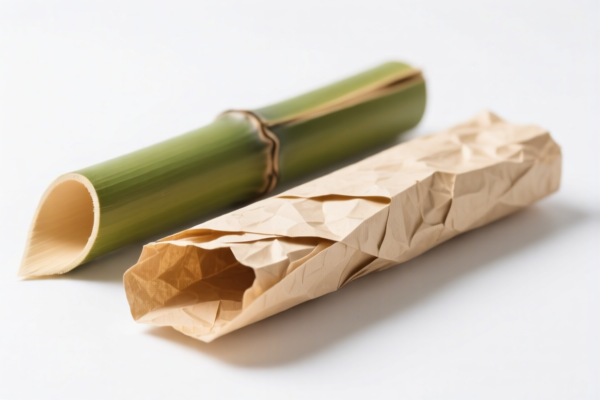
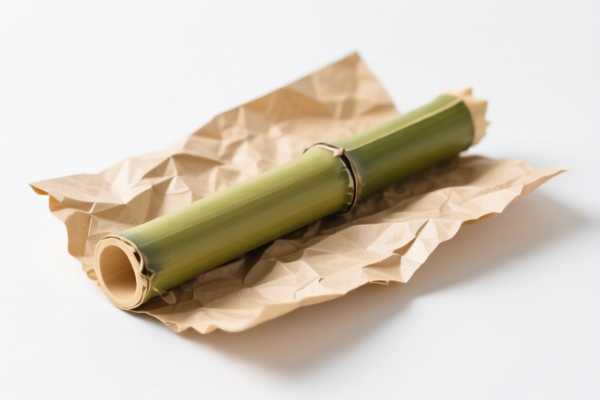
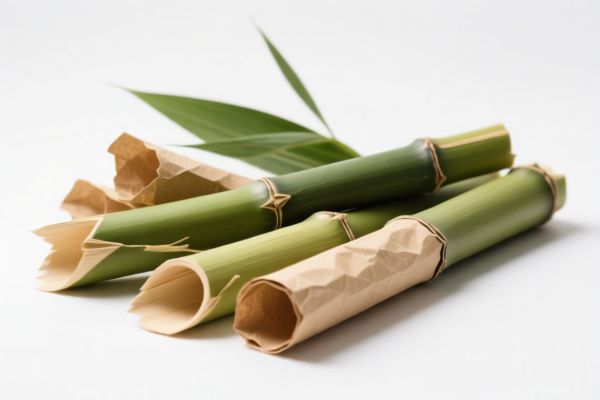
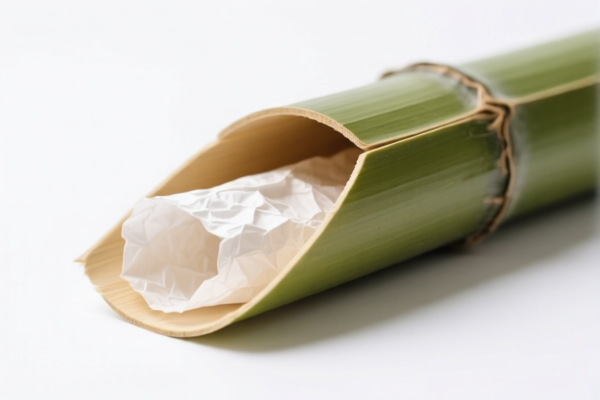
AI分析
🎋 Bamboo Pulp for Molding (Moldable Bamboo Pulp)
🌐 HS Code Reference & Customs Clearance Guide | 2026 Latest Tariff Analysis | Professional Clearance Strategy
📌 I. Product Definition & Classification: Do You Really Understand "Bamboo Pulp for Molding"?
Bamboo pulp for molding is an intermediate industrial material, primarily used to create biodegradable tableware (plates, bowls), packaging, or agricultural products through vacuum molding processes. In international trade, its classification depends heavily on whether it is viewed as a chemical pulp product or a mineral/fiber insulation material, leading to significant differences in tariff structures.
⚠️ Key Distinction:
- If treated as a chemical pulp derived from bamboo (non-coniferous) → Classified under Chapter 47.
- If treated as a finished/semi-finished fiberboard or insulation material made from bamboo fibers → Classified under Chapter 68 (Mineral Products/Fiber).
📦 II. HS Code Classification Details (2026 Latest Tariff Authority Comparison)
| HS Code | Product Description | Application Scenario | Material Nature |
|---|---|---|---|
4703.19.00.00 |
Bamboo Pulp, Chemical, Non-Coniferous | Raw material for paper, molded packaging, or biodegradable goods | ✅ Chemical Wood Pulp category (Plant-based) |
6806.10.00.90 |
Bamboo Pulp Insulation Material, Other | Treated as mineral/fiber insulation boards or mats | ✅ Mineral/Fiber Insulation Cotton category |
6806.90.00.90 |
Other Products of Mineral Substances (Bamboo Fiber Board) | Non-acoustic, non-calcium silicate bamboo fiber products | ✅ Other Mineral/Fiber Articles category |
🔍 Critical Reminder:
- "Bamboo Pulp for Molding" is often ambiguous. If it is raw pulp ready for mixing with water and molding, Chapter 47 is the most technically accurate for raw chemical pulp.
- However, if the product has been processed into boards, mats, or has thermal/acoustic properties, customs may classify it under Chapter 68.
- Misclassification Risk: Declaring high-tariff Chapter 68 items as low-tariff Chapter 47 (or vice versa) can lead to audits, fines, or delays.
💰 III. 2026 Latest Tariff Rate Details (Including Surtaxes & Policy Add-ons)
✅ Applicable Country: United States (US)
✅ Origin: China (CN)
✅ Effective Time: November 10, 2025 (and subsequent imports)
🎯 1. 4703.19.00.00 —— Bamboo Pulp, Chemical, Non-Coniferous
| Item | Details |
|---|---|
| Base Duty Rate | 0.0% (Ad Valorem) |
| USITC Surtax | +25.0% (Under USITC Footnote 9903.88.01 / Section 301) |
| IEEPA Surtax | +10.0% (Targeting Chinese/HK products, effective Nov 10, 2025) |
| Total Tariff Rate | 35.0% |
| Tax Calculation | CIF Value × 35% |
| De Minimis Eligibility | ❌ No (deny_de_minimis) |
| Legal Basis Path | IEEPA:9903.01.25 → IEEPA:9903.01.24 → USITC:4703.19.00.00 → FOOTNOTE:9903.88.01 |
📌 Explanation:
- "Base 0%": Chemical pulps from non-coniferous trees (like bamboo) have a low base duty.
- "USITC +25%": This is the standard Section 301 surtax for many Chinese goods.
- "IEEPA +10%": This is the new additional tariff under the International Emergency Economic Powers Act for specific Chinese imports starting late 2025.
- Total 35%: A significant cost increase compared to pre-2025 rates.
🎯 2. 6806.10.00.90 —— Bamboo Pulp Insulation Material, Other
| Item | Details |
|---|---|
| Base Duty Rate | 3.9% (Ad Valorem) |
| USITC Surtax | +25.0% (Under USITC Footnote 9903.88.01 / Section 301) |
| IEEPA Surtax | +10.0% (Targeting Chinese/HK products, effective Nov 10, 2025) |
| Total Tariff Rate | 38.9% |
| Tax Calculation | CIF Value × 38.9% |
| De Minimis Eligibility | ❌ No (deny_de_minimis) |
| Legal Basis Path | IEEPA:9903.01.25 → IEEPA:9903.01.24 → USITC:6806.10.00.90 → FOOTNOTE:9903.88.01 |
📌 Explanation:
- "Base 3.9%": Unlike raw pulp, processed mineral/fiber insulation materials have a base duty.
- "USITC +25%" & "IEEPA +10%": Same surtaxes apply.
- Total 38.9%: This is 0.9% higher than the chemical pulp classification due to the base duty.
🎯 3. 6806.90.00.90 —— Other Products of Mineral Substances (Non-Acoustic, Non-Calcium Silicate)
| Item | Details |
|---|---|
| Base Duty Rate | 0.0% (Ad Valorem) |
| USITC Surtax | +25.0% (Under USITC Footnote 9903.88.01 / Section 301) |
| IEEPA Surtax | +10.0% (Targeting Chinese/HK products, effective Nov 10, 2025) |
| Total Tariff Rate | 35.0% |
| Tax Calculation | CIF Value × 35.0% |
| De Minimis Eligibility | ❌ No (deny_de_minimis) |
| Legal Basis Path | IEEPA:9903.01.25 → IEEPA:9903.01.24 → USITC:6806.90.00.90 → FOOTNOTE:9903.88.01 |
📌 Explanation:
- "Base 0%": "Other" mineral products often have a 0% base duty.
- "Total 35%": Same as the chemical pulp (4703.19.00.00).
- Strategic Note: If customs classifies your molded pulp as "Other mineral products" rather than "Insulation," the cost is the same as raw pulp. However, the legal definition must match the product's physical state (e.g., is it raw pulp or a rigid board?).
🛠️ IV. Customs Clearance Practical Advice (Battle-Tested Pitfall Avoidance)
✅ 1. Document Checklist (None Can Be Omitted)
| Document | Required | Notes |
|---|---|---|
| ✅ Product Specification Sheet | ✔️ | Must specify: Form (Pulp Slurry vs. Dry Sheets), Composition (100% Bamboo), Usage (Molding for Tableware). |
| ✅ Process Flow Diagram | ✔️ | Show if it is "Chemical Pulp" (Chapter 47) or "Pressed/Insulated Board" (Chapter 68). |
| ✅ Product Photos | ✔️ | Clear images showing texture, packaging, and any labels indicating "Insulation" or "Molding Pulp." |
| ✅ Commercial Invoice | ✔️ | Description must be precise: e.g., "Chemical Bamboo Pulp for Biodegradable Tableware Molding." Avoid vague terms like "Bamboo Fiber." |
| ✅ Certificate of Origin (CO) | ✔️ | Required to verify Chinese origin for surtax application. |
| ✅ Packing List | ✔️ | Detail net/gross weight, carton dimensions. |
✅ 2. Declaration Strategy (Key Mantras)
🔥 "Raw Pulp = Chapter 47, Boards = Chapter 68. Don't Mix, Don't Guess!"
| Scenario | Correct Declaration | Wrong Practice |
|---|---|---|
| Raw Bamboo Pulp Slurry/Dry Sheets (For mixing with water) | 4703.19.00.00 |
Misdeclaring as 6806... → Higher Base Duty (3.9% extra) |
| Molded Bamboo Plates/Bowls (Finished Goods) | Not listed in Data (Likely 4823 or 3926) |
Misdeclaring as Raw Pulp → Major Classification Error |
| Bamboo Fiber Boards (Used for insulation/packaging structure) | 6806.10.00.90 or 6806.90.00.90 |
Misdeclaring as 4703 → Customs May Re-classify & Fine |
| "Bamboo Pulp" Vague Description | ❌ Never | Leads to Customs Query, Delay, or 100% Inspection |
✅ 3. Special Case Handling
| Situation | Handling Advice |
|---|---|
| Product is "Wet Pulp" vs. "Dry Pulp" | Both generally fall under 4703 if not processed into boards. Ensure invoice states "Chemical Process." |
| Product Contains Binders/Additives | If >5% non-bamboo additives, it may no longer be "Pure Pulp." Could shift to 6806 or other chapters. Disclose fully. |
| Intended for "Insulation" Market | If marketed as thermal/acoustic insulation, must declare under 6806.10.00.90. Do not hide end-use. |
| Bamboo vs. Wood Pulp | Bamboo is technically "Non-Coniferous Wood Pulp" in HS terms. Use 4703.19 (Other). Do not use 4703.21/29 (Coniferous). |
🌍 V. Global Market Clearance Comparison (2026 Latest)
| Country/Region | Recommended HS Code | Tariff (China Origin) | Certification | Notes |
|---|---|---|---|---|
| 🇺🇸 USA | 4703.19.00.00 or 6806.90.00.90 |
35.0% (Pulp/Other) / 38.9% (Insulation) | No specific CE/FCC, but FDA may apply for food contact | 35-39% is the new normal. |
| 🇨🇳 China | 4703.19.00.00 |
0% | GB Standards (Food Contact) | Export rebate available. |
| 🇪🇺 EU | 4703.19.00.00 |
0% (MFN) | FSC/PEFC Certification (Sustainability) | Check EPR (Extended Producer Responsibility) for packaging. |
| 🇬🇧 UK | 4703.19.00.00 |
0% (MFN) | UKCA Marking (if applicable) | Similar to EU. |
| 🇦🇺 Australia | 4703.19.00.00 |
5% | Biosecurity Approval (ISPM 15 for wood/pulp) | Strict biosecurity checks on bamboo products. |
📌 Conclusion:
- USA is the most complex market due to the 35%-39% surtax.
- EU/UK/Australia have low/no base tariffs, but Sustainability Certifications (FSC/PEFC) are critical for bamboo products.
- Biosecurity is a major hurdle in Australia/USA for any plant-based material.
📌 VI. Common Mistakes & Pitfall Guide (Blood-Tears Lessons)
❌ Mistake 1: Declaring "Bamboo Fiber Boards" as "Bamboo Pulp" to save base duty.
👉 Consequence: Customs finds the product is compressed/pressed, not raw pulp. Re-classified to 6806, leading to back taxes + penalty.
❌ Mistake 2: Using "Bamboo Pulp" for Finished Molded Tableware.
👉 Consequence: HS Code 4703 is for raw material. Finished plates should be 4823 or 3926. Misclassification leads to entry refusal.
❌ Mistake 3: Ignoring Biosecurity Requirements (especially for USA/Australia).
👉 Consequence: Shipment held at port for fumigation or destroyed if pests are found in bamboo pulp.
❌ Mistake 4: Incorrectly stating 0% Total Tariff (forgetting IEEPA/USITC).
👉 Consequence: Underpayment of duties. Customs will issue a demand for payment + interest.
✅ Correct Practice:
"Chemical Bamboo Pulp, Non-Coniferous, Dry, for Molding Biodegradable Tableware, 100% Bamboo, No Additives, FOB Shanghai"
🎯 VII. Conclusion: Professional Declaration, Time-Saving, Cost-Effective!
🎯 Remember the Mantra:
🔹 "Raw Pulp = 4703 (35%), Boards = 6806 (35-39%). Don't Fake It!"
🔹 "HS Code Determines Tax, Tariff Difference is 9%, One Mistake Costs Thousands!"
📌 Pro Tip:
If your bamboo pulp is sourced from Vietnam, Cambodia, or Thailand, it MAY be eligible for IEEPA Exemptions or lower Section 301 rates depending on specific rules of origin.
Recommendation: Apply for an Advance Ruling (Pre-Classification) with US Customs (CBP) before shipment to avoid 35-39% surprises.
📣 Immediate Action:
📞 Contact a Professional Customs Broker + Provide Product Photos + Apply for HS Code Advance Ruling
🚀 Let your Bamboo Pulp, Clear Customs Smoothly, Export Efficiently, Maximize Profits!
✨ Professional Clearance Starts with Accurate Classification!
💼 Every Cent of Your Cost Deserves to Be Calculated Precisely!
用户评价
关于 HS 编码归类
协调制度(HS)是由世界海关组织(WCO)制定的国际贸易商品分类标准。全球 200 多个国家采用 HS 系统作为海关关税、贸易统计和进出口监管的基础。
每个 HS 编码遵循以下层级结构:
- 章(2 位)——商品大类(例如:第 84 章:机器和机械设备)
- 品目(4 位)——章内的更具体分类
- 子目(6 位)——国际通用细分,所有 WCO 成员国统一使用
- 本国细分(8-10 位)——各国自行扩展的细分编码,如美国 HTSUS 10 位编码
正确的 HS 编码归类对于顺利通关、准确缴纳关税和遵守贸易法规至关重要。错误归类可能导致海关延误、多缴关税或罚款。
从CN进口到US时,适用的关税税率可能包括:
- 最惠国(MFN)税率——适用于 WTO 成员国的标准关税税率
- 普通税率——适用于无贸易协定国家
- 贸易救济关税——附加关税,如 301 条款(反倾销)、232 条款(国家安全)或反补贴税
本页内容仅供参考。如需正式归类,请咨询当地海关或持牌报关代理。