Bamboo fiber pulp for paper wallpaper
CN → US| HS编码 | 关税税率 | 原产国 | 目的国 | 文档 |
|---|---|---|---|---|
| 4805122000 | 35.0% | CN | US | 官方文档 |
| 4706920100 | 35.0% | CN | US | 官方文档 |
| 4805121000 | 35.0% | CN | US | 官方文档 |
| 4706300000 | 35.0% | CN | US | 官方文档 |
| 4802546100 | 35.0% | CN | US | 官方文档 |
商品图片
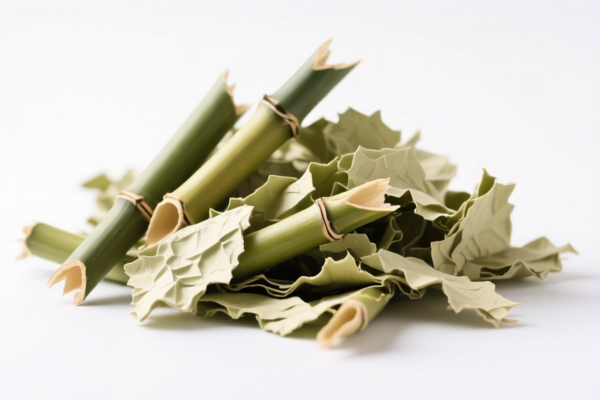


AI分析
🎋 Bamboo Fiber Pulp for Paper Wallpaper
🌐 HS Code Reference & Customs Clearance Guide | 2026 Latest Tariff Analysis | Professional Entry Strategy
📌 I. Product Definition & Classification: What is "Bamboo Fiber Pulp for Paper"?
Bamboo fiber pulp for paper wallpaper is a versatile semi-finished or finished material used primarily in the production of high-end, eco-friendly wallpapers and decorative paper products. In international trade, its classification depends heavily on its physical state (pulp vs. paper) and processing level (uncoated paper vs. pulp fibers).
Key Distinctions: * Pulp State (47xx Series): If the material is raw bamboo fiber pulp, not yet formed into sheets or specific paper products. * Paper State (48xx Series): If the material has been processed into sheets, rolls, or boards, even if uncoated.
⚠️ Critical Classification Point:
- If it is fibrous, unformed cellulose material →归类 to Chapter 47 (Pulp)
- If it is formed into sheets/boards, even if uncoated → 归类 to Chapter 48 (Paper/Cardboard)
📦 II. HS Code Classification Details (2026 Latest Tariff Authority对照)
Based on the provided data, here are the possible HS Codes for "Bamboo Fiber Pulp for Paper Wallpaper":
| HS Code | Product Description | Summary Logic | Total Tax Rate |
|---|---|---|---|
4805.12.20.00 |
Uncoated paper board of bamboo fiber | Classified as paper, fits uncoated board category | 35.0% |
4706.92.01.00 |
Bamboo pulp, fibrous cellulose material | Classified as pulp, fits paper pulp category | 35.0% |
4805.12.10.00 |
Uncoated paper, bamboo material | Based on paper attribute, no material conflict | 35.0% |
4706.30.00.00 |
Bamboo pulp (other) | Name includes "bamboo", fits bamboo requirements | 35.0% |
4802.54.61.00 |
Uncoated paper, writing/printing grade | Material is uncoated paper, usage fits writing/printing | 35.0% |
🔍 Key Insight:
- All listed HS Codes carry a Total Tax Rate of 35.0% for imports from China to the US.
- The core difference lies in whether customs views the product as Pulp (47xx) or Paper (48xx).
- 4706.92.01.00 and 4706.30.00.00 are for raw pulp.
- 4805.12.20.00, 4805.12.10.00, and 4802.54.61.00 are for finished paper/board.
💰 III. 2026 Latest Tariff Rate Breakdown (Detailed Policy Add-ons)
✅ Applicable Country: United States (US)
✅ Origin: China (CN)
✅ Effective Date: From November 10, 2025 (including subsequent imports)
🎯 1. 4805.12.20.00 —— Uncoated Paper Board (Bamboo)
| Item | Content |
|---|---|
| Base Tariff | 0.0% |
| Section 301 Additional Tariff | +25.0% |
| Section 122 Tariff | +10.0% |
| Total Tariff | 35.0% |
| Tax Calculation | CIF Value × 35% |
| De Minimis Exemption | ❌ Not Eligible |
| Legal Basis Path | Section 301: Footnote 9903.88.01 → Section 122: IEEPA → USITC: 4805.12.20.00 |
📌 Explanation:
- The 25% is from the Section 301 trade war tariffs on Chinese goods.
- The 10% is from the Section 122 tariffs (often linked to national security or emergency powers).
- Total 35% is a high tariff for paper products. Proper classification as "pulp" vs. "paper" is critical to avoid misclassification penalties.
🎯 2. 4706.92.01.00 —— Other Pulp from Wood or Other Fibrous Cellulosic Material (Bamboo)
| Item | Content |
|---|---|
| Base Tariff | 0.0% |
| Section 301 Additional Tariff | +25.0% |
| Section 122 Tariff | +10.0% |
| Total Tariff | 35.0% |
| Tax Calculation | CIF Value × 35% |
| De Minimis Exemption | ❌ Not Eligible |
| Legal Basis Path | Section 301: Footnote 9903.88.01 → Section 122: IEEPA → USITC: 4706.92.01.00 |
📌 Note:
- If your product is raw bamboo pulp (not yet dried into sheets), use this code.
- Despite being "raw material," it still incurs the full 35% due to origin-based tariffs.
🎯 3. 4805.12.10.00 & 4802.54.61.00 —— Other Paper Products
| Item | Content |
|---|---|
| Base Tariff | 0.0% |
| Section 301 Additional Tariff | +25.0% |
| Section 122 Tariff | +10.0% |
| Total Tariff | 35.0% |
| Tax Calculation | CIF Value × 35% |
| De Minimis Exemption | ❌ Not Eligible |
| Legal Basis Path | Same as above |
📌 Note:
- 4805.12.10.00 is for uncoated paper boards.
- 4802.54.61.00 is for uncoated paper for writing/printing.
- For wallpaper, if it's a decorative uncoated sheet, 4805.12.20.00 or 4805.12.10.00 is more appropriate than 4802.54.61.00 (which is for standard office paper).
🛠️ IV. Customs Clearance Practical Advice (Pitfall Avoidance Guide)
✅ 1. Required Documentation Checklist (All Mandatory)
| Document | Must Provide | Description |
|---|---|---|
| ✅ Product Specification Sheet | ✔️ | Detail: Is it pulp (fibers) or paper (sheets)? Moisture content, thickness, weight. |
| ✅ Process Flow Chart | ✔️ | Shows steps from bamboo culm to final product. Critical for proving "pulp" vs. "paper" status. |
| ✅ Product Photos | ✔️ | Clear images showing texture, form (roll/sheet/bale), and labeling. |
| ✅ Commercial Invoice | ✔️ | Must clearly state "Bamboo Fiber Pulp for Paper Wallpaper" or "Uncoated Bamboo Paper." |
| ✅ Packing List | ✔️ | Details net/gross weight, dimensions, and packaging type. |
| ✅ Certificate of Origin (CO) | ✔️ | Required for tariff calculation. |
✅ 2. Declaration Tips (Key Mantras)
🔥 "Pulp vs. Paper: State Determines Code, Code Determines Tax!"
| Scenario | Correct HS Code | Risk if Incorrect |
|---|---|---|
| Raw Bamboo Pulp (fibrous, not formed into sheets) | 4706.92.01.00 or 4706.30.00.00 |
Misclassified as paper → Potential under/over-valuation issues, though rate is same. |
| Uncoated Bamboo Paper/Board (formed into sheets/rolls) | 4805.12.20.00 or 4805.12.10.00 |
Misclassified as pulp → May trigger anti-dumping inquiries or procedural delays. |
| Decorative Wallpaper (finished, printed/coated) | Not in provided data | ⚠️ Warning: If coated or printed, these codes are incorrect. May require different HS code with different tax rate. Check with customs if product is coated. |
✅ 3. Special Circumstances Handling
| Situation | Handling Advice |
|---|---|
| Is it Coated? | If the "wallpaper" is coated or printed, it is NOT "uncoated paper." You may need a different HS code (e.g., 4823.xx.xx). Confirm with supplier if it's truly uncoated. |
| OEM Custom Pulp | Provide customer order + technical specs to prove it's not for direct retail use. |
| Mixed Shipment | If shipment contains both pulp and paper, declare separately. Mixing codes can lead to audit. |
🌍 V. Global Market Comparison (2026 Latest)
| Country/Region | Recommended HS Code | Tariff | Notes |
|---|---|---|---|
| 🇺🇸 USA | 4805.12.20.00 / 4706.92.01.00 |
35% | High tariff due to Section 301 + 122. No de minimis. |
| 🇨🇳 China | 4805.12.20.00 / 4706.92.01.00 |
0-5% | Lower tax for domestic trade. |
| 🇪🇺 EU | 4805.12.20.00 / 4706.92.01.00 |
0-6.5% | Check if bamboo qualifies for GSP or other preferences. |
| 🇯🇵 Japan | 4805.12.20.00 / 4706.92.01.00 |
0-3% | Generally lower tariffs on paper/pulp products. |
📌 Conclusion:
- The US market is the most expensive for this product due to the 35% combined tariff.
- Consider supply chain diversification (e.g., sourcing from non-China origins) if targeting the US market heavily.
📌 VI. Common Errors & Pitfall Guide (Lessons Learned)
❌ Error 1: Declaring "Wallpaper" as "Pulp" when it's actually paper.
👉 Consequence: Customs may reject as misdeclaration. Even if tax is same, documentation mismatch causes delays.
❌ Error 2: Ignoring "Coating" status.
👉 Consequence: If the paper is coated, using 4805.12.20.00 is wrong. Coated paper falls under 4810.xx.xx or 4823.xx.xx. This is a major compliance risk.
❌ Error 3: Assuming De Minimis ($800) applies.
👉 Consequence: ❌ No De Minimis for China-origin goods under Section 301/122. Small shipments still pay 35%.
🎯 VII. Conclusion: Precise Declaration Saves Costs!
🎯 Remember the Mantra:
🔹 "Pulp is 47, Paper is 48. Uncoated is key. Coated is different!"
🔹 "35% is the US price for bamboo paper/pulp. No exceptions for small shipments."
📌 Pro Tip:
If your product is finished, printed, or coated wallpaper, do NOT use the codes above.
Consult a customs broker for Chapter 49 (Printed matter) or Chapter 48 subheadings for coated paper.
The tax rate may differ, but accuracy is paramount.
📣 Immediate Action:
📞 Contact your customs broker with product samples and spec sheets.
🚀 Declare accurately to avoid delays, penalties, and unexpected costs.
✨ Professional clearance starts with precise classification!
💼 Every dollar of tariff cost counts!
用户评价
关于 HS 编码归类
协调制度(HS)是由世界海关组织(WCO)制定的国际贸易商品分类标准。全球 200 多个国家采用 HS 系统作为海关关税、贸易统计和进出口监管的基础。
每个 HS 编码遵循以下层级结构:
- 章(2 位)——商品大类(例如:第 84 章:机器和机械设备)
- 品目(4 位)——章内的更具体分类
- 子目(6 位)——国际通用细分,所有 WCO 成员国统一使用
- 本国细分(8-10 位)——各国自行扩展的细分编码,如美国 HTSUS 10 位编码
正确的 HS 编码归类对于顺利通关、准确缴纳关税和遵守贸易法规至关重要。错误归类可能导致海关延误、多缴关税或罚款。
从CN进口到US时,适用的关税税率可能包括:
- 最惠国(MFN)税率——适用于 WTO 成员国的标准关税税率
- 普通税率——适用于无贸易协定国家
- 贸易救济关税——附加关税,如 301 条款(反倾销)、232 条款(国家安全)或反补贴税
本页内容仅供参考。如需正式归类,请咨询当地海关或持牌报关代理。