Bamboo fiber pulp for paper wallpaper
CN → US| HS Code | Tariff Rate | Origin | Destination | Doc |
|---|---|---|---|---|
| 4805122000 | 35.0% | CN | US | Official Doc |
| 4706920100 | 35.0% | CN | US | Official Doc |
| 4805121000 | 35.0% | CN | US | Official Doc |
| 4706300000 | 35.0% | CN | US | Official Doc |
| 4802546100 | 35.0% | CN | US | Official Doc |
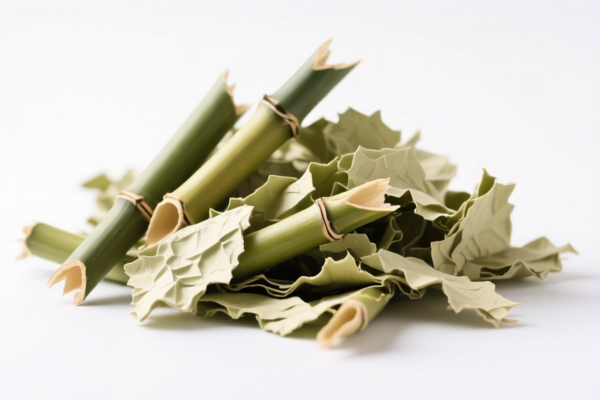
Product Images


AI Analysis
🎋 Bamboo Fiber Pulp for Paper Wallpaper
🌐 HS Code Reference & Customs Clearance Guide | 2026 Latest Tariff Analysis | Professional Entry Strategy
📌 I. Product Definition & Classification: What is "Bamboo Fiber Pulp for Paper"?
Bamboo fiber pulp for paper wallpaper is a versatile semi-finished or finished material used primarily in the production of high-end, eco-friendly wallpapers and decorative paper products. In international trade, its classification depends heavily on its physical state (pulp vs. paper) and processing level (uncoated paper vs. pulp fibers).
Key Distinctions: * Pulp State (47xx Series): If the material is raw bamboo fiber pulp, not yet formed into sheets or specific paper products. * Paper State (48xx Series): If the material has been processed into sheets, rolls, or boards, even if uncoated.
⚠️ Critical Classification Point:
- If it is fibrous, unformed cellulose material →归类 to Chapter 47 (Pulp)
- If it is formed into sheets/boards, even if uncoated → 归类 to Chapter 48 (Paper/Cardboard)
📦 II. HS Code Classification Details (2026 Latest Tariff Authority对照)
Based on the provided data, here are the possible HS Codes for "Bamboo Fiber Pulp for Paper Wallpaper":
| HS Code | Product Description | Summary Logic | Total Tax Rate |
|---|---|---|---|
4805.12.20.00 |
Uncoated paper board of bamboo fiber | Classified as paper, fits uncoated board category | 35.0% |
4706.92.01.00 |
Bamboo pulp, fibrous cellulose material | Classified as pulp, fits paper pulp category | 35.0% |
4805.12.10.00 |
Uncoated paper, bamboo material | Based on paper attribute, no material conflict | 35.0% |
4706.30.00.00 |
Bamboo pulp (other) | Name includes "bamboo", fits bamboo requirements | 35.0% |
4802.54.61.00 |
Uncoated paper, writing/printing grade | Material is uncoated paper, usage fits writing/printing | 35.0% |
🔍 Key Insight:
- All listed HS Codes carry a Total Tax Rate of 35.0% for imports from China to the US.
- The core difference lies in whether customs views the product as Pulp (47xx) or Paper (48xx).
- 4706.92.01.00 and 4706.30.00.00 are for raw pulp.
- 4805.12.20.00, 4805.12.10.00, and 4802.54.61.00 are for finished paper/board.
💰 III. 2026 Latest Tariff Rate Breakdown (Detailed Policy Add-ons)
✅ Applicable Country: United States (US)
✅ Origin: China (CN)
✅ Effective Date: From November 10, 2025 (including subsequent imports)
🎯 1. 4805.12.20.00 —— Uncoated Paper Board (Bamboo)
| Item | Content |
|---|---|
| Base Tariff | 0.0% |
| Section 301 Additional Tariff | +25.0% |
| Section 122 Tariff | +10.0% |
| Total Tariff | 35.0% |
| Tax Calculation | CIF Value × 35% |
| De Minimis Exemption | ❌ Not Eligible |
| Legal Basis Path | Section 301: Footnote 9903.88.01 → Section 122: IEEPA → USITC: 4805.12.20.00 |
📌 Explanation:
- The 25% is from the Section 301 trade war tariffs on Chinese goods.
- The 10% is from the Section 122 tariffs (often linked to national security or emergency powers).
- Total 35% is a high tariff for paper products. Proper classification as "pulp" vs. "paper" is critical to avoid misclassification penalties.
🎯 2. 4706.92.01.00 —— Other Pulp from Wood or Other Fibrous Cellulosic Material (Bamboo)
| Item | Content |
|---|---|
| Base Tariff | 0.0% |
| Section 301 Additional Tariff | +25.0% |
| Section 122 Tariff | +10.0% |
| Total Tariff | 35.0% |
| Tax Calculation | CIF Value × 35% |
| De Minimis Exemption | ❌ Not Eligible |
| Legal Basis Path | Section 301: Footnote 9903.88.01 → Section 122: IEEPA → USITC: 4706.92.01.00 |
📌 Note:
- If your product is raw bamboo pulp (not yet dried into sheets), use this code.
- Despite being "raw material," it still incurs the full 35% due to origin-based tariffs.
🎯 3. 4805.12.10.00 & 4802.54.61.00 —— Other Paper Products
| Item | Content |
|---|---|
| Base Tariff | 0.0% |
| Section 301 Additional Tariff | +25.0% |
| Section 122 Tariff | +10.0% |
| Total Tariff | 35.0% |
| Tax Calculation | CIF Value × 35% |
| De Minimis Exemption | ❌ Not Eligible |
| Legal Basis Path | Same as above |
📌 Note:
- 4805.12.10.00 is for uncoated paper boards.
- 4802.54.61.00 is for uncoated paper for writing/printing.
- For wallpaper, if it's a decorative uncoated sheet, 4805.12.20.00 or 4805.12.10.00 is more appropriate than 4802.54.61.00 (which is for standard office paper).
🛠️ IV. Customs Clearance Practical Advice (Pitfall Avoidance Guide)
✅ 1. Required Documentation Checklist (All Mandatory)
| Document | Must Provide | Description |
|---|---|---|
| ✅ Product Specification Sheet | ✔️ | Detail: Is it pulp (fibers) or paper (sheets)? Moisture content, thickness, weight. |
| ✅ Process Flow Chart | ✔️ | Shows steps from bamboo culm to final product. Critical for proving "pulp" vs. "paper" status. |
| ✅ Product Photos | ✔️ | Clear images showing texture, form (roll/sheet/bale), and labeling. |
| ✅ Commercial Invoice | ✔️ | Must clearly state "Bamboo Fiber Pulp for Paper Wallpaper" or "Uncoated Bamboo Paper." |
| ✅ Packing List | ✔️ | Details net/gross weight, dimensions, and packaging type. |
| ✅ Certificate of Origin (CO) | ✔️ | Required for tariff calculation. |
✅ 2. Declaration Tips (Key Mantras)
🔥 "Pulp vs. Paper: State Determines Code, Code Determines Tax!"
| Scenario | Correct HS Code | Risk if Incorrect |
|---|---|---|
| Raw Bamboo Pulp (fibrous, not formed into sheets) | 4706.92.01.00 or 4706.30.00.00 |
Misclassified as paper → Potential under/over-valuation issues, though rate is same. |
| Uncoated Bamboo Paper/Board (formed into sheets/rolls) | 4805.12.20.00 or 4805.12.10.00 |
Misclassified as pulp → May trigger anti-dumping inquiries or procedural delays. |
| Decorative Wallpaper (finished, printed/coated) | Not in provided data | ⚠️ Warning: If coated or printed, these codes are incorrect. May require different HS code with different tax rate. Check with customs if product is coated. |
✅ 3. Special Circumstances Handling
| Situation | Handling Advice |
|---|---|
| Is it Coated? | If the "wallpaper" is coated or printed, it is NOT "uncoated paper." You may need a different HS code (e.g., 4823.xx.xx). Confirm with supplier if it's truly uncoated. |
| OEM Custom Pulp | Provide customer order + technical specs to prove it's not for direct retail use. |
| Mixed Shipment | If shipment contains both pulp and paper, declare separately. Mixing codes can lead to audit. |
🌍 V. Global Market Comparison (2026 Latest)
| Country/Region | Recommended HS Code | Tariff | Notes |
|---|---|---|---|
| 🇺🇸 USA | 4805.12.20.00 / 4706.92.01.00 |
35% | High tariff due to Section 301 + 122. No de minimis. |
| 🇨🇳 China | 4805.12.20.00 / 4706.92.01.00 |
0-5% | Lower tax for domestic trade. |
| 🇪🇺 EU | 4805.12.20.00 / 4706.92.01.00 |
0-6.5% | Check if bamboo qualifies for GSP or other preferences. |
| 🇯🇵 Japan | 4805.12.20.00 / 4706.92.01.00 |
0-3% | Generally lower tariffs on paper/pulp products. |
📌 Conclusion:
- The US market is the most expensive for this product due to the 35% combined tariff.
- Consider supply chain diversification (e.g., sourcing from non-China origins) if targeting the US market heavily.
📌 VI. Common Errors & Pitfall Guide (Lessons Learned)
❌ Error 1: Declaring "Wallpaper" as "Pulp" when it's actually paper.
👉 Consequence: Customs may reject as misdeclaration. Even if tax is same, documentation mismatch causes delays.
❌ Error 2: Ignoring "Coating" status.
👉 Consequence: If the paper is coated, using 4805.12.20.00 is wrong. Coated paper falls under 4810.xx.xx or 4823.xx.xx. This is a major compliance risk.
❌ Error 3: Assuming De Minimis ($800) applies.
👉 Consequence: ❌ No De Minimis for China-origin goods under Section 301/122. Small shipments still pay 35%.
🎯 VII. Conclusion: Precise Declaration Saves Costs!
🎯 Remember the Mantra:
🔹 "Pulp is 47, Paper is 48. Uncoated is key. Coated is different!"
🔹 "35% is the US price for bamboo paper/pulp. No exceptions for small shipments."
📌 Pro Tip:
If your product is finished, printed, or coated wallpaper, do NOT use the codes above.
Consult a customs broker for Chapter 49 (Printed matter) or Chapter 48 subheadings for coated paper.
The tax rate may differ, but accuracy is paramount.
📣 Immediate Action:
📞 Contact your customs broker with product samples and spec sheets.
🚀 Declare accurately to avoid delays, penalties, and unexpected costs.
✨ Professional clearance starts with precise classification!
💼 Every dollar of tariff cost counts!
Customer Reviews
About HS Code Classification
The Harmonized System (HS) is an internationally standardized nomenclature developed by the World Customs Organization (WCO) to classify traded products. Over 200 countries use the HS system as the basis for customs tariffs, trade statistics, and import/export regulations.
Each HS code follows a hierarchical structure:
- Chapter (2 digits) — Broad category of goods (e.g., Chapter 84: Machinery and Mechanical Appliances)
- Heading (4 digits) — More specific grouping within the chapter
- Subheading (6 digits) — Internationally standardized breakdown, used by all WCO member countries
- National subdivisions (8-10 digits) — Country-specific extensions for further classification, such as US HTSUS 10-digit codes
Correct HS code classification is essential for smooth customs clearance, accurate duty payment, and compliance with trade regulations. Misclassification can lead to customs delays, overpayment of duties, or penalties.
When importing from CN to US, the applicable tariff rates may include:
- Most-Favored-Nation (MFN) rate — The standard duty rate applied to WTO members
- General rate — Applied to countries without trade agreements
- Trade remedy duties — Additional tariffs such as Section 301 (anti-dumping), Section 232 (national security), or countervailing duties
The information provided on this page is for reference purposes only. For official classification, please consult with your local customs authority or a licensed customs broker.