Bamboo or Rattan Tableware
CN → US| HS编码 | 关税税率 | 原产国 | 目的国 | 文档 |
|---|---|---|---|---|
| 4419120000 | 13.2% | CN | US | 官方文档 |
| 4419191000 | 15.3% | CN | US | 官方文档 |
| 4419110000 | 13.2% | CN | US | 官方文档 |
| 4602114500 | 41.6% | CN | US | 官方文档 |
| 4419191000 | 15.3% | CN | US | 官方文档 |
商品图片
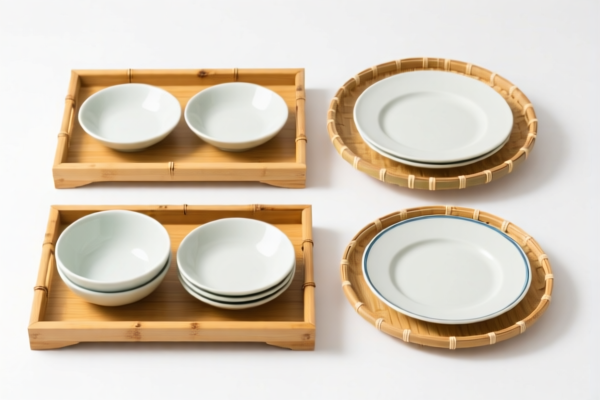
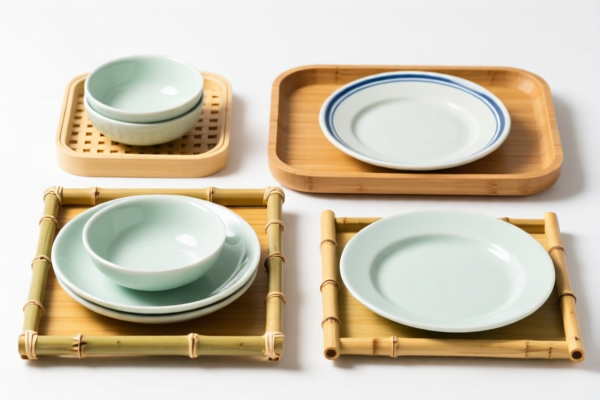
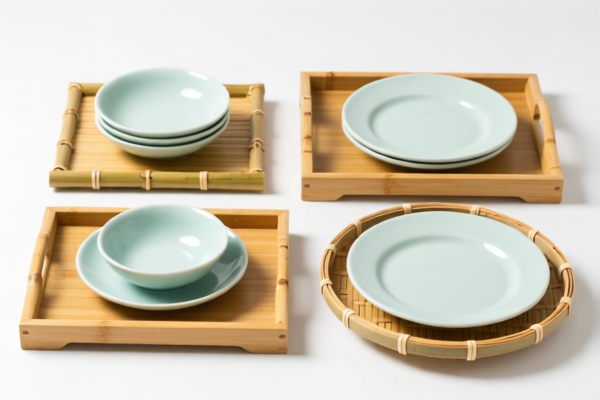
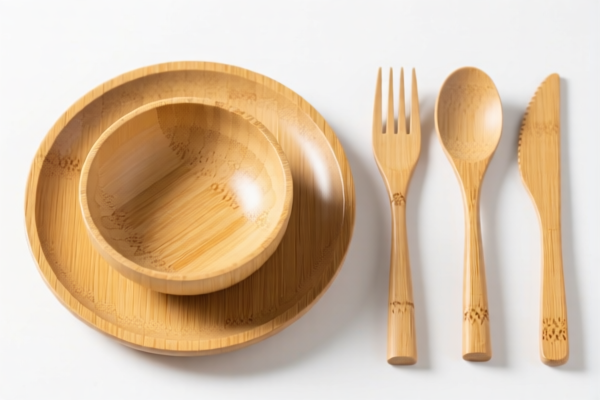
AI分析
🎋 Bamboo & Rattan Tableware: The Ultimate HS Code & Tariff Guide for US Imports (2026)
🌐 HS Code Reference & Customs Clearance Guide | 2026 Latest Tariff Analysis | Professional Clearance Strategy
📌 I. Product Definition: What Exactly is "Bamboo/Rattan Tableware"?
Bamboo and rattan tableware falls under Chapter 44 (Wood and articles of wood; wood charcoal), specifically heading 4419. However, the classification varies significantly based on manufacturing technique (carved/cut vs. woven) and specific use case (general dining vs. compostable).
In international trade, these items are categorized into two main types:
- Carved/Cut Bamboo Products: Items made by cutting, shaping, or carving bamboo pieces into plates, bowls, and cutlery.
- Key Feature: Solid wood structure, non-woven.
- Woven Bamboo/Rattan Products: Items made by weaving strips of bamboo or rattan into baskets, mats, or intricate tableware shapes.
- Key Feature: Woven structure, often categorized under Chapter 46 (Vegetable Plaiting Materials) or specific woven sub-headings in Chapter 44.
⚠️ Critical Distinction Point:
- If the item is solid, carved, or cut (e.g., a bamboo plate, fork, or spoon) → It generally falls under HS 4419.
- If the item is woven (e.g., a woven bamboo tray or basket-like container) → It may fall under HS 4602 (if strictly woven plaiting material) or HS 4419.19 (if deemed a woven article of wood). Note: The data provided maps woven items to 4602.11.45.00, which is a specific duty rate classification for woven articles.
📦 II. HS Code Classification Details (2026 Latest Tariff Authority)
Based on the provided data, here is the precise mapping of Bamboo/Rattan Tableware to HS Codes and Tax Rates.
| HS Code | Product Description | Applicable Scenario | Taxation Category |
|---|---|---|---|
4419.12.00.00 |
Bamboo tableware, general | Standard bamboo plates, bowls, cutlery (not specifically "other") | 13.2% Total |
4419.19.10.00 |
Bamboo tableware (Other/Compostable) | Biodegradable/compostable bamboo utensils or specific "other" bamboo articles | 15.3% Total |
4602.11.45.00 |
Woven bamboo tableware | Woven bamboo trays, baskets, or intricate woven serving dishes | 41.6% Total |
4419.11.00.00 |
Bamboo plates/serving dishes | Specific bamboo plates or serving platters | 13.2% Total |
🔍 Important Note:
-4419.11.00.00and4419.12.00.00share the same total tax rate (13.2%) but differ in specific sub-classification (plates vs. other tableware).
-4602.11.45.00carries a significantly higher tax burden (41.6%) due to the "122 Clause" tariffs and 25% Section 301 tariffs applied to woven products.
-4419.19.10.00is often used for eco-friendly/compostable bamboo items, carrying a slightly higher base rate (15.3%) than standard tableware.
💰 III. 2026 Latest Tariff Rate Breakdown (Detailed Tax Clauses)
✅ Applicable Country: United States (US)
✅ Country of Origin: China (CN)
✅ Effective Date: Post-2025 Trade Policies (Including Section 301 & 122 Clauses)
🎯 1. 4419.12.00.00 & 4419.11.00.00 – Standard Bamboo Tableware & Plates
| Item | Detail |
|---|---|
| Base Tariff Rate | 3.2% (ad valorem) |
| Section 301 Tariff | 0.0% (Note: Some bamboo tableware may be exempt or low-tariffed compared to other wood products, but verify specific exclusions) |
| 122 Clause Tariff | +10% (Specific punitive tariff applicable to Chinese goods under current trade actions) |
| Total Effective Tax Rate | 13.2% |
| Tax Calculation | CIF Value × 13.2% |
| De Minimis Eligibility | ❌ Not Eligible (For shipments >$800, duties apply; for <800, usually exempt, but bulk imports are subject to duties) |
| Legal Authority Path | HTSUS:4419.12.00.00 → IEEPA:122 → USITC:10% |
📌 Explanation:
- These are the most cost-effective categories for bamboo tableware.
- The 13.2% total includes a modest base duty plus a flat 10% punitive tariff.
- No Section 301 (25%) surcharge is listed for these specific codes in the provided data, making them highly competitive.
🎯 2. 4419.19.10.00 – Bamboo Tableware (Other/Compostable)
| Item | Detail |
|---|---|
| Base Tariff Rate | 5.3% (ad valorem) |
| Section 301 Tariff | 0.0% |
| 122 Clause Tariff | +10% |
| Total Effective Tax Rate | 15.3% |
| Tax Calculation | CIF Value × 15.3% |
| De Minimis Eligibility | ❌ Not Eligible |
| Legal Authority Path | HTSUS:4419.19.10.00 → IEEPA:122 → USITC:10% |
📌 Explanation:
- Slightly higher base rate (5.3% vs 3.2%) due to classification as "Other" articles.
- Often used for biodegradable/compostable bamboo cutlery to highlight eco-friendly attributes.
- Total cost is only 2.1% higher than standard tableware.
🎯 3. 4602.11.45.00 – Woven Bamboo Tableware
| Item | Detail |
|---|---|
| Base Tariff Rate | 6.6% (ad valorem) |
| Section 301 Tariff | +25.0% (High punitive tariff under Section 301) |
| 122 Clause Tariff | +10% |
| Total Effective Tax Rate | 41.6% |
| Tax Calculation | CIF Value × 41.6% |
| De Minimis Eligibility | ❌ Not Eligible |
| Legal Authority Path | HTSUS:4602.11.45.00 → Section 301:9903.88.01 → IEEPA:122 |
📌 Explanation:
- EXTREMELY HIGH TAXATION: The total rate of 41.6% makes woven bamboo tableware very costly to import.
- The 25% Section 301 tariff is the primary driver of this high cost.
- Warning: Do not misclassify woven items as "cut bamboo" (4419.xxxx) to avoid these duties. Customs agents are trained to detect weaving patterns.
🛠️ IV. Customs Clearance Practical Advice (Real-World Pitfall Avoidance)
✅ 1. Documentation Checklist (Non-Negotiable)
| Document | Required? | Purpose |
|---|---|---|
| ✅ Product Description | ✔️ | Must clearly state "Bamboo" and "Tableware" (e.g., "Bamboo Cutting Board," "Bamboo Plates"). Avoid vague terms like "Wooden Product." |
| ✅ Composition Declaration | ✔️ | Confirm 100% bamboo/rattan. If mixed with plastic/metal, it may fall under different chapters (e.g., 39 or 82). |
| ✅ Photo Evidence | ✔️ | Clear images showing woven vs. carved structure. Crucial for distinguishing between 13.2% and 41.6% tariffs. |
| ✅ Commercial Invoice | ✔️ | Must match HS Code exactly. Misdeclaration leads to penalties. |
| ✅ Fumigation Certificate | ✔️ | Required for all wood/bamboo products entering the US to prevent pest invasion (ISPM 15 standard). |
| ✅ FDA Compliance (if applicable) | ✔️ | If intended for direct food contact, ensure FDA compliance for food-safe finishes (no toxic lacquers). |
✅ 2. Declaration Strategy (Key Mnemonics)
🔥 "Solid is Cheap, Woven is Expensive; Be Precise or Pay the Price!"
| Scenario | Correct HS Code | Incorrect Action | Consequence |
|---|---|---|---|
| Solid Bamboo Plates | 4419.11.00.00 |
Declare as "Woven" | Overpay taxes (41.6% instead of 13.2%) |
| Woven Bamboo Trays | 4602.11.45.00 |
Declare as "Solid" | SEVERE PENALTY for misclassification + duty evasion |
| Compostable Bamboo Forks | 4419.19.10.00 |
Declare as "Plastic" | FDA violation + incorrect duty |
| Bamboo Cutlery (Knife) | 4419.12.00.00 |
Split into "Blade" (82) + "Handle" (44) | Complex customs scrutiny, potential delays |
✅ 3. Special Cases & Handling
| Scenario | Handling Advice |
|---|---|
| Bamboo + Plastic Handle | If >50% value is bamboo, may still be 4419. If plastic dominates, it could be 39. Consult a broker. |
| Lacquered/Varnished Bamboo | Must declare finish type. If non-food-safe, it cannot be imported as "tableware." |
| Mixed Containers | If a container has both solid bamboo plates and woven baskets, declare separately by HS Code. Do not average the tax rate. |
| Origin: Non-China | If bamboo is sourced from Vietnam or Indonesia, Section 301 tariffs may not apply. Verify Country of Origin carefully to save 10-25%. |
🌍 V. Global Market Comparison (2026)
| Country/Region | Recommended HS Code | Estimated Duty | Notes |
|---|---|---|---|
| 🇺🇸 USA | 4419.12.00.00 |
13.2% | Low risk, high volume |
| 🇺🇸 USA | 4602.11.45.00 |
41.6% | Avoid unless premium pricing allowed |
| 🇪🇺 EU | 4419.11/12 |
0-6.5% | No Section 301 equivalent; CBAM may apply later |
| 🇨🇳 China (Import) | 4419 |
5-15% | Domestic bamboo is abundant; imports are niche |
📌 Conclusion:
- USA is the primary market with specific punitive tariffs on woven products.
- Solid bamboo tableware (4419.11/12) remains highly profitable with only 13.2% duty.
- Woven products face barriers; consider sourcing from non-China origins to avoid 122 Clause and Section 301 tariffs.
📌 VI. Common Mistakes & Pitfall Guide (Lessons Learned)
❌ Mistake 1: Calling a woven bamboo basket "Bamboo Plate"
👉 Consequence: Customs rejects declaration → 41.6% duty applied + fines.
❌ Mistake 2: Ignoring Fumigation Certificate
👉 Consequence: Goods held at port for fumigation treatment → $500+ storage fees + delays.
❌ Mistake 3: Assuming all "Wooden" tableware is 13.2%
👉 Consequence: If it's rattan or woven, it may be 4602 (41.6%). Always specify material and structure.
❌ Mistake 4: Not separating Solid vs. Woven in mixed shipments
👉 Consequence: Customs audits entire shipment → Audit delay + potential penalties.
✅ Best Practice:
Use clear, unambiguous descriptions:
"Solid Bamboo Dinner Plates, Unvarnished, Food-Grade, Fumigated"
vs.
"Hand-Woven Bamboo Serving Tray, Natural Finish"
🎯 VII. Conclusion: Strategic Sourcing for Maximum Profit
🎯 Remember the Golden Rule:
🔹 "Solid is 13%, Woven is 41%; Choose Structure Wisely."
🔹 "Fumigation is Key; FDA is Mandatory."
📌 Pro Tip:
If you are importing woven bamboo tableware, consider sourcing from Vietnam or Thailand to potentially avoid the 10% 122 Clause and 25% Section 301 tariffs. This could reduce your effective duty from 41.6% to ~6.6%.
📣 Immediate Action:
📞 Verify HS Code Pre-Ruling with your customs broker before shipment.
📸 Photograph Weave Patterns for customs inspection.
🌿 Ensure FDA & Fumigation Compliance to avoid port holds.
✨ Professional Clearance Starts with Precise Classification!
💼 Save 28% Duty by Choosing Solid Bamboo Over Woven!
用户评价
关于 HS 编码归类
协调制度(HS)是由世界海关组织(WCO)制定的国际贸易商品分类标准。全球 200 多个国家采用 HS 系统作为海关关税、贸易统计和进出口监管的基础。
每个 HS 编码遵循以下层级结构:
- 章(2 位)——商品大类(例如:第 84 章:机器和机械设备)
- 品目(4 位)——章内的更具体分类
- 子目(6 位)——国际通用细分,所有 WCO 成员国统一使用
- 本国细分(8-10 位)——各国自行扩展的细分编码,如美国 HTSUS 10 位编码
正确的 HS 编码归类对于顺利通关、准确缴纳关税和遵守贸易法规至关重要。错误归类可能导致海关延误、多缴关税或罚款。
从CN进口到US时,适用的关税税率可能包括:
- 最惠国(MFN)税率——适用于 WTO 成员国的标准关税税率
- 普通税率——适用于无贸易协定国家
- 贸易救济关税——附加关税,如 301 条款(反倾销)、232 条款(国家安全)或反补贴税
本页内容仅供参考。如需正式归类,请咨询当地海关或持牌报关代理。