Bamboo or Rattan Tableware
CN → US| HS Code | Tariff Rate | Origin | Destination | Doc |
|---|---|---|---|---|
| 4419120000 | 13.2% | CN | US | Official Doc |
| 4419191000 | 15.3% | CN | US | Official Doc |
| 4419110000 | 13.2% | CN | US | Official Doc |
| 4602114500 | 41.6% | CN | US | Official Doc |
| 4419191000 | 15.3% | CN | US | Official Doc |
Product Images
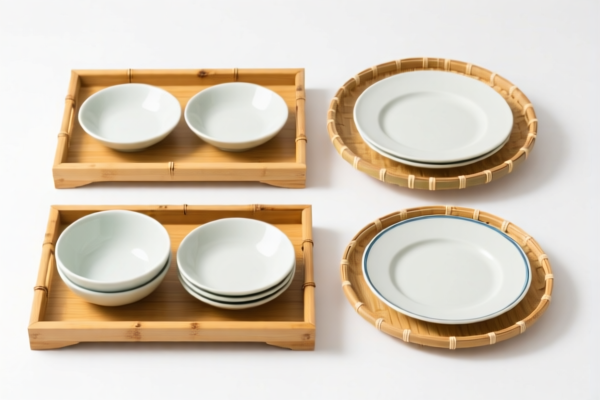
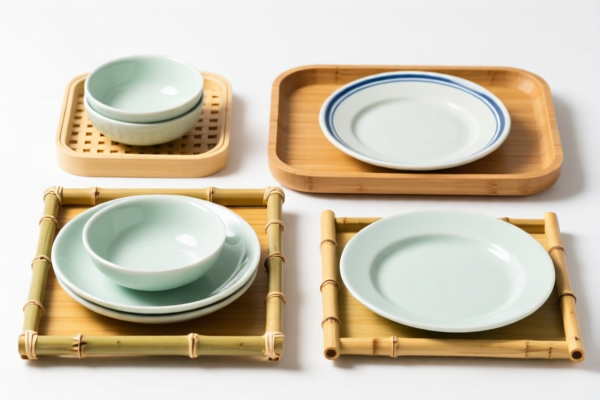
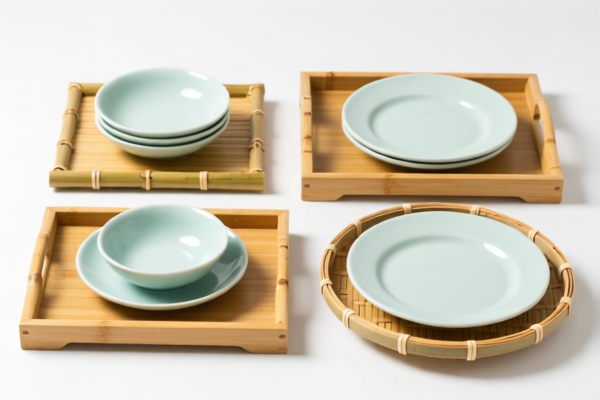
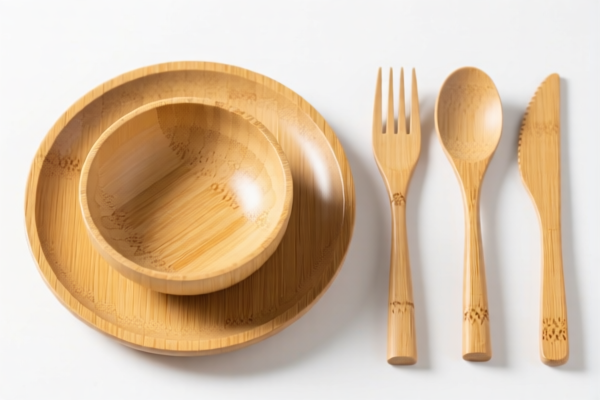
AI Analysis
🎋 Bamboo & Rattan Tableware: The Ultimate HS Code & Tariff Guide for US Imports (2026)
🌐 HS Code Reference & Customs Clearance Guide | 2026 Latest Tariff Analysis | Professional Clearance Strategy
📌 I. Product Definition: What Exactly is "Bamboo/Rattan Tableware"?
Bamboo and rattan tableware falls under Chapter 44 (Wood and articles of wood; wood charcoal), specifically heading 4419. However, the classification varies significantly based on manufacturing technique (carved/cut vs. woven) and specific use case (general dining vs. compostable).
In international trade, these items are categorized into two main types:
- Carved/Cut Bamboo Products: Items made by cutting, shaping, or carving bamboo pieces into plates, bowls, and cutlery.
- Key Feature: Solid wood structure, non-woven.
- Woven Bamboo/Rattan Products: Items made by weaving strips of bamboo or rattan into baskets, mats, or intricate tableware shapes.
- Key Feature: Woven structure, often categorized under Chapter 46 (Vegetable Plaiting Materials) or specific woven sub-headings in Chapter 44.
⚠️ Critical Distinction Point:
- If the item is solid, carved, or cut (e.g., a bamboo plate, fork, or spoon) → It generally falls under HS 4419.
- If the item is woven (e.g., a woven bamboo tray or basket-like container) → It may fall under HS 4602 (if strictly woven plaiting material) or HS 4419.19 (if deemed a woven article of wood). Note: The data provided maps woven items to 4602.11.45.00, which is a specific duty rate classification for woven articles.
📦 II. HS Code Classification Details (2026 Latest Tariff Authority)
Based on the provided data, here is the precise mapping of Bamboo/Rattan Tableware to HS Codes and Tax Rates.
| HS Code | Product Description | Applicable Scenario | Taxation Category |
|---|---|---|---|
4419.12.00.00 |
Bamboo tableware, general | Standard bamboo plates, bowls, cutlery (not specifically "other") | 13.2% Total |
4419.19.10.00 |
Bamboo tableware (Other/Compostable) | Biodegradable/compostable bamboo utensils or specific "other" bamboo articles | 15.3% Total |
4602.11.45.00 |
Woven bamboo tableware | Woven bamboo trays, baskets, or intricate woven serving dishes | 41.6% Total |
4419.11.00.00 |
Bamboo plates/serving dishes | Specific bamboo plates or serving platters | 13.2% Total |
🔍 Important Note:
-4419.11.00.00and4419.12.00.00share the same total tax rate (13.2%) but differ in specific sub-classification (plates vs. other tableware).
-4602.11.45.00carries a significantly higher tax burden (41.6%) due to the "122 Clause" tariffs and 25% Section 301 tariffs applied to woven products.
-4419.19.10.00is often used for eco-friendly/compostable bamboo items, carrying a slightly higher base rate (15.3%) than standard tableware.
💰 III. 2026 Latest Tariff Rate Breakdown (Detailed Tax Clauses)
✅ Applicable Country: United States (US)
✅ Country of Origin: China (CN)
✅ Effective Date: Post-2025 Trade Policies (Including Section 301 & 122 Clauses)
🎯 1. 4419.12.00.00 & 4419.11.00.00 – Standard Bamboo Tableware & Plates
| Item | Detail |
|---|---|
| Base Tariff Rate | 3.2% (ad valorem) |
| Section 301 Tariff | 0.0% (Note: Some bamboo tableware may be exempt or low-tariffed compared to other wood products, but verify specific exclusions) |
| 122 Clause Tariff | +10% (Specific punitive tariff applicable to Chinese goods under current trade actions) |
| Total Effective Tax Rate | 13.2% |
| Tax Calculation | CIF Value × 13.2% |
| De Minimis Eligibility | ❌ Not Eligible (For shipments >$800, duties apply; for <800, usually exempt, but bulk imports are subject to duties) |
| Legal Authority Path | HTSUS:4419.12.00.00 → IEEPA:122 → USITC:10% |
📌 Explanation:
- These are the most cost-effective categories for bamboo tableware.
- The 13.2% total includes a modest base duty plus a flat 10% punitive tariff.
- No Section 301 (25%) surcharge is listed for these specific codes in the provided data, making them highly competitive.
🎯 2. 4419.19.10.00 – Bamboo Tableware (Other/Compostable)
| Item | Detail |
|---|---|
| Base Tariff Rate | 5.3% (ad valorem) |
| Section 301 Tariff | 0.0% |
| 122 Clause Tariff | +10% |
| Total Effective Tax Rate | 15.3% |
| Tax Calculation | CIF Value × 15.3% |
| De Minimis Eligibility | ❌ Not Eligible |
| Legal Authority Path | HTSUS:4419.19.10.00 → IEEPA:122 → USITC:10% |
📌 Explanation:
- Slightly higher base rate (5.3% vs 3.2%) due to classification as "Other" articles.
- Often used for biodegradable/compostable bamboo cutlery to highlight eco-friendly attributes.
- Total cost is only 2.1% higher than standard tableware.
🎯 3. 4602.11.45.00 – Woven Bamboo Tableware
| Item | Detail |
|---|---|
| Base Tariff Rate | 6.6% (ad valorem) |
| Section 301 Tariff | +25.0% (High punitive tariff under Section 301) |
| 122 Clause Tariff | +10% |
| Total Effective Tax Rate | 41.6% |
| Tax Calculation | CIF Value × 41.6% |
| De Minimis Eligibility | ❌ Not Eligible |
| Legal Authority Path | HTSUS:4602.11.45.00 → Section 301:9903.88.01 → IEEPA:122 |
📌 Explanation:
- EXTREMELY HIGH TAXATION: The total rate of 41.6% makes woven bamboo tableware very costly to import.
- The 25% Section 301 tariff is the primary driver of this high cost.
- Warning: Do not misclassify woven items as "cut bamboo" (4419.xxxx) to avoid these duties. Customs agents are trained to detect weaving patterns.
🛠️ IV. Customs Clearance Practical Advice (Real-World Pitfall Avoidance)
✅ 1. Documentation Checklist (Non-Negotiable)
| Document | Required? | Purpose |
|---|---|---|
| ✅ Product Description | ✔️ | Must clearly state "Bamboo" and "Tableware" (e.g., "Bamboo Cutting Board," "Bamboo Plates"). Avoid vague terms like "Wooden Product." |
| ✅ Composition Declaration | ✔️ | Confirm 100% bamboo/rattan. If mixed with plastic/metal, it may fall under different chapters (e.g., 39 or 82). |
| ✅ Photo Evidence | ✔️ | Clear images showing woven vs. carved structure. Crucial for distinguishing between 13.2% and 41.6% tariffs. |
| ✅ Commercial Invoice | ✔️ | Must match HS Code exactly. Misdeclaration leads to penalties. |
| ✅ Fumigation Certificate | ✔️ | Required for all wood/bamboo products entering the US to prevent pest invasion (ISPM 15 standard). |
| ✅ FDA Compliance (if applicable) | ✔️ | If intended for direct food contact, ensure FDA compliance for food-safe finishes (no toxic lacquers). |
✅ 2. Declaration Strategy (Key Mnemonics)
🔥 "Solid is Cheap, Woven is Expensive; Be Precise or Pay the Price!"
| Scenario | Correct HS Code | Incorrect Action | Consequence |
|---|---|---|---|
| Solid Bamboo Plates | 4419.11.00.00 |
Declare as "Woven" | Overpay taxes (41.6% instead of 13.2%) |
| Woven Bamboo Trays | 4602.11.45.00 |
Declare as "Solid" | SEVERE PENALTY for misclassification + duty evasion |
| Compostable Bamboo Forks | 4419.19.10.00 |
Declare as "Plastic" | FDA violation + incorrect duty |
| Bamboo Cutlery (Knife) | 4419.12.00.00 |
Split into "Blade" (82) + "Handle" (44) | Complex customs scrutiny, potential delays |
✅ 3. Special Cases & Handling
| Scenario | Handling Advice |
|---|---|
| Bamboo + Plastic Handle | If >50% value is bamboo, may still be 4419. If plastic dominates, it could be 39. Consult a broker. |
| Lacquered/Varnished Bamboo | Must declare finish type. If non-food-safe, it cannot be imported as "tableware." |
| Mixed Containers | If a container has both solid bamboo plates and woven baskets, declare separately by HS Code. Do not average the tax rate. |
| Origin: Non-China | If bamboo is sourced from Vietnam or Indonesia, Section 301 tariffs may not apply. Verify Country of Origin carefully to save 10-25%. |
🌍 V. Global Market Comparison (2026)
| Country/Region | Recommended HS Code | Estimated Duty | Notes |
|---|---|---|---|
| 🇺🇸 USA | 4419.12.00.00 |
13.2% | Low risk, high volume |
| 🇺🇸 USA | 4602.11.45.00 |
41.6% | Avoid unless premium pricing allowed |
| 🇪🇺 EU | 4419.11/12 |
0-6.5% | No Section 301 equivalent; CBAM may apply later |
| 🇨🇳 China (Import) | 4419 |
5-15% | Domestic bamboo is abundant; imports are niche |
📌 Conclusion:
- USA is the primary market with specific punitive tariffs on woven products.
- Solid bamboo tableware (4419.11/12) remains highly profitable with only 13.2% duty.
- Woven products face barriers; consider sourcing from non-China origins to avoid 122 Clause and Section 301 tariffs.
📌 VI. Common Mistakes & Pitfall Guide (Lessons Learned)
❌ Mistake 1: Calling a woven bamboo basket "Bamboo Plate"
👉 Consequence: Customs rejects declaration → 41.6% duty applied + fines.
❌ Mistake 2: Ignoring Fumigation Certificate
👉 Consequence: Goods held at port for fumigation treatment → $500+ storage fees + delays.
❌ Mistake 3: Assuming all "Wooden" tableware is 13.2%
👉 Consequence: If it's rattan or woven, it may be 4602 (41.6%). Always specify material and structure.
❌ Mistake 4: Not separating Solid vs. Woven in mixed shipments
👉 Consequence: Customs audits entire shipment → Audit delay + potential penalties.
✅ Best Practice:
Use clear, unambiguous descriptions:
"Solid Bamboo Dinner Plates, Unvarnished, Food-Grade, Fumigated"
vs.
"Hand-Woven Bamboo Serving Tray, Natural Finish"
🎯 VII. Conclusion: Strategic Sourcing for Maximum Profit
🎯 Remember the Golden Rule:
🔹 "Solid is 13%, Woven is 41%; Choose Structure Wisely."
🔹 "Fumigation is Key; FDA is Mandatory."
📌 Pro Tip:
If you are importing woven bamboo tableware, consider sourcing from Vietnam or Thailand to potentially avoid the 10% 122 Clause and 25% Section 301 tariffs. This could reduce your effective duty from 41.6% to ~6.6%.
📣 Immediate Action:
📞 Verify HS Code Pre-Ruling with your customs broker before shipment.
📸 Photograph Weave Patterns for customs inspection.
🌿 Ensure FDA & Fumigation Compliance to avoid port holds.
✨ Professional Clearance Starts with Precise Classification!
💼 Save 28% Duty by Choosing Solid Bamboo Over Woven!
Customer Reviews
About HS Code Classification
The Harmonized System (HS) is an internationally standardized nomenclature developed by the World Customs Organization (WCO) to classify traded products. Over 200 countries use the HS system as the basis for customs tariffs, trade statistics, and import/export regulations.
Each HS code follows a hierarchical structure:
- Chapter (2 digits) — Broad category of goods (e.g., Chapter 84: Machinery and Mechanical Appliances)
- Heading (4 digits) — More specific grouping within the chapter
- Subheading (6 digits) — Internationally standardized breakdown, used by all WCO member countries
- National subdivisions (8-10 digits) — Country-specific extensions for further classification, such as US HTSUS 10-digit codes
Correct HS code classification is essential for smooth customs clearance, accurate duty payment, and compliance with trade regulations. Misclassification can lead to customs delays, overpayment of duties, or penalties.
When importing from CN to US, the applicable tariff rates may include:
- Most-Favored-Nation (MFN) rate — The standard duty rate applied to WTO members
- General rate — Applied to countries without trade agreements
- Trade remedy duties — Additional tariffs such as Section 301 (anti-dumping), Section 232 (national security), or countervailing duties
The information provided on this page is for reference purposes only. For official classification, please consult with your local customs authority or a licensed customs broker.